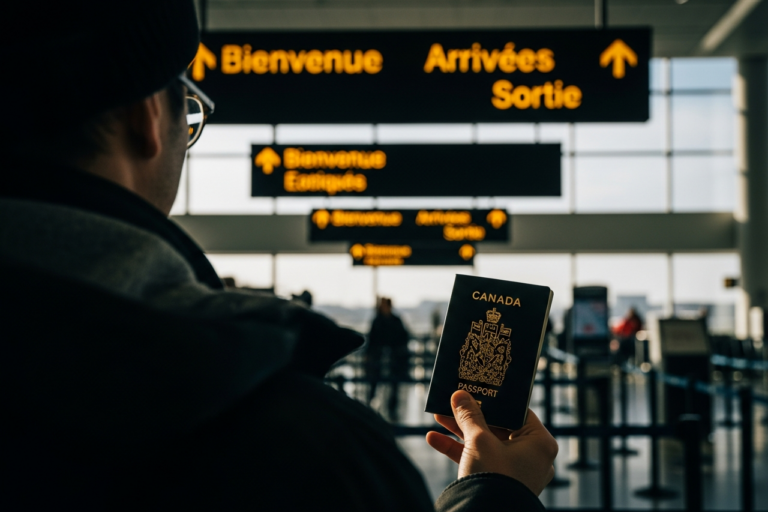
Key Highlights
-
Canadians do not have to get a visa if they want to stay in the schengen area for less than 90 days. But you will need a french visa if you want to stay longer than that.
-
When you start the visa application process, you need to use the main France-Visas website. This will help you find out the right visa type and what required documents you have to get ready.
-
There are a few types of visas. People can apply for short-stay schengen visas, or get long-stay national visas for work, for study, or to join family.
-
Most long-stay visas work like a temporary residence permit. But, you have to go and validate it when you first get to France.
-
If you want to join a school in France, you must have a student visa. Part of the application process is showing that you have been accepted by the school and have enough money to live there.
Introduction
Are you planning a trip to France? The country has a lot to offer, from the lovely streets of Paris to the nice sunny beaches in Nice. It is a dream spot for many people. If you are from Canada, you can go for a short visit with little hassle. But if you want to stay longer, you will need to get a France visa. It is good to know about the visa application process in advance. This will help your trip go well. No matter if you want a short holiday or think about moving there, this guide will cover what you need. You will learn about the France visa, the Schengen visa, and the steps in the visa application process. This can help you get ready for your French adventure.
Overview of France Visas for Canadians
Getting through the world of French visas can look hard at first, but it’s not as tough as you might think. The kind of visa you need comes down to how long and why you want to be in France. If you want to visit for a short time, the rules are easy to follow for Canadian passport holders. For trips that last longer, you must apply for the right type of visa.
Knowing about visa requirements is important. This guide will make it clear when it comes to all the types of visas, from short-stay tourist ones to long-stay visas for work or school. We will go over entry requirements and help you check what you need for your time in France.
Why Canadians May Need a Visa to Visit France
As a Canadian citizen, you may ask why you need a visa for France when short trips are visa-free. But if you want to stay in the Schengen area for more than 90 days in a 180-day window, you will need a visa. This rule works the same way if you visit one country or move around in the area.
The reason for your visit matters for the visa type you have to get. If you want to work, study, or live in France for a long time, you must get a long-stay visa before you leave Canada. You can’t just arrive and fix the paperwork later.
Also, the entry requirements change for each french territory outside of Europe. A normal Schengen visa will not let you go to french territories like French Polynesia or Martinique. You must look up what you need for each french territory because the entry rules are different for them.
Visa Exemption Scenarios for Canadian Passport Holders
For many people in Canada, you do not need a visa for France. If you are going for tourism or business and your visit is less than 90 days, you can go into the Schengen Area with your Canadian passport. This means you get visa-free entry and can travel between all Schengen countries, including France.
This visa exemption is because of an agreement between the European Union and Canada. It helps make short trips easier for people who just want to see France and the other countries near it. You can also visit small European places that are not fully in the Schengen zone, like:
-
Vatican City
-
San Marino
-
Monaco
But remember, this is only for short visits. You cannot use it to work or study in these places. If you need to stay longer or you want to study, you must apply for the right type of visa, like a student visa. People with a diplomatic passport should know there may be other rules for them.
Understanding Short-Stay Schengen Visas (Type C)
A short-stay Schengen visa is also called a Type C visa. This is the visa most people get when they want to visit Europe. It lets you stay in the Schengen countries for up to 90 days within a 180-day span. Canadians do not need this visa if they are going for tourism reasons. But other non-EU people have to fill out a detailed application form to get this visa.
This Schengen visa is good if you want to go for tourism, go on short business trips, or see family. It is important to know what you can do with this visa, and to learn the application process if you live in Canada but are not Canadian. We will now go over what activities you can do in these Schengen countries with this visa, and tell you how to fill out the application form as part of the process.
Purposes Covered by the Short-Stay Schengen Visa
The short-stay Schengen visa is easy to use and works for many activities when you visit the Schengen Area. The main goal of this visa is to let you stay for a short time, so you do not need a long-term permit.
If you are from another country but now live in Canada and you need this visa, you can do a lot with it. People often get a short-stay visa for these reasons:
-
Tourism and leisure trips.
-
Business trips, like meetings or conferences.
-
Family visits to see friends or relatives.
-
Short training courses or internships.
This schengen visa helps you travel for business trips, family visits, or short training courses or other needs. It is very important to say what your main reason is for the trip on your form. This lets the people who check your application know your plans. This also helps them do their job faster and better.
Application Process for Schengen Visa From Canada
If you live in Canada but are not a citizen and need a Schengen visa, the visa application process is simple. The first thing you need to do is go to the official France-Visas website. This website will help you with every part of the application process. On the site, you will make an account and fill out the application form online.
After you finish the form, you have to book a meeting with an external service provider like VFS Global or TLScontact. These centres send your documents to the French consulate for you. At your appointment, you will hand in your file and give your biometric data.
To get ready for your visa application, have these main documents:
-
A printed and signed application form.
-
Your valid passport.
-
Proof of accommodation and details about your travel plans.
When you are done, you can check the progress of your application online. You will know when your passport is ready for you to pick up.
Long-Stay Visas for France (Type D)
If you want to stay in France for more than 90 days, you will need a long-stay visa. People also call this the Type D visa. The French government asks for this visa if you want to work, study, or join your family. This type of visa is for people who stay between three months and one year.
The Type D visa works as a residence permit during your first days in France. But you still need to validate it when you arrive. It is different from a short-stay permit. Let’s see who should get this visa and how it is not the same as a short-stay permit.
Who Needs a Long-Stay Visa?
Anyone who wants to stay in France for over 90 days will need a long-stay visa. This is needed for Canadians and all other people who are not from the EU. The reason for your visit does not matter. It could be for work, school, or family. You should get this visa before you do anything else.
The kind of long-stay visa you need will be based on why you want to move. For instance, if you got a job offer, you will have to show your employment contract. If you are joining your spouse or a parent in France, you need to apply for a visa under family reunification. Each case comes with its own things you must do.
Once you get to France, you may also need to start your residence permit application to make your stay official. The long-stay visa is the first part. It lets you become a legal resident and start a new chapter of life in France.
How Long-Stay Visas Differ From Short-Stay Visas
The main thing that is not the same between a long-stay visa and a short-stay schengen visa is how long you can stay in France. You can use a short-stay schengen visa for up to 90 days in a 180-day time frame. But if you have a long-stay visa, you will be able to stay in France from three months up to a full year.
The other thing that makes these visas different is the reason for your stay and what you are allowed to do. With a long-stay visa, you get a way to live in France for more time, and you often can get a residence permit after. A schengen visa is only for short visits.
Here is an easy look at the main things that are different for each type of visa:
-
Validity: Short-stay lets you stay up to 90 days; long-stay lets you stay from three to twelve months.
-
Purpose: The short-stay schengen visa is for things like holidays or short business. The long-stay visa is for work, study, or if you want to live in France.
-
Residency: With a long-stay visa, you can try to get a residence permit. With a short-stay schengen visa, you cannot.
Key Types of Long-Stay Visas for Canadians
If you plan to stay in France for a long time and you are Canadian, you will find there are a few types of visas you can get. Each one is made for a different reason. You may want to study, start a new job, or be with a family member. There is a visa for all these things.
These visas work much like a study permit or a work permit. They let you do what you need to do while you are in France, and you will be doing it the right way under the law. The main types are student visas, work and talent visas, and family-related visas. Let’s look at these choices a bit more so you can pick one that is good for you.
Student Visas: Studying in France
If you are a Canadian and you have been accepted into a French school or college for a program that is longer than 90 days, you will need to get a student visa. This student visa lets you stay in France while you study. It gives you the right to live there for the time your course will take.
To get the student visa, you have to show that you got accepted by the school. You must also give proof of financial means. This means you need to show you have enough money to pay for your living costs and tuition. Most of the time, you can not work, but some student visas will let you work a small number of hours.
You also need to have health insurance that will take care of the medical care you might need in France. You often have to start your student visa application with Campus France in Canada. Then you send the application to the French consulate. So, the best way is to start the process ahead of time before you go to France.
Work and Talent Passport Visas
For people in Canada who want to work in France, you have a few choices for a visa. One popular option is called the “Talent Passport.” This visa is made for skilled workers, researchers, artists, or people who invest money and want to help the French economy or culture. With the Talent Passport, you can get a simpler way to a residence permit that lasts for years.
If you want to get the Talent Passport, you must meet some rules. You may need a certain level of school education, an employment contract, or a good business plan if you want to start a company in France. The Talent Passport is a good work permit because it can also include your close family.
For other jobs, you often need a job offer with an employment contract approved by the French authorities. The company that is hiring usually begins this step. When you get the approval to work, you can then apply for your long-stay work visa.
Family Reunion and Visitor Visas
If you have a family member who lives in France as a citizen or a legal resident, you may get a long-stay visa through family reunification. This visa lets the spouse, children, and parents who depend on them join their family in France. The family member must start the application process with the French authorities.
If you want to stay in France for more than 90 days and do not plan to work, a long-stay visitor visa can be the right choice. This is good for people like retirees or anyone who has enough money to take care of themselves. You need to prove you will not take any job.
Here are some key things about these visas:
-
Family Reunification: The family member in France must make the application with the french authorities.
-
Visitor Visa: You have to sign a statement that says you will not work.
-
Financial Proof: For both visa types, you need to show strong proof that you have enough money.
The European Union Blue Card in France
The EU Blue Card is a special work and residence permit for highly qualified non-EU citizens who wish to work in the European Union. In France, the Blue Card offers an attractive pathway for skilled professionals to live and work in the country, with benefits that can extend to family members and provide a route to long-term residency. It’s designed to attract talent from around the world, making it easier for legal residents to contribute their expertise.
To obtain a Blue Card in France, you must meet specific eligibility requirements, which are generally stricter than those for a standard work visa. The table below outlines the key criteria. Fulfilling these conditions allows you to apply for this prestigious permit.
|
Requirement |
Details |
|---|---|
|
High Qualification |
Must possess a diploma from a higher education institution (at least 3 years of study) or have at least 5 years of relevant professional experience. |
|
Employment Contract |
Must have a binding job offer or a valid employment contract for at least one year in France. |
|
Salary Threshold |
The gross annual salary must be at least 1.5 times the average gross annual salary in France. |
Eligibility for the EU Blue Card
Meeting the eligibility requirements for the EU Blue Card is the first and most important step. These rules are made to make sure that all applicants are highly skilled. The goal is for you to help the French workforce in a good way. While the requirements for the blue card are quite similar all over the EU, there are still some rules from the French government that are unique to France.
Your skills and education are key. You need to have a university degree from a three-year program. If you do not have a degree, it still may be fine. You can show five years of work experience in the same field instead. This shows the french government that you have strong skills.
Besides your skills, you also need to get a job offer that fits the rules. The main eligibility requirements are:
-
A valid work contract or a job offer that lasts at least one year.
-
A salary that meets the limit set by the French government.
-
The job must be for a position that needs high skills.
Your country of residence does not stop you from applying. You can still get the EU Blue Card as long as you are not an EU national.
How to Apply for the EU Blue Card as a Canadian Resident
As a Canadian living in Canada, you start the application process for an EU Blue Card in France after you get an employment contract. The process usually begins when your employer in France gets work authorization for you. After this is done, you can go on with your visa application.
You need to apply for a long-stay visa from the French consulate in Canada. It is called “Passeport Talent – Carte Bleue Européenne.” With this visa, you will enter France and start your job. When you arrive, you must complete a few more steps.
In the first three months of your time in France, you have to apply for your residence permit. Here are the main steps:
-
Your employer gets your work authorization in France.
-
You apply for your long-stay “Talent Passport” visa in Canada.
-
When you get to France, you go to the local prefecture and apply for your Blue Card residence permit.
This whole application process is important to get your blue card and to work and stay in France with your new visa and residence permit.
French Visa Application Process Step-by-Step
The visa application process for a French visa is made easy with the official France-Visas portal. This site helps you step-by-step. You can see if you need a visa and how to submit your documents. To start, you need to fill out the visa application form online.
After you finish your application form, you will set up a time to hand in your paperwork face-to-face. Where you go for your appointment depends on where you live in Canada. It will be at the French consulate or with an external service provider who helps with visa application process matters. The next parts will go over all the steps, like setting up your account and getting ready for your interview.
Creating an Account on France-Visas
Your path to getting a French visa starts at the official website, France-Visas. This is the main government site for every visa application you need. The first thing to do is sign up for a new account. This will make your own page on the site.
When your account is set up, you can use the “Visa Wizard” tool. With this tool, you find out what type of visa you need. The Visa Wizard also tells you which documents you must have for the application form. It gives you tips that match your country, where you are going, and why you plan to travel. Doing this helps you use the right steps from the start.
After you use the wizard, fill in the visa application form on the same site. You do not have to finish all at one time. The system saves what you put in. You can come back and fill out the form when you are ready. Here are the things you do on the official website:
-
Register for a personal account.
-
Use the Visa Wizard to get a personalized checklist.
-
Complete and save your online application.
Booking Your Visa Appointment at the French Consulate
After you finish the application form on the France-Visas website, the next thing you have to do is book a visa appointment. The website will show you how to do this step. In Canada, you need to book your visa appointment with an external service provider. This service provider works with the French consulate to help you send in your form.
It is important to book your appointment as soon as you can, especially if it is a busy travel time. Sometimes, waiting times can be long. You should try to get your visa appointment booked for at least 15 days before you want to leave Canada. If you can, it is good to apply even earlier than that.
When you are ready to book, have the reference number from your application form ready. You need to pick the correct centre, which is the one that works with the French consulate for your area. Here are the steps:
-
Use the link the France-Visas website gives you after you fill your form.
-
Pick the external service provider that works with the nearest french consulate.
-
Pick the available day and time for your appointment.
Attending Your Visa Interview and Submitting Biometrics
On your appointment day, you must show up in person. You will hand in your application form and other required documents here. You will also have your fingerprints taken and your photo taken. This part is called the visa interview, but it really is just for the staff to check your papers and see who you are.
You have to bring your passport, the printed application form, your photos, and all other documents you may need. The agent will look at your file to make sure you have everything. If you leave out something needed, the French authorities might slow down or even reject your application.
At the appointment, your fingerprints and a photo will be collected. They use these for any new applications you make later on. Here is what you need to focus on that day:
-
Get there on time and take your full application file with you.
-
Turn in all the required documents from the checklist.
-
Give your fingerprints and let them take your digital photo.
Required Documents for Your France Visa Application
Getting all the right required documents for your visa application is very important. You have to give a full and correct file if you want your application to work out well. The France-Visas website will give you a list made just for you, but some required documents are the same for all people who apply.
Most of the time, you need to have your passport, the application form, your photos, and proof of your travel plans. They will also want proof of accommodation and proof of financial means to show you can pay for your stay. Here, we will go over the main paperwork that people from Canada need and talk about any special things you should know.
Essential Paperwork List for Canadian Applicants
When you want to apply for a long-stay visa, you need to collect some required documents. It is good to have all your papers ready before you begin the visa application. This will help you avoid delays and give you a better chance that the application process goes well. Each required document helps to show who you are, why you are traveling, and if you can support yourself while you stay there.
Your Canadian passport is the most important thing. Be sure that it will not expire before the end of your stay. It should also have at least two blank pages left. You must add recent passport photos that follow the right rules.
Here is what you need to get ready for your travel plans:
-
A valid Canadian passport.
-
The filled out and signed visa application form.
-
Proof of travel medical insurance.
-
Your travel plans or a clear plan for when and where you will go.
-
A birth certificate or other document that can help show your status, if the visa needs it.
Special Requirements for Minors, Students, and Workers
Besides the usual paperwork, the people who apply may need to share extra documents. This depends on their situation. If you are applying for a student visa, work visa, or for a minor, there will be more things you must do.
If the person is a minor, you will need the child’s birth certificate. Both parents or the child’s legal guardians will have to sign the application. If the minor will travel alone or with only one parent, a letter saying it is okay is needed as well. For a student visa, the main thing you must send is the letter that shows you are accepted into a school in France.
If you are a worker, there will be other rules. The big thing you have to include is a work paper or an employment contract. This paper must come from your job offer in France and is signed or made official by the French authorities. There are a few more things people will need, such as:
-
Students: You must show proof of your financial means and your accommodation.
-
Workers: You need the employment contract that is approved by the French authorities.
-
Minors: You must have both the consent forms from parents and the birth certificate.
Fees, Processing Times, and Payment Methods
You should know the costs and how long your visa application will take before you start your trip. There is a fee you need to pay for most visa types. People also call it a stamp duty. If you go to an outside service to help you apply, you may have to pay a service fee to them.
The time it takes to process your visa application can be different for each visa type. It can also change if you apply at a busy time in the year. Be sure to check what payment methods you can use at the application centre.
The parts below will tell you more about the usual costs, fees, and how long you may have to wait for your visa.
Typical Costs for Different France Visas
The cost of your visa application depends on the visa type and your age. The French government sets the main fee, or stamp duty, and it is standardized. However, be prepared for an additional service fee if you submit your application at a third-party centre.
These fees are non-refundable, even if your visa is refused. Payment is usually required at the time of your appointment, and the accepted methods can vary by location, so it’s wise to check in advance.
Here is a general overview of the fees for the main visa application types. Note that these are subject to change.
|
Visa Type |
Fee (in Euros) |
|---|---|
|
Short-stay Schengen Visa |
€80 |
|
Long-stay National Visa |
€99 |
|
Airport Transit Visa |
€80 |
|
Children (6-12 years) |
€40 |
|
Children (under 6) |
Free |
How Long Does It Take to Process a French Visa From Canada?
The time it takes to get a French visa from Canada can change. Most people will get a decision in about 15 days after the consulate gets their application. Still, this is just a general number, so you should always apply early.
When it is peak season, like summer or Christmas, the wait can be longer. It might take 30 days or even 45 days to process your application. To avoid any last-minute problems, you should try to apply at least three weeks before your departure date.
Many things can slow down the application process. If you want things to go faster, keep these in mind:
-
Apply at least one month before you go on your trip.
-
Make sure your application is complete with all needed documents.
-
Try to not apply during busy holiday times, if you can.
Using these tips can help make your french visa application process easier at any time of the year.
Travel Insurance and Financial Means for Your Trip
When you apply for a visa to France, you need to show that you have travel insurance and enough money for your stay. Health insurance is a must for a Schengen visa. This is to make sure you get help if you have a medical emergency.
You also must show proof that you have enough funds. This lets the people checking your visa know that you can take care of your own costs while you are there. It proves you will not be a risk for the country’s system. The next parts go into more detail about travel insurance and funds for your Schengen visa.
Mandatory Travel Insurance Coverage Explained
If you want to apply for a visa to go to the Schengen Area, like France, you need to get travel insurance. It is not just something good to have. You must have it, and your insurance needs to meet some clear rules. This is there so you can get the medical care you need while you are there.
Your insurance needs to cover at least €30,000. This money should help with any emergency medical treatment you have, your hospital stay, or if you need to go back home for medical reasons. The coverage also needs to help in case you die during your trip.
The travel insurance also has to cover you for the whole duration of your stay in the Schengen countries, not just for France. When you give your visa application, you will be asked for a paper from your insurance company. This is to show you meet all their standards. To sum up, the key requirements are:
-
Minimum coverage of €30,000.
-
Have coverage for medical emergencies and being sent back home.
-
Must be valid in all Schengen countries.
Proof of Sufficient Funds for French Visa Applications
Showing that you have enough money for your trip is a big part of the visa application. The French authorities want to be sure you can handle your costs on your own. That means you need to show you can pay for your place to stay, food, and any daily costs.
The money you must show depends on where you will stay. If you have already paid for a hotel, you do not need as much money as you do if you have not paid yet. You must give proof to show your real financial state.
To show your income and savings, you should give recent bank statements that show regular activity. You can also use these documents:
-
Bank statements from the last three months.
-
Pay stubs or a letter from your workplace.
-
Proof that someone else, like a sponsor, will pay for your trip.
After Approval: Entering France and Residence Registration
Congratulations! Your visa has been approved. This is great news. But your journey is not over, especially if you got a long-stay visa. When you get to a French airport, you will show your passport and visa.
If you have a long-stay visa, there are steps you need to take to make your stay legal. You must start the process for your residence permit as soon as you arrive. You need to register with the local authorities, often by using an official website. This will help you become legal in France.
Taking these steps is very important. It lets you use public services and live in the country the right way. The next sections will show how to act when you arrive and tell you what you should do to renew your papers if you need to.
What To Do Upon Arrival in France
When you get to France with your long-stay visa, you only have a short time to get it checked. You must do this process in three months after you arrive. You need to go online and use the official site for foreign people in France.
This check works as your first residence permit, so you can stay in France the right way. If you do not do this, the French authorities will say you are not allowed to stay here. That could bring fines or problems if you want another visa later.
Doing it online is easy for most people. You need some details from your visa and your passport to finish it. Here are the main steps:
-
Go to the official validation website. You must do this in the first three months after you arrive.
-
Type in your visa details and pay the tax you need to pay.
-
You will get a paper or message that shows your validation is done. Make sure you keep this safe.
Some types of visas also mean you later have to do a residence permit application at your local prefecture.
Renewals and Extensions of Your French Visa
Your long-stay visa will last for about one year. If you want to stay in France longer, you cannot just get the visa again. You need to apply for a residence permit (carte de séjour) where you live. You should start this process two to three months before your visa runs out.
The kind of residence permit you need depends on your situation. For example, you could be a student, a worker, or a family member. Each type will have its own list of required documents. Make sure you check with your local prefecture about what documents you need.
If you need to stay a short while longer and something comes up that you did not expect, you may be able to apply for a temporary residence permit. But keep in mind, this only happens in special cases.
-
Apply for a residence permit 2-3 months before your visa runs out.
-
Get all the required documents that fit your situation.
-
Extensions are very rare and only given if there is a special reason.
Official Resources and Travel Advice for Canadians
When you plan to go to France, it’s good to use official websites for the most up-to-date information. The French government offers helpful sites so you can see all you need about visa rules and entry requirements. These sites give you clear travel advice you can trust.
By using the official resources, you get the right information on safety, legal rules, and how to apply for things you need. The next parts will show you some of the top French government websites and advice links. These can help you get ready for a safe and fun trip.
Using France-Visas and Government Resources
The main official website for your visa application is France-Visas (france-visas.gouv.fr). This is the place to start for all people who need a visa. The french government runs this site. It has an easy guide that walks you through each step of your application. It is also the most trusted source of information.
At this site, you can check if you need a visa. You can see what papers you have to have, fill out your form, and find out where to send it. It’s built to help make the steps as simple and clear as possible.
Even though this site covers everything, it might send you to other service provider websites like VFS Global or TLScontact. You can use those sites to book a meeting time. Always use only the links found right on the official website to stay safe from scams. Important places for info are:
-
The official France-Visas website for all visa application needs.
-
The websites of the french consulates in Canada.
-
The website of the service provider for your area.
Advisory Links for Safety and Legal Requirements
It is important to stay up to date with safety and laws when you plan an international trip. The Government of Canada’s travel advice and advisories website is a great place for Canadians to get details before going abroad. You will find advice for every country, like safety, health, and local rules.
You should check this site for any new updates before you leave Canada or even while you are away. The French government gives more help for visitors and people staying in France on its own official sites. These sites help you understand the local rules better.
For the best and latest advice, always use these official sources. You get current updates on travel and any warnings you may need. Good links to keep include:
-
The Government of Canada’s travel advisories for France.
-
The website of the French Ministry for Europe and Foreign Affairs.
-
The official tourism website for France.
Conclusion
Visiting France from Canada can be very exciting. But you need to know the visa requirements before you go. It is important to find out about the types of visas you might need, like short-stay Schengen visas or long-stay visas. This will help you plan your trip in the right way.
You also have to know how to apply, what documents to get ready, and what travel insurance you need. If you learn about all these things ahead of time, there will be less stress, and you can focus on enjoying your time in France. The country has a lot of beauty and culture to offer.
If you are not sure about anything or have a problem, you can ask local sources or talk to travel experts for their help. They can give you good advice. Have a safe trip!
Frequently Asked Questions
Can I Work in France With a Short-Stay Visa?
No, you can’t work in France with a short-stay Schengen visa. This kind of French visa is for tourism, family visits, or short trips for business. If you want to work, you need to get a long-stay visa that has a work permit. You must do this before you go to France.
Is it Possible to Study in France Without a Long-Term Visa?
Yes, you can go to France and spend up to 90 days there without needing a long-term visa. Canadians can visit the Schengen area for a short stay without a visa. But if your studies or program will last longer than 90 days, you have to get a long-stay student visa. This student visa will let you stay and study in France past the short stay limit.
What Happens if My French Visa Application is Refused?
If your French visa application is turned down, the French authorities will tell you why. You can appeal the decision or send in a new visa application. When you start the next application process, you should deal with the reasons why your French visa was not given at first.