

Last reviewed: September 2026
What is Lake Pukaki? (Quick overview)
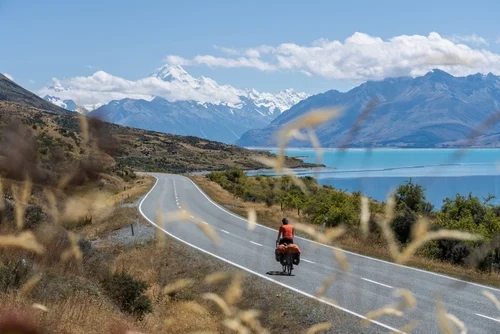
Lake Pukaki is a glacial lake in New Zealand’s Mackenzie Basin, South Island, known for its vivid turquoise water, which comes from glacial flour carried down from the Tasman Glacier. It sits at the gateway to Aoraki/Mount Cook National Park, roughly 3 hours 35 minutes by car from Christchurch. The lake covers around 179.5 square kilometres and has an average level of about 528 metres above sea level, one of three glacial lakes in the Mackenzie Basin alongside Lake Tekapo and Lake Ohau. Lake Pūkaki is managed as a major storage lake within the Waitaki hydroelectric scheme, supplying water used for electricity generation downstream. For Australians planning a wider New Zealand trip, it makes an easy add-on to a South Island route – a short flight and a scenic drive away, with no visa required.
At a glance
- Location: Mackenzie Basin, South Island – around 3 hours 35 minutes from Christchurch by car; Australian citizens don’t need a visa or NZeTA before travel.
- Colour: turquoise water, caused by glacial flour from the Tasman Glacier.
- Best time: late spring to early summer (typically November–December) for lupins, December–February for warm weather, winter for long, dark nights and stargazing.
- Nearby bases: Twizel, Mount Cook Village, and Lake Tekapo.

Why Lake Pukaki’s water is that colour
The lake’s colour comes from glacial flour: extremely fine rock particles ground down by the Tasman Glacier, New Zealand’s longest glacier. Meltwater carries this “flour” down the Tasman River into the lake, where the suspended particles scatter sunlight, giving the water its bright, milky blue-green tone. The shade shifts through the year, often most vivid in summer when glacial melt – and flour – peaks.
Best time to visit Lake Pukaki
Spring (September to November)

Lupins usually flower across the Mackenzie Basin from late spring into early summer, typically November and December, though timing varies with seasonal conditions. They’re a striking sight, but lupins are invasive here, and the Department of Conservation runs an ongoing programme to manage their spread – so admire them from formed roadsides and tracks rather than trampling surrounding native vegetation or entering areas where access is restricted.
Summer (December to February)

Summer has the longest days and the warmest weather, typically 20–25°C, the best window for hiking and time on the water. It’s the busiest season, including over the Australian summer school holidays, so book accommodation in Twizel, Mount Cook Village, or Lake Tekapo well ahead.
Autumn (March to May)

Crowds thin out, temperatures cool, and the tussock grasslands turn gold, good for photography and unhurried drives around the basin.
Winter (June to August)

Snow settles on the surrounding peaks, and the region sits within the 4,367-square-kilometre Aoraki Mackenzie International Dark Sky Reserve, one of the world’s major protected dark-sky areas, so winter’s long, dark nights are well suited to stargazing when skies are clear. Snow, ice and black ice can temporarily close or restrict State Highway 8 and other roads through the Mackenzie Basin, so check NZTA road conditions before travelling. If you’re planning around New Zealand’s ski season, it’s worth checking what else to expect.
How to get to Lake Pukaki from Australia

Flights from Australia
The flight time from Australia to Christchurch varies by departure city. Direct services operate from several Australian cities to Christchurch, while Queenstown also has direct services from Sydney and Melbourne, plus seasonal Brisbane services. Australian citizens don’t need to arrange a visa or NZeTA before travel and are normally granted an Australian Resident Visa on arrival.
Driving from Christchurch
From Christchurch, head south on State Highway 1 before joining State Highway 8 inland, a drive of around 290 kilometres, approximately 3 hours 35 minutes depending on stops.
Driving from Queenstown
From Queenstown, take State Highway 6 to Cromwell, then State Highway 8 north, a drive of around 220 kilometres, approximately 2 hours 40 minutes.
Things to do at Lake Pukaki

Hiking in Aoraki/Mount Cook National Park
The Hooker Valley Track is one of the park’s best-known walks – allow 3-4 hours return. The route crosses the Hooker River toward Aoraki/Mount Cook, and a new 189-metre suspension bridge opened in July 2026, replacing the one affected by erosion in 2025. Kea Point Track is around 3 kilometres, about one hour return from White Horse Hill or two hours from the village, heading to a lookout over the Mueller Glacier moraine. For a tougher option, the steep Sealy Tarns Track climbs around 600 metres and takes roughly 3-4 hours return, with expansive views over the Hooker Valley.
Salmon fishing
The Mackenzie hydro canals around Lake Pukaki are popular for trout and salmon fishing. A Fish & Game sports-fishing licence is required, and local regulations and daily limits apply, so check current requirements before you cast a line.
Stargazing
The Dark Sky Reserve status means minimal light pollution around the lake. Dark Sky Project runs guided astronomy experiences from nearby Lake Tekapo, including viewing at the Mount John Observatory.
Lupin photography
The lupin fields make some of the region’s most photographed scenes each spring. Photograph them from formed roadsides and tracks rather than trampling surrounding vegetation or entering areas where access is restricted.
Scenic flights
Scenic flight operators based at Mount Cook Village fly over the Tasman Glacier and Aoraki/Mount Cook, weather permitting, for a different view of the park.
Where to stay near Lake Pukaki

Accommodation around Lake Pukaki itself is limited compared with nearby towns. Most visitors base themselves in Twizel, the main service town with everyday accommodation, supermarkets, and fuel; Mount Cook Village, home to the long-established Hermitage Hotel, closer to the national park and booking out early in summer; or Lake Tekapo, a scenic drive north with the widest mix of accommodation. Some smaller lodges, farm stays, and camping options also exist in the wider area, and DOC operates campsites nearby, with facilities, fees, and booking requirements varying by site.
FAQs
Why is Lake Pukaki’s water blue?
Glacial flour – fine rock particles ground by the Tasman Glacier – gets carried into the lake by meltwater and scatters sunlight, giving the water its bright turquoise colour, most vivid during peak summer melt.
How far is Lake Pukaki from Christchurch?
It’s about 290 kilometres from Christchurch (approximately 3 hours 35 minutes by car), and around 220 kilometres from Queenstown (approximately 2 hours 40 minutes).
What’s the best time to visit Lake Pukaki?
Summer (December–February) is warmest with the longest days; late spring to early summer (typically November–December) brings the lupin bloom, and winter offers long, dark nights well suited to stargazing when skies are clear.
Can you swim in Lake Pukaki?
People do swim in Lake Pukaki, but the glacial water is very cold, and lake levels and conditions can change. Assess conditions carefully before entering the water and avoid hydro infrastructure and fast-moving inflows or outflows.
Do Australians need a visa to visit?
No. Australian citizens can enter New Zealand without a visa or NZeTA, receiving an Australian Resident Visa at the border under the special travel arrangement between Australia and New Zealand.
What is the Tahr Statue near Lake Pukaki?
It’s a roadside statue honouring the Himalayan tahr, a goat species introduced in the early 1900s. The Department of Conservation now manages tahr numbers to protect native alpine plants from overgrazing.
Is there accommodation right on Lake Pukaki?
Accommodation right on Lake Pukaki itself is limited. Most visitors base themselves in Twizel, Aoraki/Mount Cook Village, or Lake Tekapo, though some smaller lodges, farm stays, and camping options exist in the wider area.
Key takeaways
- Lake Pukaki sits in the Mackenzie Basin, about 290 kilometres (roughly 3 hours 35 minutes) from Christchurch and 220 kilometres (about 2 hours 40 minutes) from Queenstown.
- Its turquoise colour comes from glacial flour carried down by the Tasman Glacier, New Zealand’s longest glacier.
- Lupins typically bloom from late spring into early summer (November–December), December to February is warmest and busiest, and winter offers long, dark nights well suited to stargazing.
- The lake sits within the 4,367-square-kilometre Aoraki Mackenzie International Dark Sky Reserve, one of the world’s major protected dark-sky areas.
- Twizel, Mount Cook Village, and Lake Tekapo each offer a base nearby, suited to different budgets and travel styles.
Planning your Lake Pukaki visit
Lake Pukaki rewards a bit of planning: knowing when to go, how to get there, and where to base yourself makes the difference between a rushed stop and a trip you’ll remember. It also fits naturally into a wider trip – an extension north to the Bay of Islands, say, if you have the time.
Before you go, it’s worth sorting out your travel money. New Zealand runs on the New Zealand dollar, and knowing how currency and card fees work ahead of time can save you from surprises once you’re there. Remitly can help if you need to send money across while you’re travelling.



