Key Highlights
-
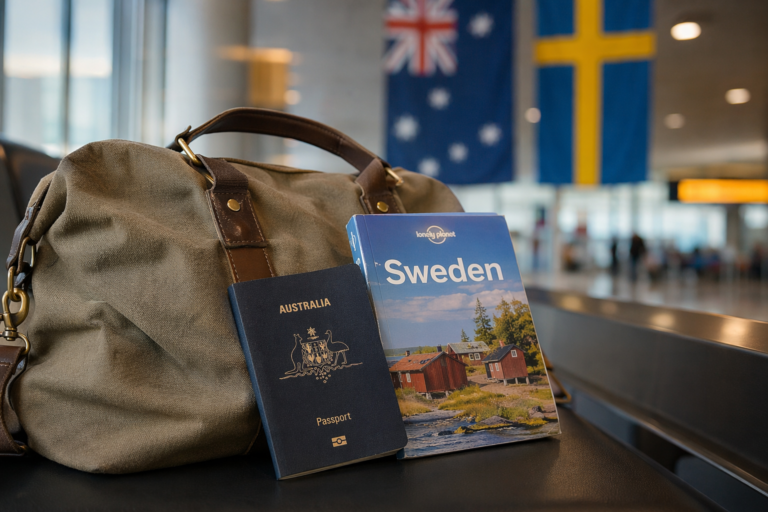
If you’re from Australia, you can visit Sweden without needing a sweden visa for short trips in the Schengen Area.
-
Most of the time, the visa exemption lets you stay for up to 90 days in any 180-day period.
-
Your passport, your travel details, and proof of funds are the main visa requirements you need to show.
-
From late 2026, ETIAS will be something all visa-exempt travellers from Australia must get.
-
If you want to stay longer for work or study, you will usually need the ok from Swedish authorities.
-
For any formal visa application, you should look at the Swedish Embassy website or other authorised visa application channels.
Introduction
Thinking about a trip to Sweden from Australia? It’s good to know the rules before you book. Sweden is in the Schengen Area. This means that the visa rules for Australians change based on how long you want to be there and what your reason is for travelling. If you are going for a short holiday or a work trip, things are usually simple. But if you plan to study, work, or stay for a long time, there will be extra steps for you. This guide helps Australians see the key details about Sweden travel and entry requirements, and what you need for your visa to the Schengen area.
Do Australians Need a Visa to Visit Sweden?
Most Australians do not need a visa to go to Sweden for a short visit. Sweden is part of the Schengen Area. If you have an Australian passport, you do not need a visa for a stay of up to 90 days in any 180-day period.
But you still need to follow all the visa requirements. You must have a valid passport, proof you have money for your stay, and other travel documents. If you want to stay in Sweden for more than 90 days, or if you want to work or study, you will need the right permit before you travel.
These rules help people know what to do if they want to go to Sweden and visit a Schengen country.
Visa Exemption and Short-Stay Rules for Australians
Australians can go to Sweden and other Schengen countries without a visa if they are a tourist or on a short business visit. They can stay for up to 90 days in a 180-day period. This rule is for holidays, seeing family, and some business trips. But, you cannot do paid work under this rule.
Before you go, you still have to pass checks at the airport and with the airline. The visa requirements for going to Sweden as a tourist are:
-
Your passport must be valid for at least three months after you come back.
-
Your passport must have at least one empty page. It should also be less than 10 years old.
-
You have to show you have enough money for your stay and you need to show tickets to go out from Sweden or to return home.
-
You need documents that show the purpose of your visit and, if needed, any visa you need for your next stop.
There is one more thing to know. Travellers should check with their airline that they can board the plane without a visa. Travel rules can change with time.
Understanding ETIAS for Future Travel to Sweden
Even though people from Australia do not need a visa right now for short trips, there will soon be a new travel step. ETIAS, which stands for the European Travel Information and Authorisation System, is being planned. This will be needed for people who are allowed into the Schengen Area, and that includes Sweden.
ETIAS is not a visa. It is a travel authorisation you have to get before you go, once the system starts. Right now, ETIAS is expected to start in the last part of 2026. That means travellers from Australia going to Sweden will need to do an online pre-travel check.
If you want to know how long the visa application takes for Sweden, it will depend on the kind of visa. There is no timing given here for ETIAS. A regular visa application can take about 15 days, but sometimes it might take 30 days or up to 60 days.
This new process is for anyone who wants to go to the Schengen area, go to Sweden, or who makes a visa application from Australia.
Types of Swedish Visas Australians Can Apply For
Swedish visas fall into groups based on how long you want to stay. If you plan to stay in the country for less than 90 days, you may need a Schengen visa unless you are free from needing one. For trips that last over 90 days, the Swedish authorities give out long-stay visas or permits. These can be for things like work, study, research, family reasons, or living in Sweden.
If you want the real facts about the different types of visas, you should first check with the Swedish Embassy, the approved centres that handle visas, or the Swedish Migration Agency. These are the main places to go for up-to-date details on visa requirements, applying, and further information. After that, it is good to look at what each type means for travellers.
Schengen Visa (Short-Stay)
A Schengen visa lets you visit and stay in the Schengen Area for a short time. In Sweden, people get it for trips like tourism, seeing family, cultural events, medical reasons, or business. You can travel in Schengen states for up to 90 days with this visa. But, you cannot do any paid work with it.
If you want to apply from Australia, you have to fill out the application form, get the required documents together, and send them in to the Swedish Embassy or a visa application centre that is allowed to handle this. Most people will need to show up in person as part of the visa application.
You must use your original passport—no copies will be accepted. The visa is stamped inside your passport. It’s a good idea for travellers to start their application about 1 or 2 months before they plan to leave. This gives enough time for everything to be processed.
Long-Stay Visas (Work, Study, and Residence Permits)
If your stay in Sweden will be longer than 90 days, you will usually need a long stay visa or a residence permit. This may apply to study, employment, research, internships, job seeking, or joining a family member. These matters are handled under Swedish rules for longer-term entry.
The Swedish Migration Agency is the key authority for residence permit matters. For students, the process usually starts with proof of acceptance from a university or course provider. For workers, the purpose is different, and a work permit is generally needed before taking up employment.
|
Permit type |
Usual supporting basis |
|---|---|
|
Study residence permit |
Invitation or proof of acceptance from a university in Sweden |
|
Work permit |
Permission to work is required if you will engage in gainful activity |
|
Family or partner stay |
Application based on a family member or partner in Sweden |
So, if you are applying for a student residence permit, begin with your acceptance documents, then follow the Swedish Migration Agency process and visa requirements.
Basic Requirements and Documents for a Sweden Visa Application
Every Sweden visa application starts with having the right papers. The applicant will need a valid passport, a filled-out application form, photos, and papers that show why they want to travel. Most people also have to give financial evidence and medical insurance for their trip.
Some required documents will change based on the reason for travel. For example, if you are a student, worker, business visitor, or going for medical care, you may need more papers. So, it’s a good idea to look at the general checklist and also check for any special things you need before you send in your visa application.
Essential Supporting Documents Checklist
Most people who want a Schengen visa or Sweden visa need to give certain required documents. These papers show who you are, what your travel plans are, how much money you have, and the purpose of your visit. If you do not include any of these, your visa application can take more time or be turned down.
A typical checklist includes:
-
A passport with at least two blank pages and that lasts for at least 90 days after your trip
-
A filled-in and signed application form with two recent biometric photos
-
A travel plan and papers that explain the purpose of your visit
-
Bank records or other proof you have enough money for your stay, with 450 SEK per day as a guide
-
Travel insurance or medical insurance that works all over the Schengen Area and covers up to 30,000 euros
-
Proof of accommodation that shows where you will stay during your trip
Most of the time, the embassy will also ask you for copies of the page of your passport with your details and copies of your old Schengen visas. The embassy might want additional information from you if needed.
Special Requirements for Students and Workers
General documents are just one part of what you need. If you are a student or worker, you will often need some extra papers that show your work status or your study plans. These papers help the Swedish authorities understand if your time in Sweden matches the right visa or permit.
You might have to give:
-
A student certificate, or an invitation or letter that proves you got accepted by a university in Sweden
-
Proof of your work, like a letter from your boss, a registration paper, or a pension record
-
An invite from a business if you are coming for a work trip or meeting
-
Your marriage certificate or family records if your visa is about another family member
-
If needed, papers from a legal guardian or a note of consent of the parental authority for someone under 18
For a work permit in Sweden, you must get the right approval first. You cannot take up paid work in Sweden if you are there on a short-stay Schengen visa. If you work, use the right long-stay option.
How to Apply for a Swedish Visa from Australia
If you are applying from Australia, the first thing to do is work out which visa you need. If you are not visa exempt or you want to stay for more than just a short visit, you will need to make a visa application that suits why you want to go—like tourism, business, study or work.
Once you know the type, get the application form, fill it out, and collect the required documents. You need to send these to the Swedish Embassy or an authorised centre. The Swedish authorities might ask you to come in person. They will also need your original passport most of the time. Don’t forget to check the fees and how long it will take too.
Step-by-Step Application Process and Fees
The way to apply is pretty clear when you take it step by step. First, pick the right visa for your needs. Then fill out the application form and get all the required documents together. After you do that, hand your papers over at the Swedish Embassy or an approved centre. Now, just wait for it to be processed.
Here’s how you can do it:
-
Check if you need a visa or if you do not
-
Pick the best category for your trip
-
Fill out the application form with your details and get the supporting papers
-
Take your passport and other documents in person if you are told to do so
-
Pay the needed visa fees and keep an eye out for further information
When you look at the costs, a Schengen Visa (Category C) costs 90 euros for people 12 years and older, 45 euros for kids aged 6 to 11, and no fee at all for children aged 0 to 5. For a National Visa (Category D), people aged 6 or older pay 60 euros, and there is no fee for children from 0 to 5.
Conclusion
To sum up, getting a visa for Sweden might feel hard at first. But when you know the requirements and the types of visas you can get, it becomes much easier. No matter if you plan a short trip or want to stay longer in Sweden for work or study, it is important to have the right information. Make sure you collect all the documents you need. Keep up with the latest rules, and follow each application step closely. If you plan things well, your trip to Sweden will go smoothly and be good. If you have questions or need help with your visa application, just ask someone for advice. Starting your Swedish adventure could be as simple as making a call.