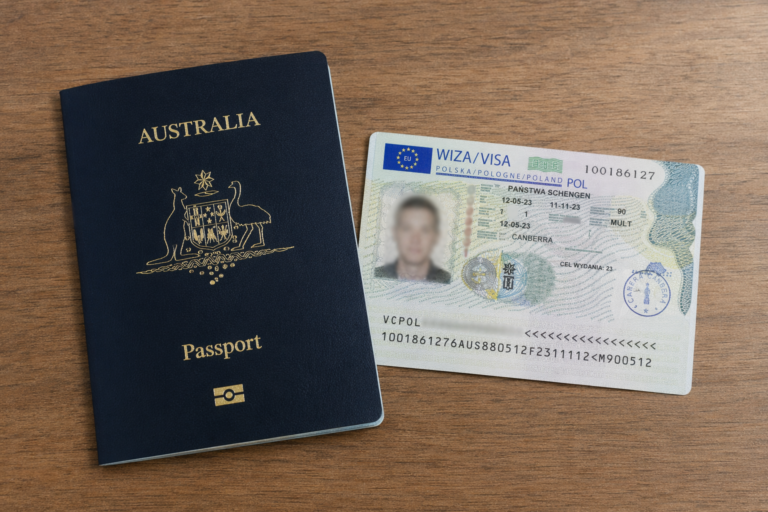
Key Highlights
-
Most Australians do not need a schengen visa to visit the Republic of Poland for a short trip in the schengen area.
-
Your visa application will depend on the time you want to stay, the main destination, and if you need a national visa.
-
The main visa requirements are a valid passport, the completed application form, your health insurance, and travel insurance.
-
When you arrive, border guards might ask you to show why you came, how much money you have, and proof that you will leave after your visit.
-
If you plan to stay for over 90 days, Australians usually need to get a national visa before they go.
-
The rules in Poland are also tied to the schengen area and those of other EU member states.
Introduction
Planning a trip to the Republic of Poland from Australia might look easy at first. But, things can get a bit muddled when the schengen visa rules come up. Should you get a schengen visa, or can you travel there without one? What if you want to stay a bit longer? Here, you will get a clear look at the application process. You will also learn about the main visa types and the papers you might need to show with your forms. This helps you get everything ready before you hop on your flight.
Overview of Visas for Australians Visiting Poland
Australian citizens do not always need to make a visa application to visit Poland. For short trips, Poland uses the same rules that work in other schengen countries. You need to remember that the time you stay counts across all member states, not just Poland.
But getting the right type of visa is important when you want to do more than just a holiday. A schengen visa is for short stays, but for a longer time, there is a different application process. The next parts will show when Australians can go without a visa, and when they need the proper approval.
Visa-Free Entry for Australian Passport Holders
In many cases, if you have an Australian passport, you can use visa-free entry to visit Poland. Poland is part of the schengen area. This means any short stays count for the whole schengen zone, not just one country. So if you are going for tourism or just a brief visit, you usually don’t need an entry visa before you go.
Even with visa-free travel, you still face some entry checks. You must have a valid passport or another accepted travel document. Your passport should be valid for three months after your planned stay. It also needs to be issued in the last ten years and have at least two blank pages.
If your main destination is Poland, it’s important to understand these rules before you leave. Border officials might also ask you to say your travel reason and show more information about your stay. So, Australian citizens don’t often need a visa for a short trip to Poland if it is part of the schengen area. But you still must meet all entry conditions.
Limitations and Conditions of Visa-Free Stay
Visa-free travel in the schengen area has some clear rules. Australians can only stay for up to 90 days in any 180-day period. This is true for time spent in all schengen countries, not just Poland. If you want to stay longer, you will need a schengen visa or another status you get before you travel.
When you enter, the border guards can still check if you meet the visa requirements, even if you do not need a visa sticker. They may ask you for proof of money, the reason for your visit, or documents for where you will stay and when you will leave. With visa-free travel, the validity of the visa does not matter, but you still have to follow the 90 days in 180 rule.
Key things to keep in mind:
-
You must not go over the 90 days in the schengen area.
-
You have to carry the right travel documents and be able to explain your stay if asked.
-
Members of national governments and some officials might have special fingerprint rules in some visa cases. But these do not apply to their family members.
Types of Polish Visas Available to Australians
If you need to get permission before you travel, the type of visa you get usually depends on how long you want to stay. Poland has a schengen visa for short trips and a national visa if you want to be there for longer time. Sometimes, there is also an airport transit option.
For Australians, the main thing to know is this. A schengen visa lets you stay for up to 90 days in the schengen zone. A national visa is for when you want to stay longer in Poland. You send your application form to the Polish mission linked to your place of residence. Next, we will look at each major type of visa.
Tourist Visa (Schengen Type C)
A Tourist Visa, or Schengen Type C, is the normal option for a short trip to Poland or other schengen countries when you are not able to visit without a visa. This visa lets you stay in the schengen area for up to 90 days in every 180-day period.
The validity of the visa can last longer than the days you can actually stay. Sometimes, the visa will last for a few years. But, you still cannot spend more than 90 days in the schengen area during one 180-day period. You have to choose the right reason for your visit in your application form and give all supporting papers that match this purpose.
The required documents often include a travel document like your passport, a photo, travel insurance or medical insurance, and proof of why you are going. You might also have to show where you will stay, that you have enough money, and that you plan to leave. For most people, these are the main required documents for a tourist visa for Poland.
National Visa (Type D) for Long-Term Stays
If you want to stay in Poland for more than 90 days, a national visa is usually the right path. This Type D option is designed for longer visits and can be issued for a period of up to 365 days. If Poland is your main destination, this is often the visa category to review first.
In practice, non-EU citizens apply through the Polish mission serving their place of residence. The required documents depend on the purpose of stay, such as work, study, research, asylum, repatriation, or use of Polish Card privileges. A residence permit may later be needed if you want to remain in Poland beyond the visa period.
|
Visa item |
Details |
|---|---|
|
Visa category |
National visa, Type D |
|
Usual purpose |
Stay in Poland for more than 90 days |
|
Maximum period |
Up to 365 days |
|
Travel rights |
Also allows travel to other Schengen states for up to 90 days in 180 days |
|
Supporting papers |
Purpose-based required documents, passport, insurance, funds, and where relevant papers for family members |
|
Next step after arrival |
Apply for a residence permit if staying beyond the visa period |
Requirements for Applying for a Polish Visa
It’s important to look at the visa requirements closely before you put in your application. The Polish authorities want you to show why you need to travel, how long you plan to stay, and if you have enough money to take care of yourself while you’re there. The required documents can change, depending on why you want to go.
Most times, you will need a valid passport, proof of your financial means, and medical insurance for your time in Poland. If you need an entry visa, make sure your papers fit the right visa category. The next parts will talk about the documents, money, and insurance rules in a simple way.
Essential Documents for Application
The list of required documents can change depending on why you need the visa and which office is working on your case. But there are some items that are needed for almost every Polish visa application. Your personal data will be used in the visa system when your case is looked at.
A basic application starts with the application form, a passport-style photo, and a travel document. Your travel document or valid passport must follow Poland’s rules. It should be valid for enough time and must have two blank pages. You will also be asked to show proof of accommodation and papers that show the reason you want to travel.
Common required documents include:
-
A completed and signed application form
-
A valid passport or travel document with at least two blank pages
-
Proof of accommodation with details about your place of residence
-
Other supporting documents that show the reason for your stay and your plans
Health Insurance and Financial Criteria
Insurance and money checks are a big part of the visa application process for Poland. You have to show you have health insurance for your whole trip, including travel. Many people get travel insurance or travel medical insurance before they arrive. You may not need this if your employer already covers you.
Money is important as well. You need to show you have enough financial means to pay for your time in Poland and your trip back home. The rules say you must have at least PLN 300 if you stay up to four days. If you stay longer, you must have PLN 75 for each day. You also need extra money for your return trip out of Poland, and the amount changes by what country you are from.
You might need to provide:
-
Proof of health insurance or medical insurance for your trip
-
Papers to show you have enough money for each day
-
Extra documents with your visa application form, like proof of job, scholarship, or your studies
Step-by-Step Guide to the Polish Visa Application Process
If you need to do a visa application, start by picking the right type for you. Next, find the Polish office that will handle your case. Most people will do the application process through the nearest Polish embassy or one of the Polish consulates close to where they live.
You need to fill out the visa application and get all papers ready. These papers must meet the visa requirements. You can start the process and book an appointment online, if that is possible at your location. The next parts talk about where to apply in Australia and what happens after you hand your papers in.
Where and How to Submit Your Application in Australia
Australians who want a Polish visa have to start with the online e-konsulat system. This is where you can find the Polish embassy or consular office nearest your place of residence and begin the application form. If you are wondering, “How do I apply for a Polish visa from Australia?” this is the main first step.
After you pick the visa type, you should see the open appointment dates in the system. If there are no times, you will have to check back later. It is also good to look over the website for the right diplomatic mission, because the list of required documents can change depending on where you apply.
Your main steps are:
-
Find the right Polish diplomatic mission that matches your place of residence
-
Fill out the application form online in the e-konsulat system
-
Book a time and take all your required documents to the Polish embassy or consular office
Processing Times and What to Expect
Processing times for a visa application are not set at one number. They can change based on the country and Polish consulates you use. The visa process also may need different papers, depending on why you want to travel.
This means you should apply as soon as you can, especially if Poland is your main destination and you know your dates. Delays can come up if there are not many spots or if they need to do extra checks. You may also have to give your biometric data. For a Schengen visa, that means fingerprints. With a national visa, you have to give a photo.
If your visa application is not accepted, that call is made by the consul. You can appeal the decision to the Minister of Foreign Affairs. To stay up to date, Australians need to check with Polish consulates, the Ministry of Foreign Affairs, and when it is needed, the European Commission’s website.
Conclusion
Getting a visa for Poland when you’re from Australia can feel hard, but knowing what you need to do will make it much more easy. There are some good things about not needing a visa for short visits, but if you want to stay longer, you should know which visa you need to apply for and what is asked of you. Make sure to have all your important papers ready. Don’t forget to check the health insurance rules, and keep an eye on how long it will take to get your visa. If you get ready in the right way, you can just enjoy your trip to Poland. If you have any questions or need help after this, feel free to ask. Have a great trip!
Frequently Asked Questions
Can Australian citizens apply for a Poland visa online?
Australian citizens can start a visa application online by using the e-konsulat system. You can fill in the visa application form and see what appointment options are there. But, the application process will still need you to give your documents in person at the Polish embassy or the consular office that looks after your destination country case.
What is Poland ETIAS and will Australians need it?
The material talks about a special calculator on the European Commission’s website. You can use it for counting your time in the schengen area. But, it does not give full details about the ETIAS rules. For the latest european travel information about the Republic of Poland, go to the European Commission’s website before you start your application process.
How long can Australians stay in Poland without a visa?
Australians can stay in the Schengen zone for up to 90 days in a 180-day stretch without a visa. This covers all the member states, and it is not just for Poland. In this case, the validity of the visa is not used, but personal data can still be checked when you cross the border if needed.