Key Highlights
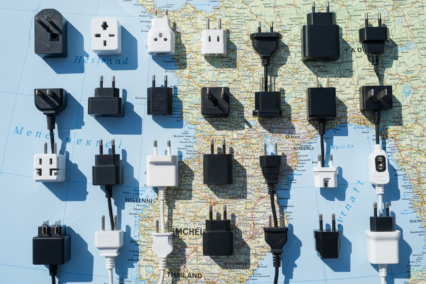
Here’s a quick look at what you need to know about the electrical outlets in the Netherlands:
-
The Netherlands uses both type C and type F plug outlets.
-
The standard voltage in homes is 230V and they use a frequency of 50Hz.
-
If you come from the US, you will need a power plug adapter to get your devices to work with the Dutch sockets.
-
Some single-voltage devices might need a voltage converter.
-
Most new electronics like phones or laptops are dual-voltage, so you will only need an adapter.
-
You can pick up travel adapters online before you go, or find them at airports and shops in the Netherlands.
Introduction
If you want to go to the Netherlands, there is a lot to look forward to. It is smart to plan ahead for your trip. One thing you have to think about is how you will keep your devices charged up. Countries do not always use the same electrical system, so you need to know the right plug types the Netherlands uses. You also need to check the power requirements. This guide will help you learn about the electrical outlets in the Netherlands. You will also find out which travel adapters you need. With this help, you can stay plugged in and ready to go while you enjoy your time in the Netherlands.
Overview of Electrical Outlets in the Netherlands
The electrical outlets in the Netherlands are the same as in many other European countries. The power sockets use two round pins. That may not be what you use at home. Because there is this sameness between the Netherlands and the rest of Europe, it is easier for people to travel from one place to the next.
It is good to know this before you go. The power supply works well. But if you cannot plug something into the sockets, you will not be able to use your devices. Next, let’s talk about where people use these electrical outlets and how these sockets may not be the same as what you see at home.
Common Uses for Power Outlets in Dutch Homes and Hotels
In Dutch homes and hotels, power outlets are a basic part of life, just like where you come from. You will see them around for things like lights, televisions, and kitchen items. When you arrive at your hotel in the Netherlands, you will use these power outlets to charge your phone, laptop, or camera.
For people who are traveling, these outlets for electronic devices are key. They let you keep your things charged so you can get around town, call people you care about, and save great moments. If you do not have what you need for the outlet, your phone can lose power. Then, you may not get to use maps or your data plan.
Most new hotels have people in mind who may need to use more than one outlet. So, a lot of places will put more than one of these in your room. But it is always a good idea to bring an adapter with many ports. This way, you will get to charge many electronic devices at the same time. This helps a lot if you are with family or if you use a lot of gadgets.
How Electrical Outlets Differ Between the Netherlands and the US
If you are traveling from the US, you will see some big changes with electrical outlets in the Netherlands. The most clear difference is the plug types. In the US, plugs (Types A and B) have flat prongs. In the Netherlands, plugs (Types C and F) use round pins. Because of this, your US plug will not fit in a Dutch outlet without a power plug adapter.
There is also a big change in the voltage. The US uses a 110-120V standard. The Netherlands uses a higher voltage of 230V. This change in voltage can be a big problem. If you plug a US-only device into a Dutch outlet, it can break your device for good. Because of that, you need to check for compatibility.
With all these different voltage standards and plug types, you will need a power plug adapter. For some things, you will also need a converter. A converter will help your device work with the higher voltage. So, before you go, check your devices to know what items will need an adapter or a converter for use in the Netherlands.
Standard Plug Types in the Netherlands
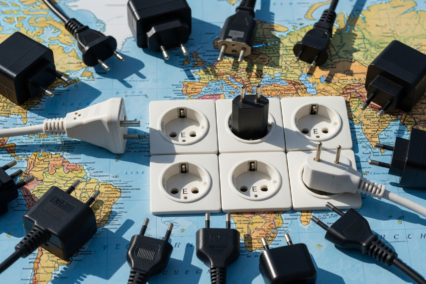
In the Netherlands, you will see two main plug types. These are Type C and Type F. Sometimes, you may find Type E sockets as well. Type C and Type F are the most common ones you will use in the Netherlands and many other European countries.
It is important to know about these plug types so you can use your electronics when you travel. The Type C plug has two simple pins. The Type F plug has a way to keep you safer with extra grounding parts. Next, we will talk more about each plug and what you need to know.
Understanding Plug Type C (Europlug)
The Type C plug is also known as the Europlug. This is one of the most common plug types people use in Europe, and you will see it a lot in the Netherlands. The Type C plug has two round pins that sit side by side. It does not have a ground pin. People use it for electronic devices that do not need a lot of power.
Many small electronic devices have this type c plug. Because of its simple shape, it fits into both Type C and Type F sockets. These sockets are common in the Netherlands. This makes the plug a good choice for people coming from other parts of Europe.
If the plug on your device from your home country is not the same as the Type C plug, you will need to use a power plug adapter. The adapter helps your device fit the socket by changing how the pins line up but does not change the voltage. This lets you use your device safely in type c outlets in Europe.
Understanding Plug Type F (Schuko Plug)
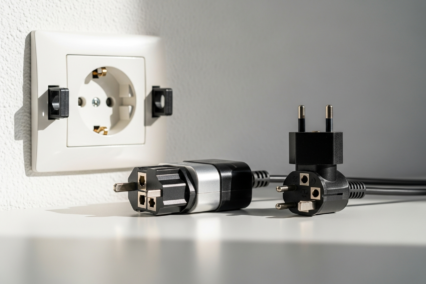
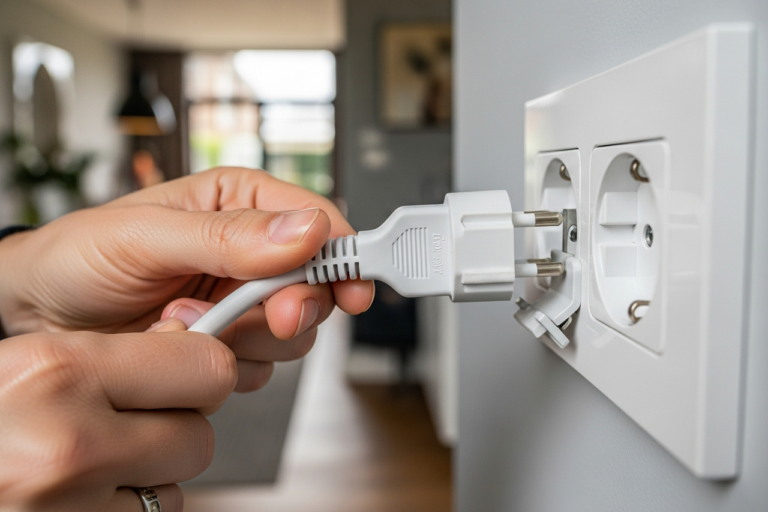
The Type F plug is also called the Schuko plug. You will see it in the Netherlands a lot. You notice it has two round pins, just like the Type C plug. But it also has two grounding clips on the top and bottom sides. These grounding clips make it safe to use. There are special indentations in a Type F socket so these clips fit right in.
People use this plug for things that need more power, or that need grounding. A laptop or kitchen equipment are good examples. The Type F socket is made to be very safe. Right now, it is the most common type of socket you will see in Dutch buildings.
You get very good compatibility with a Type F socket in the Netherlands. This is because it takes both Type F and Type C plugs. If your device has a Europlug (Type C), you can just put it into the Type F socket. It will fit with no problem. That is one reason why using plugs and sockets in the Netherlands and much of Europe is easy for people.
Voltage and Frequency in the Netherlands
The electrical standards in the Netherlands are like what you see in much of Europe. The country uses a standard voltage of 230V and a frequency of 50Hz. This is much higher than the 120V that is used in North America, so it is very important for any traveler to know this.
Knowing about these numbers is important to keep your electronics safe. If you use a device that is made for a different voltage, it can stop working or even get damaged for good. Let’s look at how well your device may work with the power supply in the Netherlands and how the frequency can change what happens with your electronics.
Typical Voltage Levels and Compatibility
The standard voltage in the Netherlands is 230V, which is typical for the power supply across most of Europe. This standardization makes it easier to use devices when traveling between neighboring countries like Germany and France. However, it’s a big jump from the 110-120V standard in the US and Canada.
Compatibility depends entirely on your device. Modern electronics like smartphones and laptops are often “dual-voltage,” meaning they can handle a range of voltages (e.g., 110-240V). If your device is dual-voltage, it will work perfectly with the 230V power supply in the Netherlands. Always check the label on your device or charger.
Here’s a quick comparison of standard voltage levels in different countries:
|
Country |
Standard Voltage |
|---|---|
|
Netherlands |
230V |
|
Germany |
230V |
|
France |
230V |
|
Russia |
220V |
|
United States |
120V |
Frequency of Power Supply and Its Impact on Devices
In the Netherlands, the power supply has a frequency of 50Hz. This is not the same as the 60Hz frequency used in North America. Most modern electronic devices can run with both numbers, so it will not matter for most people.
Most chargers for phones, laptops, and other consumer electronics use a transformer that changes AC to DC power. These are made to work with more than one frequency, usually between 50 and 60Hz. You can look at the input label on your device. If you see “50/60Hz” on it, the device will work with the power supply in the Netherlands.
Some old or simple motorized equipment, such as analog clocks or a few types of audio gear, may be affected. The machines could run either too slow or a little fast because of the change in frequency. But for most travelers, their chargers, laptops, and other electronic devices will work fine with the voltage and 50Hz power supply in the Netherlands. You will not notice any problems with compatibility.
Using US Electronics in the Netherlands
If you plan to go from the US to the Netherlands, you can’t just put your plug into the wall there. The plug shape is different. The voltage is also higher. This means you need to get ready and check if your things will work.
You have to get an adapter first. Sometimes, you need a voltage converter too. If you don’t use the right tool, you could break your electronic devices. It’s smart to check and understand how an adapter and a converter work. You need to find out what your things need for good compatibility and safety in the Netherlands.
Adapter Versus Converter—What’s Needed?
When you travel from your home country to the Netherlands, the power supply and plug types might be different. You might need an adapter, a voltage converter, or both. It is important to know how they are not the same.
-
An adapter is a small tool. You use it to change the shape of your plug, so it can fit in a Dutch outlet. This adapter does not change the voltage.
-
A converter or transformer is something you plug in when you need to change the voltage of the power supply. If you have a US device made for 110V, but the Netherlands has 230V, this is where you use a voltage converter.
So, what should you pack for your trip? Check your device. If you see “INPUT: 110-240V” on it, this means it works with more than one voltage. You only need a travel adapter to fit your plug into a Dutch socket. The voltage will be fine.
If your device only shows “INPUT: 110V,” it will not work with the high voltage in the Netherlands. You need to use a voltage converter to lower the power, plus an adapter for the plug. If you plug in a device like this without a converter, there is a good chance that you will break it.
Are Dual-Voltage Devices Compatible with Dutch Outlets?
Yes, you can use your dual-voltage electronic devices with Dutch outlets if you have the right plug adapter. Many newer chargers for laptops, tablets, and phones are made to handle both 110V and 230V. These electronic devices are meant to work safely in the Netherlands without the need for a voltage converter.
To check for compatibility, look for the fine print on your charger or device. It should say something like “INPUT: 100-240V, 50/60Hz.” If the text is there, your device will be fine to use in the Netherlands with just a simple adapter to match the Dutch plug.
This helps a lot when you travel because you will not need to bring a heavy voltage converter. Still, it’s a good idea to be careful with some high-wattage items like hair dryers. Many hair dryers only use one voltage, so they may require a converter to work in the Netherlands.
Where to Buy Power Adapters in the US and Netherlands
Finding a power adapter is a simple step when you get ready for your trip. These travel essentials can be found easily in the US and in the Netherlands. You can buy a power adapter before you leave, or you can get one when you land.
When you buy it ahead of time, you know you will have your power adapter as soon as you get there. If you wait, you can always buy one in the Netherlands too, so it is good for backup. Below, we will talk about the best places to get a power adapter, no matter if you are still at home or you are already in the Netherlands.
Purchasing Travel Adapters Before Your Trip
Buying a power adapter before you leave your home country is a good idea. This helps you stay calm and makes sure you can charge your devices right when you get to your hotel. You can also take time to look for the right adapter for your needs.
There are many places where you can get an adapter before your trip. Some top choices are:
-
Online retailers: You can look on sites like Amazon to find many kinds of adapters. Some work for just one country, while others are universal adapters. You can check reviews and see if they’re the right fit for your devices.
-
Electronics stores: Most big shops that sell electronics will have a section for travel items like adapters.
-
Luggage stores: Stores that sell travel bags and gear often keep these adapters too.
If you get your adapter early, you may pay less and find more styles to pick from. A universal adapter is also a good choice. It will help you on other trips to different countries in the future.
Finding Adapters Upon Arrival in the Netherlands
If you forgot to pack an adapter or now need an extra one, do not worry. You can get these travel essentials after you get to the Netherlands. Most major entry spots and city centers in the Netherlands have what travelers need.
You can look for a travel adapter at these places in the Netherlands:
-
Airports: Amsterdam Schiphol Airport and other main airports have shops and stands that sell travel adapters.
-
Convenience stores and supermarkets: Big store chains in cities like Amsterdam often have basic travel gear such as adapters.
-
Electronics stores: Stores that sell electronics and cell phones usually sell travel adapters too.
Some hotels might have a few adapters at the front desk to loan guests. But it is not good to count on this. It is best to bring your own travel adapters. You will not find free adapters in cafes, so it is important to have your own for your trip.
Power Adapters for Specific Devices
A basic power adapter is a must-have travel essential if you are going to the Netherlands. But you should know that not every device is the same. For example, a phone charger does not need as much power as a strong hair dryer.
You need to look at what your devices need before you pack them. Some things use less power, like chargers for phones, tablets, and laptops. Other things, like hair dryers, need more power. Think about this when you get your adapter. It will help you decide if a simple adapter is enough. If not, you may need to take more steps to stay safe.
Charging Phones, Tablets, and Laptops Safely
Yes, you will need power adapters to charge your cell phones, tablets, and laptops in the Netherlands if you are coming from a place where the plug is not the same, like the US. Most chargers for these things have plugs that do not fit in the Dutch power outlets without an adapter.
The good news is, most chargers for modern laptops, tablets, and cell phones are made to work with different types of electricity around the world. This means the chargers have voltage compatibility for many countries. If you look at the charger brick, you will often see in small print something like “INPUT: 100-240V.” This shows they work with more than one type of voltage.
Since these items are dual-voltage, you do not need to buy a voltage converter. You just need to get a simple plug adapter for your charger to fit into the Dutch power outlets. This makes charging your stuff in the Netherlands quick and easy.
Using Hair Dryers and High-Wattage Devices Abroad
Using high-wattage devices like hair dryers, straighteners, or curling irons when you travel can be tricky. Most phone chargers work fine because they often handle more than one voltage. But hair dryers and some other appliances usually only work with the power supply in the country where you got them. For example, the US uses a voltage of 120V.
If you plug a 120V hair dryer into a 230V outlet in the Netherlands, even if you have an adapter, you can run into trouble. The device might get too hot, stop working, or even catch fire. To use it safely, you would need a voltage converter that can handle its power. These converters are large, cost a lot, and not easy to carry.
The best way to avoid problems is to buy a travel hair dryer that works with both voltages before you go. Or you can just use the hair dryer that your hotel provides in the Netherlands. Most hotels already offer hair dryers in the room. This saves you trouble and keeps you safe.
Conclusion
To sum up, knowing about electrical outlets in the Netherlands is important for a good trip. It helps to be aware of the different plug types and the voltage in this country. If you get familiar with these things, you can avoid problems with your devices. Think about what plugs your devices need, and plan ahead. This can mean buying adapters before you leave or picking them up once you get there. With a bit of planning, it will be easy to keep your stuff charged and working in the Netherlands. If you have any questions or need help, please ask. Have a great trip!
Frequently Asked Questions
Are Type F plugs compatible with all sockets in the Netherlands?
Yes, the Type F plug works with the usual sockets in the Netherlands. The Type F socket is the main one you will see there. It can take both a Type F plug and also a Type C plug, but the Type C one does not have a ground. This makes it simple to use your plug and appliances in the Netherlands, since all you have to do is plug them in.
Do hotels in Amsterdam or major cities provide power adapters?
Some hotels in Amsterdam and other big Dutch cities might have power adapters you can borrow from the front desk, but this can’t be promised. It’s a good idea to pack your own travel essentials like an adapter, so you can charge your devices without any problems.
Is it safe to use universal travel adapters in Dutch outlets?
Yes, it is usually safe to use a universal adapter in Dutch power outlets. Just make sure you buy a good and certified product. A quality universal adapter can give your devices a safe connection. To stay safe, check that it fits well and is not loose in the outlet.