Key Highlights
Are you going to Hungary? This is what you need to know about the electrical outlets there.
-
Hungary uses plug types C and F for the outlets in the country.
-
The standard voltage in Hungary is 230V, and the frequency is 50Hz.
-
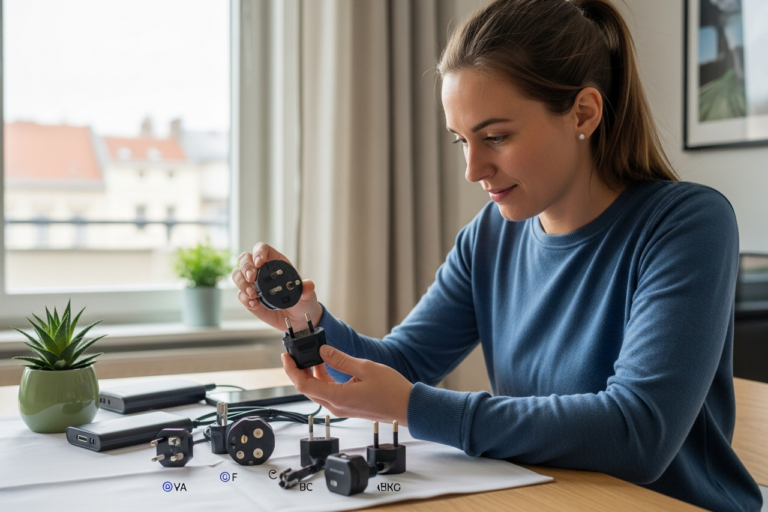
If you are not from a place that uses type C or F, you will need to get an adapter for your plug.
-
Many new electronics, like laptops and phones, have a dual voltage power supply. This means you do not need a voltage converter for most of them.
-
Always look at your device label to check the voltage compatibility before you put it into the electrical outlets.
Introduction
Welcome to your important guide for traveling to Hungary!
Before you fly off to enjoy the pretty streets of Budapest, it helps to think about simple things. One important thing is to know how the plug works and how to keep your stuff charged. Each country has its own plug types and its own way of using voltage. Hungary does, too. In this guide, you will get info about the plug types you will find in Hungary. You will know which plug to use and what voltage to expect. This way, you can keep your phone, camera, and all your other big or small gadgets powered up the whole time you are there. You will not have any problems during your trip.
Understanding Electrical Outlets in Hungary
When you get to Hungary, you will see that the country uses two kinds of power outlets. These are the type C and type F sockets, and you find them in many places in Europe. Knowing this is important because it will help you figure out if your electronic devices can be used there.
It is important to know the plug types before you go. If your plug does not match the socket in Hungary, it will not fit. Here, we’ll talk more about the type c and type f sockets and what kind of international plugs will work at Hungary’s power outlets. This can help you get your devices ready, so you have no problems with compatibility while traveling.
Overview of Plug Types Used in Hungary
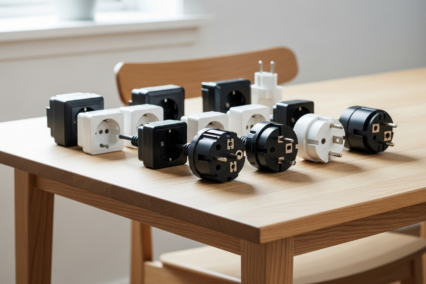
Hungary uses two main plug types for its electrical outlets: type C and type F. These are the only plug types you will see in power sockets across Hungary, so you should bring the right ones with you.
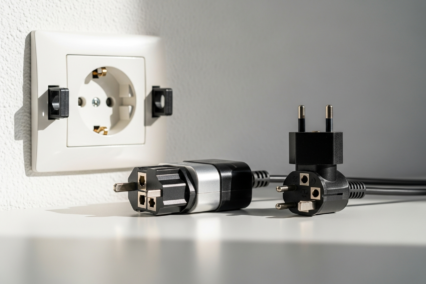
The type C plug is easy to spot. It has two round pins that go in side by side. You will find this plug used in many places in Europe and other parts of the world. It does not have a third pin for grounding.
The type F plug is much like the type C, as it also has two round pins. But type F comes with two clips on the top and bottom of the plug for extra safety. These clips help with grounding. You may hear people call this the “Schuko” plug. It fits well into both type C and type F power sockets in Hungary.
Which International Plugs Fit Hungarian Sockets?
If you want to know if your plugs will work in Hungary, the shape of your power plug is what matters most. In Hungary, people use Type C and Type F sockets. So, only plug types made for these sockets will go right in. You will not need an adapter with these plugs.
A Type C plug will go into both Type C and Type F sockets without a problem. A Type F plug can also be used in both kinds of sockets. When you use a Type F plug with a Type F socket, you get a grounded connection, which is safer. If you are coming from a country in Europe that uses these plug types, things are easy and you may not need to bring an adapter with you.
But, if you are coming from another place, your plugs may not be compatible with sockets in Hungary. Here are some plug types that will not fit into Hungarian sockets:
-
Type A and B plugs. People use these in the USA, Canada, and Japan.
-
Type G plugs. People in the UK and Ireland use these three-pronged plugs.
-
Type I plugs. These are common in Australia and China.
-
Type D and M plugs. People in India use these.
If what you have does not have a Type C or Type F plug, you will need to get an adapter before you can use your device in Hungary. Make sure to check what plug types you have and plan ahead before you go.
Voltage and Frequency Standards in Hungary
Besides thinking about the shape of the plug, you need to know about the electrical current too. Hungary uses a standard voltage of 230V and a frequency of 50Hz. This is normal in Europe. But, it is not the same as what you get in North America and some other places in the world.
This change in voltage and how often the current goes back and forth is very important. If you plug in a device made for less voltage into a 230V outlet, it can break your device and it may stop working for good. We will show you how you can check your devices and what these voltage differences in Hungary and Europe mean for you.
Hungarian Outlet Voltage and Frequency Explained
The electricity that flows from Hungarian outlets has specific characteristics you need to know. The standard voltage is 230 Volts, and the frequency is 50 Hertz. This is the uniform standard across the entire country for every power supply.
This voltage is significantly higher than the 110-120V standard found in countries like the United States and Canada. The frequency, measured in Hertz (Hz), refers to how many times the alternating current changes direction per second. While most modern electronics can handle both 50Hz and 60Hz, it’s the voltage difference that usually requires more attention. You typically won’t need a transformer for frequency differences unless you have very specialized equipment.
Here is a quick summary of Hungary’s electrical standards:
|
Attribute |
Value |
|---|---|
|
Voltage |
230V |
|
Frequency |
50Hz |
Always check the label on your appliance’s power supply to see if it’s compatible with these values.
How Voltage Differences Affect Your Devices
It’s important to know how a different voltage can affect your electronics, especially when you travel. Every device is made to work with its own voltage range. If you plug a single-voltage device into an outlet with much higher voltage, you might overload it. This can break your device. For example, a device that is made for only 110V, which is common in the US, will get damaged if you plug it into a 230V outlet in Hungary.
But the good news is that many modern devices are ready for travel. These are called dual-voltage devices. You can check this on your device. Look for something like ‘INPUT: 100-240V, 50/60 Hz’ on the label. This shows you the device can handle many types of voltage and works with different power systems around the world.
You might be wondering if American or UK plugs can fit in a Hungarian outlet. The answer is no. The plugs have different shapes, so you need a plug adapter. For voltage, if you have a dual-voltage device, you just need the adapter. If you have a single-voltage appliance from the US, you need a voltage converter as well as the adapter, to use it safely.
Do You Need a Travel Adapter or Converter for Hungary?
So, what is the final answer about taking extra gear? Most people who travel to Hungary will need a travel adapter. The adapter is simple to use. It lets the plug from your home country fit in a socket in Hungary. But, the adapter only changes the plug shape—it does not change the voltage.
If you need a voltage converter, that will depend on your electronic devices. The converter is not the same as an adapter. The converter changes the voltage to fit what your appliance needs. The adapter does not do that. We want to help you know if you just need an adapter, a converter, or both.
Identifying Power Adapter Needs by Country (USA, UK, etc.)
Yes, if you are coming from most countries that are not in continental Europe, you will need a travel adapter for Hungary. The plug types in the world are not the same, so if you do not bring an adapter, you cannot connect your devices.
For example, the USA and UK have different plug shapes compared to the Type C and F plug types you find in Hungary. An American plug has flat prongs. The UK plug has three big flat prongs. None of these plugs fit into a plug in Hungary.
Here’s a quick rundown for adapter needs by home country:
-
From the USA/Canada: You will need an adapter for the Type C or Type F plug types.
-
From the UK/Ireland: You will need an adapter.
-
From Australia/New Zealand: You will need an adapter.
-
From India: You will need an adapter.
-
From most other countries in Europe (like Germany, France, or Russia): You probably will not need an adapter. These countries use plug types that are the same as the ones in Hungary.
When Is a Voltage Converter Required for Your Electronics?
A voltage converter, sometimes called a transformer, is needed for some electronic devices. You will need this if your device is “single voltage” and does not work with Hungary’s 230V standard. The need for a converter is more common with old or simple appliances.
To know if you need a voltage converter, take a look at the power supply label on your device. When it only has one voltage, such as “INPUT: 110V,” you must not plug it into a 230V outlet without using a voltage converter. Doing this can be dangerous and will most likely break your device.
Good news is, most new chargers for laptops, phones, and cameras are made for different voltage (like ‘INPUT: 100-240V’). So, they can use Hungary’s voltage right away. For these things, you do not need a voltage converter. Laptops are almost always made this way, so a power adapter is usually all you need for them.
Safe Charging and Powering Common Devices in Hungary
Now that you know about plugs and voltage, let’s go over how to safely charge your cell phones, laptops, and tablets. These are all important gadgets for travel, and you want to keep them working the right way. The good thing is that charging cell phones, laptops, and tablets in Hungary is easy for most people.
But there is a big difference between plugging in small chargers and plugging in bigger electrical appliances like hair dryers. When you use a hair dryer, you need to be more careful. In this guide, you will find some tips on how to use chargers and hair dryers safely in Hungary, so you can stay powered up during your trip.
Using Phones, Laptops, and Chargers in Hungary
Using your own phones, laptops, or chargers in Hungary is easy for most people. Most new devices are built to work in other countries. They can handle different kinds of voltage on their own.
This means your charger should work with Hungary’s 230V outlets without any issue. To check, look on your charger. Find the words that say something like “INPUT: 100-240V.” If you see that, it is good to go and there’s no need for a voltage converter for your devices.
So, when you are getting ready for your trip, your list stays short. You just need to bring the right plug adapter.
-
Phones: Almost all come with dual-voltage chargers.
-
Laptops: Most laptop chargers are made to work with both voltages.
-
Tablets: Tablet chargers also work well for travel.
-
Camera Chargers: Most of these also handle both voltages.
Make sure to bring a plug type C or type F adapter to fit the wall outlets in Hungary. With that, your electronics will work fine and you won’t need to worry about using a separate converter.
Can You Use High-Powered Devices and Appliances?
When you use high-powered devices like hair dryers or curling irons, you need to be very careful. These appliances use a lot of electricity. Many older or cheaper types have just one voltage setting. So, if you take a 110V hair dryer from the US and plug it into a 230V outlet in Hungary, you could damage the dryer or cause an accident.
If your appliance does not work with both voltages, you have to get a heavy-duty voltage converter made for appliances with high wattage. A simple travel adapter or plug adapter is not enough. It can even start a fire if you use it with a high-powered device that does not match the voltage. You should never use just a plug adapter for these devices if they are not for 230V.
Honestly, the easier and safer choice is to leave your hair dryer or curling iron at home. Many hotels give you a hair dryer to use. If you really want to bring your own, buy a travel-friendly hair dryer or curling iron that works with both voltages before your trip. this way, you will not need to carry a big and costly voltage converter.
Conclusion
To sum up, it is important to know about electrical outlets in Hungary. This helps you use your devices safely and in the best way. You should learn about the types of plugs, the voltage, and if you need an adapter or converter. This information can help you avoid problems and extra costs. When you know what to expect, you can charge and use your devices with no trouble during your trip. Always check the compatibility of your devices and chargers in Hungary, especially the ones that use a lot of power. Have a great trip, and I hope your devices stay working well! If you want more tips or have questions about traveling with electronics, you can always ask.
Frequently Asked Questions
Do hotels in Hungary provide universal power outlets or adapters?
Some fancy hotels might give you a universal adapter at the front desk. Some rooms also may have a universal power outlet. But you can not always count on that. It is a good idea to bring your own adapter. This way, you make sure you can charge your stuff when you need to.
Where can I purchase a Hungary-compatible travel adapter?
You can get the right adapter for your trip to Hungary from Amazon. This is an easy way to make sure you have what you need before you go. There are also adapters at big airports or in electronics stores inside Hungary. But most people find that buying one ahead of time on Amazon is cheaper and simpler.
Is it safe to use a plug adapter for hair dryers or curling irons in Hungary?
You should only use a plug adapter with hair dryers or curling irons if the appliance is dual-voltage and can handle 230V. If your device is single-voltage, like 110V, you will need to use a proper voltage converter. Just using an adapter is not enough and can be a fire risk. You need to be careful with high-powered items.