Key Highlights
-
Thailand has many plug types. These include type A, type B, type C, type F, and the special type O. So, you need to have a universal travel adapter for good compatibility.
-
The standard voltage in Thailand is 220V. The frequency is 50Hz. This voltage is higher than what you get in the United States.
-
Most new electronics, like phones and laptops, can handle dual voltage. But, for devices that use only one voltage, you may still need a voltage converter.
-
You will see outlets that are grounded and some that are not. It’s good to know the difference. This is key to safe use, especially with a type B plug that comes with a grounding pin.
-
Always look at what your device can use before you plug it in. This will help keep your device safe from harm.
-
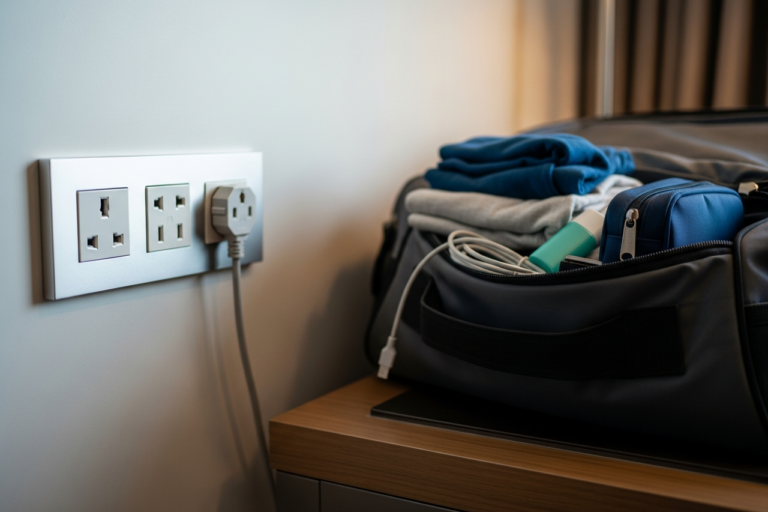
A travel adapter will help all your power plugs fit the right way. It is the best thing to bring for a smooth trip.
Introduction
Are you ready for a great trip to Thailand? The lively streets in Bangkok and calm island beaches are waiting for you. There is so much for you to see and do. Before you pack, you need to think about how you will keep your devices charged. Knowing about the local power supply is important. This guide will show you what you should know about plug types and electrical outlets in Thailand. This way, you can stay connected and not worry about losing power or missing any moments.
Understanding Electrical Outlet Types in Thailand
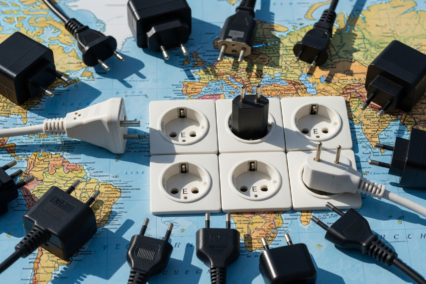
When you go to Thailand, you may see that the wall sockets are not the same as what you have at home. Thailand uses a few different power plugs. This mix can help travelers. But, it might also make things a bit hard to figure out. You will find many plug types and socket styles in the country.
Because of this, some of your own plugs may work there, but some may not fit at all. If you learn about the plug types you will see—including the Type O plug—it will be easier to know what you need for your trip. This will help you make sure you have compatibility for all your items. Let’s take a look at what plug types and socket designs you should expect to find in Thailand.
Overview of Plug Types Used in Thailand
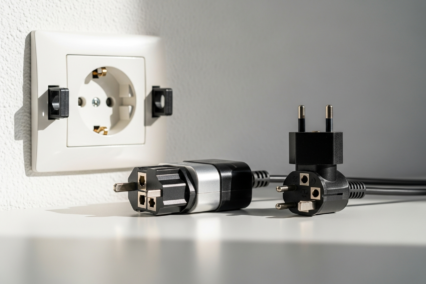
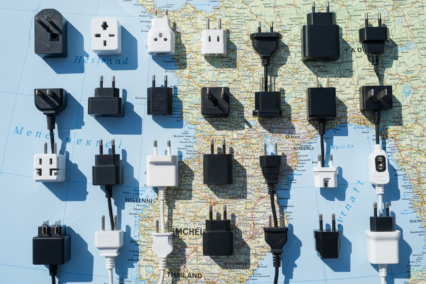
Thailand accommodates a surprising range of plug types, which is good news for international travelers. The most common ones you will encounter are Types A, B, C, F, and O. This means you might see outlets that accept the flat parallel pins of Type A plugs (common in North America) or the two round pins of a Type C plug (common in Europe).
However, not every outlet will accept every plug type. For example, Type B plugs have an extra grounding pin, and Type F plugs have grounding clips. You will also find the Type O plug, which is exclusive to Thailand. Having a universal adapter is the easiest way to ensure you can always connect.
Here is a quick breakdown of the plug types you’ll see:
|
Plug Type |
Description |
|---|---|
|
Type A |
Two flat parallel pins, common in the US. |
|
Type B |
Two flat parallel pins and a round grounding pin. |
|
Type C |
Two round pins, widely used for small devices. |
|
Type F |
Two round pins with grounding clips on the side. |
|
Type O |
Two round pins and a grounding pin, unique to Thailand. |
Commonly Found Thai Socket Designs
The most interesting thing about Thai power outlets is that many are made to be hybrid. In many places, you will see one socket that lets you use different plug types. This helps a lot, because your device’s plug is more likely to fit, and you might not need an adapter. For example, a lot of sockets can take both the flat pins of Type A and the round pins of Type C.
But, one key thing you will see is some sockets have a hole for a grounding pin and some do not. Some outlets are for grounded plugs, like Type B or Type O, but older buildings or places outside the city may only have outlets without a grounding pin. This is important when you use certain appliances because it is about safety.
Here are the common socket features you could find:
-
Hybrid sockets that work with both flat pins and round pins.
-
Outlets for the Thai-only Type O plug.
-
Sockets with a hole for a grounding pin, for Type B plugs.
-
Older sockets with just two prongs and no ground.
-
Sockets made for Type F plugs, with clips for a grounding pin.
Compatibility of Appliances and Devices
So, you might know about power plugs, but will your devices work in Thailand? Most people worry about using things like phones, cameras, and laptops when they travel. The good news is, many of these electrical appliances are made for use in other countries too. Still, it’s smart to check first. Compatibility depends on both the shape of the plug and the voltage in the country.
If your plug does not fit, using a simple adapter can fix that. This will help your device connect to the wall outlet. But, remember, an adapter will not change the voltage. This is a big deal, especially for devices that use a lot of power. Next, let’s look at how to find out what you need for your gear.
Thai Outlets vs. International Plug Types
If you come from the United States, your devices will most likely use a Type A or Type B plug. In Thailand, a lot of outlets can take Type A plugs, but not all of them do. So, compatibility is not promised everywhere. With a Type B plug, you may see that some Thai sockets do not have a hole for the third grounding pin.
If you travel from Europe, you will know more about the Type C and Type F plugs. The Type C plug, which has two pins, will work in many Thai sockets. For devices with a Type F plug, you will need to find a socket that is big enough and can hold its grounding clips. If not, you will need a travel adapter. Plugs from the UK use the Type G design. These are different from the rest and will always need an adapter for any Thai socket.
Because there are many kinds of plugs and sockets, the best idea is to use a universal travel adapter. This way, it does not matter if you have a Type B, Type C, or Type F plug, or what socket you find. The adapter will keep you safe. It also helps you use your devices with ease.
Grounded and Ungrounded Outlets Explained
When you look at a plug or socket, you will see that some have three pins or holes, and some have only two. This is because of grounding. A grounded socket will give your appliance extra safety. It does this by moving extra electric current into the ground. This helps stop damage to your appliance and keeps you from getting an electric shock.
In Thailand, you can find both kinds of outlets. The new hotels or new buildings mostly have grounded sockets, which can fit plugs with a grounding pin, such as Type B or Type O. Older buildings or places that are far away often just have two-hole, ungrounded outlets.
Here are some things you should know:
-
Grounded Outlets: These have a third hole for the grounding pin. They are good for giving more safety to things that use more power or can get damaged easily.
-
Ungrounded Outlets: These sockets have only two slots. You find these often used for small items like your phone.
-
Safety: It is safer to use a grounded socket for anything with a grounded plug, like laptops.
-
Adapters: You can put a two-pin plug into a grounded outlet. Some grounded plugs may need an adapter to fit into a two-slot, ungrounded socket.
Voltage and Frequency in Thailand
The electricity in Thailand is not the same as in some other countries. The standard voltage and how often it moves in the power supply can change if your devices work or not. In Thailand, the voltage is higher than in North America.
This is very important for anyone who travels. If you use a device made for lower voltage, it can get too hot or stop working. Let’s look at what the standard voltage and power supply frequency in Thailand is and see how to check if your devices are okay to use.
Standard Mains Voltage and Frequency
The standard voltage for the power supply in Thailand is 220 volts, and the frequency is 50 hertz. This is the same standard that you will find in much of Europe and Asia. But in the United States and many places in North America, the standard voltage is 110 to 120 volts, and the frequency is 60 hertz.
This is important to know. If you plug a device made only for 120 volts into a 220 volt outlet, you can ruin it for good. The change in frequency (from 50Hz to 60Hz) can also cause some problems, mostly for devices that have motors. It is usually not a big issue for new electronics.
So, it is vital to check what voltage your device can handle before you plug it in. The voltage and amps will decide how much power your device uses. If you use the wrong power supply, you can do serious harm to your electronics.
Checking Your Device’s Compatibility for Thai Electricity
How can you know if your appliance is safe to use in Thailand? The answer is usually on the charger or power adapter of the device. Look for a label that says “INPUT.” This will show the voltage and frequency. Most modern items like laptops, tablets, and phone chargers are dual voltage.
If it is a dual voltage device, you will see something like “100-240V” and “50/60Hz.” This means you can use it in both America and Thailand without worry. If your item is dual voltage, you just need a plug adapter so it fits in the socket. Some things, like hair dryers, may not be dual voltage. These high-power appliances are single voltage and you will see “110V” or “120V” only.
If your appliance is single voltage, you must use a voltage converter or transformer. Here is what to look for:
-
Dual Voltage: The label says “INPUT: 100-240V.” These appliances are safe to use with just a plug adapter.
-
Single Voltage: The label says “INPUT: 120V.” You will need a voltage converter for these appliances.
-
Voltage Converter: This changes the 220V from the wall to 120V, so your single voltage device does not get damaged.
-
Travel-Sized Appliances: It is a good idea to buy travel versions of things like hair dryers. These are often made to be dual voltage and work well in Thailand
Conclusion
When you go to Thailand, it’s important to know about the voltage and outlets in the country. You need the right travel adapter to use your devices. Check your devices to see if they are compatible with Thailand’s standards. This step helps your electronics work well and makes your trip easier. If you plan ahead, you will not face any problems with your devices. Take your travel adapter, pack your bags, and get ready for the beautiful places in Thailand! If you are not sure about what you need for your devices, you can ask someone for help. Enjoy your travels!
Frequently Asked Questions
Do I need a travel adapter or converter for my electronics in Thailand?
Yes, you will need a travel adapter when you go to Thailand because the country uses different plug types. You do not need a voltage converter if your device is dual voltage, like “100-240V”. Look at the label on your device to check its compatibility. If your device is single voltage, such as “110-120V”, you will need a voltage converter, or you might damage it. Make sure to use the right adapter and check what plug types Thailand has before your trip.
Is it safe to use European or American appliances in Thailand?
It is safe if you make sure the device works with the power supply. Most electronics from Europe and the United States are dual voltage. You only need a plug adapter for these. If an appliance is not dual voltage, you need a voltage converter. This makes the power match the Thai supply. Always check compatibility before you use a plug or adapter.
Where can I buy a travel adapter for Thailand before my trip?
You can get a travel adapter before your trip from places like Amazon. You will also find it at major airports, or in stores that sell travel and electronics items. If you buy the adapter before your flight, you will be ready to use it as soon as you get to Thailand.