Key Highlights
Planning a trip to Switzerland? Here is what you need to know to have a smooth experience when it comes to plug types and charging your devices:
-
Switzerland uses Type J outlets. This is not the same as what you will find in most European countries.
-
The standard voltage here is 230V and the frequency is 50Hz. That is just like in the rest of Europe.
-
You will need a Type J travel adapter. People coming from the US, UK, and some European countries will need one to plug in devices.
-
Please check if your devices have dual voltage. If they do not, you will need a voltage converter for things that use a lot of power.
-
Knowing about plug types and voltage standards in Switzerland will help you keep your gadgets running and make your trip easier.
Introduction
Traveling can be a great adventure, but it is easy to forget about the type of electric outlet you will find in a new place. When you go to Switzerland, you will see that the country uses some plug types that can be different from other places. They use outlets with Type J plugs, and their voltage standards are not the same as in some other countries. You need to know about these things to make sure you have a smooth experience and no trouble charging your devices. This guide will show you what you need to know about Swiss outlets, so you can keep all your things charged up and be ready for your trip.
Overview of Electrical Outlets in Switzerland
When you get to Switzerland, you will see that the country has its own way when it comes to electric plugs. They only use type J sockets. This type has a three-pin style that looks different from many others. So, if you come from another place, your plug may not fit in Swiss sockets unless you have an adapter.
It’s a good idea to check what plug types your devices have before you travel. It also helps to know about the voltage standards and the shape of type J sockets in Switzerland. If you do this, you will be ready. What you have will work, and you can keep your phone, camera, and other items charged without a problem. Now, let’s look at what type J and other plug types you might see and what voltage to expect there.
Common Plug Types Used in Switzerland (Type J and Type C)
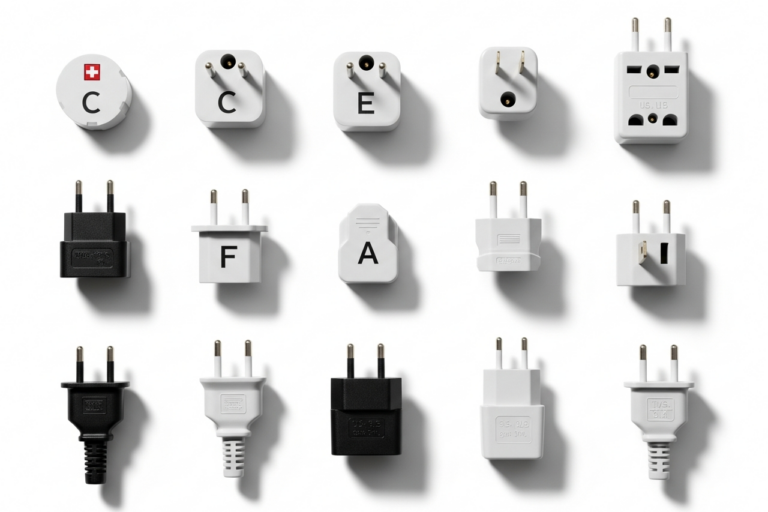
In Switzerland, the main specific plug type you will see is the Type J plug. It has three round pins. One of these pins helps with grounding. Even though it may look like plugs from some other places, its shape is not the same. Many people need a Type J adapter to use their power plugs in Switzerland.
It’s good to know that Type J sockets are the standard type. But, these sockets also let you use Type C plugs. The Type C plug is a common two-pin “Europlug” you see a lot in Europe. Devices that do not need grounding often come with this plug type.
Here’s a quick summary of the plug types:
-
Type J: The main Swiss plug. It has three round pins and is grounded.
-
Type C: The ungrounded two-pin Europlug. It also fits in Type J sockets.
-
Your device needs a Type J or Type C plug type to go into Type J sockets in Switzerland without using any type j adapter.
These different types of power plugs help make sure your device can get the power it needs in the country.
Swiss Outlet Voltage and Frequency Standards
Beyond the plug shape, you also need to consider the voltage standards in Switzerland. The country operates on a standard voltage of 230V and a frequency of 50Hz. This is consistent with most of Europe, which is good news for many travelers.
However, it is crucial to check the voltage specifications of your devices. Most modern electronics like laptops and smartphones are “dual voltage,” meaning they can handle a range from 100V to 240V. For these devices, you won’t need a voltage converter. If your device only supports 110V-120V (common in North America), you will need a voltage converter to use it safely and avoid damage. Always confirm your device’s voltage requirements.
Here is a simple breakdown of the Swiss electrical standards:
|
Standard |
Specification |
|---|---|
|
Voltage |
230V |
|
Frequency |
50Hz |
Comparing Swiss Electrical Outlets with European Countries
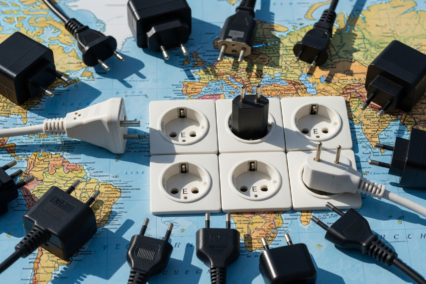
Switzerland sits in the middle of Europe. But the country has a few key differences in its electrical system compared to other European countries. Many countries in Europe have picked the same plug for everyone to use. But swiss sockets are different. Switzerland uses its own plug, called the Type J plug. This sets the place apart from most european countries.
Even though the plug looks different, the country uses similar electrical standards. The voltage and frequency for electric devices in Switzerland are like the ones in most european countries. So your european devices will work in Switzerland. The main thing you need to handle is the plug itself. The plug is not the same as most places. Now, let’s look at these differences to know more about them.
Differences Between Swiss and Other European Plugs
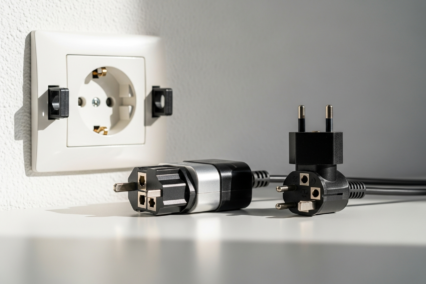
The main difference between Swiss plugs and the ones in other European countries is how the pins are shaped. Many devices in European countries use the two-pin type c plug. These work with swiss sockets, but lots of other common plugs from european countries do not.
For example, the type f plug, which people call “Schuko,” can be found in Germany and Austria. The type e, which is the french plug, is used a lot in France. These do not fit into a type j swiss socket, because the shape and the pins just do not match. The same thing happens with the type g plug, which is used in the United Kingdom. That one will not work in a swiss socket either.
Here are the key differences you need to know:
-
Type J (Swiss): Has three round pins. One is the ground pin in the middle.
-
Type F (Schuko): Has two round pins and has two grounding clips on the sides. It will not fit in swiss sockets.
-
Type E (French): Has two round pins. It has a spot for a grounding pin, but this plug is also not right for swiss sockets.
Compatibility of European Chargers and Devices
When you travel from other European countries to Switzerland, you might wonder if your power plugs will work. Switzerland uses the same voltage and frequency (230V / 50Hz) as the rest of Europe. This means that your devices will not have problems with the power. But the plugs can be a problem.
If your device has a two-pin Type C plug, you are in luck. You can use it right away in a Swiss Type J socket. On the other hand, chargers from the UK have a Type G plug. This one is different, and you will need an adapter. Also, chargers with Type E or Type F plugs, which you find in places like France and Germany, will not fit either.
So, it’s a good idea to check the types of power plugs you are bringing before your trip. Even though the electrical standards are similar, you will probably need a Type J adapter for any device from Europe that has a grounding pin or any plug that is not a simple two-pin Type C.
Adapters and Converters for U.S. Travelers
For people coming from the United States, you need to do some proper preparation before your trip. The devices from the U.S. use a different voltage, which is 110V-120V, and they need Type A or Type B plugs. These are not the same as what you find in Switzerland, so they will not work there by themselves. You have to bring the necessary adapters, and maybe a voltage converter as well.
You will for sure need a Type J travel adapter, since that is the one that lets your U.S. plugs fit. For things like phones or laptops, if they are dual voltage, a travel adapter is all you need. But if you have single-voltage things, like some hair dryers or curling irons, you also need to use a voltage converter. This will help keep them from getting ruined. Now, let’s talk about when you need each one.
When You Need an Adapter or Converter in Switzerland
Checking if you need a travel adapter or a voltage converter should be part of your travel itinerary. The first thing to do is easy. If the plug on your device is not a Type J with three round pins or a Type C with two round pins, you will need a travel adapter. The Type J adapter fits swiss sockets, so you can plug in things from other places as well.
Next, you need to see if your device matches the voltage in Switzerland. Look at the label on your device. If it shows “Input: 100-240V,” your device is dual voltage. You will just need an adapter. If the label says only something like 110V or 120V, you will also need a voltage converter. This lets you use your device safely because Swiss outlets run at 230V. Without matching the voltage, your device could be ruined.
Here’s when you need them:
-
Adapter: Needed if your plug is not type j or type c.
-
Converter: Needed for devices that do not support dual voltage and do not meet the 230V standard.
-
Both: Needed for most U.S. devices that are not dual voltage.
Safe Use of Universal and Dual Voltage Devices
Using your devices the right way when you go abroad helps you have a smooth experience. Dual voltage devices are good for travel. They change themselves to different voltages. This means you can use them with Swiss outlets. You just need a plug adapter for these devices. You do not need a big voltage converter. This keeps your packing light and simple.
A universal adapter is also a good tool to have. It has many plug types in one small box. But, always get one from reputable brands. Cheaper ones may not fit in the socket well. This can be unsafe. A high-quality universal adapter will give you a steady connection. Most of the time, it also comes with safety features, like surge protection.
Check that your universal adapter works with the grounded type J outlets in Switzerland. Some universal adapters only work with ungrounded plugs. These may not work for all of your devices.
Conclusion
To sum up, it helps to know about plug types and voltage standards before you travel to Switzerland. If you have the right adapters or converters, you can use your devices easily and avoid problems. With this info, you will be ready and can enjoy your trip more. So, take your travel adapters, pack your bags, and get set for a great time in Switzerland. If you want tips or need help, you can ask for a free consultation.
Frequently Asked Questions
Can I use my US or UK devices in Switzerland?
Yes, you can use it, but you have to use a Type J adapter to plug a US or UK plug into Swiss sockets. If your US device is not dual voltage, you also need a voltage converter. This will help step down the power from 230V to 110V. Always look at your device’s label before you plug it in.
Do hotels in Switzerland provide power adapters for guests?
Some hotels might have a travel adapter at the front desk, but you can’t count on it. To save time and avoid looking for one when you get there, bring your own. If you only rely on the hotel, you may not be able to charge your devices. It’s better to be ready and have the travel adapter with you.
Where can I buy a travel adapter for Swiss outlets?
You can get the necessary adapters you need for your trip from many places. Online retailers like Amazon have a lot of Type J adapter choices. You will also find them at travel stores, electronics shops in your home country, or at airports before you go.