Key Highlights
Here are the key takeaways for using your electronics in South Africa:
-
South Africa uses type M, type C, and type N plug types.
-
The standard voltage in South Africa is 230V, and the frequency is 50 Hz. This is not the same as the US standard.
-
You will have to use a plug adapter if you want to connect your US electronic devices to South African sockets.
-
Most modern electronic devices like phones and laptops are dual voltage, so you will not need a voltage converter for them.
-
It is a good plan to get the right adapter before you go to South Africa, so you do not run into problems.
-
Always check your device’s specs to be sure the device can handle the local power supply.
Introduction
Are you thinking about taking a trip to South Africa? It is a place full of great views and adventures. Before you go, make sure you know how you will charge all the gadgets you have. The way electricity works is not the same everywhere, and in South Africa, you will find different plug types and voltage. It is not like what you may get back in the US. This simple guide will help you understand what plug types are used in South Africa, what voltage you will see, and what plug adapters you will need.
Plug Types and Socket Styles in South Africa
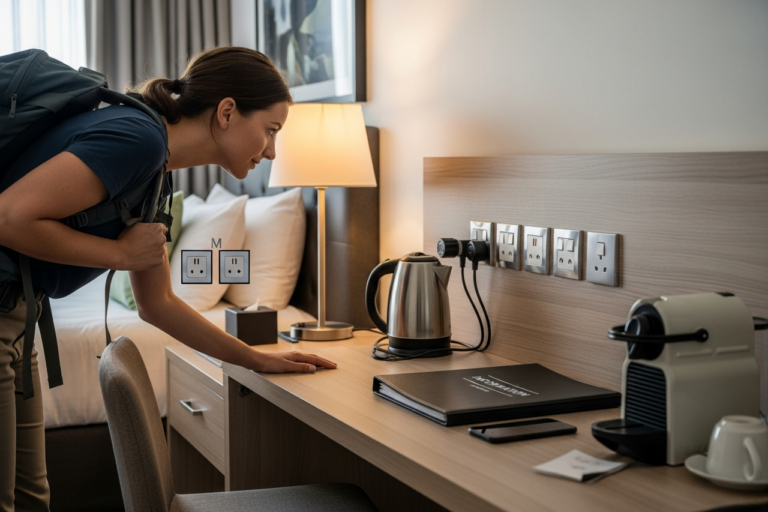
When you get to South Africa, the wall sockets may seem strange to you. The country mostly uses a few plug types, and Type M is used the most. This plug has three round pins set in a triangle. You may also find Type N and Type C in some places.
US plugs do not fit these sockets. You will need a travel adapter to use your devices. Don’t think your European or other international adapters will work, because south africa has its own system. Having the right plug and adapter lets you avoid any problems. Take time to know the type M, type N, and type C plug types, and see how they are different from the ones you use at home.
Overview of Common Plug Types (Type M, Type C, and Type N)
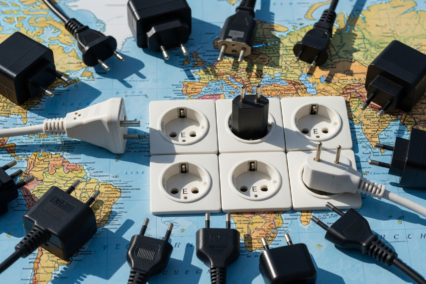
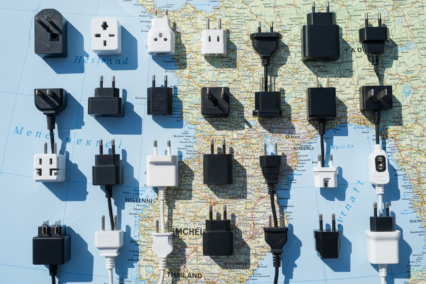
South Africa uses a few main plug types, so you need to know them to pick the right adapter. The most common is the Type M plug. This one is the official standard and used by most people in the country.
You might see Type N and Type C sockets too. Type N is newer, and Type C plugs, which are also called Europlugs, can show up in some places, but you will not see them much for wall outlets. You should remember that Type D plugs are in some countries nearby. They look almost like Type M, but are smaller. Type D and Type M plugs do not fit together.
Here’s a quick look at the main plug types in South Africa:
-
Type M: This plug is the main one in South Africa, and has three large round pins.
-
Type N: A new standard with three round pins, and it works with Type C plugs.
-
Type C: A two-pin plug that is out there, but it is not what most uses in wall sockets.
How South African Outlets Differ from US and European Sockets
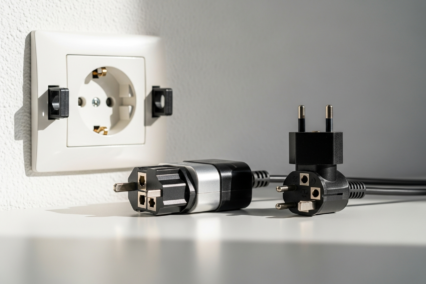
The most obvious difference between South African outlets and those in the US or Europe is the shape of the plugs and sockets. US plugs (Type A and B) have flat prongs, while most European plugs (like Type F) have two round pins. South African Type M sockets, however, require a plug with three very large, round pins arranged in a triangle.
This means your standard US or European plugs simply will not fit into a South African wall socket without an adapter. Even if you have a universal adapter, you must ensure it specifically supports the Type M plug. Attempting to force a plug into an incompatible socket is dangerous and can damage your device.
Here is a simple comparison:
|
Region |
Common Plug Types |
Pin Shape |
|---|---|---|
|
South Africa |
M, N, C |
Large round pins |
|
United States |
A, B |
Flat prongs |
|
Europe |
C, F |
Small round pins |
Power Specifications: Voltage and Frequency Details
Beyond thinking about the plug shape, you also have to check the electrical power specs. The power supply in South Africa runs at a different voltage and a different frequency than what you get in the United States. This change is very important when you want to keep your electronic devices safe.
If you know about these specs, you can tell if you need a simple plug adapter or if you need a voltage converter for your device. If you use the wrong thing, you could end up breaking your gadgets for good. Here, we look at the usual mains voltage for South Africa. We also talk about what this means for using your electronic devices.
Standard Mains Voltage and Frequency in South Africa
The electrical system in South Africa uses 230 volts and 50 hertz. This voltage is higher than the 120 volts found in the United States. In the U.S., the frequency is also different at 60 hertz.
So, what does this mean for you? Every time you bring an electronic device to South Africa, it needs to work with 230 volts. If the device is made for 120 volts only, you need a voltage converter. If you do not use a converter and just plug it into the outlet, the voltage will overload and break your device. Always look at the power details on phones, laptops, or other devices before you use them.
The change in hertz, from 50 to 60, is not a big problem for most modern electronics. But, things with motors or clocks can run at the wrong speed. Most travel items like laptops and phones will work fine with the 50 hertz in South Africa. If you are not sure, you can always get a converter for your device.
Device Compatibility and Safe Charging Practices
The main thing for safe charging in South Africa is to see if your device works with the power supply there. Most new electronics are made for travel. They use what is called “dual voltage.” You can check this by reading the small print on your charger or power block. If it says “INPUT: 100-240V, 50-60Hz,” your device is dual voltage. This means it can take the voltage and work in South Africa without problems.
But, some things—like older devices or things like hair dryers—might be single voltage. That means they are made to work only with the voltage in the country where you bought them. If you have a device that is single voltage (like 120V), you will need a voltage converter to make the 230V in South Africa safe for your item.
To keep your charging safe, you should do these things:
-
Check your device and make sure it is dual voltage before you plug it in.
-
Use a voltage converter if you want to use something that is single voltage.
-
Do not put too many items into one outlet, and always check how much power big appliances use.
This is a good way to stay safe and use your appliances and things in South Africa.
Choosing the Right Travel Adapter and Converter
Now that you know about the different plug shapes and how the voltage in South Africa is not the same as in the US, it’s time to pick the right things for your trip. If you are going to South Africa, you will have to use a travel adapter. But do you also need a voltage converter? That will depend on what you are bringing with you.
Knowing what to use—adapter plugs or a voltage converter—matters a lot to keep your things safe. An adapter plug just changes the plug so it fits the socket. A converter changes the voltage for your device. Let’s clear up what someone from the US needs, and see what you should want to find in a good adapter for South Africa.
Adapter vs. Converter: What’s Necessary for US Travelers
For US travelers going to South Africa, you need to understand the difference between an adapter and a converter. An adapter is a small thing that lets your plug fit into a different socket. It does not change the electricity. A converter, also called a transformer, is heavier and more complicated. It changes the voltage.
Most modern devices like laptops, phone chargers, and cameras are dual voltage. For these, you only need a travel adaptor to use the South African Type M socket. You just plug your US device into the adapter, and then plug the adapter into the wall.
But, if you bring a single-voltage item from the US (for 110-120V), like some hair dryers or electric razors, you must use a voltage converter. If you plug a single-voltage item into a 230V outlet with only an adapter, it will break. Always look at the label on your device first.
Features to Look for in South African Travel Adapters
When you are looking for a travel adapter for South Africa, make sure you pick one that will work with the Type M plug. Some adapters say they fit most places, but many of them do not fit the large, round pins you need for South African outlets. Always check the product details to be sure you see Type M plug in the list.
Try to choose an adapter that does more than give you just one socket. A lot of adapters today have USB ports built in, which helps when you want to charge phones or tablets. With these ports, you can plug in more than one device at a time and you do not need a different power block for each item.
Keep an eye out for these main things when you buy an adapter:
-
Type M Compatibility: This is a must for South Africa.
-
Grounded Connection: Get an adapter with three prongs. It is safer for every device you use.
-
USB Ports: You can easily charge a few things at one time.
-
Safety Features: Check for labels or extras, like surge safety.
This way, you will get a plug that is made for south africa, with type m or round pins when you need to use an adapter.
Using Your Electronic Devices Safely
Keeping your electronic devices safe while you travel is very important. If you use the wrong equipment in South Africa, it can do more than just damage your charger. It can even start a fire. The plug type is different there, and the voltage is higher. So you need to be careful.
You can charge your phones, laptops, and other appliances without trouble if you follow some easy rules. You need to know which electronic devices need a voltage converter. It also helps to understand the right way to use your adapter or power strip. Here are some useful tips for charging safely with your converter and plug in South Africa.
Guidelines for Phones, Laptops, and High-Wattage Appliances
Your phones and laptops are usually easy to use in south africa. Most are dual voltage so they work with south africa’s 230V power supply. You just need a type m plug adapter to plug them in.
Some appliances like hair dryers, straighteners, and travel kettles use a lot of power. These are often single voltage. If you bring one from the US, get a voltage converter that can handle its power. If you use a converter that is too weak, it can be dangerous.
The easier and safer choice is to leave your appliances at home. Most hotels and lodges in south africa offer hair dryers for guests. If they do not, you might get a dual voltage travel hair dryer before your trip. This will help you avoid having to use a converter and stay safe.
Universal Adapters and Power Strips: Tips and Cautions
While a universal adapter might sound like a good all-in-one tool, be careful before you buy one. Many universal adapters do not have the Type M plug you need for south africa. You must check that the adapter says it works with south african sockets. Even if the adapter says it works, a dedicated Type M adapter will often do a better job and last longer.
If you want to charge more than one device at the same time, you can bring a power strip from your home. You just plug the power strip into one Type M travel adapter, and this gives you a few US-style outlets. But, your power strip must work with 230V because the voltage in south africa is higher than that in the US. Most simple US power strips do not support this, and using the wrong one can cause a fire.
Here are some tips:
-
Make sure your universal adapter works with the south african Type M plug.
-
When you use a power strip, be sure it is rated for 230V or is a universal power strip made for travel across different countries.
-
Do not put too many high-power devices into one single socket.
Where to Buy South African Power Adapters
Finding the right adapter for South Africa is an important thing to do before your trip. It is best to buy one before you leave your home. This can help you avoid stress and have what you need as soon as you arrive. You can get them from online stores or in local shops.
If you do not get an adapter before you travel, you can still buy one when you arrive in South Africa. The price and where you find it can be different, mainly if you are not in a big city. Here is where you can get this travel item online and in person.
Online Shopping Options for Adapters
The best and easiest way to get the right travel adapter for South Africa is to shop online before you go. Amazon has many choices, and you can see all the adapters you need for South Africa right there. You get to read what other people say, check out what the adapters do, and get one sent right to your house.
When you look online, type in “South Africa travel adapter” or “Type M plug adapter” to help find the one you need. Make sure to look at the photos and details. Check that it has the three big, round pins you find on a Type M plug. If you buy your adapter before you leave, you will feel less stressed and that is one less thing you have to think about.
Here are a few more tips for shopping online:
-
Buy in a pack: Many type m adapters come in packs of two or three. This is good if you bring more than one thing or if you lose one.
-
Check compatibility: See if other people say the adapter works well in South Africa by reading the reviews.
-
Look for combo packs: Some sellers offer sets with the type m plug and other common ones too, which can be handy for future trips.
Purchasing Adapters Locally in South Africa
If you come to South Africa and you do not have the right plug adapter, do not worry. You will still be able to buy one when you get there. Try looking at the international airports first because they are often the quickest and easiest place to find what you need. Many airport stores sell travel things like the right plug adapter for South Africa.
If you wait until after you leave the airport, you can still find an adapter. Big supermarkets, electronics shops, or even some convenience stores in big cities such as Cape Town and Johannesburg sell them, too. But the choices and quality can be less, and you also might pay a higher price than you would online.
If you wait to get a plug adapter when you arrive, it could be a problem, especially if you go to small towns or safari spots outside of the cities. It is much better and easier to pack the adapter for South Africa before you travel. This will let you use your items right when you need them and help you avoid trouble during your trip.
Conclusion
To sum up, knowing about electrical outlets in South Africa helps you have a smooth trip. The country has different plug types and some unique power settings. If you plan early, you can avoid trouble when you need to charge your phone or use your laptop. It is important to know how your home outlets and plugs compare to south africa’s. Choose the right adapter or converter to match your plug and appliances. Remember that using your electronics safely makes your trip easier and better. If you want help with adapters or keeping your devices safe, reach out anytime.
Frequently Asked Questions
Can I use my US or European electronics in South Africa without an adapter?
No, you cannot use US and European plugs with South African outlets. The shape and size are not the same. You will need a travel adapter for South Africa. Most people use a Type M plug adapter when they go there. This adapter will let you plug your electronics into outlets in South Africa.
Is it safe to use power strips or multi-plug adapters in South African sockets?
Yes, you can use a power strip, but you need to be careful. If you bring a power strip from the US, make sure it works with 230V. If you use a standard 120V power strip, it can cause a fire. It is better to use a travel power strip made for different voltages, or just use more than one adapter for your devices.
What does a typical South African plug look like?
A common plug found in South Africa is the Type M plug. It has three big, round pins set in a triangle shape. The top pin is the ground pin. It is bigger and longer than the two pins below it. This type m plug is different from most other plug types in the world.