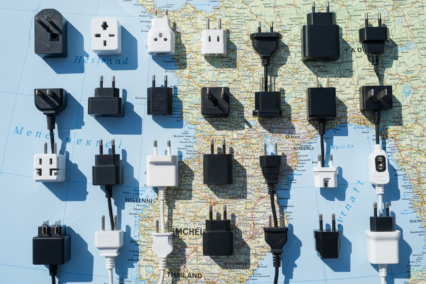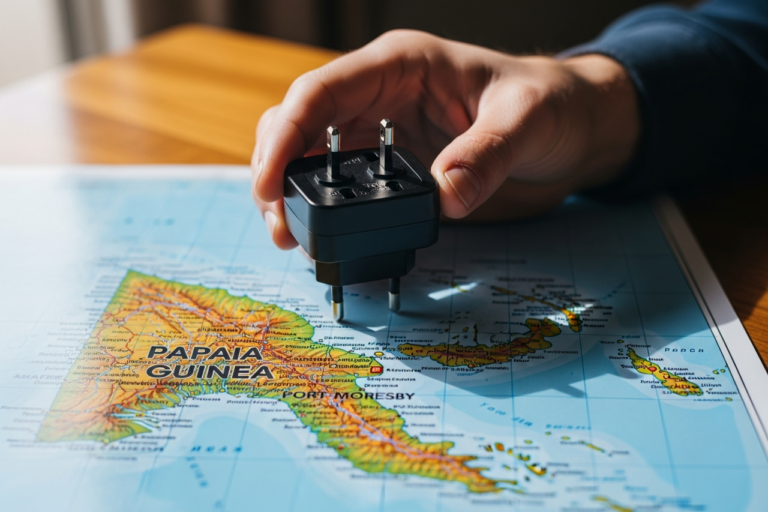
Key Highlights
If you are planning a trip to Papua New Guinea, you should know about its power outlets.
-
The power outlets in Papua New Guinea use Type I sockets, like what you get in Australia and New Zealand.
-
You have to get a Type I plug adapter if you want to connect your devices.
-
The standard voltage in the country is 240V and the frequency is 50 Hz.
-
Look to see if your devices work with dual voltage. If they do not, you may need to have a voltage converter.
-
Getting a universal travel adapter is good, because you can use it in Papua and for other trips too.
-
It’s better to buy your adapters before you leave, but you can find some in Papua New Guinea as well.
Make sure you check your devices and have the right adapter or converter for the sockets there.
Introduction
Are you getting ready for an adventure in Papua New Guinea? If you plan to visit Port Moresby, make sure you think about electricity before you go. You need to be able to charge your phone, camera, and other gadgets, so your trip goes well. This guide will tell you what you need to know about the electrical system in Papua New Guinea. You will learn about plug types, voltage, and the right adapter for your stuff. This way, you stay powered up and ready for anything.
Understanding Electrical Outlets in Papua New Guinea
When you go to Papua New Guinea, the power outlets are not the same as back home. The plug type there is different, so your devices may not fit right into the sockets.
It is important to know the correct plug type so you can keep your devices charged. In Papua New Guinea, you have to use a Type I adapter to fit local power outlets. This is something to think about as you get ready for your trip.
Common Plug Types and Socket Designs in Papua New Guinea
The electrical system in Papua New Guinea exclusively uses the Type I plug and socket. If you’ve traveled to Australia or New Zealand, you’ll recognize this design. It’s important to familiarize yourself with its features to ensure you have the right equipment.
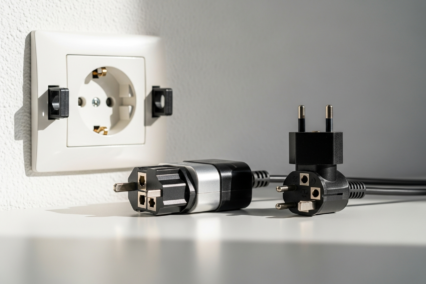
This plug type is characterized by its distinct prongs. It has two flat pins arranged in a V-shape, and often, a third vertical prong below them that serves as a grounding pin. This design ensures a secure and safe connection when you plug in your devices.
Here is a quick overview of the Type I plug:
|
Feature |
Description |
|---|---|
|
Plug Name |
Type I |
|
Prongs |
Two flat pins in a V-shape, plus a vertical grounding pin |
|
Common In |
Papua New Guinea, Australia, New Zealand, China, Argentina |
|
Amp Rating |
Typically 10 amps |
Is Plug Type I the Only Standard Outlet?
In Papua New Guinea, the only type of plug you will find is Type I. There is not a mix of plug sockets like in other countries. It makes packing much easier. You just need to bring one type of adapter.
This makes travel easier. You won’t have to worry about different sockets in the same hotel or building. All places in Papua New Guinea use Type I sockets. You can use your adapter everywhere, from Port Moresby to out in the countryside.
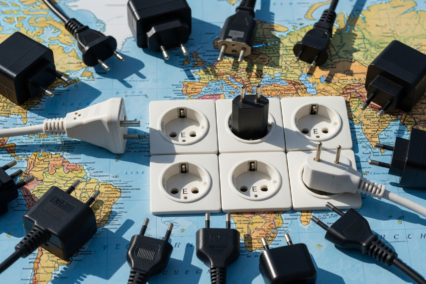
The list of countries with the Type I plug covers Papua New Guinea, Australia, New Zealand, Fiji, Argentina, and some places in China. So if you have a universal adapter or got a Type I adapter from travel in new zealand, australia, fiji, china, or argentina, you can use it in Papua New Guinea too.
Voltage and Frequency Details for Papua New Guinea
Besides looking at the shape of the plug, you must think about the electrical voltage and how often the power changes. The power supply in Papua New Guinea is not like the one in North America, so it is important to check if your devices work there or not.
Papua New Guinea gives power from its electrical system at 240 volts and at a frequency of 50 hertz. Knowing about these numbers helps you see if you need more than a plug adapter for your electronics. We will talk about what this means for your devices.
Standard Mains Voltage Used Across the Country
The standard voltage in homes and hotels in Papua New Guinea is 240V. This is the same voltage used in Australia and New Zealand, but it is not the same as the 120V used in the United States and Canada.
This difference in voltage is very important. If you plug in a device made for 120V into a 240V outlet without a converter, it can break your device. It can also be a safety problem. Always look at your device’s power label before you plug it in.
So, before you visit Papua New Guinea, check what voltage your electronics need. If your appliance does not work with 240V, you will need to take some steps to use it safely.
Frequency Specifications and Device Compatibility Considerations
In Papua New Guinea, the electrical frequency is 50 Hz. This is the same as what you will find in most countries, except for North and Central America, where 60 Hz is more common. For most modern electronics, the difference in frequency is not a problem.
What matters most for compatibility is if your device is single voltage or dual voltage. Many newer items like laptops and phone chargers are made to be dual voltage. You can look at your power supply or charger. If it says “INPUT: 100-240V, 50/60Hz,” your device is ready to use in Papua New Guinea. You will just need to use a plug adapter because the shape of the plug may be different.
If your device is single voltage and it shows “110V” or “120V” only, it will not work with the 240V power in Papua New Guinea. Some items like hair dryers or curling irons might be like this. For those, you need a voltage converter or transformer. This will step down the voltage and keep your device safe. Make sure you take the right charger, adapter, or voltage converter with you so you can use your devices in Papua New Guinea.
Travel Adapter and Voltage Converter Guide
Getting the right travel adapter and voltage converter for your trip can feel tough at first. But, the good news is, it gets easy once you know what each thing does. If you are going to Papua New Guinea, you will most likely need a plug adapter, but not everyone will need a voltage converter.
A travel adapter is used to make your plug fit in a wall socket when you are in a new country. A voltage converter, also called a voltage transformer, is bigger and can change the voltage so it is safe for your device or appliance. Now, let’s see when you will want to use each one.
When You Need a Plug Adapter vs. a Voltage Converter
Knowing if you need a plug adapter or a voltage converter is important when you travel and want to use your electronics in Papua New Guinea. The answer will depend on what your device can do and the electrical standards set in Papua New Guinea.
You will need to have a plug adapter if your device’s plug does not fit the Type I outlet found there. Since plugs in the US, UK, or Europe look different, you will need a travel adapter to make your plug fit. This is the most common thing every traveler needs to pack.
A voltage converter is only for single-voltage devices. If your device is not dual voltage and is rated for just 100-240V, you need to use a converter. This will step the 240V from the wall outlet down to the 110/120V that your device needs.
-
Plug Adapter: Use a plug adapter with all your devices to match the Type I socket in Papua New Guinea.
-
Voltage Converter: Use a voltage converter only for single-voltage devices, like some hair dryers or curling irons.
-
No Converter Needed: For dual voltage gadgets, such as most laptops and phone chargers, you do not have to bring a converter.
If you are not sure, look at the voltage information on your adapter or plug when traveling to Papua or anywhere that uses a different outlet. This will help keep your electronics safe.
Options for Buying or Renting Adapters in the United States and Locally
The best way to get the right travel adapter for Papua New Guinea is to buy one before you leave the United States. Online stores such as Amazon have many Type I plug adapters and universal adapters. Electronics stores and big department stores also sell them in their travel sections. You will have more choices and often better prices if you buy it early.
If you forget to buy it before your trip, you might get an adapter at the airport, but the price could be high. Some people like to wait and purchase one after arriving.
In Papua New Guinea, you may find adapters in large cities like Port Moresby. Stores there serving tourists or business travelers may sell them. However, the choices may not be great, and finding an adapter in remote parts of Papua could be hard. It is best to go with the adapter you need before you leave.
Using Your Devices in Papua New Guinea
After you get the right adapter, you should be able to use your devices in Papua New Guinea without much trouble. If you have things like phone chargers or laptops, using them is easy. You just put your charger into the adapter. Then you plug the adapter into the wall.
But you should always think about what you plug in and how much power it needs, especially when you are in Papua. Small things like chargers are usually okay. But big and strong items need you to be extra careful. We’ll talk about how to use different electrical appliances the right way and give some safety tips to help you out.
Charging Smartphones, Laptops, and Small Electronics
Good news for people who like to travel! Most small electronics you use every day, like laptops, tablets, and phones, are built for travel. These gadgets are dual voltage. That means the devices can work with different voltages without you having to do anything.
To check, look at the writing on your charger. The label should say “Input: 100-240V.” If you see this, you can use your US or UK charger anywhere in Papua New Guinea. You only need a Type I plug adapter. you do not need a big voltage converter.
This keeps things simple. Just attach a Type I plug adapter to your charger. Plug it in and power up your devices in Papua New Guinea like you do at home. This works for most cameras, e-readers, and other small gadgets too.
Safety Tips for Plugging In Your Devices
Using your devices in Papua New Guinea is safe if you have the right gear. It is smart to be careful with electricity when you are in a new place.
Do not try to force a plug into an outlet if it is not the right fit. You should use the correct plug adapter, like one made for Papua New Guinea. Never plug too many powerful items into one outlet. That can be risky. If you can, use an adapter in Papua that has a grounding pin. This is good for some appliances that you use.
Here are some things to remember for safety with your plug adapter:
-
Always check the voltage of your device in Papua New Guinea before you plug it in.
-
Do not use a voltage converter for electronics. Only use a voltage converter for things that heat up.
-
You might want to use a surge protector with valuable items in Papua, because the power can go up and down.
-
Take adapters and chargers out of the wall when you are not using them.
Adapting to Non-Compatible Plugs
If you get to Papua New Guinea and find that your plug does not fit in the sockets, do not worry. This happens to many people when they travel, and there are ways to solve it so you can keep your devices working.
The fastest way to fix this is to get the right adapter for Papua New Guinea. No matter if your plug comes from the UK, Europe, or somewhere else, a Type I adapter is what you need. This will let you use the sockets you find in Papua New Guinea. Let’s look at what you can do if this happens to you with your plug or adapter in Papua.
What to Do If Your Device Plug Doesn’t Fit
If you see that your device’s plug does not fit the Type I sockets in Papua New Guinea, the first thing you should do is get the right adapter. Some hotels or guesthouses can help with this. You can ask at the front desk. They may have a few adapters for guests to use.
If your hotel does not have one, the next thing is to try to buy an adapter. In big places like Port Moresby, you can look for a universal adapter or a Type I adapter at electronics stores. Some bigger supermarkets and shops for travelers also sell them.
But, it can be hard to find the right adapter in smaller towns or remote areas in Papua New Guinea. This is why it is best to buy an adapter before you leave home. A universal adapter is a good choice because it works for many plug types. It can be helpful not only in Papua but in other places you go to in the future, too.
Universal Adapters and Portable Power Solutions
A universal travel adapter is a great thing to have if you are someone who travels a lot. You do not need to buy a new adapter for each country you go to. One universal travel adapter can work in many of the different sockets around the world, even Type I. Many adapters now also have USB ports built into them, which is really handy.
A portable power bank is another useful item, especially when it is hard to find an outlet or you are going to a place far from the city. The power bank can hold a charge and let you plug in your phone, tablet, or any gadget that uses USB. When the power bank is full, you can charge your devices without needing to use the wall.
Here are some good power options to think about for your trip:
-
Universal Travel Adapter: This is a helpful all-in-one answer for many plug and socket types.
-
Portable Power Bank: This is great for charging up your things while you travel and if you cannot find power.
-
Multi-Port USB Wall Charger: One plug lets you charge more than one device at a time using one adapter.
-
Solar Charger: This is good if you are trekking or in a place where the electricity is not steady.
Look for the right travel adapter or charger for your needs to make your trip simple and stress-free.
Availability of Electrical Outlets in Accommodations
The number of electrical outlets in Papua New Guinea can be different depending on where you are. In city hotels and guesthouses, you will usually find outlets in your room. It is almost the same as what you get in other places.
But, if you go to rural or very far places in Papua New Guinea, getting electricity may not be easy. Sometimes, there will be no power at all. So, you need to think ahead about how you will charge your things while on your trip. It is good to know what to expect in the different places you might stay in Papua New Guinea.
Power Accessibility in Hotels, Guesthouses, and Remote Areas
In big cities like Port Moresby, hotels and high-end guesthouses mostly have good power. You can find several outlets in your room, so it is easy to charge your things. Some new hotels will have USB ports built right into the wall for extra ease.
When you move away from the city, things change. Mid-level places and smaller guesthouses usually have power, but there might be fewer outlets in your room. There can be times when power is only there for a few hours each day, often coming from a generator.
In the most remote spots or when you stay at a village home, power might be very hard to get or not there at all. There, you should not count on outlets to charge your things. It is important to ask about power when you book your room if you must keep your gadgets charged.
Tips for Ensuring Consistent Device Charging During Travel
Keeping your devices charged when you travel in Papua New Guinea can be hard, especially if you are in an area where there is not much power. You need to plan for this. Try to be ready to look after yourself, and plug in your devices any time you find a place to charge.
Before you go out into a remote place, make sure every device you take and all your portable chargers are full. If you stay in a place where the power does not stay on all day, you need to decide what has to get charged first. A USB charger with many ports is good to have. This way, you can charge more than one thing with just one wall socket.
Here are a few ways you can keep the power on your things when you are in Papua New Guinea:
-
Carry a high-capacity power bank that you have filled up before you leave home.
-
Bring a USB wall charger that has more than one port, so you can charge many devices with one plug.
-
Save the battery life in your device by using low-power mode and turning off what you do not need right now.
-
Plug in your charger and devices any time you can find a good outlet, like in hotels or at a restaurant.
If you get ready, you will have less trouble keeping your devices ready to use in Papua New Guinea.
Frequently Asked Questions
Papua New Guinea uses type I power plugs. These plugs have flat pins and a grounding pin. If you go there, you might be asking about a voltage converter. It depends on your device. Many modern electronics are dual voltage, so they can work without a converter. But some items, like hair dryers, may need a voltage transformer to be safe.
A universal travel adaptor is good to have. It helps you connect to different sockets and gives you compatibility for your devices in Papua New Guinea. It’s important to check that your device works with their standard voltage, so you don’t damage it.
Can I Use My US Phone Charger or Laptop in Papua New Guinea?
Yes, you can use your phone charger and laptop in Papua New Guinea. Most modern chargers and laptops from the US are dual voltage. That means they work with both 100-240V, which fits the voltage in Papua New Guinea. You will need a Type I plug adapter so that your plug fits the outlets there. Always look at the label on your charger to check its voltage compatibility first.
Are Power Outlets Reliable Throughout the Country?
Power supply in Papua New Guinea can be different from place to place. In big cities and tourist hotels, the power outlet is mostly steady. But in small towns and far-off spots, the power often goes out. Some lodges in Papua might use generators, and these often work for just a short time in a day. You should take a travel adapter with you.
Where Can I Buy the Right Travel Adapter Before My Trip?
You can buy a travel adapter for Papua New Guinea while you are still in the United States. Amazon has a lot of choices for Type I or universal adapters. You may see these adapters in stores that sell electronics, travel shops, or even at the airport. But the prices are usually higher at the airport. This is a good way to make sure you have the right adapter before you go to Papua.
Conclusion
To sum up, if you plan to go to Papua New Guinea or stay there, it is important to know about electrical outlets in that country. The plugs and voltage can be different, so it helps a lot to be ready. You might need a travel adapter, and sometimes a voltage converter for your devices. Check if the place you will stay has power outlets that work for what you need. This will help you keep your devices charged all the time. When you prepare early, the trip or stay in Papua New Guinea will go much smoother. If you want more help about this, you can ask for more information.