Key Highlights
Here are the main things you should know from our guide to electrical outlets in India:
-
In India, the most common plug types are Type C, Type D, and Type M.
-
The standard voltage in India is 230V and the frequency is 50Hz. This is not the same as the US.
-
If you are traveling from the US, you will need a travel adapter to use your plugs in Indian sockets.
-
Be sure to check if your electronic devices are dual-voltage. If they are not, then you will also need a voltage converter.
-
The best idea is to buy the right adapter before you leave for your trip. This can help you avoid problems later.
-
A universal adapter may also work, but you must make sure that it supports plug types D and M.
Introduction
Planning a trip to India? This will be a big adventure. But before you pack your stuff, it is good to know about the electrical outlets in India. You do not want to get there and find you cannot charge your phone or camera. This guide will show you all you need to know about plug types in India, how the voltage works, and why having the right adapter really matters. We want you to have the right info for power compatibility during your trip.
Common Types of Electrical Outlets in India
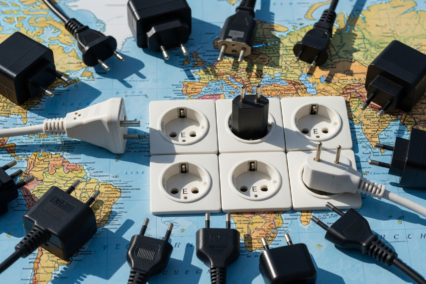
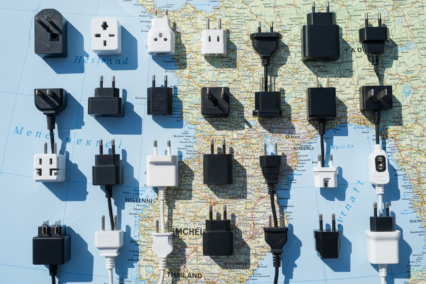
When you travel to India, you mainly see three plug types. These are type C, type D, and type M electrical outlets. It may look a bit confusing at first, but you can get to know the differences by learning what to look for.
Each socket is made for a certain plug. So, having the right one is key. Type D plugs are the most common in India. Still, you might see type C and type M in different places like hotels or cafes. We will talk more about these sockets and plug types below.
Overview of Indian Plug and Socket Types (Type C, D, and M)
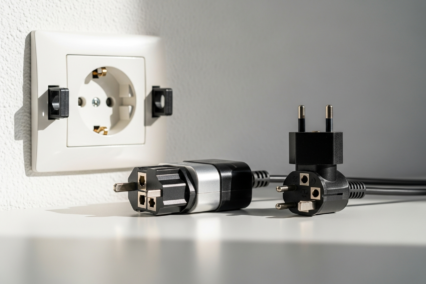
Let’s break down the three plug types found in India. Type C plugs are recognizable by their two round pins and are widely used across Europe. However, Type C sockets are less common now due to safety concerns as they are ungrounded.
The most prevalent plug is Type D, which has three round pins arranged in a triangle. The top pin is a larger grounding pin, providing extra safety. You will also come across Plug Type M, which looks similar to Type D but has much larger pins and is used for more powerful appliances.
Here is a quick comparison of the plug types:
|
Plug Type |
Pin Description |
Common Use |
|---|---|---|
|
Type C |
Two round pins |
Widely used internationally |
|
Type D |
Three round pins in a triangle (5 amps) |
Standard in India and Nepal |
|
Type M |
Three larger round pins in a triangle (16 amps) |
For high-power appliances |
Compatibility With International Plugs (US, UK, and European Devices)
If you are coming from the US, UK, Europe, or Central America, you will find that your device’s plug does not fit right into the sockets in India. This is why carrying a plug adapter is important for your trip. A plug adapter lets you fit your plug into a different-shaped outlet, but it will not change the voltage.
For example, US plugs use Type A or Type B, and they are flat. UK devices have Type G plugs, and these are more rectangular. In Europe, most people use Type C or Type E plugs. While a Type C plug may go into a Type D socket, it might fit loose and this is not safe. So, to have good compatibility and stay safe, you need to use the right adapter for your plug.
Here is a quick look at which plug fits with which socket in India:
-
US Plugs (Type A/B): You will need an adapter for Type D and Type M sockets.
-
UK Plugs (Type G): You will need an adapter for Type D and Type M sockets.
-
European Plugs (Type C/E/F): The Type C plug may work, but using a Type D plug adapter is the best way to make sure your connection is safe.
Voltage and Frequency Standards in India
Besides the shape of the plug, you also need to check the standard voltage and how often the electric current changes in India. This is very important so your devices be safe and work the right way. In India, the standard voltage is 230V, and the current changes at 50 Hz.
This is not the same as what people use in North America, where the standard voltage is only 120V. But it is close to what they have in Europe and the UK. If you use a device made for a different voltage without the right tool, you can break it for good. Let’s see what these voltage range details mean for your electronics.
Typical Voltage and Frequency Specifications
The power you get from a wall socket in India is set at 230 volts (V) and 50 Hertz (Hz). Voltage is the pressure that pushes the electric current, and frequency shows how many times the current switches direction every second. Most new electronic devices, such as laptops and phone chargers, can work with more than one voltage. They are called “dual-voltage.” This means you can use them with a voltage range, like 110-240V. You should look for this information on your device’s label or on the power brick.
If your device’s label says “Input: 100-240V, 50/60Hz,” it will run well in India. You only need a plug adapter for the plug, not a converter. But, some appliances need more power, like hair dryers, and may not be dual-voltage.
If you plug a 120V single-voltage appliance into a 230V outlet in India, it may get too hot and stop working. Watts (W) is another thing to check. It tells you how much power your device uses. You can find watts by multiplying volts (V) by amps (A). If you have a high-power device, make sure any adapter or converter you use can handle that many watts. Plugging a device built for a different voltage into an outlet can damage it if you don’t use a proper converter.
Using Electronics Safely: Adapters and Converters
To use your electronics in India without any trouble, you must know the difference between an adapter and a converter. A plug adapter will help you fit the plug into the wall socket. It does not change the voltage or power. A voltage converter changes the voltage so your device can work with India’s power.
If your device is dual-voltage, you need only a plug adapter. Check the label; if it says something like “100-240V,” it will work fine in many countries. But if your device is single-voltage (like “120V” only) and you bring it to India where outlets give 230V, you will also need a voltage converter. If you plug a 120V device into a 230V wall, you could ruin the appliance. Many people buy a universal adapter because it fits many plug adaptors in one small unit.
Here are simple steps to stay safe when using electronics:
-
Look to see if your device is dual-voltage. The label often reads “100-240V.”
-
If you see your device is dual-voltage, just use a plug adapter.
-
If you see it is only single-voltage—like “110V” or “120V”—get a voltage converter and a plug adapter.
-
For items that use more power, like hair dryers, make sure the converter you pick can handle how many watts the device uses.
With care, you can use your voltage converter or adapter and keep
Tips for Travelers: Using Electrical Outlets in India
When you travel to India, it’s a good idea to get ready before you go, especially when it comes to your devices. Some hotels may have a travel adapter for you to rent, but you should not depend on that. It is always smart to bring your own adapter. This lets you charge your devices whenever you need to.
If you pack your own plug adaptors, you know you will be set for the different plug types found in India. Be sure to take a portable power bank with you too. This can help keep your phone going if you run out of power. It’s really helpful on long days or if you are in a place where power is not good. The next parts will show you more ways to pick the right adapter and plug types for your trip.
Choosing the Right Travel Adapter or Converter
Picking the right power accessory does not have to be hard. First, you need to know what you need. Check your devices. If all your gadgets show “100-240V” on the label, you have dual voltage. You only need a simple plug adapter. If a device is single voltage, you need to get a voltage converter. You can find these items online, at major airports, or in electronics stores before you go.
If you travel a lot, a universal adapter is a good option. This unit covers many plug types, like type d and type m plugs used in India. Many universal adapters have usb ports, so you can charge your phone or tablet right away. This means you do not have to bring so many chargers.
Here’s what you need to do:
-
Check your devices: Find out if they are dual voltage.
-
For dual voltage devices: Get a plug adapter for type d or type m.
-
For single voltage devices: Buy a voltage converter that can handle your device’s power needs.
-
Consider a universal adapter: Pick one that clearly says it works with type d and m plugs in India.
You can look for adapter choices at Amazon.
Frequently Asked Questions about Indian Electrical Outlets
Moving to a new country can be hard, and you may have many questions about electrical compatibility. To help you feel sure about using your devices in India, we put together answers for some questions people often ask. When you use the right adapter and know the voltage, you will not have problems.
The main thing is to make sure your plug fits the socket, and that the power in the wall matches what your device can take. With a little work before you go, you will be able to keep your things charged during your time in India.
Here are fast answers to common questions:
-
Do I need an adapter for India? Yes, if your plugs are not Type C, D, or M.
-
Can I use my US phone charger in India? Yes, if it is dual-voltage, you just need a plug adapter.
-
Will European plugs work in India? A Type C plug may work, but an adapter is best for a safe fit.
-
Where can I buy an adapter? You can get one online, at airports, or in a store for electronics.
-
Do hotels in India have adapters? Some do, but it is a good idea to take your own.
-
What’s the difference between an adapter and a converter? An adapter changes the plug shape. A converter changes the voltage.
Conclusion
To sum up, it’s important to know about electrical outlets when you go to India. You need to know the different plug types, voltage, and safety steps, as this can help you avoid trouble and keep safe. When you find different plug types or want to make sure your things will work, having this info about electrical outlets gives you what you need to make good choices. Always pick the right travel adapter or converter, so your gadgets work with no problem. If you want help or have questions about plug types, adapters, or compatibility, you can reach out for support. Have a good trip!