Key Highlights
Here are the key things to know about electrical outlets in Germany:
-
Germany mainly uses Type F power sockets. These are also good for Type C plugs.
-
The standard voltage is 230V and the frequency is 50Hz. This is not the same as the US.
-
You will need a plug adapter so your American devices can work in German sockets.
-
Some single-voltage electronics may need a voltage converter to work safely.
-
A travel adapter is needed for plugging in your devices, but check if you also need a converter.
-
Most modern devices like laptops and smartphones use dual-voltage. They only need a plug adapter.
Introduction
Planning a trip to Germany? This will be a fun experience. Before you go, it’s important to know how you will plug in your gadgets. The electrical outlets in Germany are not the same as the ones in the United States. They look different and they have a different voltage. It helps to understand these changes so you can charge your phone, use your laptop, and keep other devices working. With the right travel adapter and information about voltage, you will be ready. This guide will explain what to know about German outlets, the travel adapter you need, and how the voltage in Germany changes things for your gadgets.
Types of Electrical Outlets Used in Germany
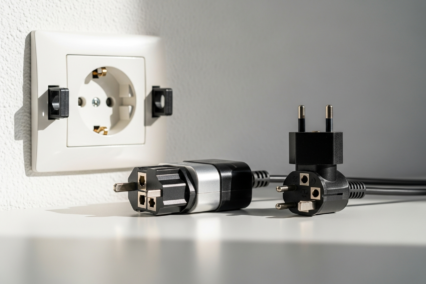
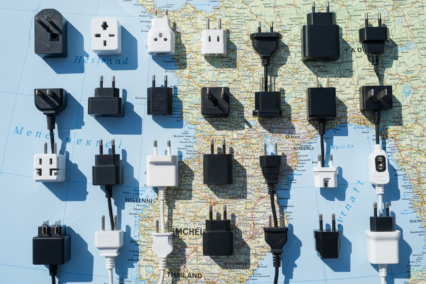
When you go to Germany, you will find two main socket types. These are Type C and Type F. The Type F socket, also known as the “Schuko” plug, is used by most people in Germany. These German sockets are made for safety. They work well for almost all electrical devices.
The good news is that the Type F socket can take the Type C plug without a problem. So, there is some flexibility when you use your plugs in Germany. Now, let’s look at how these plugs are made and see how they are different from what you have back home.
Understanding German Outlet Designs (Type C and Type F)
The two plug types that you will see the most in Germany are type c and type f. The type c plug is called the Europlug. It is one of the common plugs found around the world. The plug has two round pins that go next to each other. It does not have grounding. Many small appliances and devices use it, so you will find it often.
The type f plug is known as the schuko plug. This is the standard for german sockets. It uses two round pins like the type c plug. It also has grounding clips at the top and bottom for more safety. This is good for appliances that need more power.
Type c and type f plugs can be used in Germany because of the socket design. You can put a type c plug into a type f socket easily. This is helpful for travelers. You cannot use a type f plug in the older, shallow, ungrounded type c socket though. Those are not used much in new german buildings.
Differences Between German and US Outlets
One of the first things you will see is that German and US outlets have a plug with a very different shape. German plugs have two round pins. In the United States, most plugs have two flat prongs (Type A), or two flat prongs and one round pin for the ground (Type B). Because of this, you will always need a plug adapter if you bring US devices.
It’s not just about the plug shape. Outlets in Germany give out a different voltage. They use 230V and 50Hz. But the United States uses 110-127V and 60Hz. This higher voltage in Germany can hurt some American appliances if you plug them in the outlet without the right converter.
Because there is a different voltage, just having a plug adapter may not be enough. Check every device to see if it can use 230V. If it can’t, you will need a voltage converter. This will make sure you can use your devices in Germany and keep your appliances safe.
Plug Types Compatible with German Sockets
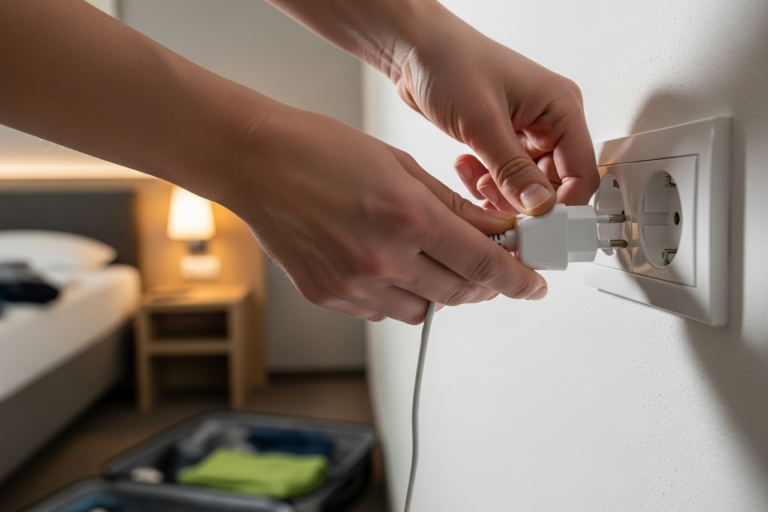
Getting your devices to work with german sockets is easy. The main socket used in germany is type f. This socket is made to fit both type f and type c power plugs, so you can use most plugs from europe with it.
If your device has a type c plug, you can just put it into a german wall outlet. It works with no problems. The same thing is true for the type f plug, which has grounding. It is important to know which of your devices use type f or type c plugs, and what you should do if you have a plug type that does not match. This will help you prepare for your trip.
Devices That Work with Type C and Type F Plugs
Many of the modern devices you own were made to be used in other countries. They usually have power supplies that can handle different voltages. These dual voltage devices are ready for your trip to Germany. You just need a simple plug adapter for the Type F socket. If you buy your device in Europe, the plug is likely to be a Type C or Type F plug.
To find out if your device is dual voltage, look at the power label. You can find it on the cord, plug, or on the device itself. If it says something like “INPUT: 100-240V, 50-60Hz,” it will work in Germany with just an adapter. Some main dual voltage devices are:
-
Laptops
-
Smartphones
-
Tablets
-
Camera battery chargers
But be careful with items like hair dryers or straighteners. These use high wattage and are often single voltage, not dual voltage. For these, you may need a heavy-duty converter, even if you have the right plug type. Many people find it easier to use the one that their hotel gives them or buy a model made for travel.
type f, type c, hair dryers, plug adapter, dual voltage, plug type, type f plug, modern devices, type f socket, germany, plug, converter, voltage, adapter, laptops, socket, europe, tablets, wattage, straighteners, smartphones
Compatibility Tips for International Travelers
If you travel from North America, you need to be sure everything you bring will work in Germany. First, you must have a travel adapter. This device lets you plug your flat US prong into the round sockets you find in Germany. If you do not have this adapter, you cannot plug your stuff in.
Next, you should check the power supply for each device you own. If your device does not have dual voltage, you also need a voltage converter. A universal adapter is good to buy because it lets you use your things in many countries. Make sure the adapter works with Type F sockets for Germany.
The tips below can help you stay ready:
-
Always get your travel adapter and voltage converter before you go.
-
Make sure your adapter fits Type F prongs for Germany.
-
Bring a power strip if you want to charge more than one device with one adapter.
-
Check if your hotel has hair dryers, so you do not have to pack those.
Voltage and Frequency Standards in Germany
The electrical system in Germany is not the same as the one in the US. In Germany, the usual voltage is 230 volts, and the frequency is 50 Hz. You will find this in many other parts of Europe too.
It is very important to know about the voltage rating when you use your gadgets and appliances. Your power supply has to be able to handle 230V, or your device might not work right. The difference in Hz is 50 in Germany, while it is 60 in the US. Most new gadgets will not have a problem with this, but you should know about it. Next, we will see what this means for your appliances and other things you use with power in Germany.
German Mains Voltage Explained
The mains voltage in Germany is set at 230V. The International Electrotechnical Commission (IEC) lists this voltage in a range from 220V to 240V, used in many european countries. This makes it easier for you to travel in europe, as you only need the right equipment.
A higher voltage gives power more easily across longer distances. But, it can be dangerous for devices that use lower voltage. If you plug a 110V US appliance into a 230V german outlet, it can break the circuits. This may ruin your device and even cause a fire. That is why you must check your device’s power supply. It’s not just smart—it’s a safety step.
The 50Hz frequency means the electric current changes direction fifty times a second. If your power supply says “50-60Hz,” your electronics can work in both setups, so it’s not usually a problem. But for travelers, the big difference in voltage is the main thing to pay attention to.
Will Your US Appliances Work in Germany?
Whether your US appliances will work in Germany depends entirely on their voltage rating. You must check each device. Many modern electronics are dual voltage, meaning they are designed to work with both the 110-127V and 220-240V ranges. These items only need a plug adapter.
However, many simpler or older appliances are single voltage and are designed only for the ~120V standard in the United States. To use these items in Germany, you will need a voltage converter or a transformer. A converter is typically for high-wattage heating appliances (like hair dryers), while a transformer is for more sensitive electronic devices.
Here’s a quick guide to help you figure out what you need:
|
Appliance Type |
Voltage Rating on Label |
What You Need in Germany |
|---|---|---|
|
Dual Voltage |
“INPUT: 100-240V” |
Plug Adapter Only |
|
Single Voltage |
“INPUT: 110V” or “120V” |
Plug Adapter + Voltage Converter/Transformer |
Always confirm the wattage of your device before purchasing a converter to ensure it can handle the load.
Travel Adapter and Power Converter Guide
When you pack for Germany, it is smart to take a travel adapter and maybe a voltage converter. These tools do not do the same thing. So, you should not mix them up. A travel adapter, also called a plug adapter, helps you fit the plug from your country into the wall in Germany.
A voltage converter changes how much electric power comes from the outlet, so your device gets the right amount. Germany uses 230V. You will need a converter if your device needs only 120V. This can help you know when you need an adapter or a converter.
When You Need a Travel Adapter vs. a Converter
The need for a travel adapter or a power converter in Germany depends on the compatibility of your device with German power. The main rule is simple. An adapter is based on the plug shape. A converter depends on the voltage rating.
You will always need a travel adapter if your plug is not Type C or Type F. Most US travelers have to get one. The adapter lets your flat pins fit into Germany’s round plug sockets.
You only need a power converter if your device uses a single voltage and does not match Germany’s 230V.
-
Use a travel adapter if: Your device is dual voltage (you see “100-240V” on it).
-
Use a travel adapter AND a power converter if: Your device is single voltage (it says “110V” or “120V”).
Using your single voltage device in Germany without a converter will cause lasting damage. The adapter, the converter, the voltage, and the plug type are all important to keep your gadgets safe. Remember Type F and Type C plugs are the ones you find in Germany, and adapter or converter needs will be clear if you check the voltage rating for all your devices.
Safety Precautions When Using Adapters in Germany
Using adapters in German power sockets is usually safe, but you need to be careful. Make sure your device works with the 230V voltage. A universal adapter does not change the voltage, so do not plug a 120V device into it. This can be risky.
When you pick a universal adapter, choose one from a good brand that is certified for safety. Some adapters are poorly made. They can have loose parts, which might lead to heat or short circuits. Do not overload an adapter by plugging a power strip with many high-powered devices into it.
For the best safety, follow these steps:
-
Check your adapter and converter for their wattage limit and do not go over it.
-
Never use a plug or adapter if it is damaged or has wires that you can see.
-
Do not use adapters in bathrooms. This is because wet places can raise the chance of electric shock.
-
Unplug adapters from the wall when you are not using them.
Conclusion
To sum up, you need to know about electrical outlets in Germany before you go. Germany uses Type C and Type F plugs. The country has its own voltage and frequency rules. If you get ready for these differences, you will not have trouble using your devices on the trip. You might need a travel adapter or a power converter for your gadgets. If you bring the right adapter or converter, your stuff will work well as you visit new places in Germany. Follow these simple tips to have a good time without worry in Germany. If you have questions or want help, you can ask for advice. Have a safe trip!
Frequently Asked Questions
Is it safe to use universal adapters in German outlets?
Yes, you can use a good universal adapter in German sockets if it fits Type F outlets. The adapter changes the plug shape, but it does not change the voltage. Make sure your device is okay with 230V, or use a converter to keep it safe.
Are German outlets childproof or do I need extra safety measures?
Many newer German outlets come with built-in child safety. These usually need you to press both holes to get the plug in. But, not all places have these, especially older buildings. If you are traveling with kids, it is smart to take your own socket covers. This gives you complete safety.
Where can I buy a Germany travel power adapter in the United States?
You can buy a travel adapter for Germany while you are still in the United States. It’s easy to find a plug adapter online, like on Amazon, or at stores that have travel or electronics stuff. When you buy your adapter before you leave, you have the right plug for your trip and do not have to worry later.