Key Highlights
Here are the key things to know about electrical outlets in France:
-
France uses Type C and Type E plugs, so you will need a France plug adapter if your devices have the wrong prongs.
-
The standard voltage in France is 230V. This is higher than what you see in North America.
-
Most modern electronics are dual voltage. You only need a plug adapter for them.
-
If you use a single-voltage device, like some hair dryers, you will need a voltage converter.
-
You can buy a Type E or Type F plug adapter before your trip or when you get to France.
Remember, you must check if your plugs are Type E or Type C when using electrical outlets in France. Keep your adapter and converter ready to use your modern electronics.
Introduction
Welcome, traveler! If you are planning a trip to the beautiful country of France, you must be feeling excited. Still, you need to think about how to charge your phone, camera, and the other things you need. Understanding the electrical outlets and plug types can be a bit confusing in France. But, this guide is here to help. It will tell you all you need to know about France’s power system. That way, you can stay powered up and connected the whole time. You won’t get any surprises with sparks. Enjoy your French adventure!
Overview of Electrical Outlets in France
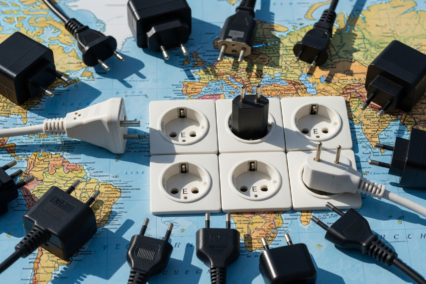
When you pack for France, it helps to know about their electrical outlets. France uses certain plug types. These types are common in many european countries. This makes things easy if you go to other places in europe during your stay.
But if you are coming from outside europe, you will see these different plug types right away. In the next part, you will read about the usual plug types in france and what makes french sockets special. That way, you can be ready.
Common Plug Types Used in France
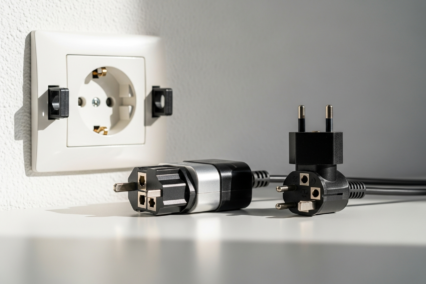
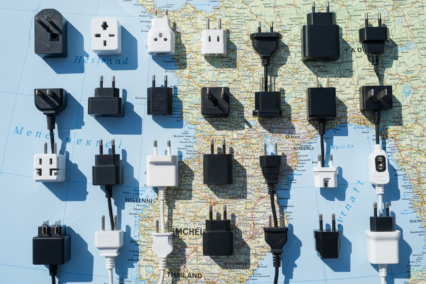
In France, you will see two main types of plugs. These are Type C and Type E. They may look a lot like each other, but they work in different ways. These plug types are used in many European countries, so it’s good to know how to use them before you visit.
The Type C plug is called the “Europlug.” It is easy to use. The plug does not have a ground and is often used for things that do not need much power. The Type E plug is the main plug you will see in new buildings in France. It is grounded, so it gives extra safety when you use it with electronics that need more power.
Here are the main plug types found in France:
-
Type C: This plug uses two round pins and does not have a ground. It works in both Type E and Type F sockets.
-
Type E: This has two round pins and an extra hole for the ground pin in the socket. This is the standard plug in France.
-
Type F: These plugs are not the French standard, but you will see Type F plugs (used a lot in Germany) that also fit Type E sockets.
If you plan to visit France, it is good to know these plug types. Using the right socket and plugs will help you keep your devices safe.
Distinguishing Features of French Sockets
At first, a French socket may seem like any other you find in Europe. But the socket in France has its own special features. The main one is the Type E socket. This type is made for safety and is an important part of all electrical systems in France.
One thing that stands out with the Type E socket is the round earth pin. This pin sticks out from the socket and fits right into a hole in the Type E plug. It gives a way for your plug to ground. This is not the same as the Type F socket you see in Germany and other European countries. The Type F socket uses two clips on the sides for grounding. It does not have a pin.
Because of this design, the Type E socket helps make sure that your devices have a good and safe connection. The socket also works with Type C plugs that have no ground. Most of the time, you can use Type F plugs in it too. This means the French electrical system is good for people coming from other European countries. It works well for many plugs and helps travelers in Europe use their devices without trouble.
Understanding French Power Standards
When you travel, it’s not just the shape of the plug you have to look at. You should also know about the power supply. Every country, like France, has a standard voltage and frequency. This decides how much power your devices get. France uses the same power as most european countries, but it may not be like what you use in your country.
It is important to know the standard voltage and frequency to keep your devices safe. We will talk about the voltage and frequency in france. We will show how these changes could make a big difference for your gadgets.
Standard Voltage and Frequency in France
The power supply in France operates at a standard voltage of 230 volts (V) and a frequency of 50 Hertz (Hz). This is the same standard used across most of Europe, making travel between neighboring countries seamless for your electronics.
If you’re visiting from a country with a different standard, this information is vital. Using a device designed for a lower voltage can cause permanent damage. Always check your device’s power label before plugging it in.
Here’s a quick comparison of the power supply in France versus other major regions:
|
Country/Region |
Voltage (Volts) |
Frequency (Hz) |
|---|---|---|
|
France/Europe |
230V |
50Hz |
|
United States |
120V |
60Hz |
|
United Kingdom |
230V |
50Hz |
|
Australia |
230V |
50Hz |
How Voltage Differences Affect International Travelers
The difference in voltage between your home country and France can really affect your devices. If you are traveling from North America, you use 110-120V there. Plugging your device straight into a 230V outlet in France can hurt it. The higher voltage in France can overload the electronics inside your appliance. This can break your device.
This is where single voltage and dual voltage matter. Many modern electronics like laptops and phone chargers are “dual voltage.” This means they can handle a range of voltages from 100 to 240V. These devices will work well in Europe if you use just a plug adapter.
But some appliances, like older items or things that make heat (for example, hair dryers), are often “single voltage.” If your device is single voltage and made for 110V, you must use a voltage converter to use it safely in France. Always look at the label on your appliance to check for compatibility.
Plug Adapter vs. Voltage Converter—What’s the Difference?
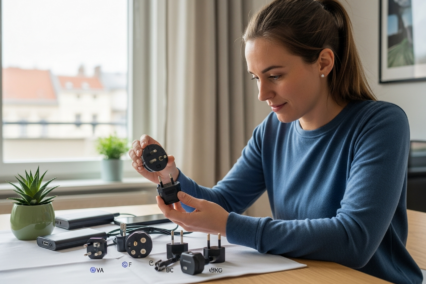
It’s common for people to mix up a “plug adapter” with a “voltage converter.” But the two have very different uses. A plug adapter is a small tool. It helps the plug you use at home fit into a wall outlet in another country. The plug adapter does not change the type of electricity in any way.
A voltage converter, however, does something else. This device changes the voltage from the outlet so it works with what your device from your home country needs. Most modern electronics will not need a voltage converter when you travel. But some electrical devices might. Now, let’s talk about when you will need an adapter and when you will need a voltage converter if you are going to France.
When to Use a Plug Adapter in France
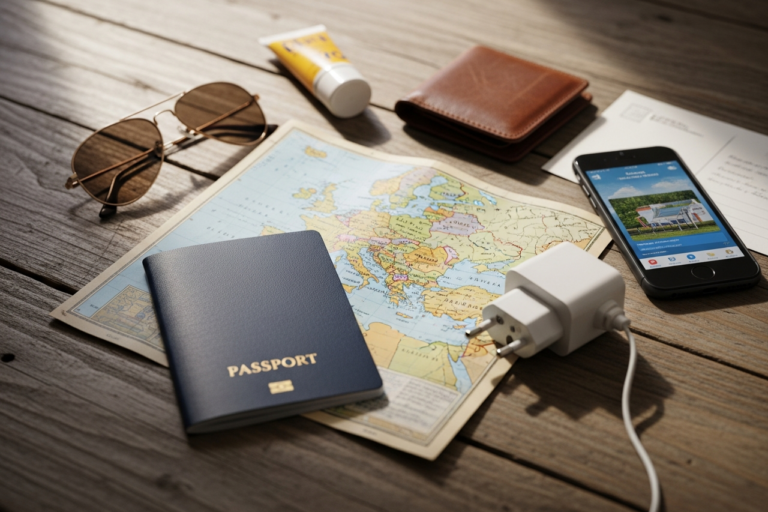
You will need a plug adapter in France if your plugs do not have two round pins. A France plug adapter changes the shape of your plug so it will fit in French Type E sockets. The adapter does not change voltage. It is only for devices that already work with 230V.
Most people coming from the US, UK, Australia, and Asia will need an adapter. Luckily, these are cheap and simple to get. The right adapter lets you safely use your dual-voltage phone chargers and other electronics in France.
Here’s when a plug adapter is all you need:
-
Your device is dual-voltage and says “INPUT: 100-240V.” This is true for most new laptops, phone chargers, and camera chargers.
-
You are coming from another European country with different plug shapes but the same voltage.
When You Need a Voltage Converter for Your Devices
A voltage converter is what you need if your electronic device is not dual-voltage and made for a different type of plug. For example, if you have a single voltage appliance that is rated for 110V, like you find in North America, and you plug it into a 230V outlet in France, you could damage your device for good.
Some high-powered items that need a voltage converter are hair dryers, curling irons, or electric shavers. A travel voltage converter, or transformer, brings down the voltage from 230V to 110V or 120V. This helps your single voltage appliance work the right way.
Be sure to look at the power rating on your converter, which is measured in watts. This is to make sure that it can handle your appliance. If your appliance needs more power than your converter gives, it can be a safety problem. Always look at the labels on both your device and the voltage converter before you use them.
Compatibility of American Devices with French Outlets
If you are coming from the United States, you have to check if your devices will work in France. American electronics run on a 120V/60Hz system, but in France, the outlets use 230V/50Hz. This means you can’t plug in your devices without making sure of their compatibility.
Many electronics from the United States are made to handle travel. You need to know if your items are dual voltage. Some may work with just an adapter, but others will need more care. We are going to tell you which devices need an adapter and which need something more for safe use.
Dual Voltage Appliances and French Outlets
The good thing for travelers with American electronics is that many modern devices are dual voltage. This means that the device can handle different voltages, such as the 230V standard used in France. You can find this by looking at the device or its power brick for a label that says something like “INPUT: 100-240V, 50/60Hz”.
If you see this label, your device can work with the French power grid. You only need a simple plug adapter to connect it to the Type E or Type F sockets. This fits most laptops, smartphones, tablets, and camera chargers.
Here’s what to remember for your dual voltage devices:
-
Always look at the label to see if it is dual voltage.
-
You will still need a plug adapter to fit the socket in France.
-
There is no need to use a voltage converter for these devices.
Devices That May Require Extra Precautions or Converters
Some electrical devices, like a hair dryer or curling iron, need extra care when you travel. Many of these items are single voltage. That means they work with the voltage in the country where you bought them, like 120V in the US. If you use them in France without a voltage converter, they can get too hot and stop working.
Your laptop will most likely have dual voltage, but not all your other stuff is the same. Always check your device’s label for this. If you see “110V” or “120V” only, that item is single voltage. You should not use it in France unless you have the right converter or equipment.
For these single voltage electrical devices, you will need a voltage converter built to handle their high power. It is safer and easier to get a dual-voltage travel hair dryer or just use the one from your hotel in France. This helps you avoid problems and saves you time.
Where and How to Buy the Right Adapter for France
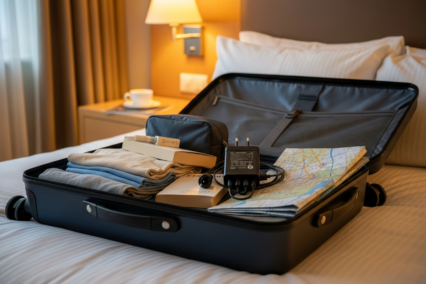
Now that you know what you need, you might ask where to find the right plug adapter for your electronic devices. The best way to start your trip without stress is to get a France plug adapter before you leave home. But if you forget to pack one, don’t worry. You can also buy an adapter when you get to France.
Shopping for a travel adapter can be easy. You have the choice to buy one online before your trip or pick one up from a store when you arrive. Let’s see the best way to get an adapter before you travel and where you can find a plug adapter in France.
Best Places to Purchase Adapters Before Traveling
The easiest and safest way to get your France plug adapter is to buy it before your trip starts. You will be able to charge your phone or laptop right when you get to France. Online shops are good for buying an adapter. They have lots of choices, like single plugs or ones that work in many places.
Stores like Amazon are great because they show what people think about the adapters and make picking the right one easy. Big electronics shops and some department stores have travel adapters too, usually in the travel section. Getting your plug adapter before you leave is cheaper, and you get to pick from more styles.
Here are some good places to get a france plug adapter:
-
Online retailers: Amazon has a big list of options and fast shipping.
-
Electronics stores: Best Buy and others have many travel gadgets, including an adapter.
-
Luggage stores: These shops have travel parts, like adapters and other important things.
Tips for Finding Adapters Once You’re in France
If you are in France and do not have the right plug adapter, you can get one without any problem. The big airports are the best places to try first. You can buy a France plug adapter at a shop inside Paris’s Charles de Gaulle airport as soon as you arrive.
If you are headed out of the airport, you can look for an adapter at big train stations. For example, Gare du Nord in Paris has shops that carry travel items. There are also big supermarkets like Carrefour, or stores that sell things for electronics like Fnac and Darty. These shops are found in all the big French cities. Sometimes you pay a bit more, but you will not have a hard time finding the adapter you need.
Here are some spots where you can buy a plug adapter in France:
-
Major airports: Look in shop stands or tech stores inside the terminals at Charles de Gaulle or Orly.
-
Train stations: You will find small shops and kiosks at big train stops like Gare du Nord.
-
Supermarkets and electronic stores: Stores like Carrefour, Fnac, and Darty are always a good choice.
Conclusion
Traveling to France can be fun and new, but you do not have to worry about how the electrical stuff works there. It helps to know about the types of outlets, voltage, and how an adapter is not the same as a voltage converter. It’s good if you make sure all your things fit French sockets before you go. This means your phone, laptop, and other devices will charge without problems. Be ready and pack your adapter ahead of time. That makes your trip easier and more stress-free. If you have questions about france or need help picking an adapter for your laptop or any device, just ask. Have a good time on your trip!
Frequently Asked Questions
Can I use UK or EU plugs in French outlets?
You can use most Type C plugs from the EU in France without any problems. But if you have a plug from the United Kingdom (Type G), it will not fit. You will need an adapter for that. In France, the sockets are Type E. These sockets can fit Type C and many Type F plugs as well.
Is it safe to charge USB devices directly in French sockets?
Yes, you can usually charge most modern devices with USB ports because most chargers are dual voltage. You still need a plug adapter for your USB power block to fit the type E electrical outlets in France. Some new hotels and trains in France have USB ports built in, so you can charge devices right there.
What are safety tips for using French electrical outlets as a traveler?
For safety, always use a certified adapter. Never try to force a plug into the outlet. Do not use cables or adapters that look damaged. Be careful when you use electrical devices that need a lot of power. Check that the voltage is right for the device to stop damage or fire hazards. If you see that an outlet is damaged, do not use it.