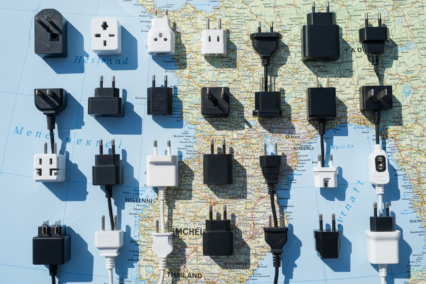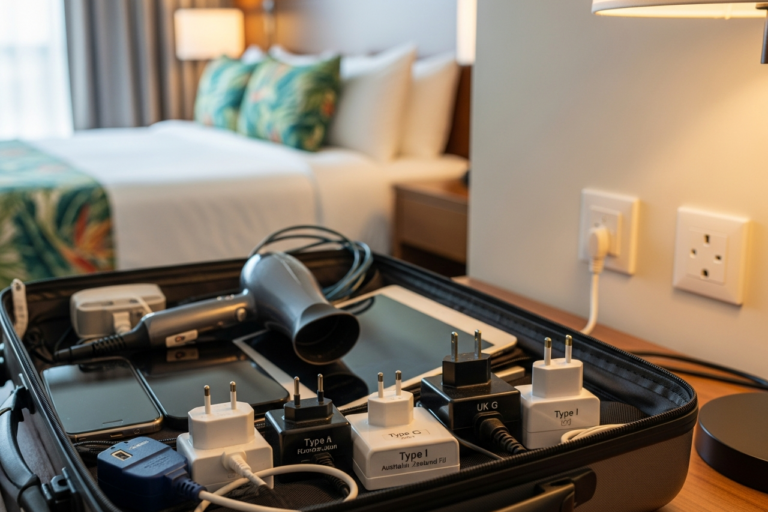
Key Highlights
Here’s a quick look at what you need to know about electricity in Fiji:
-
Fiji uses Type I electrical outlets. These are the same plugs used in Australia and New Zealand.
-
The supply voltage is 240V and the frequency is 50Hz.
-
If you are coming from the US, you will need a plug adapter to use the sockets in Fiji.
-
Check if your devices have dual voltage. If they do not, you will need a voltage converter.
-
A universal adapter is a good idea for this trip. It will also be useful for future travels.
Introduction
Getting ready for a trip to the beautiful islands of Fiji can be very exciting. When you pack, you need to think about how you will keep your devices charged. Different countries use different outlets and plug types. Fiji is the same way. This guide will show you what to know about the power system in Fiji. You will learn about the kind of plug they use and if you need a travel adapter or a converter. This way, you can stay connected and keep your things powered up while you enjoy your time in Fiji.
Understanding Electrical Outlets and Plug Types in Fiji
When you go to Fiji, you will see that there is one main kind of electrical socket. The plug that fits these sockets is called Type I. You will find this plug type in most places in Fiji. It is common in hotels, resorts, and homes around the islands.
These sockets use plugs with three flat pins. The pins are set in a V-shape. If your plug does not look like this, you cannot use it right away. We will talk more about this plug type. We will also see how it is different from other plugs you might know.
Common Plug Types Found in Fiji (Type I and variations)
In Fiji, the only associated plug type you will find is the Type I plug. This is the standard plug used across the country. You do not have to worry about seeing many different plug types on the islands.
The Type I plug is easy to know by its look. Here are things you will notice when you see one:
-
It has three flat pins.
-
The top two pins are at an angle and form a “V” shape.
-
A third flat pin points straight down and is used for grounding.
You will find this plug type in many countries around the Oceania area. Knowing about this plug type will help you figure out if you need an adapter to use your electronics in Fiji. Do not forget that the supply voltage is important too, and we will talk about the voltage soon.
How Fiji’s Outlets Compare to Australia, New Zealand, and the USA
If you’re traveling from Australia or New Zealand, you’re in luck! Fiji uses the same Type I plug that is standard in both of those countries. This means your appliances will fit directly into Fijian outlets without needing a plug adapter.
However, for travelers from the USA, the situation is different. The US primarily uses Type A and Type B plugs, which have two flat parallel pins (and sometimes a third round grounding pin). These are completely incompatible with Fiji’s Type I sockets. Therefore, an American traveler will absolutely need a plug adapter.
Here’s a simple comparison:
|
Country |
Plug Type |
Adapter Needed for Fiji? |
|---|---|---|
|
Fiji |
Type I |
N/A |
|
Australia |
Type I |
No |
|
New Zealand |
Type I |
No |
|
USA |
Type A & B |
Yes |
Voltage, Frequency, and Compatibility for Your Devices
Other than the shape of the plug, you also have to think about the supply voltage and the frequency. In Fiji, the supply voltage is 240V and the frequency is 50Hz. This is not the same as the 120V and 60Hz you get in the United States, and some other places.
If you plug your device into an outlet where the voltage is not right for it, you can damage the device or even put yourself in danger. So, you should always check if your appliance has compatibility with the supply voltage. You may need more than an adapter. In some cases, you have to use a voltage converter or a transformer to make sure your appliance works well and stays safe.
Standard Voltage and Frequency Used in Fiji
The electrical system in Fiji uses a set standard, and it’s good to know this for the safety of your appliance. The supply voltage in Fiji is a lot higher than the one in North America.
Here are the main electrical facts for Fiji:
-
Standard Voltage: 240 Volts
-
Frequency: 50 Hertz
The voltage and frequency used in Fiji is not just for this place. You will see the same set up in New Zealand and Australia as well. Before you use an appliance in Fiji, always check twice if it works with the voltage here. If any item is not made for a higher supply voltage and you do not use a converter, it can get too hot and break easily.
Will Your American Electronics Work in Fiji?
For people coming from America, it is important to check the compatibility of their devices with Fiji’s power. The answer depends on whether you have a single voltage or dual voltage device. A lot of new electronics like laptops, phone chargers, or camera battery chargers are dual voltage and made to be used when you travel.
To find out, look for a label on your appliance or on its power brick. If you see something like “INPUT: 100-240V,” it means you have a dual voltage device. You can use this in Fiji, which has 240V power. You just need an adapter to fit your plug into the socket.
But if you find only one number, like “INPUT: 110V” or “INPUT: 120V,” then you have a single voltage device. These will not work in Fiji with only an adapter. Plugging them in can break them for good. If you have things like some hair dryers or old electronics, you will need to get a step-down voltage converter or transformer to use them.
Using Travel Adapters, Converters, and Staying Connected
Now that you know about plug shapes and voltage, let’s talk about travel adapter and voltage converter. These tools help you use your things when you are in a new place. The two main things you may need are a travel adapter and a voltage converter. It is good to know that these are not the same. A travel adapter lets the plug on your device fit into a socket with a different shape.
A voltage converter, though, changes the voltage from the wall so it matches what your device needs. It is important to pick the right tool for compatibility and to stay safe. Here, we will look at when to use a travel adapter and when you need a voltage converter, and also where to find one.
When Do You Need a Travel Adapter or Voltage Converter?
Figuring out if you need a travel adapter or a voltage converter is easy. You just have to check what your device needs and what Fiji has in their outlets. These two things, the adapter and the converter, do different things, so it is important to know what you have to get.
You will need a travel adapter if:
-
The plug on your device does not look the same as what is in the wall outlets in Fiji (for example, if you are going from the US or Europe).
-
Your device is dual voltage (says 100-240V on it).
You will need a voltage converter along with a travel adapter if your device is single voltage and does not work with Fiji’s 240V outlets. This often shows up when you try to plug in things like hair dryers. Always look at the label on your appliance because using a single voltage item without a voltage converter is not safe. To make things easier, you can use a universal adapter that works with more than one plug type. This will help you on all your trips later on.
Where to Purchase Plug Adapters for Fiji
Finding the right plug adapter for your trip to Fiji is not hard. You have a few options. The easiest way is to buy one before you leave. Websites like Amazon have many types of plug adapters. You can get a plug for just one place, or you can buy a universal adapter that works in more than one country. If you buy your adapter early, you get time to look at reviews so you know you have a good one.
If you forget to get an adapter before you go, you do not need to worry. You can find travel adapters for sale at large airports. They cost a bit more there, but you can count on finding one if you need it right before you go.
When you get to Fiji, you can also try tourist shops, places that sell electronics, or ask at your hotel. You might be able to buy or borrow an adapter. But there may not be many to choose from, and you might have to spend more. To make things easier, the best way is to get a universal adapter from Amazon before your trip. This will help you have a good time in Fiji with no trouble.
Conclusion
Traveling to Fiji can be a great time. It is good to know about the plugs and outlets you will use there. The plug and standard voltage in Fiji might not be what you have at home. You need to make sure you take the right travel adapter and a converter if you want to use your devices. This helps you keep your things charged and working every day. If you are not sure which plug or voltage your things use, ask someone for help before you go. When you get ready, you can enjoy your trip to Fiji and not worry about your devices. With a little planning, you and your electronics will have a smooth time in Fiji.
Frequently Asked Questions
Can I safely charge my phone or laptop in Fiji?
Yes, you can charge your phone or laptop in Fiji without worry. Most new devices like phones and laptops are dual voltage. This means they work with the 240V supply voltage in Fiji. You will need a Type I plug adapter for the outlets there. It is a good idea to check your charger’s label and be sure before you use it.
Do hotels in Fiji provide power adapters for guests?
Some big hotels and resorts in Fiji might have power adapters you can borrow at the front desk. But you can’t be sure they’ll have one for you. It’s a good idea to bring your own adapter. The hotel may not have enough, so it’s better to pack your own adapter when you go to Fiji.
Is it safe to use a UK or European plug in a Fijian outlet with an adapter?
Yes, it is safe to use these electronics. UK and most European devices are made for a 220-240V supply. Fiji has a 240V system, so they work. You will need a travel adapter. The adapter will change your UK or European plug so it can fit into the Type I socket in Fiji.