Key Highlights
-
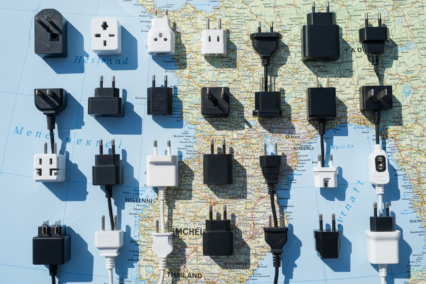
In Cuba, there are different plug types. You can see Type A, B, C, and sometimes L. So, you will need a travel adapter.
-
The power supply in Cuba can be 110V or 220V. Make sure you check the voltage before you use your plugs or devices.
-
Some sockets in Cuba work with plugs from the United States. But for Type C and L sockets, you need a power plug adapter.
-
A lot of modern items like laptops and phones are made to work with dual voltage. If you have one that is not, you will have to use a voltage converter.
-
The power runs at 60 Hz, just like in the United States. Your devices should work well with this.
-
It is a good idea to buy a universal travel adapter before you go to Cuba. That way, you will be ready for any power supply or plug type you find.
Introduction
Are you getting ready to go to the beautiful island of Cuba? You might be thinking of classic cars and sunny beaches, but there is something you should not forget: electricity. To keep your phone, camera, and other gadgets charged, you need to know about plug types, voltage, and if you need an adapter in Cuba. This guide shares what you need to know so your things will work well during your trip. Being prepared will help you make the most of your adventure without any trouble.
Overview of Electrical Outlets in Cuba
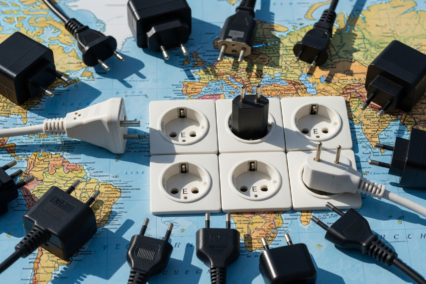
When you get to Cuba, you may see that the power sockets are not the same as what you have at home. Cuba uses different power socket types. The most common ones are Type A, Type B, and Type C cuban power outlet. You can find more than one type in the same room.
Since there is a mix of cuban power outlet types, it is a good idea to bring a travel adapter. A universal adapter helps you plug your devices into any cuban power socket. This makes sure you can get the power supply you need. Next, we will talk more about the plug types, like type b and type c, and how these electrical outlets work in Cuba.
Common Plug Types You’ll Encounter
It can be good to know about the plug types you will see in Cuba. The main power sockets there are Type A, Type B, and Type C. Knowing these can help you when you need to charge your things.
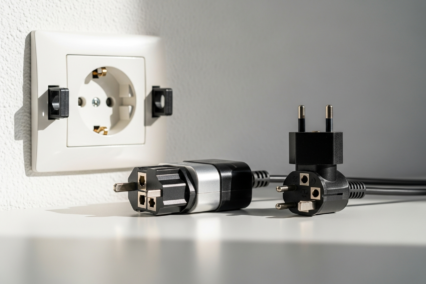
Type A plugs have two flat parallel pins. You can find them in North America. Type B plugs look a lot like Type A, but they add a round grounding pin. Type C plugs have two round pins. These plugs are used a lot in Europe.
Here are the plug types you may find in Cuba:
-
Type A: Two flat parallel prongs.
-
Type B: Two flat parallel prongs with a round grounding pin.
-
Type C: Two round prongs.
-
Type L: Not common, but has three round pins in a row.
You may see any of these power sockets in Cuba. The best way to stay ready is to get a power plug adapter.
How Cuban Outlets Differ from US Outlets
The main difference between Cuba outlets and those in the United States is the variety. While the US primarily uses Type A and B sockets, Cuba uses those plus Type C and occasionally Type L. This means your American plugs will fit in some Cuban sockets but not all of them.
You can’t always rely on your plugs fitting directly, especially with the European-style Type C sockets present. The plug shape is the most immediate difference you’ll notice. While Type A sockets have two flat parallel pins, Type C sockets have two round pins.
The voltage can also be a point of contrast, with Cuba having a different voltage standard in some areas. Here’s a quick comparison:
|
Feature |
United States Outlets |
Cuba Outlets |
|---|---|---|
|
Common Plug Types |
A, B |
A, B, C, L |
|
Plug Shape |
Two flat parallel pins (A), with or without a grounding pin (B) |
Can be flat (A, B) or round (C, L) |
|
Voltage |
120V |
110V / 220V |
Understanding Electrical Voltage and Frequency in Cuba
Besides the shape of plugs, you need to know about the electric voltage and the frequency in Cuba. The country uses a dual-voltage system. This means outlets can be either 110V or 220V. The standard frequency in Cuba is 60 Hz. It is the same as in the United States.
With the dual-voltage system, you must be careful. If you plug a device made for 110V into a 220V socket, it may break. Let’s check the standard voltage and see what the frequency can do to your plugs and devices.
Standard Voltage Used Throughout the Country
The standard voltage in Cuba is 110V. This is almost the same as the 120V you get in the United States. So, it is good if you are an American traveler with your own devices. Most American devices work well with this power supply. But things are not always that easy or simple.
Many newer hotels and some private places have 220V power outlets. They do this to help people from Europe. For this reason, the local voltage can change from one place to another in Cuba. It is not easy to tell what the voltage is just by looking at a Cuban power outlet. The best thing to do is check first.
If the voltage is not marked, think of the outlet as 110V. If you bring a single voltage appliance from the United States, it might not work well in Cuba if you use it in a 220V outlet. You need to be careful, or you can break the appliance if you use the wrong power supply.
Frequency and Its Impact on US Devices
Good news for people traveling from the United States. In Cuba, the electrical frequency is 60 Hz. This is the same as back home in the United States. Your electrical appliances will work the same way. Clocks will keep time. Shavers and other devices with motors will work as they should.
Because the frequency is not different, you do not need to worry about it when you use your devices. The main things to check are the plug shape and the voltage. Most modern appliances, such as laptops and chargers, have dual voltage. This means they can work with different voltage levels, usually from 100 to 240 volts.
Here’s what is important for you:
-
Your appliance will work at its normal speed.
-
You do not need a frequency converter.
-
Always see if your device is dual voltage or single voltage before you plug it in. Your main concern should be about the plug and the voltage.
Compatibility of American Devices with Cuban Outlets
When you go from the United States to Cuba, you may find that some of your devices can use cuba outlets right away. If there is a Type A or Type B socket, your power plug should go in without trouble. But if you see a Type C socket, you will need a power plug adapter.
The main thing to look at is not just the plug shape but the voltage. Many new gadgets are dual voltage. They can work with both 110V and 220V. But some things, like hair dryers, are single voltage. If you have one of these, you will need a voltage converter. Here, we talk about when you can plug in directly and when you will need a converter or adapter.
Can You Plug In Directly with American Electronics?
Whether you can plug your American electronics into Cuba outlets depends on the socket in the room. Cuba uses Type A and B sockets, like those in the United States. If you find one, your plug will fit, and you can use it with no trouble. This works best if your device is dual voltage.
But you cannot be sure you will find these sockets everywhere. Some places have Type C and L sockets. These have round holes, so the flat pins from the United States will not fit. Because of this, you need an adapter.
Most new devices like laptops, chargers, and cameras have dual voltage. They often work with 110V and 220V. Always check the label on your charger. If it says “INPUT: 100-240V,” it’s safe to use. Then, you only need an adapter for plug shape if the socket doesn’t match. Sometimes, you might be able to plug in your phone charger without an adapter, but only with the right outlet.
When Is a Power Adapter or Converter Necessary?
You need a power adapter when your plug shape does not fit the wall socket. If your device’s voltage is not the same as the outlet’s, you need a voltage converter or power converter. It is important to know this difference so you can protect your items like laptops and hair dryers.
If your device is dual voltage but the plug does not fit, a basic power plug adapter is all you need. A universal travel adapter is a good thing to have on your Cuba packing list because it works with lots of plug types. When your device is only for a single voltage, like 120V, and you are plugging it into a 220V outlet, you will need a stronger voltage converter. This comes up with things like hair dryers or some electric shavers.
Here’s when to use each thing:
-
Bring a power adapter if you have a plug that does not fit the outlet.
-
Use a voltage converter when your single-voltage device meets a much higher voltage at the outlet.
-
Read your device label for “INPUT: 100-240V” to see if you have a dual voltage device.
-
Things like phones and laptops usually just need an adapter.
-
Appliances that get hot, like hair dryers, often need a converter.
-
For more ease, think about getting one product that is a combined adapter and converter.
Plug Types and Adapter Guide for Cuba
Getting the right plug types in Cuba takes some planning. In Cuba, there are Type A, B, C, and L plugs. That means you cannot know for sure if your devices will work right away. The Type C plugs, which you see a lot in Europe, are why most people from the United States will need to bring an adapter on their trip.
A world travel adapter, or universal adapter, is going to help you the most. It can help you use your devices with any plug you might find while in Cuba. Now, let’s see how you can spot these plug types and figure out the best travel adapter to bring from the United States.
Identifying Type A, B, and C Plugs in Cuba
It’s easy to spot the different plug types in Cuba when you know what to look for. The shape of the plug and the power sockets will show you what you need to know.
Type A is common in Cuba. It has two flat prongs that sit next to each other. Type B looks like Type A but also has a round pin for safety. People in the United States know these plug types well. The one you may not know is the Type C plug. It has two round prongs instead of flat ones.
Here’s a simple way to tell the different plug types apart:
-
Type A: Two flat prongs.
-
Type B: Two flat prongs and one round grounding pin.
-
Type C: Two round prongs.
When you look at sockets and see round holes, you’re looking at a Type C outlet. If you want to use your American plugs, you will need an adapter for these power sockets in Cuba.
The Right Adapter to Bring from the United States
Picking the right power plug adapter for a trip to Cuba is easy. There are a few plug types you may run into. That is why using a universal adapter is a good idea. You can use this in many countries, and it works with the Type C and L sockets found in Cuba.
You will find a great selection of travel adapters online before you go. Many people shop at retailers like Amazon. Look for a “world travel adapter” or “universal adapter.” These often have prongs you can slide out, so they work in other places, too. If you have a Europe power adapter, it will work with Type C sockets in Cuba.
Here’s what to check when you want to buy an adapter:
-
Make sure the universal adapter can handle many plug types.
-
It should be good for Type C sockets.
-
Choose one that is small and not heavy, so it is easy to travel with.
-
Some models have USB ports, so you can charge your things right away.
-
Go over user reviews to see if it is reliable.
-
If your gadgets use just one voltage, you may need an adapter that is also a converter.
Charging Devices and Safety Tips for Travelers
Once you are in Cuba and have the right adapters, you can start keeping your electronic devices like cell phones, laptops, and cameras charged. The power sockets or outlets might be worn, so make sure your devices connect well and stay in place.
Pay attention to the voltage when you use power sockets in Cuba. This is important for electronic devices, especially those that are sensitive. A few simple steps can help keep your gear safe from harm. Your cell phones, laptops, and other devices will then be ready to use any time you need them.
Now, let us give you some tips to help you charge your devices safely when you are in Cuba.
Using Smartphones and Laptops Safely in Cuba
Charging your smartphones and laptops in Cuba is usually safe. Most of these devices have power supplies that handle both 110V and 220V. You do not need a voltage converter for them in Cuba. The main thing you have to think about is using the right adapter for the plug.
When you charge your devices, make sure the plug fits tightly into the universal adapter. The adapter should also be snug in the wall outlet. If they are loose, it can cause sparking or stop charging. It is a good idea to use an adapter that has a fuse. This will help protect your devices from power surges.
Here are some tips for safe charging:
-
Always check that your laptop and phone chargers say “INPUT: 100-240V” on them.
-
Use a good quality universal adapter to get a secure connection.
-
Do not leave your devices charging for a long time, like overnight, when you are not around.
-
Never plug in devices if the outlet looks damaged or is loose.
With the right adapter and some care, you can charge your devices and not worry much when you visit Cuba.
Charging Sensitive Electronics: What to Watch Out For
When you are charging more sensitive electronics, it’s smart to be extra careful. Modern chargers often do a good job, but power changes can still happen. Some items, like expensive camera batteries, drones, or medical gear, may need more care than others.
If you are taking very valuable or sensitive electronics when you travel, it is good to use a surge protector along with your adapter and voltage converter. This can be another layer of safety against sudden power spikes. Remember, a power converter and a surge protector are not the same thing. Don’t mix them up.
Pay attention to these points:
-
Make sure your chargers work with the local voltage.
-
Use a voltage converter if your single-voltage and sensitive electronics need to work with a 220V outlet.
-
Do not use a power converter with devices that come with their own chargers, unless the converter was made for it.
-
Unplug your electronics during storms to keep them safe from lightning damage.
-
Check for adapters that have surge protection built in for more safety.
-
Always follow what the manufacturer says when charging your devices.
Conclusion
To sum up, it is important to know about the electrical outlets in Cuba for a smooth trip. Learn about the common plug types you will find in Cuba. Also, check the voltage and read some safety tips before you go. This will help you keep your devices working while you are there. It does not matter if you want to charge your phone or another device. When you have the right adapters and you know the basics, you will have fewer problems. A little planning can make your visit better. So, if you want to go to this Cuban island, get the information you need to enjoy your time more. There is a lot to see and do, so be ready and make the most out of your Cuban trip!
Frequently Asked Questions
Are Cuban hotel outlets different from other locations?
Outlets in your accommodation can be different in Cuba. Newer hotels often give you both 220V and the usual 110V electrical outlets for travelers from other countries. It is a good idea to add a voltage converter to your Cuba packing list if your devices are single-voltage. This way, you will be ready if you find higher voltage outlets in your room.
Where can I get a suitable power adapter before my trip to Cuba?
You can quickly find the right travel adapter to take with you before you leave. Sites like Amazon have a great selection of travel adapters. You will find universal adapter options that will work in Cuba, too. A travel adapter is a must-have for your cuba packing list. If you buy an adapter ahead of time, it will save you time and stress later.
How reliable is the electricity supply in Cuba—should I expect outages?
The power supply in Cuba is not always steady. You may get power outages there, and this can be different from what you know. These outages most times do not last long. Still, it is a good idea to charge your electrical appliance whenever you find working power sockets. You can also bring a portable power bank. This will help you if you need power and the sockets are not working. This way, you and your appliance will always be ready.