Key Highlights
-
In Colombia, you will find type A and type B electrical outlets. These are the same as the ones you see in the United States.
-
The standard voltage in Colombia is 110V, and the power supply is 60Hz. This is just like what you get in North America.
-
If you come from the United States, you do not need a plug adapter or a voltage converter for most of your electronics.
-
You should know the difference between a plug adapter and a voltage converter. A plug adapter makes the plug fit, but a voltage converter changes the electrical current.
-
Many new devices like laptops and smartphones are dual voltage, so they work well with the type A and type B outlets in Colombia.
-
If you still want a travel adapter, you can get one online, at major airports, or after you get to Colombia.
Introduction
If you are planning a trip to Colombia, you will want to know how to charge your devices while you are there. Colombia is a great place to visit, but it helps to plan ahead for things like electrical outlets and plug types. You should also find out about the voltage so your appliances keep working the way they should. This guide will show you what you need to know about the power system in Colombia. You will learn about plug types, electrical outlets, and which adapter you will have to bring. That way, you can keep your devices running and stay connected the whole time you are in Colombia.
Understanding Electrical Outlets in Colombia
When you travel to Colombia, the electrical outlets will look like the ones you see in America. If you are from North America, you will notice this right away. In Colombia, people use two types of plugs: type A and type B. These decide how you plug your things into the power supply.
It is good to know the plug types they use. This will tell you if your devices can go right into the sockets or if you will need something extra. Now let’s take a closer look at how type A and type B plugs and sockets work in Colombia.
Overview of Plug Types Used Across Colombia
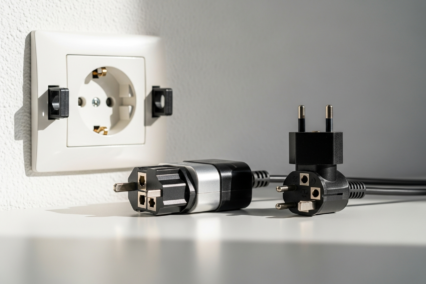
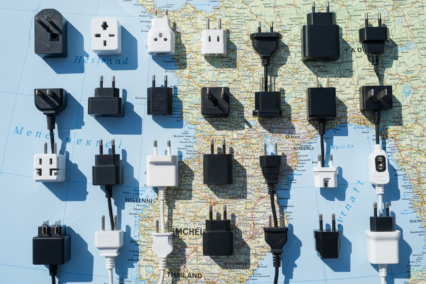
Colombia uses two main plug types: Type A and Type B. The Type A power plug has two flat parallel pins. You can see that one of the pins is a bit wider. This helps you put the plug in the right way.
Type B is a lot like Type A, but there is a third pin. It’s round or U-shaped and gives extra safety by grounding your appliances.
Type B sockets have a place for that extra pin, so you can use both Type A and Type B plugs in them. This makes Type B sockets very common, and you will find them in many places in Colombia.
Common Electrical Socket Designs in Colombian Cities
The electrical sockets you see in most Colombian cities are the type A and type B outlet types. A type A socket has two thin prong openings. These are made for the flat pins of a type A plug.
You will also see type B outlet types a lot. They look like the type A, but there is an extra third hole under the two main slots. This hole is made for the round pin on type B plugs.
There is something important you should know about these sockets. These electrical sockets are not set deep into the wall. When a plug is only halfway in the socket, the metal prongs can stay out and still have power. So, always make sure you put your plugs all the way in, so you do not get hurt.
Voltage and Frequency Standards in Colombia
Besides the shape of the plug, you have to know about the voltage and frequency used in Colombia if you want your device to work well. The electrical system in Colombia uses its own standard, and it may not be the same as what you have in your home country. The standard voltage in Colombia is 110 volts, and the standard frequency used by the power grid is 60Hz.
This setup is important. It can decide if your device will work right and be safe. In the next part, we will talk more about how the standard voltage in Colombia changes what your devices can do and how the frequency plays a role, too.
Standard Voltage for Colombian Electrical Systems
In Colombia, the standard voltage you get from most outlets is 110V. This is close to the 120 volts you find in the United States and parts of America. Because of this, the power supply is pretty much the same for many people who travel between these places.
If you have a device that works with a standard voltage of 110V to 127V, it will work well in Colombia. You will not have problems using it. The volts tell you how strong the electricity is. If the voltage does not match what your appliance needs, it can be unsafe.
If your device is made for a single voltage that is much higher, like 230V, do not use it in Colombia without a converter. It will not work right and could break. Always look for the voltage number on your device’s label before you plug it in.
Frequency Details and Appliance Compatibility
The number on the power is not the only thing to look at. The frequency is also important. In Colombia, it is 60Hz. This is how fast the current changes, and the number is the same as in North America. This match is good for the use of electrical appliances, especially for those things like clocks or motors that need the right time to work.
Many electrical appliances you use today are “dual voltage.” You should look at the label on your charger or plug to check this. If you see something like “INPUT: 110-240V,” this means your appliance is a dual voltage appliance and will work on Colombia’s power grid.
A lot of the new personal gadgets, such as phones and laptops, are now dual voltage. This makes moving from one place to another much better for people. But, before you use items that use a lot of power, like hair dryers, it is smart to check one more time.
Plug Adapter Requirements for US Travelers
If you are coming from the United States, it is very easy to use Colombia’s electrical system. Both the United States and Colombia use the same plug types, and the voltage is almost the same. You do not have to worry about special equipment when you want to charge your devices. You can leave your adapter at home.
This setup makes it simple to pack. The chargers you use in the United States will also work in all Colombian outlets. Let’s check that US plugs really do work in Colombia, and talk about any adapters you might still want to bring, just in case.
Are US Plugs Compatible with Colombian Outlets?
Yes, plugs from the United States will work with power outlets in Colombia. Both countries use type A and type B plugs and sockets. So, if you have a two-pronged type A or a three-pronged type B plug, it will go in just fine.
No matter if you are in Bogotá, Medellín, or Cartagena, the power outlets you see will look like the ones you know from home. This smooth match makes it easy to plug your American devices into the wall.
You do not need to carry an adapter for your plugs. This is very good news for people from the US because it means they have one less thing to worry about and pack for their travels.
Essential Power Adapters for American Devices
For most American devices, you do not need a power adapter or a travel adapter when you visit Colombia. The plugs you use in the US are already made to fit the outlets there. You can connect your device with no problem.
There is one small thing you should keep in mind. Most places in Colombia have three-hole Type B outlets that work with Type B plugs. But in some old buildings, you may still see two-hole Type A outlets. If your device has three prongs, you may not be able to plug it in at these spots.
Because of this, you may want to bring:
-
A simple 3-to-2-prong adapter. This is a small tool that lets Type B plugs work in Type A outlets by removing the grounding pin.
-
A small power strip. This lets you charge more than one device from one outlet and helps if you can only find a few outlets in the room.
Types of Power Adapters and Converters
The words “adapter” and “converter” get mixed up a lot, but they are not the same thing. An adapter just lets your plug fit into a different shaped outlet. It does not change the electricity or the voltage at all.
A voltage converter, also called a power converter, does a bigger job. It changes the voltage to make sure your device can be used safely. Knowing the difference between an adapter and a voltage converter can help you keep your electronics safe when you travel to other countries. Here is when you need each one.
Plug Adapters vs. Voltage Converters: What’s the Difference?
A plug adapter is a simple, passive device. Its only job is to match the prongs on your appliance’s plug to the holes in the wall outlet. It does not contain any electrical components like a transformer and cannot change the voltage.
On the other hand, a voltage converter is an electrical device that steps the voltage up or down. For example, if you have a device designed for 230V and you’re in a 110V country, you would need a step-up converter. Using an appliance with a different voltage without a converter can destroy it.
Here’s a simple breakdown:
|
Feature |
Plug Adapter |
Voltage Converter |
|---|---|---|
|
Function |
Matches plug shape to outlet |
Changes the electrical voltage |
|
Use Case |
When plug and socket shapes are different |
When appliance voltage and outlet voltage are different |
|
Electronics |
Does not contain a transformer |
Contains a transformer to alter electricity |
Choosing the Right Adapter for Your Devices
Choosing the right travel adapter means you need to first look at your devices. Most new electronics are made to be dual voltage. This means they can work with a range of voltages, like 110V to 240V. If your device is dual voltage and you are not from the US, you will only need a simple plug adapter for Colombia.
Some single voltage devices from your home country may not work with Colombia’s 110V system. For these, you will need a voltage converter. This is common for high-power things like hair dryers or curling irons if your country uses 220-240V.
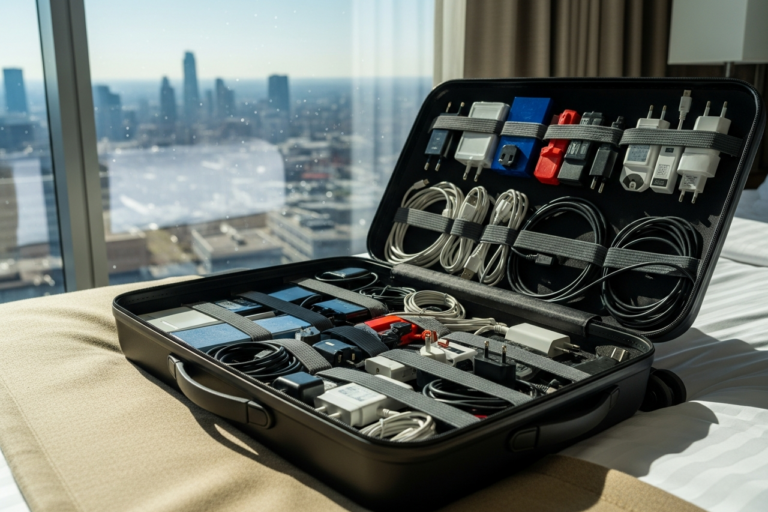
When looking for a travel adapter, think about these types:
-
A single-region adapter: This is good if you go to one country or region only.
-
A universal power adapter: This has many pin setups. You can change it to fit outlets in more than 150 countries. This is a good idea for people who travel a lot.
-
An adapter with USB ports: You can charge more than one device, like phones and tablets, at the same time without using each charger.
Charging Electronic Devices in Colombia
Charging your electronic devices in Colombia is easy most of the time. There is a reliable power supply and the outlets look like the ones you have at home. You can use these outlets to charge your smartphones, laptops, or other gadgets without trouble when you are on the go.
The voltage and outlets work with most chargers, so you just plug in and charge your stuff. Now, we will talk about how you can safely and quickly charge common devices like phones and cameras when you are in Colombia.
Using Smartphones, Tablets, and Laptops
You can charge your smartphones, tablets, and laptops in Colombia with no trouble. Most new chargers for these gadgets are made to be a dual voltage appliance. This means they can handle the voltage you get from Colombia’s power outlets without a problem.
Just take the charger that comes with your device. Plug it right into the Colombian plugs. The voltage and shape of the power outlets in Colombia are almost the same as what you have in the US. So, you do not need to use a special adapter or converter.
This makes it easy for you to use your main gadgets while in Colombia. You can look at your maps, share photos, or check your emails. Just plug your device in like you do at home.
Safely Charging Cameras and Portable Gadgets
Just like with phones and laptops, it is simple to charge cameras and other small devices in Colombia. Most chargers work with dual voltage. This means you can put them into the wall and not worry. Still, look at the label on the charger to make sure it will work.
The power grid in Colombia is good in big towns and cities. But there can still be power outages sometimes, more so in the country or small towns. That is why you should carry a portable charger or power bank. This helps you keep your devices ready to use even when the power goes out.
A portable charger that is charged all the way can really help you out. You can charge up your camera or phone with it when you are away from a plug. This comes in handy during day trips or hikes when you can’t find places to plug in.
Tips for Buying Travel Adapters and Electronics in Colombia
Even if you forget to bring a travel adapter, you do not have to worry. If you come from a country where the power plug is different, you can buy power plug adapters in Colombia. You can get an adapter before your trip, or you can buy one when you get there.
It is a good idea to buy your adapter from a store you trust. This will help make sure you get a product that works well. Let’s look at the places you can go to find a reliable travel adapter and what hotels might offer you.
Where to Purchase Reliable Power Adapters
The easiest way to get a travel adapter is to plan ahead and buy one before you go. Online marketplaces like Amazon have a large selection and you can read the reviews to pick what is best for you. This is also one of the most cost-effective ways to do it.
If you do not buy a travel adapter before you leave, you can usually find them at major airports. These stores are for people who travel around the world and usually have universal adapters. Prices at airports are often higher though, so keep that in mind.
If you are in Colombia and need an adapter, you can look for one at:
-
Large electronics stores in big cities.
-
Some big supermarkets or department stores.
-
Small hardware stores, called “ferreterías.”
Adapters Provided by Hotels and Accommodations
Many hotels and fancy places where people stay may have a small number of travel adapters for guests to use. You can ask about this at the front desk when you check in.
But do not count on them having one for you. The supply of adapters is often low, and other people might already be using all of them. It is smart to have your own travel adapter just in case.
If you come from a place with different plug types, the best idea is to bring your own universal travel adapter. This will help you be ready, and you will not need to depend on the adapter the hotel might offer.
Conclusion
To sum up, it’s important for you to know about the voltage, plugs, and adapters used in Colombia if you want to stay connected. When you understand these things, your trip will go more smoothly. If you get ready before you go, you will not run into problems. Your electronic items will work the way you want during your trip. You might want to capture memories with your camera or keep in touch with your people at home. The right electrical gear is a must for these things. Make sure you get good adapters and converters and buy them from a place you trust. If you want to be sure you have what you need for your trip, you can get a free consultation for your Colombian adventure. Have a safe trip!
Frequently Asked Questions
Can I use European devices without a converter in Colombia?
No, you cannot use most European devices in Colombia without a voltage converter. The voltage in Europe is 230V, but the voltage used in Colombia is 110V. This different voltage can damage the device. You will need a step-down voltage converter to use your device. You also have to get a plug adapter. You need this because Type C plugs from Europe do not fit in the Type A or B electrical outlets found in Colombia.
What should I do if my device is not dual voltage?
If you have a single voltage device that does not work with Colombia’s 110V system, you need to use a voltage converter or transformer. Plug the power converter into the wall. After that, plug your device into the converter. The converter will change the voltage up or down as needed. This helps to protect your device.
Are Colombian power outlets safe for all electronics?
Colombian power outlets are safe to use for most electrical appliances that work with the standard voltage of 110V. If you have appliances from places that use a different voltage, you will need the right adapter or converter. The power grid in Colombia is quite steady, but it’s still a good idea to use a surge protector when you plug in your appliances. This way, you can help protect your devices from problems that the power grid might have.