

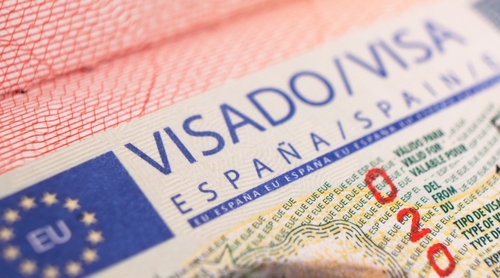
Spain has launched a new pathway to legal status for certain undocumented migrants already living and working in the country. The program is open xfor a limited time, with applications running from April 20 to June 30, 2026, although online applications began April 14. If you have family or friends in Spain without legal status — or you’re just following what’s happening with immigration policy abroad — this is worth paying attention to. Here’s what it actually means, who qualifies, and what life looks like once someone gets their permit.
What Spain just did and why it’s significant
The Spanish government passed a royal decree through the Council of Ministers creating a one-year renewable work and residency permit for undocumented migrants already living in the country. The government estimates around 500,000 people may be eligible, though independent analysts put the number closer to 840,000. To put that in perspective, that’s roughly the population of San Francisco. It’s not the first time Spain has taken this approach either, there have been six similar processes since 1986.

Who Qualifies?
The eligibility criteria are clearly outlined and based on a small set of requirements:
- You were in Spain before December 31, 2025
- You can show at least five months of continuous residence there
- You have no criminal record in Spain or countries where you’ve lived in the last five years
How to Apply
There are several ways to submit:
- Online via Spain’s Cl@ve digital identity system, available 24/7
- In person at an immigration office, by appointment
- At a Social Security office – at least one per province across the country
- At a Correos post office in major towns and cities
What Legal Status Actually Changes Day to Day
For someone living undocumented in Spain, this permit is meaningful in very practical ways. You can work legally and be issued a social security number (NUSS) after the application is admitted. Think of it as the rough equivalent of getting work authorization in the US, but with access to healthcare and labor protections built in from day one.
The right to healthcare (asistencia sanitaria) is formally recognised as soon as the application is admitted for processing.
One thing that tends to get overlooked is banking. Right now, without the right documentation, opening a bank account in Spain can be challenging. With a TIE (Spain’s residency ID card), things become more accessible.
After year one, permit holders can transition into longer-term residency under Spain’s general immigration laws.
Why Banking Matters, Especially for Sending Money Home
Here’s something that doesn’t always make the immigration headlines: many people in Spain are regularly sending money back to family in Latin America, North Africa, and elsewhere. Without a bank account, that could mean cash, informal networks, or wire transfers, which may involve high costs.
Instead, migrants can use services like Remitly to send money digitally to countries including Argentina, Colombia, the Dominican Republic, Venezuela, Morocco, Honduras, and Ecuador.
It’s worth getting banking sorted before the permit even arrives, so everything is ready to go from day one.

The Timeline
The application window runs from April 16 to June 30, 2026 (about ten weeks). There’s no planned extension announced as of the time of this writing.
Once submitted, processing can take anywhere from a few months to most of the year. During the wait, applicants should look into their banking options and keep copies of everything they submit.
Frequently Asked Questions (FAQs)
What if someone doesn’t have official documents?
Not a problem. Spain accepts public and private documents — rental agreements, utility bills, medical records, school enrollment for kids. It just needs a name, a date, and evidence of presence before December 31, 2025.
How long does processing take?
About three months. But provisional work authorization starts within 15 days of the application being accepted — people aren’t stuck waiting to work.
What happens after the first year?
The permit is renewable. After year one, holders can move into standard longer-term permits under Spain’s general immigration framework — a real pathway toward permanent residency.
Can someone open a bank account with this permit?
Yes. The TIE residency card is what Spanish banks need to open a standard account.
What happens if someone misses the June 30 deadline?
This regularization closes on June 30 with no extensions planned. After that, the only options are standard routes like arraigo — which may require longer residency periods and can be more complex.
Official resources
Regularization process
- La Moncloa – official government announcement: lamoncloa.gob.es
- NPR – Spain grants legal status: npr.org
- AP via WSLS – amnesty finalized: wsls.com
- BBC – figures and estimates: bbc.com
Eligibility and how to apply
- JURO Spain – complete eligibility and documents guide: jurospain.com
- SpainResidency.com – amnesty requirements: spainresidency.com
- ETIAS.com – amnesty explainer: etias.com
- VisaHQ – amnesty overview: visahq.com
- Ministry of Inclusion — processing time: inclusion.gob.es
Banking and finances
- Idealista – how to open a bank account in Spain 2026: idealista.com
- Echeverria Abogados – bank account guide: echeverriaabogados.com
- BBVA – basic payment account for new residents: bbva.es
- Banco de España — remittances to Latin America: bde.es
- Centro Europeo del Consumidor (Spain’s Ministry of Consumer Affairs) – TIE account access: consumo.gob.es
Immigration law
- ImmigrationSpain.es – permit renewal and arraigo routes: immigrationspain.es



