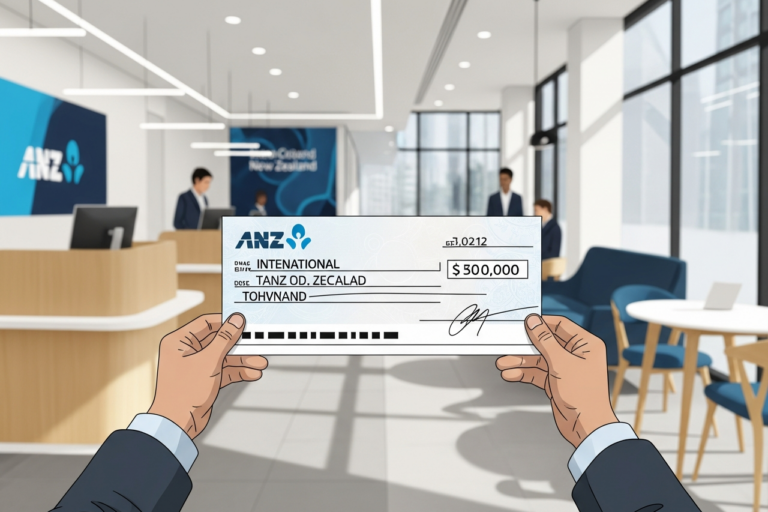
Key Highlights
Here are the key things to know from this guide:
-
An international bank cheque is used when you make a payment in a foreign currency.
-
Many banks in New Zealand, including ASB, stopped taking foreign cheques from 31 March 2024.
-
If you get an international cheque, you need to talk to the sender to set up a new way to get paid.
-
Electronic international money transfers are faster and safer than a cheque.
-
You have to give your bank account details to the sender if you want an electronic payment.
-
If you used to get pensions or share dividend payments by cheque, you will need to make special plans for those now.
Introduction
Have you ever got a cheque from overseas and wondered what to do next? Handling international payments can look hard, especially now when the banking world is changing. In New Zealand, the way people manage these things is changing as well. This guide will show you what an international bank cheque is, why many banks do not take them now, and what you can do to get money into your bank account from overseas.
Understanding International Bank Cheques in New Zealand
An international bank cheque, also called a foreign currency draft, is a paper cheque written by an overseas bank and is in a foreign currency. In New Zealand, this way to send or get money from another country was used a lot before.
But now, banks are starting to stop using these foreign cheques. They want to use new ways that are safer and work better. Banks now choose an international money transfer. This lets you move your money faster and with less trouble. We will look at what makes these cheques different and what people in New Zealand used them for in the past.
What Makes an International Bank Cheque Different from Local Cheques
The main difference between a foreign cheque and a local cheque is the currency and where the cheque comes from. A foreign cheque is given by a bank in another country. It is usually in a foreign currency, not NZD. This means there are more things to do with it, when you compare it to a local cheque that comes from a New Zealand bank in New Zealand dollars.
When you put a foreign cheque into your bank account, your bank has to send it to the overseas bank to check and pay out the money. At this point, foreign exchange happens. The amount on the cheque is changed from the foreign currency into New Zealand dollars. The exchange rate used will be the one at the time of processing.
Because the process is done with banks in other countries, and because of foreign exchange, handling a foreign cheque takes more time and is harder than clearing local cheques. This is also a big reason why many banks are moving away from using them.
Common Uses of Foreign Currency Cheques
Before they stopped using them, foreign currency cheques had an important place in international payments. People in New Zealand often used these cheques to get money from other countries.
There were a few reasons you might get a foreign cheque in the mail. The most common ones were:
-
Getting pension payments from an overseas government or a pension provider.
-
Getting payments for shares, like dividend payment purposes, from overseas share registries.
-
Getting tax refunds from an overseas government.
To cash these foreign currency cheques, you had to bring them to your bank. You also needed a valid bank account and had to go through the bank’s checks. But now, many banks in New Zealand do not accept these cheques. So people need to find other ways to get their money from overseas.
How to Deposit or Cash an International Bank Cheque
If you have got a cheque from an overseas bank, you might wonder how to get the money in your bank account. In New Zealand, today, the big banks like ASB no longer let you deposit currency cheques from overseas.
This means that you can’t just cash or deposit a currency cheque from another country like you may have before. Now, you will need to talk to the sender of the cheque. You should ask them to pay you by using another way, like an electronic transfer. Below, we talk about what you used to do and what you need to do now.
Step-by-Step Process for Depositing at a New Zealand Bank
In the past, if you wanted to put an international cheque into your New Zealand bank account, you had to follow a certain process. Many banks do not accept these cheques now, but knowing the old way can help you see why the system has moved on.
The main steps for putting a cheque from an overseas bank into your account were:
-
Go to a bank branch with the cheque.
-
Fill out a deposit slip.
-
Show your ID.
-
Wait while the cheque gets sent overseas. The bank would check it, clear it, and put the money into your account after changing the amount to New Zealand dollars.
Now, you can’t put in these cheques the old way. What you do is ask the issuer for a new way to get your money. They will need your New Zealand bank account details so they can send you an electronic payment. You can handle these payments using FastNet Classic internet banking, your internet banking with the bank, or by using the ASB mobile app.
Key Requirements and Fees for Cashing Foreign Cheques
When foreign cheques were accepted, there were specific requirements and fees involved. You needed a valid account type with the bank, and the cheque had to be legitimate and not post-dated. Banks charged fees to cover the costs of processing, which included courier charges and currency conversion.
Now that banks like ASB have stopped accepting foreign cheques, the focus has shifted to the fees for alternative payment methods. Electronic transfers are not only faster but also often have more straightforward fee structures.
For example, receiving an international electronic payment into your bank account has a different fee. Here is a simple comparison:
|
Transaction Type |
ASB Fee |
|---|---|
|
Processing a foreign cheque (no longer offered) |
Varies (historically) |
|
Receiving an international electronic transfer |
$15.00 |
Note that the fee for electronic transfers is waived for amounts of $100 or less and for credits to foreign currency accounts.
Clearing Times and Bank Handling Procedures
The time it takes for a foreign cheque to clear was one of the big problems with it. Local cheques are usually cleared in a few business days. But when you have a foreign cheque, the wait can be much longer. This is because the whole process of handling it between banks is much more involved.
The cheque has to be sent to the country where the overseas bank account is held. Then the overseas bank will have to check and approve it. This can take weeks. Sometimes it might even take months. Because the waiting time is so long, the person who gets the cheque can feel unsure about when the money will come through.
The next few sections will talk more about how long these steps take and what needs to be done.
How Long Does It Take for an International Bank Cheque to Clear
Are you asking how long you have to wait for an international bank cheque to clear? In the past, this took a long time. Your money was not there in your account right after you put in the cheque.
Clearing could take weeks, and some people had to wait a month or even more. This wait was there because the cheque had to go all the way back to the bank that gave it out. It went to be checked in its home country. How long you had to wait depended on where the cheque came from, the banks handling everything, and how fast the post was.
Many people did not like waiting so long for their money. That is a big reason why banks use electronic money transfers now. With these, you can get your money in just a few business days. It is much quicker and also more sure.
Processing Differences Between Foreign and Local Cheques
The way a foreign cheque gets processed is not the same as with a local cheque. If you have a local cheque, the banks in New Zealand work together and it is done in a few business days. This is done by using the standard electronic system.
But if you have an international cheque, things are more tricky. After you deposit it, your bank acts as an intermediary. The bank will send the foreign cheque to an overseas bank. The overseas bank has to check the funds, and if everything is right, the money gets sent back. There is also a foreign exchange step to change the money into New Zealand dollars.
This whole process is slow because of all the steps, sending things by post, and having to check everything by hand. That is why this way of processing has risks, delays and can cost more. Because of these problems, banks have stopped using this old method.
Alternatives and Recent Changes to International Cheque Deposits
The way banks in New Zealand handle international cheques has changed a lot lately. From 31 March 2024, ASB and many other banks in New Zealand will not take cheques from overseas banks anymore. You can’t put these types of cheques into your bank.
If you get international payments, like money from overseas share registries or a pension that comes from outside New Zealand, you will need to look at other ways to get your money. The good thing is, there are now faster and safer options to use. In this guide, we go over the new rules and some of the best alternative ways to get international payments.
Current Restrictions on Overseas Cheques
As of early 2024, it has become hard to deposit a foreign cheque in New Zealand. Most banks will not take them at all now. This change covers all kinds of foreign cheques, such as personal, business, and government ones.
If you get a foreign cheque by post, you cannot deposit it at your bank in New Zealand. The reason for this is that people do not use cheques much now. The cost to process these cheques is high. There is also a risk with cheques, so the banks made this rule across the industry. Here are the main points you should know:
-
Banks such as ASB do not take any foreign currency cheque for deposit.
-
This rule is for all countries and all kinds of currency.
-
If someone sends you a cheque, you need to talk to them to get a different way to pay you.
The banks want more people to use the new ways to send money. Digital payment methods are much safer and work better for foreign payments.
Alternative Methods for Receiving International Payments
Cheques are not a good way to get international payments anymore. So, what other ways are there? The good news is, there are several great electronic payment options. They are faster and safer for you.
The best way is to ask for an international money transfer straight into your bank account. This way is simple and safe. To get money this way, you need to give the sender your bank account number and your SWIFT code.
These days, you can get money transfers by:
-
Direct credit to your New Zealand bank account.
-
International money transfer through your bank.
-
Using a foreign exchange service made for these transfers.
-
Digital wallets or other online payment sites.
You can use your internet banking (like FastNet Classic), or a mobile banking app to take care of these international transfers. This makes it easy for you to receive money if you are in New Zealand.
Conclusion
To sum up, it helps to know about international bank cheques in New Zealand if you want to handle foreign money matters well. These cheques have their own good points and hard parts, like how long it takes for them to go through and what fees you might need to pay. If you take time to learn the steps to put in or get money from these cheques, and know what other choices there are, things will be much easier for you at the bank.
It is good to stay up to date with any changes or rules, so you can move through international payments without trouble. If you want to find out more about your banking choices or need help with your money matters, you can go for a free talk with someone who can help.
Frequently Asked Questions
Can I still deposit travellers’ cheques at my local bank?
Like foreign currency cheques, most banks in New Zealand don’t take travellers’ cheques for deposit or exchange any more. The use of travellers’ cheques has gone down a lot. Now, using electronic payment ways is the best way to look after your money when you travel.
What should I do if my bank no longer accepts foreign cheques?
If your bank in New Zealand will not take a foreign cheque, you need to get in touch with the person or the business who gave it to you. Tell them that you cannot put the cheque in your account. Ask if they can pay you in other ways, like by an international money transfer.
Is it possible to clear a US tax refund cheque in New Zealand?
New Zealand banks do not handle foreign cheques anymore, so you can’t put a US tax refund cheque into your bank account in New Zealand. You need to talk to your tax adviser about the best alternative options for getting your refund another way, like through an electronic method.