Key Highlights
Here’s a quick look at what you need to know about telegraphic transfers:
-
A telegraphic transfer (TT) is a way to send money overseas using electronics. It is often called a SWIFT transfer.
-
These international money transfers work through the SWIFT network. Each bank has its own swift code.
-
To send a TT, you must have the recipient’s bank account details. This includes their bank name and swift code.
-
You might pay a transfer fee from your bank, bank fees for currency conversion, and sometimes other intermediary bank fees.
-
TT payments give you a secure way to send a set amount to an international bank account.
Introduction
Have you ever had to send money to someone in another country? If you have, you might have heard of the term “telegraphic transfer.” This way of moving money can sound a bit old-fashioned, but it is still very common. Many people use it when they want to make international money transfers. A telegraphic transfer, or TT, is a kind of bank transfer. It works by using the SWIFT network. The SWIFT network helps banks send your money safely across different countries.
In this guide, you will find out everything you need for doing a telegraphic transfer from New Zealand.
Understanding Telegraphic Transfers
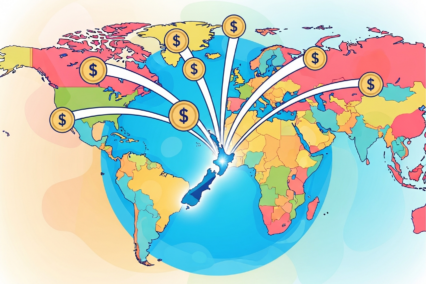
A telegraphic transfer is an electronic way to send money overseas. tt payments are common for international money transfers. While the name might sound old, now a telegraphic transfer is fast and happens online. People and businesses both use it when they need to move funds to someone’s account in another country.
These fund transfers happen through the swift network. The swift network links banks all over the world. It helps make sure your money gets to the right place. You might need to do an outward telegraphic transfer or get money from an inward rransfer. Knowing the basics helps a lot. Now, we will look at what a TT is and the main words you will see.
What Is a Telegraphic Transfer (TT)?
A telegraphic transfer, or TT, is an electronic transfer of funds from one bank account to another. People often use this for sending money overseas. This is seen as a safe and formal way to do an international bank transfer. The name came from the time when banks used telex machines, but now it is all done online.
These days, the word “telegraphic transfer” mostly means a SWIFT transfer. This uses the SWIFT network, which is short for the Society for Worldwide Interbank Financial Telecommunications. The SWIFT network lets banks send payment instructions to each other and helps the movement of money stay safe around the world.
Here’s how a bank transfer like this works. Your bank will send a safe message through the SWIFT network. This message goes to the bank where you want to send money. It tells them to put money into the person’s bank account. People use TT payments because they trust this way of moving money. Just remember to check for any bank fees when you do an international bank transfer.
Common Terminology Associated with Telegraphic Transfers
When you set up a telegraphic transfer, you will see some special words. Learning what they mean will help you get things done more easily. These are the main things you need to know to make a wire transfer work well.
It is important to have all the right details for the person or business you want to send money to. This helps the money go to the right bank account with no big waits or problems. It does not matter if you use a personal or a business account, you still need to check all the details.
Here are some of the most common terms you will find:
-
SWIFT/BIC Code: This is a one-of-a-kind code with 8 or 11 letters and numbers. It tells you which bank someone uses in the SWIFT network. You must get the right SWIFT or BIC code for the recipient’s bank.
-
Bank Account Number: Make sure you get the correct and full bank account number of the person you are paying.
-
Recipient’s Bank Name and Address: You will need the full bank name and the address of the bank.
-
Intermediary Bank: At times, there is another bank that helps with the payment. This extra bank may want a fee from you or the person getting money.
Using the right account number, bank name, bank account number, bic code, and knowing about any bank fees is part of a good wire transfer. Make sure to double check all your info before
How Telegraphic Transfers Work in New Zealand
For people in New Zealand, sending a telegraphic transfer is common. Most big banks offer this service. It is a good way to send an international payment right from your bank account. The sending bank starts the transfer, and it goes through the swift network. It ends up in the person’s bank account, most times in a few working days.
If you want to make a TT payment, you must share details about who is getting the money. This includes their bank account and their swift code. Your bank will ask you to pay a transfer fee for doing this. Some banks do not charge a transfer fee for certain online payments. Here are the main steps and information you will need.
Step-by-Step Process of Sending a TT
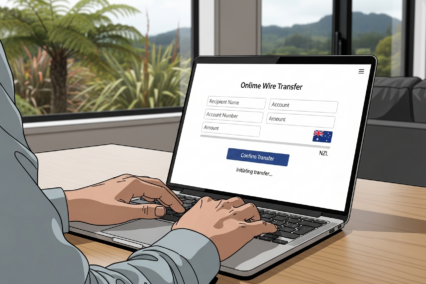
Sending an outward telegraphic transfer is simple. The process keeps your money transfer safe so it goes to the right receiving bank. Most banks in New Zealand let you do this using online banking.
First, you have to get all the needed payment instructions. You need the person’s name and their bank account details. When you have all of this, log in to your online banking. Go to the part that says international payments, and then you can start the form.
Here is a general outline of the process:
-
Log in to your online banking and choose the international transfer option.
-
Type in the transfer amount and choose the currency to send.
-
Fill in the recipient’s full name, address, and bank account number.
-
Write in the recipient’s bank name, address, and their swift code.
-
Check all details, like the transfer fee and currency conversion.
-
Confirm the payment. Your sending bank will then handle the telex transfer.
Requirements for Sending and Receiving a Telegraphic Transfer
To make sure your international money transfer works without any problems, you must give the right details for the sender and the receiver. If there is a mistake in the bank account details, your money might be held up. The transfer could also be sent back, and you might have to pay extra money as fees.
For the sender, you need an account with the sending bank. You also need to have enough money in your account to cover the transfer amount plus the sending bank fee. If you go to a branch to send money, you will need to show your identification.
The receiver has to give you all the correct details. This means the right bank account number, the full bank name, and the SWIFT/BIC code. The receiver should call or visit their bank to check these details. They should also ask if there are any fees from their bank or from any intermediary banks that may take money from the amount sent.
If both people are careful, your money transfer will go well.
Key Information Needed for International Telegraphic Transfers
Getting the details right really matters when you make international telegraphic transfers. To start a TT payment, you need to give your sending bank all the needed details of the person you want to pay. If you make even one small mistake in the bank account number or the bank name, your money could end up in another bank account or the transfer could be delayed for a long time.
The main thing is to make sure the recipient and their bank account are clearly known in the SWIFT network. Before you go ahead with the transfer, check all the payment instructions with the person you are sending money to. Taking time to do this helps make the transaction smooth and trouble-free.
Essential Details for the Sender
As the person who sends the money, you need to have a few key details ready for your bank. These details help make sure the transaction goes smoothly from your end. It’s also good to know about all the bank fees before you go ahead.
You can do most of this on your online banking account. The bank debits the transfer amount and any transfer fee right from your bank account. Make sure you look at the bank fees and their currency exchange requirements before you pay.
Here is what you will need to give:
-
Your full name and address.
-
The bank account number you are transferring the funds from.
-
The transfer amount and the currency you want to use.
-
The reason for your payment, as some banks ask for this to meet rules.
-
Your agreement to pay any bank fees.
Details Required from the Receiver
To make sure your international payment gets to the right place, you need to have clear and complete information from the person you are sending money to. The receiving bank needs these details to make sure the money goes into the right bank account.
Ask the person you are sending money to check all their details with their bank. This will help stop any mix-ups. Even a small mistake, like a wrong bank account number or the wrong account name, can stop the transfer from going through. Getting the details right the first time can save you time, money, and hassle.
Here’s the information you need to get from the other person:
-
Their full legal name as it shows on their bank account (recipient’s account name).
-
Their full street address.
-
Their whole bank account number.
-
The name of their bank.
-
The full address of the bank (this could be the branch or the main office).
-
The bank’s SWIFT code.
Importance of Accurate SWIFT Codes and Bank Information
Yes, you need a swift code if you want to make an international transfer using a telegraphic transfer. The swift code, which can also be called a bic code, acts like a postcode that tells the swift network where your money needs to go. It makes sure your money arrives at the right bank name, no matter where it is in the world. If the swift code is wrong or missing, there is a good chance your payment will not go through, or it could get held up.
The swift system helps banks talk to each other safely when people send money. If you put in the wrong code, your money might go to the wrong place. Sometimes, this might mean another bank has to handle your money and could charge extra fees or return it, but take some costs out first. That’s why the right swift code is important to make sure your international transfer gets to the correct bank account.
To find the swift code, the person you want to pay should ask at their bank or visit the bank’s website. You will often see the swift code in the international transfer section. It is a good idea to always check this code with the receiver before you send money. That way you know the swift network won’t have any problems getting your money to the right bank name.
Fees and Costs of Telegraphic Transfers
When you send money to another country, you need to know about the bank fees you may have to pay. A telegraphic transfer can have a transfer fee from your bank, a fee for currency conversion, and at times, there may be other intermediary bank charges from correspondent banks that help with the payment.
The total cost for your SWIFT transfer can change. It depends on the transfer amount, what currencies you are sending, and which banks use the SWIFT network to process it. Knowing about these different fees helps you see the real price for your international money transfers.
Typical Charges for International Transfers
The costs associated with an international transfer can be broken down into a few categories. The most obvious is the sending bank fee, which is the upfront charge from your bank for processing the SWIFT transfer. Some banks, like ANZ in New Zealand, may waive this fee for transfers made through their online banking platforms.
However, that’s not the only cost. The recipient’s bank might also charge a fee for receiving the funds. Furthermore, if the transfer needs to pass through an intermediary bank to reach the final destination, you could face intermediary bank fees. These charges are often deducted from the amount sent before it reaches the recipient’s bank account.
Here is a breakdown of typical charges:
|
Fee Type |
Description |
|---|---|
|
Sending Bank Fee |
A flat fee charged by your bank to initiate the transfer. For example, ANZ charges $0 for online transfers but $15 at a branch. |
|
Intermediary Bank Fees |
Charges by one or more correspondent banks that handle the transfer between your bank and the recipient’s bank. These can vary. |
|
Receiving Bank Fee |
Some banks charge a fee to their customers for receiving an international payment. |
|
Currency Conversion Margin |
A markup on the exchange rate applied by the bank when converting your NZD to a foreign currency. |
Currency Conversion and Exchange Rates
When you send an international transfer in a foreign currency, currency conversion is an important part of the process. The exchange rate the bank gives will decide how much money the other person gets in their local money. You need to know that the exchange rates for a money transfer given by banks are often not the same as the middle rate you see online.
Most banks put a margin or a bit extra on the exchange rate as part of their money transfer service. This is how they make money from your international transfer, and it is often a hidden cost added to any bank fees. If the exchange rate is not good, then less of your transfer amount reaches the person you send it to.
Before you say yes to the transfer, your bank should let you see the exchange rate they will use. You should check and compare this with other ways of making a money transfer if you can. Some banks will have better currency exchange requirements than others. So knowing how different exchange rates and bank fees affect the final value can help you get more to the other person.
Potential Extra Fees from Intermediary Banks
One of the less expected costs that can come up with an international transfer is bank fees charged by intermediary banks. These banks, or correspondent banks, help move your money through the SWIFT network when your bank does not deal straight with the other bank.
Intermediary banks take a fee for helping with the movement of money. It is common for these intermediary bank fees to be taken out of the transfer amount while it is on the way. Because of this, the person who gets the money may not get all you sent. It can also be hard to know about all the different fees before you send your money.
Some banks and money transfer services now show you all their costs up front. They may let you pay a set fee that covers all intermediary bank charges. This means the person gets the full amount in the end. This option lets you know the cost at the start, but you could end up paying more than the normal transfer fee. Make sure you ask your bank if they have these options so you can cover all possible bank fees.
Comparing Telegraphic Transfers with Other Money Transfer Options
A telegraphic transfer is a common way for people to send money overseas. But, it is not the only way. Now, there are new options for international money transfers. For example, you can use a wire transfer, electronic funds transfer, or online payments. Each way has something good and something bad about it. This could be how quick it is, how much it costs, or how easy it is to use.
If you know the difference between a SWIFT transfer, a regular electronic funds transfer, and special online payment methods, you can pick what is best for you. Here, we will look at TT payments and compare them to other popular ways to send money.
Differences Between TT and Wire Transfers
The terms “telegraphic transfer” and “wire transfer” often get used in the same way. This is very common when people talk about an international bank transfer. Now, banks use both names to describe the same thing. It is an electronic money transfer from one bank account to a different bank account, usually sent over the SWIFT network.
In the past, these names came from how people sent money—telegraphs were used for TTs, while wire transfers used different old networks. Today, both mean a SWIFT payment. But some people say “wire transfer” when they talk about domestic bank transfers too. The term “telegraphic transfer” usually points to an international transfer.
Here’s a clear look at both:
-
Terminology: “Telegraphic transfer” is an older name. Now, it is the same as an international SWIFT transfer. “Wire transfer” is used to talk about both international and domestic electronic payments.
-
Network: Both use the SWIFT network for international transactions.
-
Process: With both, you give a SWIFT code, the account details, and pay a transfer fee. The steps are all the same.
-
Modern Usage: These days, your bank will know what you mean, no matter which word you use for an international bank transfer.
TT vs. ACH Payments and Online Transfer Methods
TT payments are not the same as other ways to send money online, like ACH payments or special online transfer services. While they all move money in an electronic way, the systems they use are different. Because of this, they fit different needs for people and businesses.
ACH payments stand for Automated Clearing House payments. You find ACH mostly in the United States for domestic transfers. The payments are sent together in batches through a clearing house. These are not fast, but they cost less. Because they are not quick, they work well for things like pay day or paying bills, but they are not good for sending money overseas when time matters. Some new online transfer services now give people faster and cheaper ways to shift money than old-style bank transfers.
Here’s how each option stacks up:
-
TT Payments: These use the SWIFT network and are great for safe transfers between bank accounts all around the world. But, they can take longer and cost more.
-
ACH Payments: Best for domestic transfers, mainly in the United States. These payments go in batches, using a clearing house. They are often cheaper, but take more time.
-
Online Transfer Services: These can give people better exchange rates, lower fees, and faster times than banks. However, there may be limits on how much you can send at one time.
Security, Limits, and Reliability of Telegraphic Transfers
When you need to send a large transfer amount to another country, there is always concern about how secure it will be. A telegraphic transfer is seen as a safe way to send money. Banks use the SWIFT network for this. It is a well-known system that helps banks look after international money transfers with care. The banks offer a strong level of security for your money.
A SWIFT transfer is also said to work well. Because the money goes from one bank to another, every step of the move is recorded. It may take a few business days for the whole thing to finish. But you know your money is safe and looked after by groups who must follow rules in their country.
How Safe Are TTs for Sending Money Overseas?
Telegraphic transfers are a safe way for people to send money to other countries. These bank transfers use the strong SWIFT network. Banks all over the world have used this network for many years for international money transfers.
A SWIFT transfer is secure because there is more than one step to check and approve it. Every bank in this network has its own SWIFT code. The messages for each payment are also locked, so nobody else can see or change them. If you give the correct details for the person you want to send money to, it is very hard for anyone to get your money in a bad way.
Here’s why TTs are a safe way for you to use an international bank transfer:
-
Verified Network: Only banks and other money companies can get into the SWIFT network, and it is private and very safe.
-
Traceability: Each bank transfer will have its own special number. This makes it simple to follow your money and see where it is at any time.
-
Bank-Level Security: Your money uses the same rules and checks as any other process run by your bank.
-
Direct Bank-to-Bank: The money goes straight between real banks that are checked by law, not other less safe ways of moving money.
Limits on Transfer Amounts for New Zealanders
Yes, in New Zealand, there are usually rules about how much money you can send with a telegraphic transfer. The transfer amount you can send often changes depending on your sending bank and the way you make the international transfer. For example, if you use online banking, the daily limit is often lower than if you go to a branch in person.
Banks put these limits in place for safety. They need to stop fraud and follow anti-money rules. If you want to send a big amount of money, especially from your business account, you might have to go into a branch. You may also need to show extra papers or ID at the bank.
As an example, your bank name might let you send up to $50,000 each day by online banking for an international transfer. If you want to send more than that, the best thing is to talk to your bank or visit your branch. You should always check with your sending bank to know for sure about their rules on the transfer amount.
Conclusion
To sum up, it’s important to know about telegraphic transfers if you are in New Zealand and want to send money transfer overseas. This method helps you send funds in a safe and quick way. TTs can be a good choice when compared to other international money transfers. When you know about the words used, how it works, and what fees there might be, you can make your transfer easy. Always make sure you give the bank the right details like SWIFT codes and bank account info. If you want to be in charge of your international money transfers, talk to your bank or look at some good and trusted online services.
Frequently Asked Questions
Do I need a SWIFT code for a telegraphic transfer in New Zealand?
Yes, you need a SWIFT code for any telegraphic transfer you send from New Zealand to another bank overseas. The SWIFT code helps to find the right bank in the SWIFT network. This makes sure that your international transfer goes to the correct place. If you do not use it, your payment will most likely not go through.
How long does a telegraphic transfer usually take to process?
A telegraphic transfer, or a SWIFT transfer, will usually take two to five business days to reach the recipient’s account. The time it takes can change based on the country where the bank transfer is going. Things like time zone differences and how many intermediary banks are used in the international bank transfer can also affect when the money will show up.
Which banks in New Zealand offer telegraphic transfer services?
Most big banks in New Zealand let you do bank transfers for international money transfers. This is true for banks like ANZ, ASB, BNZ, Westpac, and Kiwibank. You can use their online banking, call them, or go to a branch to send your money this way.