

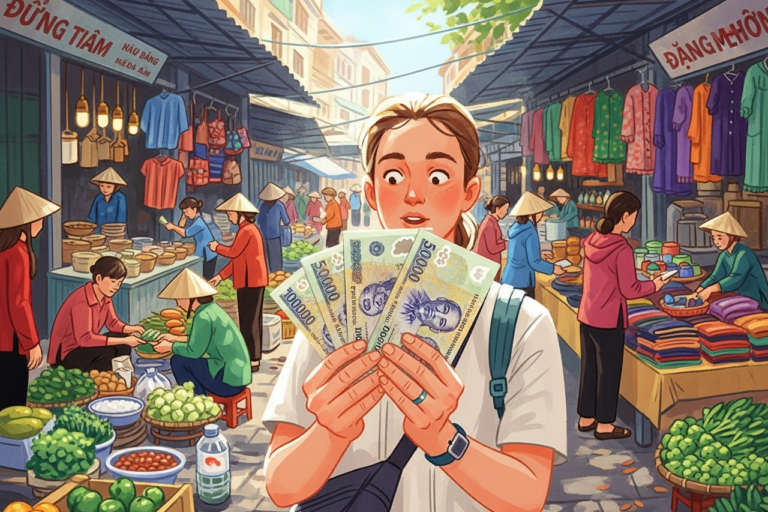
Key Highlights
-
The Vietnamese Dong (VND) is the official currency of Vietnam. You will need it for most things you buy or pay for.
-
Some tourist areas may take US dollars. But you will usually get a better exchange rate if you use the local currency.
-
You can swap your foreign currency for Vietnamese Dong at banks, currency exchange providers, and some hotels in major cities like Ho Chi Minh City.
-
Many bigger shops and restaurants in Ho Chi Minh City let you make card payments. Still, it is good to carry cash for small shops and street vendors.
-
There are a lot of ATMs where you can get cash out, but watch for withdrawal limits and any extra fees from local banks.
Introduction
Are you planning a trip to see the beautiful places in Vietnam? You will need to get your travel money sorted before you go. The vietnamese dong is the official currency in Vietnam. If you know how to use it, your trip will be easier and may even cost you less. In this guide, you will learn about the vietnamese dong. You will find out how to change your New Zealand dollars, how to pay for things in Vietnam, and how to feel sure about your cash when you travel.
Understanding Vietnam’s Official Currency
The official currency used in Vietnam is the Vietnamese Dong. You often see VND in exchange rates, and the symbol ‘₫’ on what things cost in shops and places to eat. The State Bank of Vietnam is the country’s central bank. It is in charge of bringing out and handling the official currency.
If you are travelling from New Zealand, you should use Vietnamese Dong for most things you buy. You can have some foreign currency with you, but it is better to use the local money. This will make your trip much easier.
What is the Vietnamese Dong (VND)?
The Vietnamese Dong, also known by the currency code VND, is the official currency in Vietnam. The State Bank of Vietnam gives out this money. You will use it at many places, like when you buy street food or pay for your hotel room. If you travel to Vietnam, you will notice that the notes have high numbers.
When you need to change your money, you will look for the VND code. You will see prices listed with the ‘₫’ symbol. For example, a cup of coffee could cost 25,000₫.
It is good to know how much the Vietnamese Dong is worth compared to the New Zealand dollar. When you see the exchange rate, you will find that most things are priced at thousands, or even millions, of Dong. To make things easy, you can use a currency converter on your phone to check what you are really spending.
Brief History of Vietnamese Dong
The story of the Vietnamese Dong we see now started after the end of the Vietnam War. At that time, Vietnam used two different types of money—the North Vietnamese Dong, and the South Vietnamese Dong. This was because the country was split up into two sides.
When Vietnam came back together in 1978, the government brought in one main currency for everyone. The new Vietnamese Dong took the place of both the north and south versions. This was an important move for the country’s economy.
Since then, the State Bank of Vietnam has taken care of the Vietnamese Dong. There have been good times and hard times, and sometimes, a lot of things got more expensive very fast. The currency lost value many times. The State Bank came out with higher-value banknotes. This is why the numbers on today’s money can be quite high.
Vietnam Currency Denominations for Travellers
When you get to Vietnam, you will mostly use Vietnamese banknotes. You may see Vietnamese coins, but this is not common in tourist areas or for usual things you buy every day. The amount of money on these banknotes can look like a lot at first, so it will help if you get to know them.
It is a good idea to have different types of these banknotes with you. This will help when you need to pay for a taxi, buy a souvenir, or do other things. A currency converter can help you see how much each note is worth. Now, let’s check out the main banknotes you will find.
Common Banknotes and Coins
You’ll primarily use Vietnamese banknotes for your daily spending. These come in polymer, which makes them durable and water-resistant. The denominations range from 100₫ to 500,000₫. It’s wise to carry a mix of smaller and larger notes to get the best value, especially when dealing with street vendors who may not have change for large banknotes.
While Vietnamese coins do exist, they are very rarely used in circulation and you are unlikely to receive them as change. The focus is almost entirely on banknotes for all transactions.
Here’s a quick look at the commonly used banknotes you’ll be handling:
|
Banknote Denominations |
|---|
|
10,000₫ |
|
20,000₫ |
|
50,000₫ |
|
100,000₫ |
|
200,000₫ |
|
500,000₫ |
4.2
Identifying VND Notes in Day-to-Day Use
It can be hard to tell Vietnamese Dong notes apart at first because there are so many zeros. Each note has a different colour and you will see a picture of Ho Chi Minh on one side. It is a good idea to get to know these banknotes so you do not give too much money, especially at busy markets or in small shops.
The notes are made from a kind of plastic, so they feel different from paper. Each one also has a clear window for safety. The 20,000₫ note and the 500,000₫ note look nearly the same because of their colours. The 10,000₫ note and the 100,000₫ note are quite close in colour too. This means you need to check the notes before you pay someone.
To help you use Vietnamese Dong:
-
Look at the colours. The 500,000₫ note is a bright blue colour, and the 100,000₫ note is a green-gold.
-
Look for the numbers. You can find clear large numbers telling you each note’s value.
-
Keep your wallet tidy. Put smaller and bigger notes in different places. This makes it easy to get the right note when you need it.
Can New Zealand Travellers Use Other Currencies in Vietnam?
While the official currency in Vietnam is the Vietnamese Dong, you may wonder if you can use NZ dollars or another foreign currency there. All payments should be made in VND. In big cities where there are a lot of tourists, some shops may take US dollars, but you cannot count on this every time. You also often get poor exchange rates when you use other money.
It is always best to use the local currency, as this helps you avoid problems and extra fees. Using foreign currency like the NZ dollar is not the best idea for your travel plans in Vietnam.
Acceptance of US Dollars, NZ Dollars, and Other Foreign Currencies
In Vietnam, the law says that people must price and pay for all goods and services in Vietnamese Dong. Still, in big tourist areas, there is some room to use other money. The US dollar is the main foreign currency you might see. People use it most for big things you buy, like hotel rooms or tour packages.
It is not likely that anyone will accept NZ dollars. So, you should not try to pay with them. Even if someone takes US dollars, the exchange rate that you get from a shop or hotel is not as good as at a bank or an official currency exchange.
Here are some things to remember:
-
Always use Vietnamese Dong to get the best exchange rate and to follow the rules.
-
Some hotels and tour companies in tourist areas sometimes give prices in US dollars. But you can nearly always pay in Vietnamese Dong.
-
If you have NZ dollars, bring them to exchange once you get there. Do not try to use them to pay for things in Vietnam.
This way, you know how to use the official currency and what the exchange rate means for you when you visit tourist areas.
Where and When to Use Local Currency versus Foreign Currency
For most of your trip, you should use the local currency, Vietnamese Dong. You need it for things like food at local places, shopping at markets, getting a taxi, and when you buy things at small shops. Most people who work outside the big tourist spots, or live in rural areas, will only take Vietnamese Dong.
Sometimes, prices might be shown in a foreign currency, like US dollars. This usually happens at top hotels or with big tour companies. Check with the hotel staff to see if you can pay in Vietnamese Dong. This is the way to get the best deal and not get stuck with poor exchange rates.
If you stick with the local currency, you’ll get fair prices and you can buy from anyone in the country. If you use a foreign currency, your choices go down and you might end up paying more. So, it’s best to change your travel money to Vietnamese Dong.
Exchanging Money in Vietnam
Getting Vietnamese Dong when you get to Vietnam is easy. You can do a currency exchange at banks, or go to places that are allowed to exchange money. You may get a better exchange rate if you avoid doing currency exchange at the airport. The exchange rate at the airport is usually not as good.
If you bring a travel money card or use your international cards, you can take out local cash at an ATM. This way is good and quick. It helps to check the market exchange rate before doing any exchange. You can use a currency converter app for this. That way, you know what is fair and what to expect for the vietnamese dong.
Best Places in Vietnam to Exchange NZD for VND
To get the most Vietnamese Dong for your New Zealand dollars, the place where you swap your money is important. The best spots for currency exchange are usually in the city centres. You will find better exchange rate choices here than at airports or hotels, where you will not get the most competitive rates.
When you are in major cities like Ho Chi Minh City or Hanoi, try to use trustworthy banks or currency exchange providers that are licensed. Banks like Vietcombank or ACB are good and safe, but you may need to fill in more paperwork. Some gold shops and jewellery stores also give good rates, but make sure they are licensed to avoid problems.
For your travel money, here is how you can get the best deal:
-
Use licensed currency exchange counters in the downtown areas of major cities like Ho Chi Minh.
-
Check and compare the rate offered to the market exchange rate before you decide.
-
If you exchange a larger amount at one time you might get a better rate, but be careful about holding too much cash.
This way, you can make the most out of the exchange rate and your travel money.
Tips for Getting the Best Exchange Rates and Minimising Fees
Getting the best exchange rate means you will have more travel money to use. One tip to follow is to know the current mid-market rate. That is the real exchange rate and it does not have extra costs added on. You can see this rate on a good currency converter or an app like Wise. If you know this, you can protect yourself from poor exchange rates.
When you exchange cash, always count the money while you are at the counter. That way, you can make sure you get the right amount. If you see any deal that looks too good to be real, be careful. It can often have an extra fee or even be a scam.
Here are some ways to get the best deal on currency conversion:
-
Try not to use airport or hotel exchange desks. They often have bigger margins and worse rates.
-
Use a multi-currency card when you get cash from ATMs. Many times, these have competitive exchange rates.
-
If you pay by card, always pick to pay in the local currency (VND). This helps you avoid dynamic currency conversion, where you could pay an extra fee.
Convenient Ways to Access and Spend Money in Vietnam
You can look after your Vietnamese money in a few ways. Cash is still best for street food and market shopping. But now, card payments can be used at hotels, restaurants, and bigger stores. You can use a debit card or a travel money card to take out cash from ATMs when you need it.
If you use international cards, be careful with dynamic currency conversion. Always pick to pay in Vietnamese Dong, not your home currency. This helps you get a fair deal. If you know your choices for spending and getting money, it will be easy to use your travel money in Vietnam. That way, you can enjoy your time without any stress about currency conversion or card payments.
Using Credit Cards and Digital Payments
Credit cards and other card payments are used often in big shops and places in Vietnam. You can use your international cards, like Visa or Mastercard, with no trouble at many mid to high-range hotels, places to eat, and retail shops in cities. These card networks will be accepted most of the time.
But, when you want to buy small things, grab some street food, or shop at a local market, you will need to have cash. Digital payments, like Apple Pay, are not used much in Vietnam yet, so you should not use them as your main choice for payment. Some places might also charge an extra fee for card payments. It’s best to ask first before you pay.
When you use your card:
-
Always pick to pay in the local currency, VND. This can help you stay away from poor exchange rates from dynamic currency conversion.
-
Let your bank know about your travel plans. This will keep them from blocking your card because of what they might see as odd activity.
-
Always have some cash with you, just in case the shop or food stall does not take card payments.
ATM Accessibility and Cash Withdrawals
ATMs are easy to find all over Vietnam, especially in cities and in tourist areas. This makes it simple for you to get cash when you need it. You can use your New Zealand debit card at these machines and take out Vietnamese dong right away. For the best experience, try big local banks like Vietcombank or Agribank, or use an international bank like HSBC.
Most Vietnamese ATMs have withdrawal limits. Normally you can only take out between 2,000,000 and 5,000,000 VND in one go. Your own bank could also set a daily limit. Local banks in Vietnam will usually charge you a fee for each cash withdrawal. Your New Zealand bank might also have a fee. If you are going into rural areas, there may not be many ATMs. It’s a good idea to get enough cash before you travel out of the cities.
For the best value when you make ATM withdrawals:
-
Take out more cash each time so you don’t pay the fixed fee too often.
-
Ask your bank about their fees for using your debit card overseas before you go.
-
Use ATMs that are inside actual banks. This is safer.
These tips can help you handle your money the right way while you travel in Vietnam and want to use vietnamese dong in both tourist areas and rural areas.
Conclusion
To sum up, knowing about money in Vietnam is very important for people from New Zealand. You should get to know the Vietnamese Dong (VND) and the different notes. It is also good to learn the best ways to swap your money. This will help make your trip easy and fun. Watch for places that might take foreign money, as some may use it instead of the local currency. When you know more about how to get and use your money in Vietnam, you can enjoy the country’s amazing culture and beautiful views. If you have questions or need help, you can ask for more info or support. Have a safe trip!
Frequently Asked Questions
What is the current exchange rate for Vietnamese dong to NZD?
The exchange rate for the New Zealand dollar and the Vietnamese dong can change every day. If you want to know the latest vietnamese dong rates, you should use an online currency converter that you can trust. The converter will tell you the market exchange rate, and you can use this as a guide to help you get competitive rates when you swap money.
Is it better to exchange money before travelling to Vietnam or after arrival?
Usually, you will find more competitive exchange rates if you change your money after you land in Vietnam. It is best to do this at banks or licensed changers in city areas. If you change money at home or at airports, you may get poor exchange rates. It is a good idea to carry a small amount of local cash for any needs you have right after you arrive.
Are there any tips for handling money safely while travelling in Vietnam?
To keep your Vietnamese money safe, do not carry a lot of cash with you. You can keep extra travel money and your passport in the hotel safe. When you pay at small shops or with street vendors, try to be private and quiet about it. Always look at what is happening around you, especially if you are with many people, so you do not lose your money to pickpockets.



