

Key Highlights
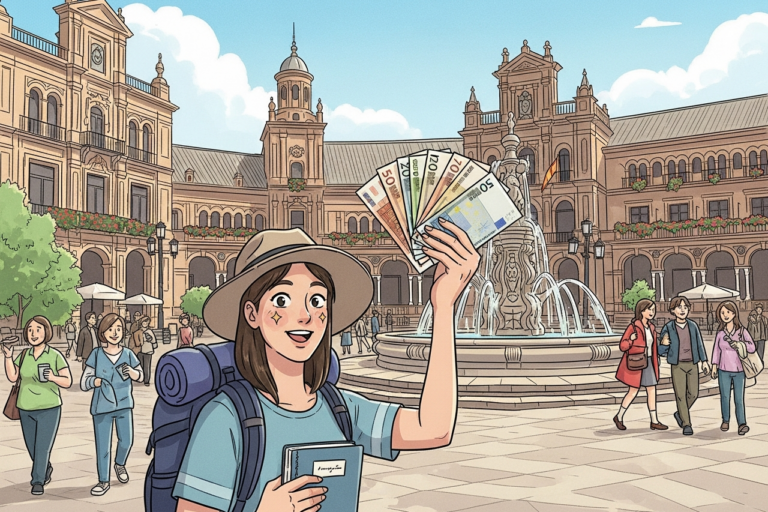
Here’s what you need to know for your trip to Spain:
-
The euro (EUR) is the official currency of Spain. It has taken over from the Spanish peseta.
-
You can swap your New Zealand dollar for euros. Do this either before leaving New Zealand or after you land in Spain.
-
Use a currency converter app. This will help you see the real-time exchange rate between the dollar and the euro.
-
Watch out for things like exchange rate markups and foreign transaction fees when you use foreign currency.
-
Many places take credit cards, but it is a good idea to keep some cash. You may need cash for smaller purchases.
It is helpful to know the exchange rate and have cash for things when you travel. This way, you can use both your card and money easily in Spain.
Introduction
Are you thinking about going from New Zealand to Spain? This will be a fun trip, but you need to get your travel money ready first. You should learn about the local currency in Spain and how to get the best exchange rate for your New Zealand dollars. When you know what to do with your money, your whole trip can be much easier. This guide will help you with all you need to know about money in Spain. You will find out about the history of Spain’s currency and get easy tips for spending while you are there.
The Currency Used in Spain
If you want to know the currency of Spain, it is the euro. The code for the euro is EUR. This is the currency that many people in European countries now use. It helps people travel around these countries more easily.
Spain used the peseta before, but you cannot use it now. All things you buy or pay for in Spain use euros. It does not matter if you get a coffee or stay at a hotel—you will pay in euros. Let’s talk more about the euro and how Spain changed its currency.
Overview of the Euro (EUR)
The euro is the main currency in many countries across Europe, looked after by the European Central Bank. More than 340 million people use this money in the Eurozone. This makes trade and travel much easier between countries that use it. The currency code EUR is known by people and used on foreign exchange markets all over the world.
If you are in Spain, you will use euro banknotes and coins for most things. EUR notes come in different sizes, from €5 up to €500. But, bigger notes are not used much every day. Each country in Europe that uses the euro has the same design for euro banknotes.
Every EUR note has its own colour and size, so you can know what note you have. For example, the €5 note is grey, the €10 note is red, and the €20 note is blue. Making the notes this way helps people use the euro with no trouble when they travel or buy things in Europe.
History of the Currency Transition in Spain
Spain has an interesting story when it comes to their currency. The currency of Spain used to be the Spanish peseta before the euro. People had used the peseta for a long time. The roots of this currency go back many years, even before it was made official in the 19th century.
Things changed as Spain became part of the Eurozone. On 1 January 1999, the euro was brought in as money for online banking and other bank work. Later, in January 2002, euro banknotes and coins started to be used in everyday life. The old currency, the peseta, started to fade out.
For a little while, people could use both the peseta and the euro at the same time. This gave folks in Spain time to get used to the new currency. But after March 2002, you couldn’t use the peseta as money anymore. The euro was then the only currency of Spain. The moment Spain switched to the euro marked a big change in its history. This helped bring Spain closer to Europe and the way other countries use banknotes and money.
Euro Banknotes and Coins
When you get some euros, you will see the range in both the banknotes and the euro coins. All euro banknotes are the same in every country that uses the euro. These banknotes show old building styles from many times in European history. They do not show one country’s famous places.
Euro coins are not like the euro banknotes in this way. There is one side of the coin—the “common” side—that is the same in all euro countries. That side has the value of the euro coins and a map of Europe. The other side—the “national” side—is different in each country. Every country picks its own pictures or symbols to go on their coins. Now, let’s have a look at what you might see on Spanish euro coins.
Design Features of Spanish Euro Banknotes
Euro banknotes look the same all over the Eurozone. This is to show unity. But there are small ways to know where a note comes from. For example, the first letter of the serial number tells you the national central bank that put it out. If you see a “V”, the euro banknotes come from Spain.
EUR notes are made with pictures that stand for Europe’s history. The front shows windows and gateways, which mean that Europe is open and welcomes others. The back of the banknotes shows bridges. These bridges stand for working together across the countries of Europe and outside Europe as well.
In the past, Spanish peseta banknotes showed well known people from Spain like the writer Miguel de Cervantes or the artist Velázquez. They are not seen on EUR banknotes now. The people who designed the euro chose not to highlight history from just one country. Here are the notes you will use the most:
-
€5, €10, and €20 notes are good for buying things each day.
-
€50 notes are used when you need to pay for bigger things.
-
€100, €200, and €500 notes do turn up, but not all shops will take them.
[euro euro banknotes eur notes miguel de cervantes eur spanish spain banknotes peseta europe]
Spanish Euro Coins and Their Unique Symbols
This is where you can see a special Spanish look. The national side of Spain’s euro coins shows different designs. These designs show the country’s history, culture, and its royal family. The coins may look Spanish, but they can be used in any country that uses the euro.
There are coins in values of 1, 2, and 5 cents. These are made from steel with a copper cover. The 10, 20, and 50 cent coins are made of a ‘Nordic gold’ mix. The 1 and 2 euro coins are made with two different precious metals.
Here is what you will find on the Spanish coins you might have:
-
1, 2, and 5 cent coins: The coins have the Santiago de Compostela Cathedral. This is a well-known place where many people go on long walks called pilgrimages.
-
10, 20, and 50 cent coins: On these, you see the face of Miguel de Cervantes. He wrote “Don Quixote” and is a very important author.
-
1 and 2 euro coins: These coins show a picture of King Felipe VI, who is the king now. Older coins show King Juan Carlos I, his father.
You get a bit of Spain in your pocket with these euro coins.
Converting New Zealand Dollars to Euros
If you want to change your New Zealand dollar (NZD) to euros (EUR), this is an important part of getting ready to travel. The exchange rate for these two is always going up and down, so it’s good to watch it closely. You can use a currency converter to check the latest market rate.
Just remember, the rate that you see online is not always the one you will get from a bank or when you use an exchange service. That’s because most places add exchange rate markups. We will talk more about how you can get the best rate, and look at ways to get euros before you leave New Zealand.
How to Find Live Exchange Rates
To find the most accurate and up-to-date exchange rate, you should look for the mid-market or interbank rate. This is the ‘real’ rate that banks use to trade currencies with each other, without any added fees or markups. The easiest way to find this is by using an online currency converter or a dedicated app on your phone.
These tools are incredibly useful, not just for planning but also while you’re in Spain. You can use a currency converter app to check real-time rates before making a large purchase or withdrawing cash, ensuring you have a good sense of what you’re spending in New Zealand dollars. Many apps let you track your favourite currency pairings, like NZD to EUR.
Here’s a quick look at some popular currency pairings you might see on a converter tool:
|
Currency From |
Currency To |
|---|---|
|
USD |
EUR |
|
GBP |
EUR |
|
NZD |
EUR |
|
JPY (Yen) |
EUR |
|
THB (Baht) |
EUR |
Options for Currency Exchange in New Zealand
It’s often smart to get some euros before you head to Spain. You have a few ways to do foreign currency exchange while still in New Zealand. It’s good to compare them so you don’t end up paying a bad exchange rate or extra fees.
Many financial institutions, like big banks, offer foreign currency exchange at their bank branches. But, these banks often add extra exchange rate markups. This means fees could be higher than at places that only do money exchange. Another way is to use a specialised currency exchanger. They may give you a better exchange rate and help you save money.
A travel money card is also a good way to take money with you. You can load euros on it before you leave. You use it the same way you use a debit card. Here are your main choices:
-
Bank branches: These are handy, but the exchange rate might not be as good.
-
Specialised currency exchangers: They often have better rates and can beat what other places offer.
-
Travel money cards: Using these is safe, but make sure you check if there are fees when putting money on or taking it out.
With so many ways to get foreign currency in New Zealand, think about what’s simple, what will cost you less, and what works for you.
Exchanging Currency Upon Arrival in Spain
If you want to wait until you get to Spain, you can change your money there. You will see places with currency exchange at the airports, big train stations, and in the city centres. But you need to be careful, because airport counters often have bad exchange rates and there can be high fees.
It can be better to go to local bank branches or exchange offices called ‘cambios’ that are not in the main tourist areas. Always check the exchange rate and any commission fees before you give them your cash. In this guide, we will talk about where to go and what fees you might have to pay.
Where to Exchange Money in Spain
When you get to Spain, you will find a few spots where you can get the local currency, EUR. Airport exchange desks are easy to find, but they often do not give the best market rate. You should only swap a small bit of money there if you really need some cash.
You can get better rates at bank branches of big Spanish financial institutions like BBVA and Santander. These banks will give you a more fair deal compared to airport desks. Still, they may open for less hours, and sometimes you need to have an account for some of their services. There are also ‘cambios’, which means special currency exchange offices, in many city spots.
To help you get a good deal for your local currency:
-
Don’t use the airport or hotel exchange desks for large sums.
-
Find ‘cambios’ away from the busy tourist areas for better rates.
-
Take out cash at an ATM for euros, since the rate is close to the market rate.
Common Fees and Charges for Currency Exchange
Knowing about the fees for exchanging money can help you keep more in your wallet. Many costs are not clear right away, so it’s good to know what to check before you get some EUR.
The exchange rate can be one of the biggest hidden costs. This is when a provider gives you a rate far from the real market rate you see on a currency converter app. Even if someone says there are “no fees,” they might give you a poor exchange rate to make money. Always check the rate you get. Then, look up the live market rate on an app to see how it lines up.
There are other charges to watch as well. Some of these are:
-
Commission fees: The provider may take a set amount or a part of the money you change.
-
Foreign transaction fees: If you use your New Zealand debit or credit card overseas, your bank can charge this fee.
-
ATM withdrawal fees: When you take out cash in Spanish banks, both the bank at home and the one in Spain may charge you.
Think about all these things when you want to get euros. A bit of research with an app can help you stay on top of the exchange rate and know if you pay more than you should.
Spending Money in Spain as a Tourist
When you are in Spain, you will see that using different ways to pay is the best idea. In the big cities, people take major credit cards and debit cards for things like hotels, accommodation, restaurants, and large shops. Having a card is handy when you want to book accommodation or rent a car.
But, if you make smaller purchases like grabbing a coffee, a snack at the market, or a bus ticket, having some euro cash is very useful. A lot of small, family-run places may like cash more or ask for a minimum spend if you want to pay with a card. Now, let us see the good and bad points of using ATMs or cards for your spending each day.
Using ATMs to Withdraw Euros
Using an ATM (cajero automático) is the easiest and cheapest way for people in New Zealand to get euros in Spain. You will find ATMs in many places, and if you have a New Zealand debit card with a Visa or Mastercard, you should have no trouble using it. The exchange rate you get at the ATM is often very close to the interbank rate. This means it is better than what most currency exchange desks will give you.
Before you go, tell your bank that you will be in Spain. This helps make sure they don’t block your card by mistake. You should also ask your bank if there are any fees when you use your debit card for cash in another country. The Spanish bank that owns the ATM might also charge you for using their ATM. This fee should show up on the screen before you take out any money.
Here are some tips when you use ATMs in Spain:
-
Take out more money at one time and less often, so you pay the fixed withdrawal fee fewer times.
-
Make sure you pick to be charged in the local currency (EUR), not New Zealand dollars (NZD). The rate if you pick your own currency is usually very bad, so always pick euros.
-
Pick ATMs that are part of actual banks and go during bank opening hours to keep safe.
This way, you get more out of your money by using the right cards, paying less fees, and sticking with the local currency.
Cash vs. Credit Card: What’s Most Accepted?
In Spain, major credit cards like Visa and Mastercard are easy to use in cities and tourist spots. You will find that most restaurants, hotels, and shops accept them. However, it is not a good idea to only use your card for everything.
It is good to have some euro cash with you. There are many small places, like tapas bars, markets, or little shops in villages, that may only take cash. Having cash is also helpful for tipping and making smaller purchases, as cards might not work for low-value buys or could have a minimum spend. The best way is to use your card for big payments, and keep some cash for things like transport or small shops.
To get the most out of your money in Spain, try this:
-
Credit Card: Use your Visa or Mastercard for large and planned expenses, such as accommodation and going out to nice dinners. This gives you extra purchase protection.
-
Debit Card: Withdraw cash from ATMs for your everyday spending.
-
Cash: Carry a fair amount of euro cash for smaller purchases, rides on buses or taxis, and to give tips.
Conclusion
To sum up, it is important for new zealand travellers to know about the currency used in spain. This will help you have a better, smoother trip. Since spain now uses the euro, it is easier for you to handle money when you explore spanish places or enjoy the local culture. Learning about where to change your money, what euro banknotes and coins look like, and how to keep track of your spending can help you get more out of your visit. If you’re planning to head off on your spanish holiday soon, make sure you get ready and find out about the best ways to change money. Safe travels!
Frequently Asked Questions
Should I exchange money before travelling or in Spain?
It can be smart to change a little New Zealand money into euros before you go. This is good for things you need right away, like a taxi or a drink. If you need to get more money later, you may get a better exchange rate by taking cash out from an ATM in Spain. But you should also check with bank branches and use a currency converter to find the best rates.
Does Spain accept currencies other than the euro?
No, the currency of Spain is the euro. The euro is the only currency you can use in Spain. Travellers must pay for everything with the local currency. If you have new zealand dollars or any other foreign currency, you will need to exchange it for euros. You cannot use the new zealand dollar or other foreign currency for shopping in Spain.
How often do NZD to EUR exchange rates fluctuate?
The exchange rate between the New Zealand dollar (NZD) and the euro (EUR) can go up or down often. These changes, or fluctuations, happen because of things like world financial markets, interest rates, and news about the economy. For your trip, it is a good idea to use a currency converter app to check the exchange rate each day before and while you travel.



