

Key Highlights
Are you going to Turkey soon? Here is what you need to know about your travel money.
-
The official currency of Turkey is the Turkish lira (TRY).
-
Some places for tourists may take euros or US dollars, but it is often better to use the local currency. It can help you get a good deal.
-
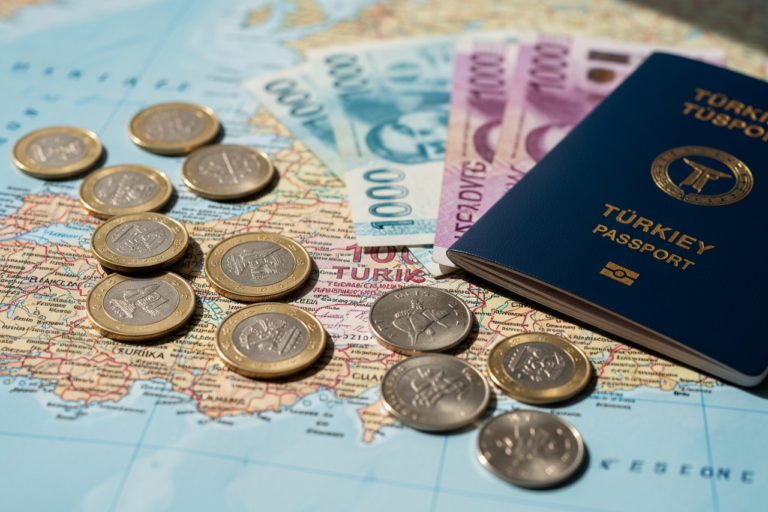
The Turkish lira comes in different banknote and coin denominations.
-
You may change your money before you leave New Zealand or do it when you get to Turkey.
-
In major cities people will let you use cards often, but in small shops and rural areas you still need cash.
-
Be sure to know the exchange rate, so you can keep track of your budget.
Introduction
Are you getting ready for a great trip to Turkey? This is a place where Europe and Asia meet. You can visit busy bazaars in Istanbul. You can also see the beautiful coast by the Mediterranean. There is a lot to do and see. But before you leave, it’s smart to set up your money. The official currency of Turkey is the Turkish lira. Some shops take other money. Using the Turkish lira will help you avoid bad exchange rates and extra charges. This way, your holiday money will last longer.
Understanding the Turkish Lira for New Zealand Travellers
The official currency of Turkey is called the Turkish lira. People often write it as TL. This is the main money you’ll use in all parts of the country. You will find the Turkish lira in big cities and small tourist areas. The Central Bank of the Republic of Turkey looks after and gives out the lira.
The Turkish lira is also the official currency of the Turkish Republic of Northern Cyprus. If you plan a Turkish adventure, it helps to know how much your New Zealand dollar can buy when you change it for lira. This lets you plan for things like food, gifts, and drinks while the sun goes down. The sign you will see for the Turkish lira is ₺.
Official Currency Status and Recent Changes
At the moment, the official currency of Turkey is the Turkish lira. You might see it written as TRY or with the symbol ₺. What you use now is called the new Turkish lira. The government put this version in place in 2005. They did this to make the money simpler after many years of depreciation.
The Central Bank of Turkey is the group that manages the Turkish lira. In the past, there were big changes in the lira’s value. The old currency lost value and had too many zeros. People found it hard to use for everyday things. It even went into the Guinness Book of Records as the world’s least valuable money for some time. To fix this, the Central Bank of Turkey dropped six zeros from the old lira. This change made the new Turkish lira one million times more valuable than what came before.
The Turkish lira today still goes up and down a lot. The value of the TL is not tied to another type of money. Instead, the market decides what it is worth. So, it’s good to check the exchange rate before your trip and while you are there. That way, you get the best idea of what your money is worth in Turkey.
Symbol, Codes, and Historical Evolution of the Turkish Lira
The turkish lira comes from a long and interesting past. It started back in 1844 as the ottoman lira when the ottoman empire used it as its main money. The word ‘lira’ is linked to an ancient roman unit of weight called the ‘libra’. This old weight meant a troy pound of silver. Because of that, people still see the letter ‘L’ or things like it to stand for many types of money in the area.
When turkey became a new country in 1923, the name changed to the turkish lira. In 2005, there was a big change when the new turkish lira (Yeni Türk Lirası) was brought in. This was meant to make the money better and help people with buying or selling things after lots of price rises.
By 2009, the word ‘new’ was gone, and everyone used ‘turkish lira’ again. Each lira can be split into 100 kuruş as its subdivision. The story of the turkish lira shows how turkey’s economy has changed over time.
Turkish Lira Denominations: Coins and Banknotes
When you use Turkish currency, you will see that it has both coins and banknotes. The Turkish lira is the main part of this money and people often call it “TL.” The banknotes come in the following denominations: 5, 10, 20, 50, 100, and 200 lira. On every note, there is a picture of Mustafa Kemal Atatürk. He started the modern Republic of Turkey.
The lira is split into smaller units. These are called kuruş. There are 100 kuruş in one lira. Coins that are in circulation include 1, 5, 10, 25, and 50 kuruş. There is also a 1 lira coin. If you carry a mix of these coins and notes, it will help you. You can use them to pay for a snack or give a tip.
Commonly Circulated Coins and Their Uses
Getting to know Turkish coins will help you move through your day with no trouble. These coins, called kuruş, are the subdivision of the lira (TL). You will use these a lot for small buys, like when you shop in small shops or visit local markets. They are very useful in rural areas where people like to have the right change.
The most common coins in circulation are:
-
Kuruş coins: 1, 5, 10, 25, 50
-
Lira coin: 1 lira
You may not come across the 1 kuruş coin much, but you will find the other coins nearly everywhere. They are good for when you want to get a bottle of water, pay for public transport, or leave a tip at a café. In busy tourist areas and big cities, these coins are just as useful as banknotes when it comes to spending every day.
Banknote Values and Security Features
Turkish lira banknotes are colourful and feature important figures from Turkish history and culture on their reverse sides. The denominations currently in circulation are 5, 10, 20, 50, 100, and 200 TL. To help you avoid any fake notes, it’s good to know about their security features.
The Central Bank of Turkey has incorporated several features to prevent counterfeiting. These include watermarks, holographic strips, and security threads. For example, when you hold a banknote up to the light, you should see a watermark of Atatürk and the note’s denomination. The holographic strip changes images and colours as you tilt the note.
Being aware of these features is your best defence against counterfeit money. Always try to exchange currency at reputable places to minimise risks.
|
Denomination |
Main Colour |
Security Features |
|---|---|---|
|
5 TL |
Brown |
Watermark, holographic strip, security thread |
|
10 TL |
Red |
Watermark, holographic strip, security thread |
|
20 TL |
Green |
Watermark, holographic strip, security thread |
|
50 TL |
Orange |
Watermark, holographic strip, security thread |
|
100 TL |
Blue |
Watermark, holographic strip, security thread |
|
200 TL |
Purple |
Watermark, holographic strip, security thread |
Currency Exchange in Turkey: What Kiwis Need to Know
If you are travelling from New Zealand, it is easy to change your New Zealand dollars for Turkish lira. You can exchange your money before you leave or when you get to Turkey. It often helps to plan ahead because this can give you a better exchange rate. You also avoid bad exchange rates that way.
Many people ask if they should bring US dollars or euros. Sometimes, these are taken in tourist places. But you will get a better deal if you pay in the local currency, which is the Turkish lira. You can also get a good exchange rate if you use an app or order online for home delivery before you travel. This can be a simple way to get your Turkish lira.
Where to Exchange New Zealand Dollars for Turkish Lira
When you want to swap your New Zealand dollars for Turkish lira, there are the few ways to get a good exchange rate. One of the best times to get Turkish lira is before you leave your country. You can order your travel money online and have it sent to your home, or pick it up. This is an easy way to get your Turkish lira sorted.
If you want to change money when you get there, it is not hard to find places in big cities like Istanbul or other tourist areas. You can try the following options:
-
Exchange Offices (Döviz Bürosu): You will see these in city centres, and they often give good rates for your money.
-
Turkish Banks: You can go to banks to swap your cash, and they are reliable, but you should check their open hours.
-
ATMs: Using ATMs is a simple way to get lira straight from your bank account, but your bank might charge you some fees, so look out for that.
If you are going to rural areas, it might be hard to find places to get Turkish lira, so take enough cash with you just in case.
Tips to Get the Best Conversion Rates and Avoid Scams
Everyone wants to get the best value for their travel money, and finding a good exchange rate is key. With a bit of planning, you can get a better exchange rate for your Turkish lira and stay away from common problems.
First, it is good to compare exchange rates. Do not go to the first exchange counter you see at the airport, because they often have higher costs. Try to find places that have only a small gap between the ‘buy’ and ‘sell’ prices. If a place says ‘no commission’, be careful, as this might mean the fee is hidden in a poor exchange rate.
Here are a few tips for you:
-
Check the mid-market rate: Go online and use a currency converter to find the latest rate.
-
Avoid airport exchanges: These are easy and fast, but they often cost more.
-
Use official exchange offices: Go to licensed places called “döviz bürosu” or banks.
If you follow these tips, it will be easier to avoid hidden fees. You will also get the official currency of Turkey, the Turkish lira, at a fair price. This way, you can make your travel money go further.
Spending Money in Turkey: Payment Methods & Currency Restrictions
When you pay for things in Turkey, it is best to use both cash and card. In major cities and tourist areas, you can use debit cards and credit cards like Mastercard and Visa in hotels, restaurants, and big shops. But, you still need cash for many things.
You will need to use the local currency, the Turkish lira, if you want to buy small things at bazaars, pay for taxis, or shop at small shops. This is even more true when you are in remote areas. Sometimes people may take dollars or the euro, but it is best to use lira. You can find ATMs in urban places where you can get local currency in cash.
Cash vs Card: What’s Widely Accepted in Turkey?
Deciding whether to use cash or a card in Turkey comes down to where you are and what you want to buy. In the big cities and most tourist areas, using a debit or credit card is often easy and quick. Hotels, restaurants, and large shops will take cards like Visa and Mastercard.
But there are some things you will need cash for. You may have to pay cash at small shops, local food stalls, or little places run by families. Cash is best in remote areas or villages, as many do not have places set up to take cards. It is also important to know that American Express cards are not as widely accepted as Mastercard or Visa. You should always have a backup option on you.
To make sure you are ready for any situation:
-
Use your card for larger expenses: This works well at hotels, tour companies, and nice dinners in a restaurant.
-
Carry cash for daily spending: You will need cash for things like taxis, food markets, and snacks.
-
Inform your bank: Tell your bank you will be in Turkey so they do not block your card by mistake.
Bringing Foreign Currency Into Turkey: Guidelines for Travellers
When you travel to Turkey, it’s good to know the rules about bringing money like foreign currency into the country. The good thing is that the Central Bank of Turkey does not have any big limits on how much foreign cash you can bring.
You can take any amount of euro, USD, turkish lira, or other foreign currency with you. If you are carrying a large amount, you might have to tell the officers when you arrive. This is simple to do and helps stop money laundering. Other countries do this as well. The Central Bank makes these rules for Turkey.
Here are a few key things to keep in mind:
-
There is no limit to the amount of foreign currency you can bring into Turkey.
-
When you leave, you can take up to 5,000 USD worth of turkish lira out with you.
Always look up the latest rules before you travel, because the regulations can change.
Conclusion
To sum up, knowing about the Turkish Lira is important for people from New Zealand who want to get around Turkey with ease. When you know the lira’s denominations, where to exchange money, and the different ways to pay, your time there will go much better. You can also handle your money well. Being ready helps you feel sure when you need to exchange the Turkish lira, whether you use banks, change offices, or ATMs. You will know what to do when it comes to how people spend money in Turkey too. So, pack your bags, enjoy the amazing culture, and make the most of your time in this beautiful place! If you want more ideas or need help before your trip, feel free to ask for advice.



