

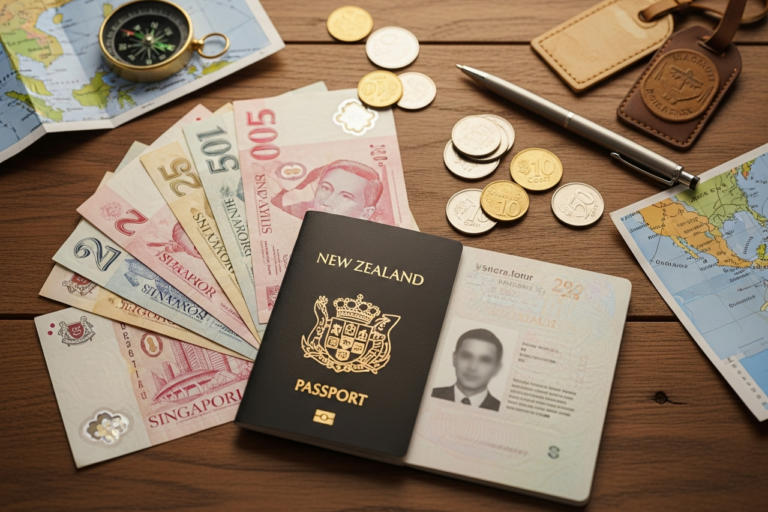
Key Highlights
Here are the key takeaways for New Zealand travellers heading to Singapore:
-
The singapore dollar is the official currency of singapore. It is also called SGD.
-
You can get better rates for your nzd if you swap them for sgd at airports, banks, or money changers in singapore. Getting singapore dollar in new zealand is usually not as good.
-
Big shops will take your main credit or debit cards. But it is a good idea to keep some cash for the food stalls or small markets.
-
The currency of singapore comes under a currency interchangeability agreement with brunei. The brunei dollar can be used like sgd and has a 1:1 value because of this interchangeability agreement.
-
Many people use digital payment ways like Apple Pay and Google Pay. These make it easy when you buy things in singapore.
Introduction
Are you getting ready to go from New Zealand to Singapore? This is a fun trip to make. Before you start thinking of tasty food and the bright city, you need to know about money there. The official currency of Singapore is the Singapore dollar, also called SGD. It is good to know the currency of Singapore, the different denominations, and the latest exchange rate. This will help you a lot on your trip. In this guide, you will find out all you need about money in Singapore. You will learn about the singapore dollar, using cash or digital payments, and how to make the most of your time there.
Understanding the Singapore Dollar for New Zealand Travellers
For Kiwis who are heading to Singapore, it’s good to learn the basics of their currency. People use the Singapore dollar (SGD) for everything, like coffee in the morning or paying the hotel bill.
You will change your New Zealand dollars (NZD) to the Singapore dollar. So, you should always check the exchange rate. If you plan a bit before your trip, you can get more dollars for your NZD. This will help you save money and make the most of your time in Singapore. Let’s look at more details about the Singapore dollar.
What Is the Official Currency Used in Singapore?
The Singapore dollar is the only official currency in Singapore. People often write it as SGD or use the symbol S$. It is the legal tender in the country. So, this is the only money you must use for payments and when you buy things.
Shops, banks, and all other places use the Singapore dollar for their prices. The monetary authority of Singapore is in charge of the currency. The monetary authority of Singapore is the main bank there, and it takes care of money rules. It gives out the banknotes and coins and makes sure the Singapore dollar stays steady.
If you visit Singapore, you will use the Singapore dollar for everything. You use it when you pay for your bus rides and when you buy gifts. Every time you pay someone, you will be using the Singapore dollar.
Why Is Knowing About Singapore Dollars Important for Kiwis?
If you are heading to Singapore, it’s good to know about the Singapore dollar. This helps every Kiwi get ready for their trip and stops any shock with your bank balance. Understanding how the New Zealand dollar changes with the Singapore dollar, and keeping an eye on the exchange rate, helps you check what things really cost you.
When you know the exchange rate between SGD and NZD well, you can make the right choices about your money. You will know where to swap your cash and how to get a good deal. It also helps see if someone tries to give you less money with a bad rate.
In the end, if you keep track of the Singapore dollar and exchange rate, you get more out of your time in Singapore. You can shop, eat out, and see the sights, feeling sure about your money. It lets you enjoy your holiday while sticking to your budget.
Common Currency Myths for First-Time Visitors
If you are visiting Singapore for the first time, you may hear some things that are not quite right about what money you can use. Let’s sort out the facts. Singapore is a big place for people from around the world, but the Singapore dollar is the main money people use every day.
Some people ask if they can use other types of dollars or cash. Here is what you need to know:
-
US Dollars (USD): A few big hotels and shops that mostly serve tourists may take US dollars. However, this is not normal and the exchange rate you get will most likely not be good.
-
Malaysian Ringgit (MYR): Because Singapore is so close to Malaysia, this is something people often ask. But shops in Singapore do not take the Malaysian ringgit for everyday buys.
To save money and to make buying things easy, always use the Singapore dollar. It will cost you more and be hard if you try to use foreign money instead.
Singapore Dollar: Codes, Symbols, and Appearance
Getting to know the Singapore dollar is about more than its value. You need to know how to spot it, too. The Singapore dollar has some special signs which make it simple to know, once you see what they are.
It has a set code for all types of money exchanges around the world. The symbol for the dollar also shows up on price tags and in many shops. These make the Singapore dollar easy to tell from other money. Let’s go over what you see, the code, the signs, and how Singapore dollar banknotes and coins look in real life.
Official Currency Code and Symbol Explained
Every currency has its own code, and the Singapore dollar is no different. The official code for the Singapore dollar is SGD. You will find this code when you go to a bank, use a currency exchange shop, or check rates on an online converter.
When you are in Singapore, you will notice a currency symbol on prices. Usually, the symbol is “S$” for the Singapore dollar. This helps you know it is not the same as other countries’ dollars like the US dollar ($) or the New Zealand dollar (NZ$).
So, if you see the SGD code or S$ symbol on your bank statement or a price tag in Singapore, you can be sure you are looking at the Singapore dollar. Knowing both these ways makes it easy for you to handle your money in Singapore.
Recognising Banknotes and Coins at a Glance
When you get the Singapore dollar for the first time, you will see that there are different banknotes and coins. If you get to know these different denominations, you will find that it is much quicker and easier to use money and pay for things.
The singapore dollar banknotes can be S$2, S$5, S$10, S$50, and S$100. The dollar notes are not the same colour or size. This makes it easy for you to tell one from another at a glance. These notes are not made from paper now. They use a polymer, so the banknotes are tough and not damaged by water.
There are coins with different values too. There is a 5 cents coin. There are coins for 10, 20, and 50 cents. There is also a S$1 coin. The coins are each a different size and their look is not the same. They often show some special things from Singapore. When you take time to see and know these notes and coins, you will feel good, and you can handle singapore dollar cash with more confidence.
Distinctive Features on Notes for Security
Singapore’s currency notes have smart safety features that help stop copying. The use of polymer banknotes in new series lets them add more new and better ways to keep it safe.
When you get the currency in your hand, you can see many features on it. These parts do more than just look nice. They help you check if your banknotes are real. When you know what to look for, you can feel sure that the cash you use is genuine.
Some main safety features on Singapore’s polymer banknotes are:
-
A complex clear window: The note has a clear bit you can see through which is hard for fake-makers to copy.
-
A security thread: There is a line that goes through the note and shows up as one long strip if you hold the note to the light.
-
Raised print: Some spaces on the note, like the face or the value, feel rough as you touch them.
Singapore’s currency notes use these smart tricks to help you know that your banknotes are safe to use.
A Brief History of the Singapore Dollar
The singapore dollar that we use now has the kind of history that shows how the island nation worked to be free and do well. Before singapore got its own dollar, people there used the straits dollar. There was also the malaya and british borneo dollar used at that time.
When you know this history, you can see how the island nation started to grow in money matters. The story of the singapore dollar is about standing on your own feet and keeping things steady. Let’s see how the dollar in singapore changed over time.
Evolution from Malaya and British Borneo Dollar
Before Singapore had its own currency, it shared money with Malaysia. When it was still a British colony, and later when it was part of Malaya, people used the Straits dollar. Later on, the Straits dollar was swapped out for the Malayan dollar as the common currency.
After World War II, people began to use a new money called the Malaya and British Borneo dollar. This British Borneo dollar was brought in by the Board of Commissioners of Currency, Malaya and British Borneo. People in Singapore, the Federation of Malaya, Sarawak, North Borneo, and Brunei used this currency.
This system of sharing a common currency lasted until about the mid-1960s. When Singapore became a free country in 1965, everything changed. This made it possible for Singapore to have its own dollar and the power to control its own money.
Introduction of the Singapore Dollar
After Singapore separated from Malaysia, it started making its own money. The creation of the Singapore dollar was a big step for the country. It showed the world that Singapore was now its own nation.
On 12 June 1967, the Board of Commissioners of Currency, Singapore, or BCCS, made and sent out the first set of Singaporean notes and coins. That was the start of the Singapore dollar. At first, this new dollar was worth the same as the Malaysian ringgit, and Singapore had an interchangeability agreement with Malaysia.
As time went on, the way the dollar was managed began to change. Later, BCCS joined with the Monetary Authority of Singapore, often called MAS, in 2002. Now, the MAS looks after everything to do with the Singapore dollar. MAS helps keep the dollar strong and trusted for people in Singapore and around the world.
How SGD Became Singapore’s Sole Legal Tender
When the singapore dollar was introduced, it was used together with the brunei dollar and the malaysian dollar (now ringgit) as part of an interchangeability agreement. At this time, people in singapore, brunei, and malaysia could use these three types of money at the same value. This setup lasted for a short time after the countries went their own way with their currencies.
But in 1973, malaysia ended this agreement. From then on, the singapore dollar (SGD) became the only legal tender in singapore. This means people are only required to use SGD when they pay for things in the country.
The board of commissioners of currency, singapore (BCCS), helped guide this big change. They took care of new money coming in and made sure things went smoothly. This was important for the island nation because it gave singapore full control over its own money and economy, which helped it move forward on its own path.
Current Currency in Circulation in Singapore
When you are in Singapore, you will use the new banknotes and coins that are out now. The Monetary Authority of Singapore makes sure the money in use is up-to-date, safe, and simple for people.
The latest banknotes are made from a type of plastic, so they last longer and are harder to copy. The coins show fresh pictures that share parts of Singapore’s story. Here is what to know about the notes and coins you will see while moving around Singapore.
Latest Banknote Series: What to Expect
The latest series of Singapore dollar banknotes is known as the Portrait Series. These polymer banknotes feature the portrait of Singapore’s first president, Yusof bin Ishak. They are designed with vibrant colours and advanced security features to prevent counterfeiting.
These polymer banknotes are more durable than paper ones, so you don’t have to worry about them getting damaged if they accidentally get wet. Each denomination has a distinct colour and size, making them easy to identify.
Here are the common banknotes from the latest series you will likely use:
|
Denomination |
Main Colour |
|---|---|
|
S$2 |
Red |
|
S$5 |
Green |
|
S$10 |
Blue |
|
S$50 |
Purple |
|
S$100 |
Orange |
Coin Designs and Their Denominations
In Singapore, you use both banknotes and coins for your everyday transactions. The Singapore dollar comes in notes and coins, which are good for things like buying food or using public transport.
The Third Series of coins has been in circulation since 2013. These coins show some of Singapore’s national icons and landmarks. You’ll see things like the Merlion and the Esplanade on them. The coin denominations are 5, 10, 20, and 50 cents, plus a S$1 coin.
You will see yourself using both banknotes and coins every day. The most common notes are S$2, S$5, and S$10. You will also find all the coin denominations in circulation. It is always handy to have small change for some smaller purchases.
Historic Notes and Collectibles Still in Use
The Portrait Series is now the main banknotes used in Singapore. But you might still see older banknotes from time to time. Older series like the Ship Series or Bird Series are not new, but they are still legal tender. You can use them to pay for things. Even so, these notes do not come up often in daily circulation.
Some of these old notes have turned into real treasures. Numismatists and people who like to learn about Singapore’s past want them for their collections. If you get one when you get change, there is nothing to worry about. You can still use it. Younger cashiers may not know as much about these, but that does not make them less useful.
There are also special banknotes put out by Singapore. For big events, like the bicentennial, the country made commemorative notes. The banknotes given out for these times are legal tender as well. Many Singaporeans like to keep them as memories, so they are not spent much. Because of this, you might see a note that does not look like the ones you use every day. It is common in Singapore for notes from other series to turn up now and then.
All About Singapore Banknotes
The banknotes of the Singapore dollar show the growth and story of Singapore. Over the years, Singapore has brought out a few different sets of banknotes. Each one stands out with its own style and theme.
At first, the dollar notes had pictures of local plants. Later notes showed a well-known person from the country’s politics. Every series shows what Singapore cared about at that time in its history. Let’s have a look at the great designs that are part of each singapore dollar banknote series.
The Orchid Series: Singapore’s First Banknotes
The Orchid Series is important in Singapore’s story. It was the first banknotes series made after Singapore became its own country. These banknotes came out in 1967. They showed that Singapore was starting a new path and building its own look.
Like the name says, the orchid was the main theme for this set of notes. The orchid is the national flower of Singapore. Each note, in all nine denominations, had a different orchid drawn on the front. This was a way to show off Singapore’s plants and its dream to be a “garden city.”
On the back, you could see life in Singapore. There were pictures of things like ships in the harbour and government buildings. These showed how the city was growing and full of life. The Orchid Series is not in circulation now, but it is still a loved part of Singapore banknotes and history.
Bird and Ship Series: Iconic Banknote Designs
After the Orchid Series, Singapore put out two more well-known banknote series. These both showed new sides of the nation’s story. The Bird Series started in 1976. It was the second set of banknotes. Each dollar note had a different bird. This let people see the wide range of birds living in the region. The birds on each note were meant to show strength, being able to change, and independence.
Later, in 1984, Singapore brought out the Ship Series. This one honoured the country’s deep ties to the sea and its big role as a world port. The notes for this series showed many kinds of ships. Some were old trading boats. Others were big, modern ships that move containers. This showed how the sea helps singapore’s economy.
People still talk about the Bird and Ship series. These singapore dollar banknotes are loved for their fine detail and bright designs. Even though the Portrait Series took their place, these two old sets are still a big part of the singapore dollar story. Lots of collectors like to get them.
Portrait Series and Modern Commemorative Notes
The Portrait Series is the current set of Singapore dollar banknotes. It started in 1999. This set is important because it is the first to show a portrait of someone. That someone is Yusof bin Ishak. He was the first President of Singapore. You will see his picture on every note. His face on the banknotes stands for Singapore’s values, like meritocracy, multiculturalism, and public service.
When you look at the back of each note in this Portrait Series, you will find a special theme. Some themes are about education, art, sports, or the economy. This shows what Singapore hopes for and what it has done as a nation. Now, most of the singapore dollar banknotes are made of polymer instead of paper. This helps the notes last longer and keeps them more safe from damage or copying.
As well as the main group of banknotes, the Monetary Authority of Singapore sometimes releases special notes. These are for big events or important moments in the country’s history. You can use these commemorative singapore dollar notes as legal tender, the same as regular money. But many people want these special banknotes because of their different designs and because there are not many of them. Collectors like to get their hands on them.
Singapore Coins in Everyday Life
While people use banknotes in Singapore for bigger buys, coins are what most people use each day. You will need coins when you buy snacks at a hawker centre or use a vending machine. It is always good to have some coins in your pocket because they make things much easier.
The currency of Singapore has coins in several denominations. Each coin comes with its own design. When you get to know these coins, day-to-day spending in Singapore will be much easier. Let’s see the coins you will use.
Commonly Used Coin Denominations
In Singapore, you will see different singapore dollar coins used for daily needs. It is good to know about the value of the coins. That way, you can pay fast and make sure you use the right amount. The coins you use now are easy to tell apart because of their size and design.
People in Singapore use these coins the most in their day to day life. The smallest coin in use is the 5 cent coin, because the 1 cent coin is out of circulation and not made anymore.
Here are the coin denominations you will use often:
-
5 cents
-
10 cents
-
20 cents
-
50 cents
-
S$1
Iconic Imagery on Singaporean Coins
Singapore coins are more than money. They show the country’s story and pride. The new coins come with pictures that mean a lot to people who live in Singapore.
Each coin in the Third Series has a picture on the back that stands for something important to Singapore. You will see the Merlion, which is a famous mascot, on the S$1 coin. On the 50 cents coin, you will find the Port of Singapore. This shows how big Singapore is in the world of trade.
Other coins in this series have pictures of well-known places too. The 20 cents coin has the Esplanade – Theatres on the Bay. You will see Changi Airport on the 10 cents coin and public housing flats on the 5 cents coin. All of these coins give you a good look at life in Singapore and make it clear what the country is most proud of.
Tips for Handling Small Change
Having small change can sometimes be a bit hard to deal with. But there are some good, easy ways to handle it better. In Singapore, people use singapore dollar coins a lot, especially when they are at food stalls or small shops. So, it helps to have a plan for all that loose dollar change.
One thing you can do is keep a small coin purse or use a pocket just for coins. This helps you keep your singapore dollar coins neat and easy to reach. That way, you do not have to search for the right dollar coins when you are paying in a rush at food stalls or in taxis.
Here are some other handy tips for looking after your singapore dollar coins:
-
Use exact change: Taxis and small shops like it when you pay the right amount. Sometimes they may not have enough coins to give you back the change.
-
Consolidate coins: At the end of the day, if you have coins left over, try using them up to pay for a drink or snack. This stops your pockets or bag from getting too heavy.
-
Use self-checkout kiosks: Supermarkets often have machines where you can pay with coins. This is a good way to use those leftover coins.
Using these small tips can make it much easier to manage your singapore dollar coins while you shop, travel, or eat out in Singapore.
Comparing the Singapore and Brunei Dollar
When you travel in Singapore, you may hear people talk about the Brunei dollar. Singapore and Brunei have a long history of working together when it comes to their money. With a special agreement, the two countries have linked the singapore dollar and brunei dollar in a way that helps both travellers and businesses.
This is called the currency interchangeability agreement. It says that the brunei dollar and the singapore dollar can be used the same way in some places. So, let’s look at how this interchangeability agreement can help you when you are travelling.
Mutual Exchange Agreement with Brunei
A special thing about the Singapore dollar is how it is tied to the Brunei dollar. These two countries have something called a currency interchangeability agreement. They set this up in 1967. Thanks to this agreement, people can use both the Singapore dollar and the Brunei dollar in each nation.
With the interchangeability agreement, money leaders from Singapore and Brunei made a deal. They both accept each other’s currency, and you do not have to pay any fee to swap one for the other. One Singapore dollar always equals one Brunei dollar (BND). Because of this, there are strong ties in business. It also makes travel and trade between Singapore and Brunei easy.
The currency interchangeability agreement shows how good the relationship is between Singapore and Brunei. It makes a kind of common currency, so people who come and go between the two countries find it much simpler.
Can Brunei Currency Be Used in Singapore?
Yes, you can use the Brunei dollar in Singapore. Because of the Currency Interchangeability Agreement, the Brunei dollar (some people call it the Brunei ringgit) is taken as “customary tender” in Singapore. This means that most shops and people are encouraged to accept it for payment.
When you make a payment with the Brunei dollar in Singapore, the exchange rate is always one to one with the Singapore dollar. So if you need to pay S$10, you could use a B$10 note. The shop will see both dollars as the same value.
But it is good to know that the Brunei dollar is not seen as “legal tender” in Singapore, even though a lot of people use the currency there. This means a shop owner may say no to accepting it, but this does not happen often. Most shops, especially big ones, will take it with no problem. The interchangeability agreement helps make things easy between the two places.
Currency Acceptance at Shops and Attractions
In Singapore, most people will take the Brunei dollar without a problem. The shops, places to eat, and fun spots see the Brunei note as the same as the Singapore dollar. You can use it for payment the same way you use Singapore money.
Big store groups, large supermarkets, and well-known tourist spots know about this. They are used to the setup and will take the Brunei dollar right away. So if you get some Brunei dollars when you get your change, or if you come from Brunei, you will find it easy to spend it here.
But the small stalls, like those in hawker centres or market sellers, may not take the Brunei dollar. They might not know much about it. To keep things simple, it’s a good idea to use the Singapore dollar when you deal with these smaller shops that use only cash.
Currency Exchange for New Zealanders Visiting Singapore
As someone from New Zealand travelling to Singapore, the first thing you will need to do is handle your money. You have to change your NZD (New Zealand dollars) to SGD (Singapore dollars).
You can do this in a few ways. You can change your money while you are still in New Zealand, or you can wait and do it when you get to Singapore. If you know where to go and what to check for, you can get a better exchange rate. This can help you save some money. Here are your options.
Where Can Tourists Exchange New Zealand Dollars?
When you get to Singapore, you will see many places to change money. It is easy to exchange your New Zealand dollars for Singapore dollars. Singapore is a big money centre, so there are a lot of options for currency exchange, and the rates are very good.
You will find licensed money changers all around the city. Many are inside shopping centres, in work areas, or near places with many visitors. They usually give better rates than you will get at banks or at the airport.
Here are the usual places that most travellers use to exchange money:
-
Licensed Money Changers: You can find these in shopping malls like the Mustafa Centre or The Arcade at Raffles Place, and they often have the best rates.
-
Banks: Almost all big banks in Singapore let you change money, but their rates for currency exchange might not be as good as other places.
-
Changi Airport: Every terminal has exchange counters, so you can change money when you land. The rates here are usually not as good as what you find in the city.
You will see that it is simple to get Singapore dollars once you arrive. Choosing the right place will help you save with better rates.
Exchange Rates at Airports, Banks, and Hotels
The exchange rate you get can vary significantly depending on where you choose to convert your money. While convenience is a factor, it often comes at a cost. It pays to be aware of the differences to get the most Singapore dollars for your NZD.
Generally, licensed money changers in the city centre offer the most competitive exchange rates. Banks are a safe and reliable option but may not offer the best rates. Hotels and airport counters are the most convenient but usually have the least favourable rates and may charge higher fees.
Here’s a general comparison to help you decide:
|
Exchange Location |
Exchange Rate |
Convenience Level |
|---|---|---|
|
Airport Exchange Counter |
Less Favourable |
Very High |
|
Hotel Front Desk |
Least Favourable |
Very High |
|
Major Banks |
Moderate |
High |
|
Licensed Money Changer |
Most Favourable |
Moderate to High |
Best Currency Exchange Practices for Kiwis
If you want to get the most from your money, it is smart to follow some easy tips for currency exchange. A bit of planning can save you money. This gives you more to spend when you are in Singapore.
First, look up the latest exchange rate online before you go to swap cash. Use a trusted currency converter tool or website to do this. It helps you see what deal you should get when you ask for better rates from different changers.
Here are a few things to keep in mind to get a good deal:
-
Avoid airport exchanges: At the airport, only swap a small amount for things you need right away, like getting from the airport. The main exchange should be done once you get into the city.
-
Compare rates: When you see a few money changers near each other, take a moment to look at their rates. This will help you get the better rates. Most changers show their exchange rate where you can see it.
-
Exchange larger amounts: Many changers might give a better exchange rate if you do a bigger swap. But only swap what you need, so you don’t have too much cash.
Use these tips and your time in Singapore will be even better.
Converting New Zealand Dollars to Singapore Dollars
The way to change your New Zealand dollars (NZD) to Singapore dollars (SGD) is simple. But if you know a bit more, you can make your money go further. It’s important to check the exchange rate and the tools that can help you keep an eye on it.
These days, you do not need to guess if you are getting a good exchange rate. There are plenty of online tools and phone apps that show you rates for singapore money in real-time. This can help you make better choices when you want to change NZD to SGD. Let’s see how you can use these tools to help get the most for your money.
Online Exchange Rate Tools and Apps
These days, you can check the Singapore dollar exchange rate anytime you want. There are many online tools and easy-to-use apps on your phone. You get new updates within seconds and can see what your money is worth in real time.
If you search for a “currency converter” on a computer or your phone, you will find many choices. The tools will show you the mid-market exchange rate. This is the real rate without extra fees. You can use this as a benchmark before you make any exchange.
Here are some options that people use a lot and trust:
-
Wise (formerly TransferWise): This gives you a free app for currency conversion. It shows the mid-market exchange rate for the Singapore dollar, and you can set alerts to know when rates change.
-
Xe: This is known for being good with exchange rates and has a simple app and a website to check the live singapore dollar rates.
-
Your bank’s app: Most bank apps have a singapore dollar currency converter built in too. Keep in mind that the rate might be your bank’s own, which can be different from the mid-market singapore dollar exchange rate.
All these ways make it safe and quick to know the singapore dollar exchange rate wherever you are.
Real-Time SGD to NZD Conversion Tips
To get the most out of your money when you change New Zealand dollars to Singapore dollars, you need to know about timing and exchange rate changes. Rates do not stay the same and can go up or down. If you have up-to-date information, you can choose a good time to swap your cash.
A handy tip is to set up a notification in a currency converter app. Lots of apps let you pick the exchange rate you want. The app will give you a message when the rate gets to your level. You can then exchange your money in Singapore at a time that suits you.
Here are some more real-time tips:
-
Watch trends: Check charts from the last 30 or 90 days. This helps you see if the exchange rate is going up or down.
-
Use a live converter: When you go to a money changer, pull out your phone and check a live currency converter. This shows you if their rate is good or not.
-
Check for hidden charges: The exchange rate you see is not always the full story. Ask if there are any other fees or money taken out before you hand over any cash.
Saving on Currency Conversion Fees
One of the biggest costs you may not see when you travel can be the fees for changing money. When you change NZD to Singapore dollars, many places make their money from the exchange rate and extra fees as well.
These charges can be a set fee each time you change money, or a small part of what you change. If you swap money more than once, these extra costs can build up. The way to save your money is to look for services that show you all their fees and keep them low.
Here are some simple ways you can cut down on conversion fees:
-
Use a multi-currency travel card: The Wise card or Travelex Money Card will let you keep SGD in your card. You can pay in the local money and not get a bad exchange rate from banks.
-
Avoid Dynamic Currency Conversion (DCC): When a card machine asks if you want to pay in NZD or SGD, pick SGD. Paying in Singapore currency means your bank will give you the best rate.
-
Withdraw larger amounts from ATMs: Take out more cash at once from ATMs, not many small amounts. This way you pay a fixed withdrawal fee less often.
Following these tips can help you to keep more of your money when you use your travel card, exchange rate services, or Travelex Money Card while in Singapore.
Getting Singapore Dollars Before or After Arrival
A question many people from NZ have when they travel is if it’s best to get money before they leave, or to get it when they reach their destination. If you are going from NZ to Singapore, you can choose to buy Singapore dollars before you fly, or get them after you arrive in Singapore.
Both choices come with good and bad points. What you pick may depend on how comfortable you feel, how much time you have, and what is most important to you. Some care about getting the best rate, while others want things to be easy. Now, let’s have a look at both choices.
Pros and Cons of Exchanging Money in New Zealand
Changing your NZD for Singapore dollars while you are still in NZ can make things easy for you. You will have local money in your pocket when you get off the plane, so you can pay for a taxi or buy a snack right away.
But this ease can cost you more. The exchange rate for SGD in NZ is usually not as good as what you get in Singapore. So, you pay extra for getting your cash early.
Here’s a look at the good and bad points:
-
Pros: It’s easy and lets you relax. There is no need to look for a money exchange shop as soon as you land.
-
Cons: The exchange rate is often worse, so you get less SGD for your NZD.
-
Cons: Your bank or local exchange in NZ may not have much SGD to give you.
Advantages of Getting SGD in Singapore
For most people who travel, it is better to wait and get your Singapore dollars when you get to Singapore. The currency market there is very busy, which is good for you and the others who travel.
There are many licensed money changers in the city. They all want your business. Because of this, they try to give better rates than what you would find in your own country. If you change your NZD to SGD in Singapore, you will likely get more of the Singapore dollars for your money.
This helps your holiday money go further. You may need to take a short time to find a money changer when you arrive, but you could save a lot, especially when you are exchanging a bigger amount.
Airport vs City Centre Exchange Counters
When you decide to exchange money in Singapore, you have to choose if you want to do it at the airport or wait until you get to the city centre. It can be easy to use the airport exchange counter, especially if you are tired after a long flight.
But this convenience comes with a higher cost. The exchange counters at Changi Airport do not offer better rates in most cases. City counters will give you better rates compared to the airport. Their rates are not the worst, but you can get a better deal in the city. It’s best to change just a little cash at the airport, enough for your ride into the city, and wait to do the rest once you are there.
You will get better rates at the licensed money changers in The Arcade at Raffles Place or at one of the many counters in Mustafa Centre in Little India. Taking a short trip into the city can help you save more of your money.
Digital Payments and Card Use in Singapore
Singapore is very up-to-date with technology, and the payment systems are no different. While you can still use cash, many people in Singapore now use digital payments and cards. These ways to pay are easy and handy, especially for travellers.
You can use credit cards and mobile wallets like Apple Pay, so you will see that it’s easy to get by in Singapore without cash most of the time. This means you can manage your spending more simply and you do not have to walk around with a lot of cash. Let’s have a look at how digital payments work in Singapore.
Are Credit and Debit Cards Widely Accepted?
Yes, you can use credit and debit cards almost everywhere in Singapore. Most hotels, restaurants, big shops, and places for tourists take Visa, Mastercard, and American Express. It is common to use contactless payments too, so paying is quick and easy.
Singapore is good at using new technology and has strong systems for card payments. A lot of places, from fancy shops on Orchard Road to your everyday mid-range restaurants, will take your card. This is good news for people who travel and do not want to carry a lot of money.
But, some small places may not take cards. For example, hawker stalls, small local shops, or people selling in the market often only take cash. So, while it is fine to use your card for most things, it is smart to have some Singapore dollar cash for the little things you want to buy.
Popular Digital Wallets: Apple Pay, Google Pay, and More
Singapore is a place where many people use digital wallets. They are a favourite way to pay for things. Locals and people visiting Singapore like them because they work so well. If you have a smartphone, you can use it to pay with a digital wallet for many things.
Most shops, cafes, and places to eat let you pay with your phone. Even some taxis take these digital payments if they take credit cards. Many times, you can just tap your phone or your watch to pay. This is very handy because you do not have to get your card out of your wallet.
Popular digital wallets you can use in Singapore are:
-
Apple Pay: You can use this almost everywhere there is contactless.
-
Google Pay: Many places also take this.
-
Samsung Pay: Good for people who use Samsung phones.
Paying in singapore is quick, and you can use a phone or watch in plenty of places, even in some taxis.
Fees and Exchange Rates on Card Payments
When you use your New Zealand credit or debit card in Singapore, it can be easy. But you should know about the fees and exchange rate involved. Your bank in New Zealand will use its own exchange rate when you buy things in Singapore dollars. This means when you pay in Singapore dollar, the bank turns it back to NZD.
This rate is not always as good as the mid-market exchange rate. There might be some extra fees too. Many banks ask for a foreign currency fee when you buy in another currency. This is usually a small part of what you spend. All these can make things cost more. It’s a good idea to talk with your bank before you leave New Zealand and find out what the fees are.
Think about these things before you travel, so you do not get a shock later:
-
Dynamic Currency Conversion (DCC): Try to pay in SGD each time if you can. Paying in NZD might cost you more because the exchange rate is often worse.
-
Use a travel-friendly card: Some cards are made for people who travel a lot. They have low or no extra foreign currency charges.
-
Inform your bank: Let them know you are going to Singapore. This helps avoid your card being stopped from use when you are there.
ATMs and Cash Withdrawals in Singapore
If you want to use cash but do not like the idea of carrying a lot with you, you can use ATMs to take out Singapore dollars after you get there. The ATMs in singapore are easy to find and you can use them any time of day, as they are open 24/7.
Taking out money with your New Zealand debit or credit card is a simple thing to do in singapore. But, you need to know that there can be some fees and extra costs for this. Here is how you can use atms in singapore to get cash.
Locating ATMs for International Cards
Finding an ATM that takes international cards is simple in Singapore. The city has many ATMs. You will see them in shopping malls, MRT stations, and outside bank branches. If you need cash, you will find one with no trouble.
Search for ATMs from banks like DBS, OCBC, or UOB. These banks are big in Singapore. Most of their machines are linked with big networks like Cirrus (Mastercard) and Plus (Visa). Your New Zealand card should work at these ATMs with no problem. The machine will show which networks it supports on the screen or on the ATM itself.
If you are not sure, you can use your card provider’s ATM finder online. You can also use an app like Google Maps to look for an ATM nearby. With so many ATMs in the city and the suburbs, you are never far from one, even if you are not in the main city centre.
Withdrawing Singapore Dollars: Charges to Expect
Withdrawing Singapore dollars from an ATM is easy, but it may not be free. When you use your New Zealand card, you might see a few different charges. First, the local Singapore bank that owns the ATM could ask you to pay a fee for using your foreign card.
Next, your own bank back in New Zealand may also ask for some fee. This will likely be a set fee each time you use a foreign ATM and a percentage fee for foreign currency conversion. You can end up paying quite a bit and making lots of small withdrawals may cost you more in the end.
You can spend less if you check what your bank will charge for international or foreign currency ATM use before you leave New Zealand. It also helps to take out more cash at once and less often, which lowers the total you pay in fixed fees.
Using Multi-currency Travel Cards
Using a multi-currency travel card is a good way to take care of your money and not pay lots of extra ATM fees. These travel cards are made for the people who go to other countries, and they make it much cheaper to spend and get your money while you are overseas.
With a Wise card or the Travelex Money Card, you can put NZD on your card, and then swap it to Singapore dollars (SGD) inside the app, at a fair and clear exchange rate. You can use this card to shop and pay in Singapore, or get cash from ATMs.
Here are some benefits of using a multi-currency travel card:
-
Better exchange rates: The rates you get are very close to the market number, much better than old bank rates.
-
Lower fees: You often pay less in fees, or they can even be free for some ATM use each month.
-
Convenience and security: It is easy to see and change your money with an app, and you can block the card if it gets lost or someone takes it.
Travel cards like the Travelex Money Card are a smart choice if you want to make the most of your NZD when you go to Singapore. They work well with SGD and make using ATMs in Singapore simple.
Spending Money: Where Singapore Dollars Are Required
While Singapore likes cards, there are still times when you have to use cash. The singapore dollar is the country’s legal tender, and some places will only take this dollar if you want to pay.
It helps to know when and where you will need cash. You want to be ready and not get stuck in a bad moment. If you visit busy food centres or local markets, you will find that having some singapore dollars with you is a good idea. This way, you can see what the city is really like. Now, let’s check out the places in singapore where you’ll want the singapore dollar ready in your wallet.
Paying at Stores, Eateries, and Markets
In Singapore, you will see many ways to pay for what you buy. Most big shops in shopping malls, chain restaurants, and fancy places will take credit cards and also let you use digital payments.
But, the real taste of Singapore is at hawker centres and small “kopitiam” coffee shops. At these places, you have to use cash most of the time. Many food stalls are run by families. They often do not take cards or other kinds of payment.
When you visit busy areas like Chinatown, Little India, or the local wet markets, you will need cash too. You will have to use Singapore dollar notes and coins for things like snacks, fresh food, or a nice souvenir. It is important to keep some Singapore dollar coins and notes with you. That way, you can enjoy everything these food stalls and markets have to offer.
Typical Cash-Only Situations
Even though Singapore is known for being modern, there are still many times when you will have to pay with cash. It is good to be ready for these cash-only moments. This helps your day go well.
You will use cash often at hawker centres. Lots of food stalls only take cash. Make sure you have Singapore dollars if you want to try tasty dishes like chicken rice or laksa.
Here are some other times when you may need cash in Singapore:
-
Small neighbourhood shops: Many small convenience stores, called “mama shops,” prefer you to use cash when you buy something.
-
Street markets: People selling things at markets like Bugis Street Market often do not use cards. They will ask for cash.
-
Some taxi rides: Even though most taxis can take card payments, some drivers might want cash, especially for short rides. It is a good idea to ask before your trip.
Tipping and Small Purchases in Cash
Tipping is not something people do a lot in Singapore. You will see that most restaurants and hotels put a 10% service charge on the bill. This means you do not need to give an extra tip. If you get service that is really good, it can be nice to show you are thankful with a small tip. But you do not have to do this.
For small buys, cash is often the best choice. If you want to get a bottle of water, a snack from a street seller, or a small souvenir, it is much faster with cash. Many small sellers may ask you to spend a minimum amount if you want to use your card. So, it is helpful to have some Singapore dollar notes and coins with you.
When you use cash for these small things, you can see what you spend each day. It is a good idea to keep some coins and dollar notes in your wallet each morning for these costs. This works well for people in Singapore.
Limits and Customs Rules for Bringing Cash into Singapore
If you travel to another country, you need to know the rules for carrying cash. Singapore has its own set of rules on how much money you can bring in without telling anyone.
The rules are set to stop people from doing things that are against the law, like money laundering. If you know about the cash limits and what you need to do when you arrive, your entry into singapore will be smooth and easy. Here is what you need to know.
Allowable Amounts Without Declaration
There are some rules about bringing money into Singapore, and they are easy to follow. You can bring physical money or other negotiable items, like traveller’s cheques, into Singapore up to a certain limit.
The main point to remember is the S$20,000 limit (or the same amount in any foreign currency). If you have less than this total, you do not have to tell customs when you arrive.
This rule is about the total cash you bring in, no matter the currency you use.
-
Limit: Under S$20,000, or the same amount in another foreign currency.
-
Action: You do not need to declare the money.
-
Currencies: This rule is for Singapore dollars, New Zealand dollars, or any other foreign currency added together.
Declaring Large Amounts of Foreign Currency
If you bring S$20,000 or more into Singapore, or the same amount in a foreign currency, by cash or bearer negotiable instruments, you must tell customs. This is the law. The reason for this rule is to help fight the risk of money laundering and also stop terrorism.
You can follow this rule through a simple process. There is a form that you need to fill out, called the Physical Currency and Bearer Negotiable Instruments Report (NP727). You can get this form when you reach a customs checkpoint. You can also go online and download it before you travel, so you can fill it in before your trip.
It is very important to say what you are bringing in and to give the right amount in your declaration. If you do not say you have the money, or your amount is too high and you hide it, you could face big punishments. This might be a fine, or even time in jail. Remember, bringing this money is not against the law. You only have to report it, because it is a standard rule to help manage the risk of money laundering in Singapore.
Money-Saving Tips for Bringing Cash
It’s good to have some cash on you when you travel, but carrying too much can be unsafe and is often not the best way to look after your money. It‘s better to use a balanced plan to handle your spending.
Don’t take all your holiday money as cash. Instead, try to use different ways to pay. This way, you lower the chance of losing all your money or having it stolen. You could also save money on fees and get better exchange rates.
Here are a few good tips for bringing cash to Singapore:
-
Bring a small amount: Take only enough Singapore dollars to cover what you need for your first day, like getting transport or a meal.
-
Use a multi-currency travel card: Put most of your holiday money on a travel card. This will help you get better exchange rates and pay lower fees.
-
Withdraw from ATMs: When you need more cash, use ATMs to take out bigger amounts less often. This helps you pay less in ATM fees.
Can Foreign Currencies Be Used in Singapore?
A lot of people who come to Singapore for the first time want to know if they can use their home money or other big foreign currency notes. Even though Singapore is known all over the world, the singapore dollar is the main cash used for spending here.
Using foreign currency for day-to-day things in singapore is not normally be done. It is also not a good idea because most of the time, people only accept the singapore dollar. There may be some spots where other money is ok, but this does not happen much. Let’s talk about the cases where some foreign currency or another dollar might be used.
US Dollars, Malaysian Ringgit and Other Foreign Notes
For daily spending in Singapore, you will not see shops, restaurants, taxis, or fun spots take other money like the US dollar, Malaysian ringgit, or New Zealand dollar. People there use the Singapore dollar (SGD), and it is the main money for buying things.
There are a few cases that are not common. Some big hotels for tourists or fancy shops at places like Marina Bay Sands may take US dollars as a favour for those from outside Singapore. Still, this does not happen a lot, and if someone does let you pay in US dollars, the exchange rate is usually not good.
Even though Malaysia is close, you cannot use the Malaysian ringgit in Singapore. You have to swap your Malaysian ringgit or any other foreign money for Singapore dollars if you want to buy something. The best way is to always use SGD so things go easy for you.
Exchange Rules at Duty-Free Zones
Duty-free zones in Singapore give travellers a good chance to exchange money. But there are some rules you need to know. You will need to pay with the official currency of Singapore. This is called the singapore dollar, or SGD. Sometimes, you may see signs that say you can pay with other currencies. If you use them, the exchange rate might not be good for you.
It is always best to check the exchange rate, the total cost, and any extra fees before you pay. This can have a big impact on how much you spend. It is a good idea to keep some singapore dollars with you. This way, you can buy those tasty local treats or souvenirs without any trouble.
Risks of Using Non-SGD Currencies
Using money that is not Singapore dollars in Singapore can cause problems for people who travel here. You may find that many shops or food stalls will not take foreign cash like usd or other notes and coins. This can make it hard for you to buy what you need.
When you try to change your money at local stores or stalls, the rates are often not good. You could end up paying more by getting fewer singapore dollars back. This means you might spend more than you planned. Another thing to look out for is getting fake cash, especially if you have usd or other popular types of money.
The best idea is to use only the singapore dollar, also called SGD, when you are here. This will help you worry less about money problems and enjoy your time more. Try to get used to what singapore dollar notes and coins look like. This will help you have an easy time when you buy things at shops or food stalls.
Exchange Rates: How They Affect New Zealand Travellers
If you are travelling from New Zealand to Singapore, it is good to know how the exchange rate works. The way the singapore dollar exchange rate changes can decide how much your NZD will buy. It helps to look at the rates that banks use and also at the ones you see in shops. This gives you a better idea of what to expect when you swap money. A lot of people use a travel card because you can lock in a good rate before you go. Still, the rate can change every day, and this might change your plans a bit. If you use online tools to see exchange rates, you can make better choices and get more out of your trip in this busy island nation.
Understanding Mid-Market and Retail Rates
Knowing the difference between the mid-market rate and retail rates can help you save money when you travel. The mid-market rate, also called the ‘true’ exchange rate, is right in the middle of the buy and sell prices in the money market. At banks or exchanges, you get the retail rate, which is what most people actually have to use. The retail rate has a markup, and this extra cost can be different at each place.
It’s good to watch these exchange rates before you make any money swaps. When you use a trusted currency converter, you can check if you’re getting competitive exchange rates or if you’re paying more than you should. This way, you can make sure you get the best value for your Singapore dollars.
Daily Fluctuations and How to Track Them
Currency values go up and down all the time. Things like how the economy is doing and what people feel about the market can set these changes off. Checking the exchange rate every day is a good way to lock in the best Singapore dollar exchange rate. There are the apps and online sites you can use to see the exchange rate for the Singapore dollar as it happens. They help anyone who plans to go to Singapore from New Zealand to know the best time to buy or sell dollars. You can also set up the alerts with currency converters so you get told if the exchange rate changes a lot. If you get to know how these tools work, it will be easier to get the dollar you need. It will also help you use your travel budget in Singapore in the best way and have more fun.
Timing Your Currency Exchange for Best Value
Knowing when to change your money can help you get more out of your travel budget. Watch how the Singapore dollar exchange rate moves each day. This will help you find the best time to swap your money. Use a currency converter app to check the exchange rate and get alerts when it goes up or down. It’s also good to exchange your cash at quieter times, not at busy tourist spots, because the rates there are not as good. If you plan well, like around times such as Chinese New Year, you can get better rates for your spending in Singapore. This way, you will have more to use while you enjoy this island nation.
Singapore Dollar Denominations for Travellers
Knowing about the singapore dollar and its denominations can help you when you travel and make spending easy. The singapore currency has notes in $2, $5, $10, $50, and $100. Coins come in 5, 10, 20, 50 cents, and $1. If you have small and large notes, it will be helpful at local markets or food stalls. You will find that many places, like taxis, want to get paid in cash. It is good to have the right currency notes, so you don’t face problems when you pay. By being familiar with these denominations, it will be easy to pay and get change. This will help you have a great time on your Singapore trip.
Suggested Note and Coin Mix for Your Trip
Bringing the right singapore dollar notes and coins will help you have a better time in singapore. It is smart to have a few bigger singapore dollar notes, like S$50, for things like hotel bills or big buys. For daily things, use S$10 and S$20 denominations. These are good for paying at food stalls or when you get a taxi. Keeping some coins, like one-dollar and fifty-cent coins, is also good. You might need them for small things or for taking the bus or train. If you have the right mix, you will not worry about finding change each time you need to pay for something in the city.
Navigating Small Vs Large Denominations
In Singapore, it’s good to have both small and large SGD notes when you travel. Small notes and coins come in handy at food stalls, in taxis, or when you shop at markets. This is because these places may need you to give the right change. Large denominations like SGD 50 and SGD 100 are better for times when you need to pay for bigger things. But sometimes, it’s hard to use them in busy spots. So, try to carry a mix of different notes. This way, you are ready for anything, and it makes moving around this island nation much easier and more fun.
Avoiding Counterfeit Notes
Keeping an eye out for fake money is important for a good time in Singapore. The currency notes, especially the brightly coloured polymer banknotes, have easy-to-check security features. Look for watermarks and security threads on these notes. It helps to know about these parts before you buy anything, mostly at food stalls or markets. This will make sure you use real singapore currency. If you think a note is fake, do not try to use it. Tell the local authorities or speak to someone at a nearby bank instead. Doing this will protect your money and help you enjoy your stay in singapore without worry.
Currency Safety and Security for Tourists
Staying safe with cash is very important for anyone who travels. In Singapore, the polymer banknotes are tough and have good security features, so having them helps lower some risk. It is also smart to have both cash and electronic options, like travel cards. Put your cash somewhere safe, for example a money belt or a hotel safe, for more safety. If something bad happens, like your cash is lost or ruined, it helps to know what to do and who you can talk to about it. Using these ideas lets you feel better and enjoy your time in this island nation.
Keeping Cash Safe While Travelling
Keeping the cash safe when you visit Singapore is key if you want a worry-free trip. You can use a travel card. The travel card helps you lower the risks that come from holding a lot of cash on you. It also gives you both ease and safety. You should check the exchange rate often. If you do this, you can choose when to do money changes at the right time. It is also a good plan to put your cash in a few places. Try a money belt or a small bag you keep hidden. This can give you calm if there is any theft. You need to be aware of the security features of Singapore banknotes. They use polymer banknotes. When you know these features, you can tell if the cash is fake, and you will know you are using reliable currencies. Go out and enjoy all the things in Singapore with the peace of mind that your money is taken care of.
Lost or Damaged Money: What to Do
Losing or damaging money while you are in a new place can make you feel worried. But you can follow some easy steps to help yourself. First, if you lose your Singapore banknotes or if they are stolen, tell your hotel or the local police right away. This can help stop fraud. If you have damaged Singapore dollars, take them to a bank close to you. The bank will look at the money and might give you new banknotes. Make sure you keep all your receipts and know the value of your currency. This will make the process smoother. Always keep an emergency backup with you. A travel card or some extra foreign currency can help you if something goes wrong on your trip.
Recognising Security Features on New Currency
Knowing the security features of the Singapore dollar can make your trip better and help you feel safe. The monetary authority of singapore has put in some new things on its polymer banknotes. You will see a clear window and bright colours that change when you move the note. These things help stop fake notes.
You can also check for small printing and the way the banknotes feel. This can help you know if a singapore dollar is real. When you take out cash at atms or swap money, this can help you. It’s good to know your dollar notes are okay, and you can enjoy your time in this lovely island nation.
Currency Services and Technology Innovations in Singapore
People in Singapore now get to use many modern financial services. These make things better for travellers. With the right mobile apps, people can swap and send money with ease. You can use your phone to check exchange rates and pick the best one before you change your cash. ATMs and currency exchange counters are set up in places where many tourists go. Technology helps people use reliable currencies with no trouble.
You can use new tools like the travelex money card. With this card, it is easy to put Singapore dollars on it before your trip. Then you do not have to carry cash to pay for things. ATMs and travelex stores work well with these cards. With all these changes, exploring the money side of Singapore is now simple and safe for everyone.
Latest Developments in Payment Convenience
New ways to pay in Singapore keep getting better, and now it’s even easier for travellers to pay for things. You will see many places like food stalls and taxis let you pay with your phone, as contactless payments have become common. It’s also simple for tourists to get travel cards with good, competitive exchange rates and not worry about big extra fees.
The monetary authority of singapore has played a strong part in pushing for handy digital wallets and QR code payments. This means more people, whether from singapore or out of the island nation, can pay easily and quickly.
All this smart technology brings everything together, so changing money is smooth. Tourists now feel safe and relaxed as they travel through the island nation.
Mobile Apps for Exchanges and Transfers
Many mobile apps can make exchanging money and sending cash much easier while you travel in Singapore. These options usually come with competitive exchange rates. They let you switch New Zealand dollars (NZD) to Singapore dollars (SGD) anytime you want. You will also find real-time rate checks and a helpful track record of your past actions on these platforms. This helps people know more before they act. There are some apps made just for turning one currency into another. Others let you send, get and move money peer-to-peer.
With more ways to reach your cash, you can manage the things you need, right from your phone. This makes lots of things like eating out at food stalls or grabbing taxis much easier to sort. Always choose secure and trusted choices for your currency converter, so you can relax and know all will go well.
Foreign Exchange Counters in Tourist Hotspots
Many places in Singapore let tourists change money to the Singapore dollar (SGD). You will find foreign exchange counters at busy spots like Orchard Road and Marina Bay Sands. These places make it easy for visitors to get local cash. They often give you competitive exchange rates, so it is a good idea to check a few before you pick one. Most counters take different types of money, such as New Zealand dollars, and some will give you travel cards too. Make sure the exchange counter is reliable. This way, you can enjoy your time in Singapore with less worry. So, have fun and take in all the city’s energy and culture!
Conclusion
Getting around the busy island nation of Singapore can be easy when you know about the singapore dollar and how to exchange money. If you come with New Zealand Dollars or want to use the latest apps to pay, being aware will help you spend well. Keep a lookout for good and competitive exchange rates. It’s also smart to get to know the different singapore dollar denominations before you go.
Make sure to use only legal tender and check the notes carefully by looking for their safety marks. A bit of planning can help a lot. Take in both the culture and the business side that singapore is known for, and enjoy every day you are there!
Frequently Asked Questions
What is the best way to check the latest SGD to NZD exchange rate?
To see the latest SGD to NZD exchange rate, you can go to trusted financial websites or use a currency converter app. Many banks show the current rates as well. For the most up-to-date numbers, check for changes in the market often. You can also sign up for alerts if you want to know about big changes.
Are credit cards or cash better for everyday spending in Singapore?
In Singapore, you can use both credit cards and cash in most places. Credit cards give you the ease of not carrying money and might let you earn rewards. Cash can still be good when you buy things from small shops or in local markets. In the end, if you use both, it can give you good options each day when you are spending.
Can I use digital wallets like Apple Pay and Google Pay in Singapore?
Yes, digital wallets like Apple Pay and Google Pay work in Singapore. You will see that many shops, places to eat, and transport services use these ways to pay. This makes things easy for people when they visit. Be sure to set up your wallet before you go. This helps you pay faster and with no hassle.
How much Singapore dollar currency should I bring for a week’s visit?
If you are spending a week in Singapore, it is good to bring about SGD 500 to SGD 700 with you. This should be enough for meals, getting around, and seeing some nearby spots. You can use a card for big costs, but it is handy to have some cash as well. Having both will make your time in singapore easy.



