

Key Highlights
-
The official currency of Italy is the euro (EUR), shown as €.
-
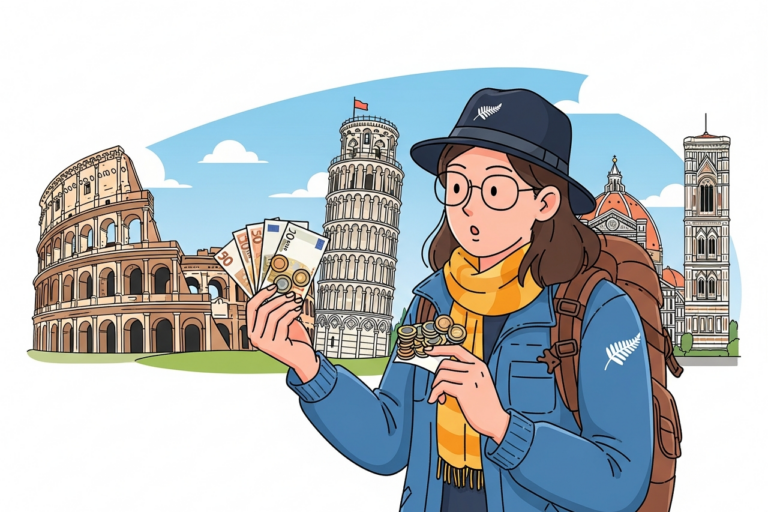
You will see euro banknotes in different denominations, and there are euro coins for smaller amounts.
-
It is important to plan your travel money. You should know the exchange rate before you go.
-
Credit and debit cards are accepted in many places, especially in cities. But it is still a good idea to carry some cash with you.
-
The euro is used right across Italy, so this makes things easy for travellers from New Zealand.
-
If you exchange currency before you travel, you might get a better rate.
Introduction
Are you thinking of a trip from New Zealand to Italy? While you get excited about walking through Rome or seeing the canals in Venice, remember to plan for travel money too. You should learn about the official currency of Italy before you go. Italy uses the euro. That makes things easier when you want to pay for things. This short guide will help you know what to do with money in Italy. You will find tips on how to exchange money and how to use your cards.
Understanding the Official Currency of Italy
The official currency in Italy is the euro (€). Italy started using the euro and now people use it for all kinds of payments. Having just one currency makes it easy to travel in Italy and also in other countries that use the euro. The euro is looked after by the European Central Bank and the Bank of Italy, which is also called the Banca d’Italia. They help keep the euro in good use across the country.
When you get to Italy, you will see both euro banknotes and euro coins. These have different values, or denominations, so you can buy anything from a cup of coffee to a train ticket. It is a good idea to know what these banknotes and coins look like before you go. This way, you can control your spending while travelling. Let’s take a closer look at the euro notes and coins you will use in Italy.
The Euro: Notes and Coins Used Across Italy
The euro (EUR) is split into 100 cents, just like the New Zealand dollar. This makes it easy to understand the prices when you use euro.
There are euro banknotes for €5, €10, €20, €50, and €100. The bigger banknotes, like €200 and €500, are not common. Most people do not see them in normal day-to-day use, and some small shops may not take them. The best way is to use lower-value euro banknotes for what you buy every day.
For small payments, euro coins are used. You will see coins for 1, 2, 5, 10, 20, and 50 cents, plus €1 and €2 coins. It is a good idea to carry some of these coins with you. They are useful when you want to get a snack, buy a ticket for public transport, or leave a tip.
Euro banknotes, euro coins, and all their denominations make it simple for people in New Zealand or anywhere to get used to eur. Coins and small-value banknotes help a lot in daily transactions in the local area where eur is the main money in use and you may want to know what is common in circulation.
Where Euros Are Accepted and Possible Exceptions
The euro is the official currency in Italy. You will be able to use it everywhere, from Rome’s busy streets to quiet villages in Tuscany. You can pay with euros for all goods and services. Many places across Europe use the euro, so this makes payments easy.
How you pay can change a bit. Card payments are often fine in cities and at spots where tourists like to go. Still, in many places, cash is the most common way to pay. It’s good to keep some euro coins and small notes in your pocket for things you need to buy.
Cash is often used or needed at:
-
Small local markets
-
Family-run cafes and shops
-
Places in rural areas
This will help you everywhere you go in Italy.
Money Matters for New Zealand Travellers in Italy
Managing your travel money well will help you have a smooth trip to Italy. If you are going from New Zealand, you need to change your dollars to euros. It is good to know the exchange rate and also not forget about foreign transaction fees, as these can add up fast.
There are a few ways to get euros. Each one has its good and bad sides. You can get cash before you leave, use ATMs in Italy, or bring a travel money card with you. Below, we go over the best ways to get euros and how to deal with money when you are in Italy.
Exchanging Currency: How & Where to Get Euros
One of the easiest ways for tourists to get euros is by withdrawing from ATMs, known as ‘Bancomat’ in Italy. They are widely available in cities and towns. When using an ATM, always choose to be charged in the local currency (euros) to avoid poor conversion rates offered by your home bank.
Another option is to exchange money before you travel. Ordering euros online in advance can often secure you a better exchange rate than you would get at the airport. Currency exchange desks at airports and hotels are convenient but often have higher fees and less favourable rates.
Comparing your options is crucial for getting the best value for your travel money.
|
Exchange Option |
Pros |
Cons |
|---|---|---|
|
ATMs in Italy |
Convenient, widely available |
Withdrawal limits, potential fees |
|
Pre-ordering online |
Competitive rates, convenient |
Requires planning ahead |
|
Airport/Hotel Exchange |
Very convenient |
High fees, poor exchange rates |
Using Credit Cards, ATMs, and Managing Cash Needs
Credit cards like Mastercard and Visa are accepted in most hotels, restaurants, and shops in Italy, especially in cities. It is a good way to pay for big things. But, make sure you check if your bank has any foreign transaction fees when you use your card overseas.
Still, you will need to have some cash with you in Italy. Cash is needed for small things or when you go to rural areas or local markets. In these places, cash is not just good to use, but sometimes it is the only thing they take. ATMs are easy to find when you are in a city, but in small villages, there are not many ATMs.
Here are some handy tips for handling your money:
-
Always carry some cash and cards so you can use what you need, when you need it.
-
Tell your bank before you travel so you do not get your cards blocked while in Italy.
-
Keep a few small notes and coins with you for tips, using public toilets, or buying from little shops.
Conclusion
To sum up, knowing about the currency in Italy is important for travellers from New Zealand. The euro is used everywhere in the country. It helps to get to know the different denominations so you can spend money without stress. When you get ready for your trip, have a look at different currency exchange options. You might use cash, credit cards, or ATMs. This way, you can avoid extra fees and spend more time enjoying what Italy has to give. If you want help with your plans or have questions, you can ask for a free consultation. Have a good trip!
Frequently Asked Questions
What Was Italy’s Currency Before the Euro?
Before Italy started to use the euro in 2002, the italian lira was the country’s official currency. People used the lira for a long time, and it changed a lot, especially after world war ii. There was a transitional period, where the lira and the euro were both in circulation. After this time, the lira was not used anymore.
Should I Bring Cash, Cards, or Traveller’s Cheques?
For your trip to Italy, it’s good to use both cash and credit cards. You can also get a travel money card, which is very handy. Traveller’s cheques are not used much now and most places do not take them. It is better to use more simple ways to pay, like travel money cards, when you are in Italy.
Are There Tips to Avoid High Fees When Exchanging Money?
Yes! To keep from paying high fees, make sure you check the mid-market exchange rate before you swap money. Do not use the exchange desks at airports because they often have high charges. When you use ATMs, always pick to be charged in euros and not your home money. This way, you get a better conversion rate and do not have extra foreign transaction fees.



