

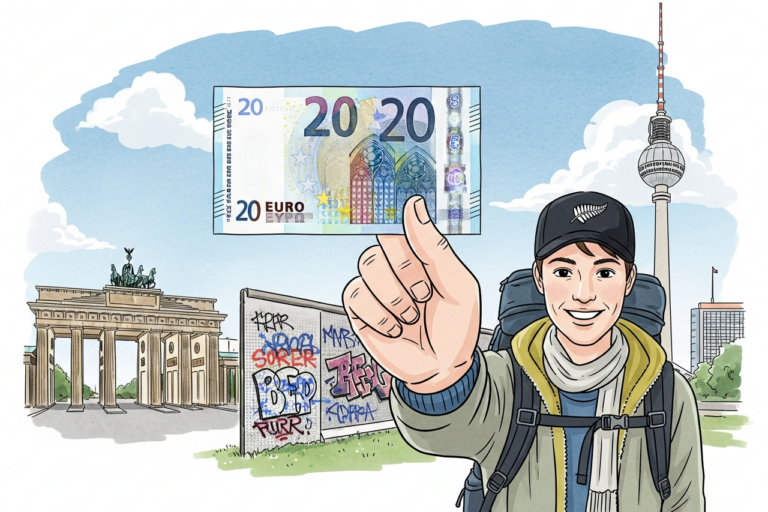
Key Highlights
Here are the key points for your trip to Germany:
-
The euro (EUR) is the official currency of Germany. You will use it in all parts of the country and across the eurozone.
-
Card payments happen often, but it is good to keep cash handy when you buy small things or visit less busy places.
-
You can swap your New Zealand Dollars for euros before leaving or once you get there. For better exchange rates, try not to use airport currency exchange.
-
Euro banknotes and coins come in different sizes and amounts. It’s a good idea to know the different denominations before you travel.
-
A travel money card may be a good and simple way to keep your money safe and lock in exchange rates.
Introduction
If you are planning a trip to Germany, you will want to know how to pay for things. You could go to Berlin to see its history, hike in the Black Forest, or have a beer in Bavaria. It is good to understand the local currency before you go. The euro is the official currency in Germany. This guide will show you how the euro works there. You will learn the best ways to exchange your money and how to make payments. If you get your money sorted ahead of time, you can enjoy your German trip much more.
The Official Currency of Germany
The official currency of Germany is the euro. People call it the euro and the code for it is EUR. The sign for it is €. Germany is part of the European Union and the Eurozone. So, Germany uses the euro as the only legal tender. This means all the prices you see for things like goods, accommodation, and services are in euros.
When you travel in Germany, you will use euro banknotes and coins for buying things. It is good to know the different denominations before you get there. We will talk about what the euro is and remember what currency Germany used before it switched to the euro.
What Is the Euro and Why Is It Used in Germany?
The euro is the official currency used by 19 out of the 27 countries in the European Union. This group is called the Eurozone. Germany is an important country in this group. The euro first started as an accounting currency in 1999. The euro notes and coins began to be used on 1 January 2002.
Germany uses the euro so trade and travel are easy between these countries. A common currency helps by removing exchange rate costs and worries when dealing with places like France, Italy, or Spain. This makes the economy in Europe more stable and brings everyone closer.
For travellers, it’s good to know that when you get the euro for your trip to Germany, you can use it in lots of other European countries as well, which makes moving from country to country much easier. In Germany, the euro is the only legal tender. So, you will need euros for all your spending.
Brief History of German Currency Before the Euro
Before the introduction of the euro, the Deutsche Mark was the official currency of Germany. The central bank of that country, the Deutsche Bundesbank, used to issue the German Mark. It was one of the most stable and trusted currencies in all of Europe. After World War II, the Deutsche Mark became the main currency of West Germany. The German Mark then stood as a sign of the country’s economic recovery.
In the 20th century, Germany had a few currency changes, with the Reichsmark being used in the years before and during the war. When reunification happened in 1990, the Deutsche Mark became the currency of the whole country.
The German Mark stayed in use until the euro officially took over in 2002. When that happened, the Deutsche Mark went out of circulation and changed to the euro at a fixed exchange rate. Now, the euro is the only official currency in Germany, but many people still see the history of the German Mark as a big part of the country’s story.
Where the Euro Is Accepted in Germany
The euro is the legal tender in Germany. You can use it everywhere, no matter if you are in Berlin, Munich, or a small town. Every business has to take the euro, so you can pay for a train ticket, a hotel room, or a meal at a restaurant with it.
But even though you can always use the euro, the way you pay may change from place to place. Some small shops or stalls at markets like to get cash. Bigger shops and restaurants mostly let you use cards. Knowing these things will make the way you spend money much easier. Next, we will talk about where the euro is used and if there is anything you should know about special cases.
Can You Use Euros Everywhere?
Yes, you can use the euro all over Germany with no trouble. It is the only local currency, and you will need it for every type of payment. The euro works if you are in a busy city or a small village. You won’t need any other currency.
One good thing about the euro is that you can use it in many Eurozone countries. If you leave Germany and travel to other places in Europe, you might not have to worry about currency exchange. The euro is used in these countries as well:
-
France
-
Spain
-
Italy
-
Austria
-
Netherlands
This means you can go from one Eurozone member state to another without stress. You won’t have to get new money every time you go to a new country. But keep in mind, a place like Switzerland or the Czech Republic is not in the eurozone. They have their own currencies.
Are There Any Payment Exceptions or Regional Variations?
The euro is the main money used in most places, but you might see people who like to use other ways to pay. The euro does not change from place to place. But, you will find that some small businesses, like those in country areas, may only take cash. It is good to have some cash with you just in case.
Some shops and cafes may ask for a minimum spend before they let you use card payments. So, if you want to buy a coffee or a snack, cash can be useful. The places below may not take cards:
-
Small bakeries or cafes
-
Local market stalls
-
Some independent shops
-
Public transport ticket machines that don’t accept foreign cards
When you need to get euros, it is best to avoid doing currency exchange at the airport or at hotels. They often have bad exchange rates. You will get better rates if you use an ATM or go to a currency exchange office in the city centre.
Paying in Germany: Cash, Cards, and Digital Options
In Germany, you will see that people use both old and new ways to pay. Many big shops, hotels, and food places will take card payments, like using a debit card or a credit card. But many people in Germany still like using cash for most things. So, cash is still really common for daily life.
It is good to use a mix of ways to pay. You should keep some euro cash with you for small things, tips, or when you are at a spot that will not take cards. For bigger costs, a card might be easier to use. We will talk more about why people pick cash or card and also talk about mobile payments as well.
Cash vs Credit Card: What’s Preferred by Locals and Businesses?
In Germany, many people still like to use cash when they buy things for daily needs. They do this because it is simple and gives them more privacy. You will see that smaller places, like bakeries, markets, and old-style pubs or cafes, might let you use only cash most of the time.
Bigger shops and businesses, like hotels, chain restaurants, and big stores, will take card payments. That includes credit cards and debit card options. But you should not think every place will take a card. If you are not sure, it is a good idea to ask first what ways you can pay before you try to buy something.
You will be ready to buy what you want if you have more than one way to pay. Think about these ideas:
-
Always have some cash on you for small spends or if you want to leave a tip.
-
You can use your debit card or credit card for bigger bills—like when you stay in a hotel or shop at a large store.
-
A travel money card can give you a good mix of being handy and getting good exchange rates.
Contactless Payments and Mobile Solutions
Contactless payments are now used more often in Germany, especially in big cities and by well-known shops. It is easy to use a contactless debit card or credit card to pay quickly. This is good for times when you ride on public transport or shop in supermarkets.
You can also try mobile payment options such as Apple Pay and Google Pay. These are connected with big card networks like Visa and Mastercard. But, you may not be able to use them everywhere in Germany like you would in some other countries. So, do not use these as the only way you pay. If you use American Express, you may find that less places accept it compared to Visa or Mastercard.
If you want help with your money, there are services for you. You may not find many money apps just for currency exchange in Germany. But, you can use card or app options that let you swap currencies.
-
Wise, for example, lets you make an account that can hold money and let you exchange it at good rates.
-
You can use apps like these on your phone to manage all your money.
-
Remember to check if you see the contactless symbol in the store before you try to pay this way.
Exchanging Money for Euros as a New Zealand Traveller
As a traveller from New Zealand, you have to change your NZD into EUR. To get the most out of your travel money, it helps to know about exchange rates and fees. An online currency converter can show you the mid-market rate. This rate gives you an idea of what you should get for your money.
There are a few ways to sort out currency exchange. You can do it before you leave New Zealand or after you get to Germany. It is smart to plan in advance, so you do not get caught out. This means you will have euros ready to use when you arrive. Here are the best ways to get your foreign currency sorted for your trip.
Best Ways to Exchange NZD to EUR Before You Depart
Exchanging your money before you leave New Zealand can help you feel more at ease. One good way to do this is with a travel money card that holds more than one currency. Companies like Wise let you put NZD on your card, then switch it to EUR either online or using their app. You will often get the mid-market exchange rate.
You can also order euros online from a currency exchange company. Then you can get them sent to your home or pick them up. Services like Travelex or Western Union let you do this, and you can lock in the exchange rate before you go. Ordering online can help you get better currency exchange rates than if you walk into a shop in person.
Here are some common ways to handle your travel money:
-
Travel Money Cards: Put NZD on your card and switch it to EUR. This is handy and has low fees.
-
Online Currency Exchange: Buy your euros online and get them delivered or pick them up.
-
Your Bank: This can be the easiest way but you might not get the best exchange rates.
These options make it easier for you to get good exchange rates and sort your travel money, including currency exchange, before your trip. Western Union, travel money cards, and checking different currency exchange rates help you find what works best.
Currency Exchange Options Upon Arrival in Germany
If you prefer to get your euros upon arrival, Germany offers several convenient options. The easiest method is often to withdraw cash from an ATM. ATMs are widely available in airports, train stations, and throughout cities. Using your New Zealand debit or bank card will usually give you a fair exchange rate, but be mindful of any fees charged by your bank and the local ATM operator.
You can also visit a currency exchange bureau, known as a ‘Wechselstube,’ in city centres. These often provide better exchange rates than those found at airports or hotels. Always compare the offered rate against the mid-market rate shown on a currency converter to ensure you’re getting a good deal.
Here is a comparison of your options:
|
Exchange Option |
Pros |
Cons |
|---|---|---|
|
ATMs |
Convenient and widely available; often good exchange rates. |
Your bank and the local ATM may charge fees. |
|
City Exchange Bureaus |
Competitive rates compared to airports/hotels. |
You need to locate them; rates can vary between providers. |
|
Airport/Hotel Exchange |
Very convenient upon arrival. |
Usually offer poor exchange rates and high fees. |
Conclusion
To sum up, knowing what money to use in Germany is important for New Zealand travellers. It helps you have a smooth and good time. The euro is the official currency of Germany. You will find that the euro is trusted for many ways to pay, like cash or with online payments. If you know where and how to change your New Zealand dollars for euros, you can stop big problems before they start. This means you can make the most of your trip.
When you are in Germany, you should know how people there like to pay. This can help you connect better with others. If you are ready to start your German trip, make sure you get things ready first. Enjoy the local life while you are there! For more helpful tips just for you, get in contact with us for a free talk.
Frequently Asked Questions
What are the common denominations of euro banknotes and coins?
In Germany, people use euro banknotes in €5, €10, €20, €50, and €100. There are bigger notes, but you won’t see them every day. Euro coins come in 1, 2, 5, 10, 20, and 50 cents, plus €1 and €2. It’s a good idea to have small denominations when you shop or pay for things in Germany.
Is it easy to withdraw euros from ATMs in Germany?
Withdrawing euros from an ATM (Geldautomat) in Germany is easy. You can find them in most cities and towns. It is possible to use your New Zealand debit card or credit card at the atm in germany. Make sure to ask your bank about any foreign withdrawal fees before you go. This way, you will not get any hidden costs.



