

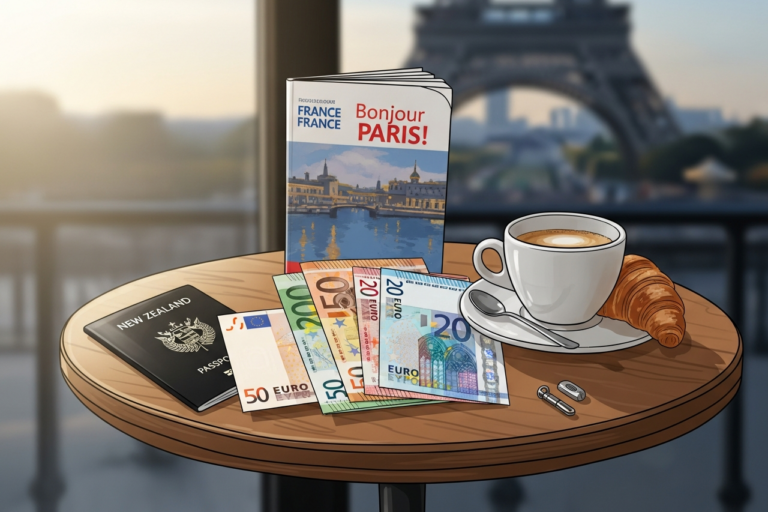
Key Highlights
Planning a trip to France from New Zealand? Here’s what you need to know about your travel money.
-
The official currency of France is the euro (EUR). It is the legal tender used all over the country.
-
If you are from New Zealand, you can swap your dollars for euros in New Zealand before you go, or wait and do it in France when you arrive.
-
If you keep an eye on the mid-market exchange rate, you can get the best value for your travel money.
-
Most shops and businesses take major credit and debit cards. Still, it is a good idea to carry some euro banknotes for small things you need to buy.
-
You will find ATMs in cities and bigger towns where you can get your local currency, which in France is the euro.
Introduction
Are you dreaming about walking in the Paris streets, eating tasty French food, and seeing the beautiful French Riviera? A trip to France gives you something you will never forget. But before you grab your suitcase, make sure you get your travel money sorted. You need to know the official currency and how you will pay for things. This is a big part of planning your trip. This guide is here for New Zealand travellers. It will help you learn about the legal tender in France, ways to get it, and the best ways to spend your money while you are in this lovely country.
The Official Currency of France
The official currency of France is the euro (€). France is a member of the European Union and the Eurozone. France started to use the euro as its legal tender in 2002. Before the euro, the currency of France used to be the franc.
In France, all transactions are done in euros. People will see all prices shown in this currency. The European Central Bank gives out euro banknotes and coins. These banknotes and coins are used in 21 EU countries. This makes it very easy to travel between Eurozone countries, because you do not have to change your money.
Introduction to the Euro and Its Symbol
The euro is the main money used in many countries that are part of the European Union. These countries make up what people call the Eurozone. The euro was introduced to make it easier for people to trade and travel across Europe. This change helped create a single and unified space for business and travel. When you check exchange rates, you will see the euro shown with the currency code EUR.
If you are in France, you will notice the € sign everywhere. This symbol comes from the Greek letter epsilon, and it stands for the start of European culture and the beginning of the word ‘Europe’. The two lines going through the symbol show stability.
The euro is the legal tender in France. This means the price for all things you buy or pay for in France is shown in euros. The euro is the second most used money in the world. It has a big place in global finance. Because of its stability and how many people use it, the euro is a good money to use when you travel.
Common Euro Notes and Coins Used in France
When you start using the French currency, you’ll quickly become familiar with its various denominations. The euro is divided into smaller units called cents, with 100 cents making up one euro (€1).
You will find euro coins and euro banknotes in circulation. The coins are particularly useful for small purchases, like a coffee or a snack from a bakery. The banknotes, on the other hand, are better suited for larger expenses like restaurant meals or shopping. It’s good to know that while the €500 note exists, it is no longer issued and may not be accepted by many businesses.
Here is a simple breakdown of the common euro denominations you will use in France:
|
Type |
Denominations |
|---|---|
|
Euro Coins |
1, 2, 5, 10, 20, 50 cents; €1, €2 |
|
Euro Banknotes |
€5, €10, €20, €50, €100, €200 |
Currency Exchange Options for New Zealand Travellers
When you want to turn your New Zealand dollars into euros, there are a few ways to do it. To get the most from your travel money, try to find better rates and stay away from places with high fees. It is a good idea to know the mid-market exchange rate before you swap money. This way, you can tell if you are getting a good exchange rate.
You can change money before you leave New Zealand or wait until you get to France. But, you need to be careful about airport or hotel exchange desks because they may give you poor exchange rates. You will likely find better rates at a bureau de change or from French banks. These places in France often have better deals for your travel money.
Exchanging New Zealand Dollars for Euros Before You Travel
One of the easiest ways to sort your travel money is to get it dealt with before you leave New Zealand. When you do this, you have the official currency of France ready for any costs you might face, like paying for a taxi or a coffee as soon as you get there.
Sorting New Zealand dollars at home means you feel relaxed. You don’t have to stress about being in a new place. You also get to pick the best exchange rate out there. This lets you have more euros for your dollars, and you are in control.
Here are some good ways to get currency of France before your trip:
-
Order euros at your local bank in New Zealand.
-
Get a currency exchange job done online or at a store.
-
Put euros onto a travel money card before leaving.
With these options, you will have what you need, get better rates, and spend less time worrying about travel money while in France.
Where to Exchange Currency in France: Banks, Kiosks, and Airports
If you choose to exchange your money after you get to France, there are a few ways you can do it. While the airport is handy, it is not a good place for money exchange. Airports are known for poor exchange rates and big fees. You should only swap a little bit if you really need cash right away.
For a better rate, try to find a bureau de change, which is a currency exchange office, or go to one of the large French banks. These places are easy to find in the big cities. But keep in mind that banks and bureaux de change often close on public holidays and weekends. In smaller towns, it can be much harder to find somewhere to exchange your money.
Here are some places where you can exchange money in France:
-
Major French banks such as BNP Paribas or Crédit Agricole.
-
Dedicated bureau de change kiosks.
-
Post offices (La Poste).
-
For better rates, try not to use airport or hotel exchange desks.
Using Bank Cards and ATMs in France
Using your bank cards in France is an easy way to handle your travel money. Most hotels, shops, and restaurants in the cities take Visa and Mastercard debit cards and credit cards. You can also use contactless payments at many places.
You will find a lot of ATMs (also called ‘distributeur automatique de billets’) in France. These machines let you take out euro banknotes with your New Zealand debit card. This can be a good way to get euro, and you often get a good exchange rate.
Withdrawing Euros from ATMs: What to Know
Finding an ATM in France is easy, especially in big cities and large towns. The ATMs are outside banks and in busy places like train stations and shopping spots. Using an ATM is a good way to get cash when you are in France.
When you use your New Zealand debit card or credit card at an ATM, you will see a choice. The ATM will ask if you want to be charged in your own currency (NZD) or the local currency (euro). Always choose the euro because you will likely get a better exchange rate from your own bank, not the one set by the ATM. The euro is the best choice if you want to save money.
Before you go, ask your bank about the overseas withdrawal fees. Some banks charge the same fee each time, but other banks base the cost on a percentage. Also, tell your bank you will use your debit card or credit card in France, so they do not block them because of overseas use. This way you can enjoy your trip with less stress.
Debit, Credit, and Prepaid Card Acceptance in France
In France, you will find that debit cards and credit cards are used a lot, mainly in cities. You can use your card to pay for hotel rooms, restaurant food, and shopping. Visa and Mastercard are everywhere, so if you have one of these, you should not have any trouble.
Some places, like big hotels and expensive shops, do take American Express. But it is not as widely used as Visa or Mastercard. So, it is a good idea to carry a backup card from a different company, just in case you need it.
Here are a few things to know about card use in France:
-
Visa and Mastercard are accepted in most places.
-
You can use a prepaid card with euros to help with your budget.
-
It is good to check before you buy something if you want to use a card like Amex, as it is not taken everywhere.
-
Let your bank know about your travel dates. This will help you have good service and not run into problems.
Paying in France: Cash, Cards, and Digital Wallets
When you need to pay for things in France, you get to choose from a few ways. Credit cards will help you out in the cities. Still, you should also have some cash with you in euro, which is the legal tender here. This makes sure you can pay for little things or when you are in rural areas where cards might not work. The euro is the only money people use.
Besides old ways of paying, France now uses a lot of new tech. Digital wallets and paying by mobile are more common each year. These ways help you pay both fast and safely. We will show you how and when to use each type of payment, so your time in France goes well.
When to Use Cash vs Cards in France
Knowing when to use cash or cards can help things go well for you in France. In big cities like Paris, you can use your cards to pay for most things. This is true for hotels, places to eat, and tickets to museums. Still, it is smart to keep a small amount of cash with you.
Cash is often needed when you go to smaller towns, rural areas, or when you walk around local markets. You may find that some small bakeries, cafes, or market stalls only take cash, or they may let you use your card only if you spend a certain amount. If you have local currency like euro coins and notes, you will have no trouble joining in with these real French ways of life.
Here’s a quick guide:
-
Use cards for bigger things such as accommodation and eating out.
-
Use cash for small things like coffee, pastries, or things you find at the market.
-
Keep some euro coins for public toilets and for tipping.
-
Always have some cash with you if you are going to rural areas.
Digital Payment Methods and Mobile Wallets
France has really picked up on the ease of digital payments. If you use a digital wallet like Apple Pay or Google Pay at your own place, you will be happy to know these ways to pay are easy to find all over France. This is even more true in the big cities and towns.
When you pay at the shop, look for the contactless sign. It looks like some curved lines. If you see it, you can use your phone or your smartwatch to pay. Many new card machines now use NFC. This lets you tap to pay fast and safe. It is handy, as you do not always need to carry your cards around.
This way of paying is not just easy, it is safe too. That’s because your card numbers are not given straight to the shop when you pay. Before you leave home, just check your device has enough charge and that you have a payment set up in your digital wallet.
france
Conclusion
To sum up, knowing how money works in France is important if you are travelling from New Zealand. It helps you have a smooth and fun time. Make sure you know about the euro, the different denominations, and the ways you can swap your cash. This saves you both time and money when you travel. You can take out cash from ATMs, use your card, or pay with digital wallets. If you know about these things, you will be able to pay for what you need with more confidence.
It is also good to look into local banks and learn about any extra charges that come with buying things in another country. If you want advice or travel tips just for you, get in touch with our team. We are ready to help you get the most out of your trip!
Frequently Asked Questions
Can I use currencies like US dollars or British pounds in France?
No, you cannot use US dollars or British pounds to buy things in France. The euro is the only legal tender in the country. You will need to use the local currency, which is the euro, for all your payments. It is important to swap your money for euros to get goods and services while you are in France.
Are there limits on bringing cash or foreign money into France?
Yes, there are rules about travel money. If you are coming into France from a country that is not in the EU and you have €10,000 or more in cash, or the same amount in a different currency, you need to tell customs when you arrive. This is for all of the money you bring for your trip.
What was France’s currency before the euro?
Before the euro came in 2002, the currency of France was the French franc (FRF). The franc was used for a long time. It started back in 1795, after the French Revolution. The franc was the national currency of France for many years. France used it until the euro replaced it fully.



