

Key Highlights
-
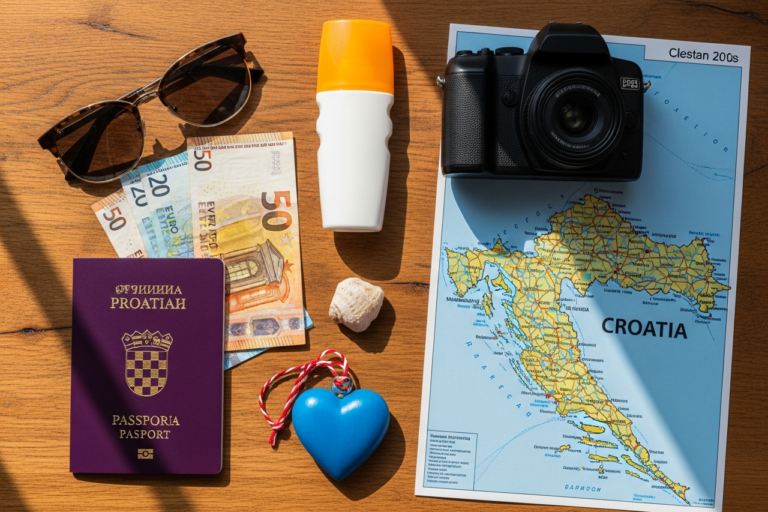
The official currency in Croatia is the euro (€). This changed from the Croatian kuna to the euro on 1 January 2023.
-
The euro is now the only legal tender. You can’t use the old Croatian kuna to pay for things anymore.
-
Debit and credit cards like Visa and Mastercard are accepted in most cities and tourist areas.
-
You will often get a better exchange rate if you take cash out from an ATM in Croatia, instead of changing your money before you go.
-
When you pay, always choose to use the local currency (euro), so you don’t end up with a bad rate because of dynamic currency conversion.
Introduction
Are you planning the dream holiday to the amazing shores of Croatia? Maybe you will see the old walls of Dubrovnik or explore some beautiful islands. There is so much to enjoy there. But before you get your bags ready, you might ask yourself about the money. What is the official currency of Croatia? Not long ago, people used the Croatian kuna. Now, that is different. In this guide, you can find out all you need to know about the currency in Croatia. It will help you look after your travel money when you visit.
Croatia’s Official Currency: The Switch from Kuna to Euro
As of 1 January 2023, the euro (€) became Croatia’s official currency. This was a big step, as Croatia joined the eurozone. Now, the currency of Croatia is like many other European countries. The introduction of the euro made it easier for people to travel and trade. It also helped Croatia as a member of the European Union.
Before this change, the Croatian kuna was the official currency. The switch from the Croatian kuna to the euro did not happen overnight. It started when Croatia joined the European Union in 2013. Now, the euro is the only official currency used in Croatia.
Timeline of Croatia’s Transition to the Euro
Croatia’s journey to adopt the euro was a multi-year process. After joining the European Union, the country had to meet strict financial criteria before it could become a member of the eurozone. This journey started formally in 2019, with active preparations beginning in 2020.
The Croatian National Bank worked to ensure a smooth transition from the previous currency, the Croatian kuna, to the euro. The process was approved in 2022, paving the way for the introduction of the euro. The changeover involved setting a fixed exchange rate to ensure fairness and stability during the switch.
Here’s a simplified timeline of the key events:
|
Date/Year |
Event |
|---|---|
|
2013 |
Croatia joins the European Union. |
|
2019 |
Croatia formally takes the first step towards euro adoption. |
|
2022 |
Croatia’s entry into the eurozone is approved. |
|
1 Jan 2023 |
The euro becomes Croatia’s official currency. |
Can You Still Use Croatian Kuna in 2024?
If you have some leftover Croatian kuna from your last trip, you may be asking if you can still use it. The answer is no. The kuna is not legal tender in Croatia anymore. Now the kuna is out of use because Croatia has moved fully to the euro. You can’t spend the old currency in shops, restaurants, or any other place.
These days, the euro is the official currency of Croatia. All prices that you see will be in euros. People use euro banknotes and coins for every deal. So now, any Croatian kuna you have at home will be more like a keepsake and not something you can spend.
When Croatia first changed its official currency, people had a short time to swap Croatian kuna for the euro at post offices and banks. But that time is over. Now, you need to use the euro for all your money matters in Croatia. This makes travel and spending a lot easier while you are there.
Practical Guide for New Zealand Travellers: Exchanging Money
Now that you know Croatia’s official currency is the euro, and the currency code is EUR, let’s talk about how you can get your hands on it. If you are a traveller from New Zealand, there are a few ways you can get travel money. You can use your debit card at ATMs, bring some cash to change, or get a travel money card.
It’s important to know the best way to handle your money before you go. This can help save you time and money, so you have more to spend while in Croatia. We will look at whether it is better to change your money before you leave, or after you land, and show you where you can find good and reliable exchange services.
Should You Exchange Currency Before Arriving or In Croatia?
A lot of travellers want to know if they should get foreign currency before they leave home. It can seem good to travel with euros in your wallet. But when you exchange money in New Zealand, the exchange rate is not as good as you will get in Croatia. The exchange rate at airport currency counters is often the worst, both in New Zealand and when you land.
For a better exchange rate, it’s best to wait until you get to Croatia. Use your debit card at a local ATM to take out euros. This is both easy and cheap. You will often get a far better exchange rate than if you swap cash.
Here are a few tips to keep in mind:
-
Avoid exchanging a lot of cash at airports.
-
Use your debit card at a bank ATM in Croatia. This will get you a good exchange rate.
-
Let your bank know about your travel. This helps make sure your card works the whole time.
-
Carry a small amount of euros with you for when you first arrive.
Where to Find Reliable Currency Exchange Services
If you want to swap cash, it is good to find a service you can trust. This helps you not get overcharged. Most people go to official banks or trusted exchange offices in Croatian, called ‘Mjenjačnica’. You will find these in cities or main tourist areas.
Be careful when you see a sign that says “no commission”. They often hide their fees by using a low exchange rate. Always check how much money you get at the end before you give your cash. The Croatian National Bank keeps an eye on the exchange rate. Still, you should be smart and look closely.
To get the most out of your money, try to:
-
Go to an official bank branch.
-
Pick a trusted exchange office that is not in a busy tourist area.
-
Use ATMs from the big Croatian banks.
-
Stay away from exchanging at hotels or airports because their rates are usually not good.
Paying in Croatia: Cash and Card Options
When you are in Croatia, you will see that both cash and cards are used often. In big towns, cities, hotels, and places to eat, using your debit card or credit card is normal. But it is a good idea to keep some euro banknotes with you. This helps when you are buying small things, like in a village or at a local market.
We will talk about where you can use cards the most, and how to get cash from ATMs easily. This will help you know how to pay and handle your money, whether you are having a meal in Zagreb or picking up a souvenir on a Dalmatian island.
Acceptance of Credit and Debit Cards in Croatia
Credit and debit cards are used a lot in Croatia, mostly in the big cities and the places where a lot of people travel. Lots of hotels, restaurants, and bigger shops take Visa and Mastercard. Paying with your card is easy and helps you not have to walk around with too much cash.
Many shops are set up for contactless payments, and you can use Apple Pay or Google Pay too. This is a good idea for quick things like getting coffee or using public transport. You just tap your card or your phone, and that is it.
But, you need to know that some smaller shops, family places to eat, market stalls, and places away from the main areas may still ask for cash only. That’s why it is always a good idea to have some euros with you, so you do not end up with no way to pay.
Accessing Euros via ATMs Across Croatia
ATMs, called ‘bankomat’ in Croatian, are everywhere in the country. You can find them in towns, cities, and places where lots of tourists go. ATMs are an easy way to get euros in Croatia. You can use your New Zealand debit card at a Croatian ATM without much fuss. You usually get a good exchange rate when doing this.
When you use an ATM, it may offer ‘dynamic currency conversion’ (DCC). This lets you choose if you want to be charged in New Zealand dollars. Always say no to this and choose to pay in the local currency, which is the euro. If you pick the euro, you will save money because you miss extra fees and a bad exchange rate set by the ATM.
To make sure using ATMs in Croatia goes well:
-
Try to use ATMs that belong to good banks. This often means lower fees.
-
Tell your New Zealand bank your travel dates.
-
Know your daily withdrawal limit from your home bank.
-
Take out more money in one go rather than lots of small withdrawals. This way you can cut down on transaction fees.
Conclusion
To sum up, it’s good for travellers from New Zealand to know about the currency used in Croatia. Croatia has moved from the kuna to the euro, so it helps to understand what this means for your travels. Be sure to know when and where you can swap your money, and what payment options there are while you go around. This will help your trip run well. Whether you are having coffee in Dubrovnik or seeing the Plitvice Lakes, having the right currency means you can focus on your holiday. If you have questions or want help, feel free to ask for advice that suits you. Travel safe!
Frequently Asked Questions
What are the latest euro exchange rates in Croatia?
Euro exchange rates can change every day because of what happens around the world. The European Central Bank sets the main rates, but when you go to different banks or use other services, the rate you get may not be exactly the same. If you want the latest rates for the euro, use a good online currency converter right before you swap money or take some out.
Are there restrictions on bringing New Zealand dollars or other foreign currencies into Croatia?
If you come into Croatia from a country that is not in the EU, you have to say if you bring in an amount of cash, or any foreign currency, that adds up to €10,000 or more. This rule is there to stop money laundering. If you have a smaller amount, there are no rules against that. But in most cases, it is safer and cheaper to use cards and ATMs in Croatia.
Can I pay for tourist activities and campsites in Croatia with euros?
Yes, you can pay for all your goods and services with the euro. This includes tourist activities, accommodation, and campsites. The euro is the official currency and is the only legal tender used here. In most tourist areas, campsites and tour operators will take both debit and credit card payments as well.



