

Key Highlights
-
The official currency in the People’s Republic of China is the Chinese Yuan (CNY). People also call it the Renminbi (RMB).
-
The currency symbol for the yuan is ¥.
-
It’s good to know the difference between yuan and renminbi when you deal with the Chinese currency in China.
-
It is important to check the live exchange rate between the New Zealand dollar and the Chinese Yuan. This will help you with your budget.
-
People in China now use a mix of ways to pay, like cash, cards, and more and more, mobile payments.
-
Most places in China will not take foreign money, like the NZD, when you want to buy something.
Introduction
Are you planning to go from New Zealand to China? It can be a great trip, but working out the money in China can make you feel a bit lost. What do they call the Chinese currency? How do you get it? What is the best way to pay for things there? You do not need to worry. This guide will help you know what to do. We will explain everything you need to know about money before you leave New Zealand. This way, things will go well when you get to China.
Understanding China’s Official Currency
The official currency in China is called the Renminbi. This name means “the people’s currency.” The People’s Bank of China makes and looks after this money. Some people use different words, but Renminbi is the proper name for the currency system.
When you are in China, you will use the Chinese Yuan. Make sure to know about this money so you can keep to your budget. Try to learn the words people use for China’s money and what they mean. This will help you not get mixed up while you are there.
Yuan vs Renminbi: Explaining the Terminology
It can be a bit confusing when you hear people talk about Chinese currency. Sometimes they call it “Renminbi” and other times “Yuan.” Here is an easy way to remember the difference. Renminbi, which is often called by the abbreviation RMB, is the full name for the Chinese currency. It is a bit like how “sterling” is used for the British pound. The yuan is the main unit of Renminbi.
For example, when you want to say how much something costs in China, you say it costs a certain number of yuan. It is like in Britain, where people say “10 pounds” instead of “10 sterling.” The People’s Bank of China is the bank that manages Renminbi, but every day people use yuan to buy things.
To put it simply, Renminbi is the name of the system, and yuan is the part people use to count money. The words are sometimes used to mean the same thing, but knowing the difference can help a lot when you want to learn about chinese currency or if you are using the abbreviation RMB.
What Does CNY Stand For and How Is It Used?
When you want to check an exchange rate or do an international transaction, you’ll often see the code “CNY.” This is the three-letter ISO code for the Chinese Yuan. “CN” means China, and “Y” is for Yuan.
Banks, currency exchange places, and the news all use CNY when they talk about the Chinese Yuan. It is just like NZD for the New Zealand Dollar. In China, the currency symbol you will see in shops is ¥.
If you use the right code, CNY, it helps people be clear when they send money or change currency. This is important, so there is no mix-up with other money from around the world.
Notes and Coins: Chinese Currency in Practice
When you get to China, you will use real money like banknotes and coins. The Chinese currency comes in many sizes, and each one is good for different things you might buy. It helps a lot to know what they look like. This will make it easier for you to pay for things.
The Bank of China and some other big banks are the main places where you can deal with cash. If you learn about the different values of notes and coins, you can buy anything from street food to small gifts without worry. Now, let’s find out more about the look and size of the Chinese currency you will see.
Design and Denominations of the Yuan
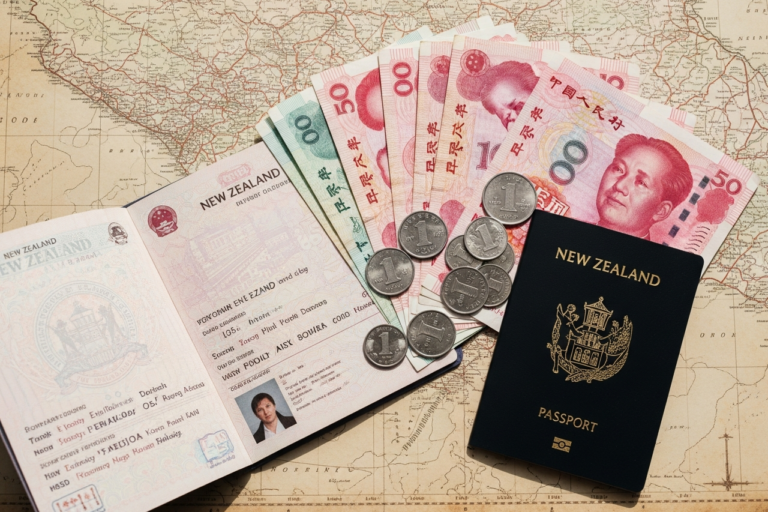
The Chinese Yuan comes in a variety of banknotes and coins. Modern banknotes feature the portrait of Mao Zedong on the front, with different famous Chinese landscapes on the back, making each denomination visually distinct. The colours and sizes also vary to help with easy identification.
Smaller units of the yuan are the jiao and fen. One yuan is equal to 10 jiao, and one jiao is equal to 10 fen. While fen coins are rarely used these days due to their low value, you will commonly encounter yuan and jiao in both note and coin form. You might come across both old yuan and new yuan designs in circulation.
Here is a breakdown of the commonly used denominations:
|
Type |
Denominations |
|---|---|
|
Banknotes |
¥1, ¥5, ¥10, ¥20, ¥50, ¥100 |
|
Coins |
¥1, 1 jiao, 5 jiao |
Can You Use Foreign Currencies Like NZD, USD, or Euros in China?
You can’t use foreign currencies in your daily life when you are in mainland China. This means you can’t pay with the New Zealand dollar, US dollar, or euros in shops, restaurants, or other local places. The only money people will take is the Chinese Yuan, also known as renminbi.
Most countries do things the same way, and the Chinese government is very firm on this rule. In the past, when China had a command economy, visitors sometimes used foreign exchange certificates, but that has stopped for a long time. Now, the chinese yuan is the one way to pay for all things.
So, you need to swap your New Zealand dollars for yuan before you come to China or straight away once you arrive. If you try to use any other foreign currency to pay, it will not work and people might just get confused by it. Make sure you have enough Chinese yuan with you for the things you want to buy when you are in china.
Exchanging New Zealand Dollars for Chinese Yuan
Getting some Chinese yuan should be one of the first things you do when you plan to travel. You will need to swap your New Zealand dollars, and you have a few ways to do this. The exchange rate you get can change a lot, depending on where and when you do your foreign exchange. This change can affect how much money you have for your trip.
It is good to know your choices so you can pick what suits you. You can get currency before you leave New Zealand, or you can wait and get yuan after you get to China. Below, you will see the best places to swap money. We also share tips so you can get a better exchange rate.
Where to Exchange Currency in China
When you get to mainland China, there are many good ways for you to change your money. Big banks, like the Bank of China, are very common and safe for foreign exchange. You can go to a bank branch with your passport and your New Zealand dollars. The staff will help you change your money into yuan.
You can also change money at hotels and airports. These places are fast and easy to use. But, the exchange rate there is not as good as at banks. So, use hotels or airports just to get a small amount of cash if you need money right away after you get to China.
If you want the best exchange rate, you should go to banks in bigger cities. You will need to show your identification. Make sure you keep the receipt from your transaction. You might need it if you want to change any extra yuan back to your home currency when you leave China.
Tips for Getting the Best Exchange Rate as a New Zealand Traveller
If you are heading from New Zealand and want to get the most out of your money, getting a good exchange rate for the Chinese yuan can help a lot with your travel budget. The exchange rate between NZD and CNY changes each day, so it helps to keep yourself up to date.
One smart way to get a good deal is to not use airports or hotels for exchanging your cash, as the rates there are usually not as good as in other places. You get a better deal if you go to a big bank or use a service that only does currency exchange in a city centre. Also, watch out because some places can add extra fees, which can surprise you. Ask them for the total amount you will get after all fees before you agree.
Here are a few easy tips to help you get the best deal:
-
Know the mid-market rate: Look up the live exchange rate from NZD to CNY on a good financial website or app. This rate is the most fair, and you should look to get your rate as close as you can to this one.
-
Avoid airport exchanges: Airports often give you a worse rate because of the market there. If you really need some cash when you get there, only change a small amount.
-
Consider a travel card: A multi-currency card is good as it often gives better exchange rates and lower fees on things like card payments and getting cash from ATMs.
-
**Pay in the local
Spending Money in China: Payment Methods & Tourist Advice
In China, you will see both old and new ways to pay for things. It is always good to have some Chinese Yuan in cash. This helps you when you have to make smaller purchases or if you are in far away places. But now, most people in the country use digital payments.
When you know the different ways to pay, your trip can be a lot easier. You can use cash for tips and when shopping at small market stalls. Card payments work too, but most people in China use their phone to pay. The best way is to go with the flow and be ready to try what works. Here, we will talk about how you can use cash, cards, and mobile apps while you travel.
Using Cash, Debit/Credit Cards, and Mobile Payments in China
China has many ways for people to pay. Cash is still common and needed, especially when you are in rural areas, small shops, or want to leave a tip. So, it is a good idea to have some yuan with you at all times for these times.
You can use debit and credit cards from big names like Visa or Mastercard in most big hotels, good restaurants, and big retail stores in cities. Still, you might find that not all places will take your card. You should not count on card payments only. Always have another way to pay.
Most people in China love mobile payments like Alipay or WeChat Pay. These make it easy for locals, but if you are visiting, you might struggle to set them up without a bank account in China. Here is a short list of ways you can pay:
-
Cash: You will need this for small things, giving tips, and when you are out in country towns.
-
Debit/Credit Cards: Handy for bigger spots like hotels or large shops, but you can’t use them everywhere.
-
Travel Cards: These are good for getting better rates when you take money from ATMs or when making card payments.
-
Mobile Payments: This is how most locals pay, but it could be hard for anyone visiting for a short time to get started.
Conclusion
To sum up, it is important for people from New Zealand to know about the official currency when they travel to China. The Yuan, or Renminbi, is what you will need to use, so be sure to know about its notes and coins. Also, find out how to change your New Zealand dollars for CNY before you go or while you are there. If you know the best ways to change money, and when to use cash or mobile payments, you can handle money matters well during your trip. Don’t let worries about the currency stop you from having a good time in China. If you want more help, you can book a free chat with our travel pros to get tips for looking after your money in China. Have a safe and fun trip!
Frequently Asked Questions
Are There Restrictions on Bringing Chinese Yuan Into or Out of China?
Yes, the Chinese government does have some rules. You can bring in or take out up to 20,000 Chinese yuan without stating it. There are rules about how much foreign currency and yuan you can have. It’s a good idea to check the latest rules about foreign exchange before you travel, so you can follow what the chinese government says.
What Is CNH and How Does It Differ From CNY?
CNH is the Chinese Yuan you get outside mainland China, for example in Hong Kong. CNY is the yuan used inside mainland China. Both are the same kind of money. But you may see a different exchange rate for each, as the rules and places for trading them are not the same.
What Are the Best Ways for New Zealand Travellers to Handle Currency in China?
For people from New Zealand, the best way is to mix these methods. It’s good to take some Chinese yuan in cash for things you buy that cost less. You should use a travel debit card for getting money out of ATMs and for card payments, as it can save you more. Also, keep your main bank card with you, just in case you need it for an emergency.



