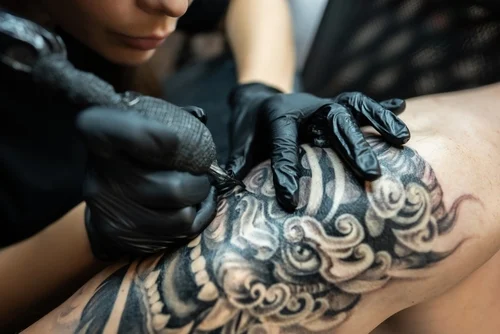
A UK tattoo apprenticeship is a studio-based training period, typically lasting one to three years, in which you learn tattooing under an experienced artist. Most apprenticeships are unpaid. You’ll need a tattoo-specific portfolio, hygiene and infection-control certificates, and the patience to build relationships with studios directly, since few apprenticeships are ever advertised.
What is a tattoo apprenticeship in the UK?
A tattoo apprenticeship in the UK is a structured, studio-based training period — typically one to three years — in which you learn tattooing under an experienced artist, practise on synthetic skin before working on clients, and meet UK licensing requirements. Most apprenticeships are unpaid, though a small number offer expenses or a modest training wage.
Tattooing has no regulated national qualification route in the UK. There’s no single body that awards a recognised ‘tattoo artist’ certificate, and no fixed curriculum that every studio follows — what you learn, and how quickly, depends on the studio and mentor you train with.
Because most tattoo apprenticeships are informal training arrangements rather than contracted jobs, they often fall outside National Minimum Wage rules, which generally apply where there’s a contract of employment or a formal Apprenticeship agreement. Whether a specific arrangement should be paid depends on its exact terms, so consider checking your position against GOV.UK’s current guidance on the minimum wage and unpaid work trials before you commit.
It’s also worth understanding your broader employee rights in the UK before you start, even in an unpaid arrangement — knowing where the lines sit helps you spot a fair studio from one that’s taking advantage.

UK tattoo licensing: what you need to know before you start
Since 2023, the Health and Care Act 2022 has given local authorities in England powers to run a licensing scheme covering tattooing and other ‘special procedures’, replacing the old, inconsistent system of local byelaws. Many councils brought their schemes into force during 2024, though exact rules and fees still vary by area, so it’s worth checking with your local authority or GOV.UK for the current position wherever you plan to train. In England and Wales, you can search for your local council and apply online. If you are working in Greater London (except for City of London), you will need to get a Special Treatments Licence from your council instead, which covers some additional activities. You’ll need to renew your licence periodically, and may need to reapply if you move premises. Scotland, Wales, and Northern Ireland run their own separate registration systems, so the detail differs if you’re training outside England.
The premises licence — covering the studio itself — is the studio’s responsibility, not yours. As an apprentice, what matters for you personally is holding the right personal certificates and evidence before you start working on real skin. If a studio can’t confirm it holds a current licence, or seems unclear on which local scheme applies to it, treat that as a sign to look elsewhere rather than a minor detail to overlook.
What you’ll typically need before tattooing skin:
- Evidence of hepatitis B vaccination — most studios and local authorities expect to see this before you tattoo real clients
- A bloodborne pathogens (BBP) awareness course, typically costing £20–£80
- Basic hygiene and infection-control training, such as the Level 2 Award in Preventing and Controlling the Spread of Infection
- Your studio’s own health and safety induction, covering sharps handling and cross-contamination
Ask any studio you’re considering exactly which certificates they expect and by when, since requirements can vary slightly between local authorities. For a sense of how formal apprenticeship applications work more generally in the UK, see our guide to applying for apprenticeships as a newcomer to the UK, even though most tattoo apprenticeships are arranged directly with a studio rather than through a formal scheme.

Skills you need for a tattoo apprenticeship
Artistic ability and drawing practice
Studios aren’t looking for fine art skills in the abstract — they’re looking for tattoo-specific draughtsmanship: clean, confident line work, an understanding of how a design will sit and age on skin, and awareness of the styles currently popular in the UK, such as fine line, blackwork, neo-traditional, and Japanese-influenced work. Regular drawing practice focused on designs you could genuinely imagine as tattoos, rather than general illustration, does more for your chances than a formal art qualification.
The style you specialise in can also shape your employability once you’re through training. Fine line and script tend to be in steady, high-volume demand, which suits building a client base quickly, while more technical styles like Japanese-influenced or realism can take longer to master but often support higher prices once you’re established. Studios generally value someone who’s genuinely skilled in one or two styles over someone who’s average across many, so don’t be afraid to allow a natural specialism to emerge through your portfolio rather than trying to cover every style at once.
Certifications and hygiene training
Alongside artistic ability, studios expect you to already understand, or be actively working towards, the hygiene side of the job. This is often what separates an applicant who’s serious from one who isn’t.
Certifications worth having before you approach studios:
- Level 2 Award in Preventing and Controlling the Spread of Infection
- A bloodborne pathogens (BBP) course, typically £20–£80
- Hepatitis B vaccination, with evidence you can show a studio
- Any additional infection-control or hygiene certificate your local authority’s licensing scheme specifies

How to build a tattoo portfolio that gets you an apprenticeship
Your portfolio is the single biggest factor in whether a studio takes you seriously, and a tattoo portfolio is a different thing from a general art portfolio. Studios want to see how you draw for skin, not how well you paint or sketch on paper.
What to include:
- Tattoo-ready designs — flash-style pieces drawn as if they’re about to be tattooed, not framed art
- Consistent, confident line quality across every piece
- A range that shows awareness of popular UK styles: fine line, blackwork, neo-traditional, Japanese-influenced, and script
- Correct scale and thoughtful use of negative space, showing you understand how a design sits on a body
- Around ten strong, focused pieces rather than thirty inconsistent ones
Present your work as a physical A4 folder you can hand over or leave with a studio, plus a simple, well-organised digital presence — an Instagram grid or a basic portfolio site works fine. A clear UK-style CV and cover letter alongside your portfolio also signals that you’re approaching this professionally.
The most common mistake is submitting a general art portfolio — landscapes, portraits, or abstract pieces — with no tattoo-specific work in it. However strong the drawing, it doesn’t show a studio the one thing they actually need to see.

Finding a tattoo studio and mentor in the UK
How the UK tattoo apprenticeship market actually works
There’s no centralised job board for tattoo apprenticeships in the UK, and vacancies are rarely advertised the way other jobs are. Opportunities are relationship-led: visiting studios in person, engaging genuinely with their work on social media, and being visibly around and interested over weeks or months. A polite cold enquiry — an email or an in-person introduction with your portfolio — is a reasonable way to start, but ongoing networking for career success and consistent follow-up tend to matter more than the first message ever does.
What to look for in a studio and mentor
Before approaching a studio, look at their healed tattoo photographs rather than just fresh ones — healing is where you really see whether an artist’s work holds up. Check that the studio’s style aligns with what you want to learn, and that your prospective mentor has been through an apprenticeship themselves, since that shapes how they’ll teach you. A reasonable question to ask directly: ‘Have you trained an apprentice before, and can I see healed work from someone you’ve mentored?’
Red flags to watch for:
- A studio asking you to pay a fee for the apprenticeship itself
- No visible or confirmed premises licence
- A mentor who can’t or won’t show healed work, either their own or a previous apprentice’s
- Vague promises about pay or progression, with nothing put in writing
Most tattoo apprenticeships won’t come with a formal employment contract, but it’s a good idea to have a clear agreement in place. Before you start, ask for the basics in writing or by email: roughly how long the apprenticeship is expected to run, what hours you’ll be expected to keep, whether anything is paid or covered (travel, materials), and what has to happen before you move on to supervised client work. Having this on record protects you if expectations later shift, and a studio that’s reluctant to put any of it in writing is worth a second thought.

What to expect during a tattoo apprenticeship
Most UK tattoo apprenticeships follow a broadly similar progression, though pacing varies by studio, and a typical apprenticeship runs one to three years. Because tattooing doesn’t follow a fixed, regulated syllabus the way some trade college routes into skilled work in the UK do, how quickly you move through each stage depends largely on your mentor’s judgement.
- Studio tasks and observation — cleaning, sterilising equipment, and watching sessions closely before you’re allowed to draw or tattoo anything yourself.
- Drawing and design work — building your tattoo-specific portfolio further and learning to translate a client’s rough idea into a clean, tattoo-ready design.
- Practising on synthetic skin — learning machine control, consistent line work, and shading technique without any risk to a real client.
- Tattooing friends and family — usually your first time working on real skin, done under close, hands-on supervision from your mentor.
- Supervised client work — tattooing paying clients while your mentor checks your setup, technique, and aftercare advice at each stage.
- Unsupervised client work — taking on your own clients once your mentor judges you ready, which typically marks the end of the apprenticeship.
The early stages involve a lot of cleaning, sterilising, and watching rather than tattooing, and that’s normal rather than a sign you’re being overlooked. Most artists who’ve been through it describe the first few months as the least glamorous part of the job — worth knowing going in, so it doesn’t put you off.
Frequently asked questions about tattoo apprenticeships in the UK
How long does a tattoo apprenticeship take in the UK?
Most UK tattoo apprenticeships take one to three years, depending on the studio and how quickly you progress through supervised and then unsupervised client work. Some mentors extend this if they feel more time is needed before you work independently, so treat the range as a guide rather than a fixed timeline.
Are tattoo apprenticeships paid in the UK?
Most tattoo apprenticeships in the UK are unpaid, since they’re typically informal training arrangements rather than contracted jobs covered by National Minimum Wage rules. A smaller number of studios offer expenses or a modest training wage. Always clarify pay, hours, and expectations with a studio before you commit.
Do I need a licence to become a tattoo apprentice?
You don’t need a personal licence simply to train, but you will need certain certificates — including bloodborne pathogens training and hepatitis B vaccination evidence — before tattooing real skin. The studio itself needs a premises licence under its local authority’s scheme, which is the studio’s responsibility, not yours.
What should I include in a tattoo apprenticeship portfolio?
Include tattoo-ready designs across styles popular in the UK, such as fine line, blackwork, and neo-traditional, with consistent line quality and sensible scale for skin. Around ten strong, focused pieces work better than a large, inconsistent collection. Avoid general art like landscapes or portraits with no tattoo-specific work included.
Can I get a tattoo apprenticeship with no experience?
Yes — most successful applicants start with no formal art qualifications. What matters more is a genuine, tattoo-focused portfolio built through regular drawing practice, plus persistence in approaching studios. Drawing classes or independent practice can help you build the kind of portfolio a studio wants to see.
How do I find a tattoo apprenticeship near me?
There’s no central listings site, so visit local studios in person, engage genuinely with their work on social media, and introduce yourself with your portfolio. Building a relationship over weeks or months tends to work better than a single cold application, since most studios choose apprentices they’ve already met.
What are the red flags when choosing a tattoo studio for an apprenticeship?
Be cautious of studios that ask you to pay for the apprenticeship, can’t confirm they hold a premises licence, or have a mentor unwilling to show healed work. Vague verbal promises about pay or progression, with nothing agreed in writing, are also worth questioning before you commit your time.

Key takeaways
- A UK tattoo apprenticeship typically takes one to three years and is usually unpaid, since most run as informal training rather than contracted jobs.
- Studios need a premises licence under their local authority’s scheme, introduced under the Health and Care Act 2022, while you as an apprentice need certificates like BBP training and hepatitis B vaccination evidence.
- There’s no centralised job board — most apprenticeships come from visiting studios in person, engaging on social media, and building a relationship over time.
- A focused, tattoo-specific portfolio of around ten strong pieces matters more than a large, general art portfolio.
- Red flags include studios charging apprenticeship fees, unclear licensing, or mentors unwilling to show healed work.
If you’re serious about training, start by visiting studios whose work you admire, building a tattoo-specific portfolio, and checking the current licensing position with GOV.UK or your local authority. Many tattoo artists also move into self-employment once qualified, renting a chair rather than working as an employee — our guide to freelancing in the UK is worth a look for that stage. And if you’re building a new life in the UK while you train, including sending money to family back home, Remitly is glad to help make those transfers straightforward whenever you need them.
Last reviewed: September 2026