

Key Highlights
-
The United States and Canada have a long border but the weather conditions in each can be very different. That is partly because they are both so big and where they are located in North America.
-
In the United States, you get many different kinds of weather. Florida can be tropical while Alaska can be as cold as the Arctic. This means the U.S. gets severe weather more often.
-
Canada is mostly colder. You will see long and tough winters there, and summers tend to be shorter for most people in Canada.
-
When you check weather forecasts, you will see both the United States and Canada use high-tech tools like Doppler radar. These help spot precipitation and tell people when storms might come.
-
Seasonal changes happen in both countries. But the United States faces bigger swings in temperature, and it gets severe weather such as hurricanes more often.
Introduction
Have you ever thought about how the weather conditions in the United States match up with those in Canada? These two countries are next to each other here in North America. We share a big piece of land, but the weather each day can be very different. There are times when it is hot enough to feel like a heat wave. Other days, you will see deep snow and cold air that makes you shiver. Both the United States and Canada have many weather types.
This guide will show you the main differences. You will learn about different kinds of weather areas and how strong the seasons can get. We will help you see the weather forecasts and patterns that are special to each country.
Comparing Weather Patterns: United States vs Canada
When you look at the weather in the United States and Canada, you can see that latitude is the most important thing. Because Canada sits further north in North America, it is often colder, and the winters are long. This is very true when you think about their daily life, and also the severe weather that both countries can get.
Both these countries are big. This size gives them lots of different weather. In the United States, there are many types of climates. You get hot, tropical areas in the south. The Pacific Northwest has lots of rain and is more temperate. Canada also has some different weather in each area. But a lot of the country is a big piece of land with a continental climate. This means clear seasons, and sometimes they can be very strong. Next, we will talk about the climate zones and the way the seasons change.
Regional Climate Zones Across Both Countries
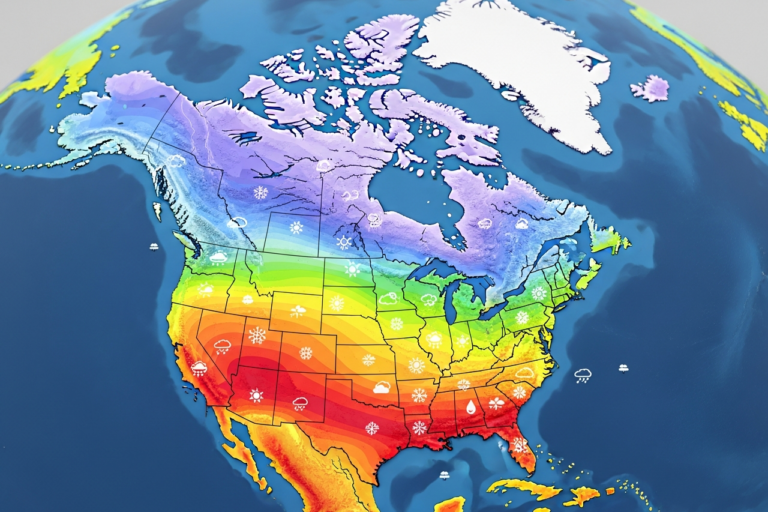
Both the United States and Canada are home to multiple climate zones, which explains the wide variety of weather conditions you can experience. Information from national centers for atmospheric administration helps define these regions. The U.S. boasts everything from arid deserts in the Southwest to humid subtropical climates in the Southeast, leading to diverse precipitation patterns across the continent of North America.
Canada’s climate zones are generally colder. They range from the temperate West Coast to the vast subarctic and arctic regions in the north. This results in significant differences in snowfall, temperature, and the length of the growing season compared to most of the U.S.
Understanding these zones is key to interpreting weather forecasts. A forecast for Miami will be drastically different from one for Montreal on the same day. Here is a simple comparison of some climate zones:
|
Climate Zone |
Predominant in United States Region |
Predominant in Canadian Region |
|---|---|---|
|
Arctic/Subarctic |
Alaska |
Northern Territories, Northern Quebec |
|
Humid Continental |
Northeast, Midwest |
Southern Ontario, Quebec, Maritimes |
|
Humid Subtropical |
Southeast |
Not present |
|
Desert/Arid |
Southwest |
Parts of Southern British Columbia/Alberta |
Differences in Seasonal Weather and Temperature Extremes
Seasonal differences are where you can see the biggest changes between the United States and Canada. In the United States, summer heat can get much more intense. The country can also get more severe weather, like hurricanes and big thunderstorms. In some areas from Texas to the Carolinas, people deal with a lot of heat, high humidity, and bad tropical weather. Much of this weather is not often seen in Canada.
Canadian winters, however, are often much longer and harsher in most parts of the country. Some northern U.S. states get a lot of snow, but it is not as much as the long months of freezing cold and deep snow you find in Canadian provinces. This affects activities outside, giving different types of recreation across North America.
The two countries also have very different temperature extremes. The United States has seen some of the hottest weather in North America. On the other hand, Canada is known for its cold spells and freezing temperatures. This makes things like drought relief more important for people in the hotter U.S. states. In a lot of Canada, this problem is not as common.
Conclusion
In the end, knowing about weather conditions in the United States and in Canada helps us see how each area is different. Both the United States and Canada can have all kinds of weather, but Canada will get colder winters and summers that are not as hot. This is because Canada is very big. In the United States, the weather gets warm, cold, and even has many kinds of weather events. Their land is different in many places, and that is why. When you know these things, you can get ready for your next trip. Or, you can just enjoy what makes the climate in each country special. If you want to know more or have more questions about weather conditions in the United States or Canada, please check out our FAQs for more information!
Frequently Asked Questions
Which country experiences more weather variability—United States or Canada?
The United States often has more weather changes than many other places. The big size of the country goes from cold arctic places to warm tropics. So, it can get many kinds of weather conditions and severe weather, like hurricanes, tornadoes, and blizzards. This means there are more sudden changes in precipitation and temperature in parts of North America.
What are the main factors influencing weather differences between the U.S. and Canada?
The main reasons are latitude and geography. Canada sits further north, so it has colder and longer winters. The United States is close to the warm water in the Gulf of Mexico and the Atlantic. This mix affects the weather in the United States. The atmospheric administration says this is a big reason for severe weather and other weather conditions we see in both countries.
Where can I find trustworthy sources for national weather forecasts in both countries?
In the U.S., the National Weather Service (NWS) and the National Oceanic and Atmospheric Administration (NOAA) give official weather forecasts. In Canada, Environment and Climate Change Canada shares up-to-date weather information. These agencies have reliable data you can use for things like travel, recreation, and safety. If you see a linked website, it does not mean there is an endorsement.



