

Key Highlights
Here’s what you need to know about the climate in New Zealand and Canada:
-
New Zealand has a largely temperate climate. It is not like the big swings in weather that you see in Canada.
-
The North Island of New Zealand is warmer. The summers feel more like the tropics. The South Island stays cooler than the North.
-
Winters in Canada get very cold and rough. In New Zealand, winter temperatures are usually not as harsh.
-
New zealand weather can shift fast. It is good to be ready if things change, even in a short time.
-
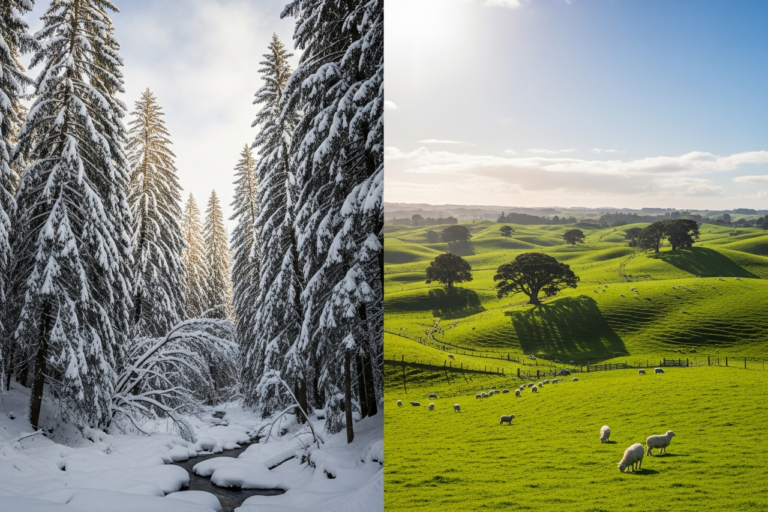
The two countries both give people something nice each season. You can see Canada’s snowy land or enjoy the sunny beaches in New Zealand.
Introduction
Are you wondering about the weather in New Zealand and Canada? Many people want to know, especially if they plan to travel or move. Both countries have many beautiful places, but the weather is not the same in each of them. In Canada, you get big changes in weather. There are hot summers and very cold winters. New Zealand, on the other hand, has a milder, temperate climate for most of the year. This guide will help you see the differences and what you can look forward to with the weather in both Canada and New Zealand.
Comparing New Zealand and Canadian Climates
New Zealand’s weather is mostly mild. The ocean around it has a big effect on the climate. Because of this, there are not many times with very high temperatures or very cold days like Canada often gets. The far north of new zealand can feel a bit like the tropics in summer, but for most places, the weather stays away from wild swings.
Canada has many types of weather. In a lot of Canada, summers can get hot and sticky. Winters there are cold and can come with lots of snow. Because Canada is so big, it can have different types of climates, from mild rainforests on the west coast to very cold, icy areas up north.
Overview of Climate Zones in New Zealand and Canada
New Zealand’s climate is dominated by its mountains and the sea, creating a predominantly temperate climate. The North Island has subtropical weather in the summer, while the South Island’s inland alpine areas can see much colder weather, dropping as low as -10°C in the winter months. The Southern Alps mountain ranges act as a barrier, creating distinct weather patterns on either side.
Canada, being the world’s second-largest country, features a vast array of climate zones. These range from temperate on the west coast to subarctic and arctic in the north. The interior plains experience a continental climate with warm summers and cold winters, while the eastern provinces have a maritime climate that is more moderate but still features cold, snowy winters.
Here’s a simple breakdown of the main climate zones:
|
Country |
Primary Climate Zones |
Key Characteristics |
|---|---|---|
|
New Zealand |
Temperate Maritime |
Mild temperatures, moderate rainfall, abundant sunshine. |
|
Canada |
Diverse (Temperate, Continental, Arctic) |
Extreme temperature variations, significant regional differences. |
Unique Weather Features in Both Countries
One thing about the weather in New Zealand is that you never know what you’ll get. There can be sudden changes because of cold fronts or tropical cyclones, so you might feel all four seasons in just one day. Because of this, it’s a good idea to dress in layers, even when it looks sunny.
The sunlight in New Zealand is also a lot stronger than in other places. There’s little air pollution, so the UV rays can be really strong, especially in summer. You need to protect your skin from the sun, most of all during the heat of the day, which is usually from 11 a.m. to 4 p.m.
Here in Canada, there are also a few special weather types:
-
Lake-effect snow: The places close to the Great Lakes can get big dumps of snow when it’s winter.
-
Chinook winds: In Alberta, you can get warm, dry winds that make the temperature go up quickly in winter.
-
Ice storms: These happen often in Eastern Canada. They can cover everything in ice and cause a lot of problems.
Seasonal Differences Throughout the Year
The seasons in New Zealand and Canada do not line up because the two countries are in different parts of the world. When it is summer in New Zealand, which is from December to February, people in Canada have winter. In fact, January and February are often the warmest month in New Zealand. For Canadians, though, July is the coldest month with the lowest winter temperatures.
Because of this, when people in Canada put on lots of warm clothes because of snow, people in New Zealand are heading out to the beach to enjoy the sun. The flip is also true. Summer in Canada runs from June to August, and this is when New Zealand is going through its winter months, so it gets cooler winter temperatures and snow in the mountain ranges. Now, let’s take a closer look at what new zealand and Canada each get during their special times of year.
New Zealand’s Mild Winters Versus Canada’s Cold Winters
Winter in New Zealand, from June to August, is not as cold as Canada. The South Island can get cooler winter temperatures, and there is snow in the high mountain areas. But most of the country, including the North Island, gets mild temperatures during winter. July is the coldest month, but in a lot of the coast areas, you still get daytime temperatures that are above freezing.
Canadian winters are much harder. From November to March, in most of the country, you can expect it to be cold, with a lot of snow and ice. On the west coast, winter is more gentle. But places like the prairies and eastern Canada get very cold and the temperature often stays far below zero for a long time.
Even though parts of the South Island can get cold, the lowest winter temperatures really only happen in the mountains. These places are great for people who like to ski. Most of New Zealand does not get the kind of deep cold that is a big part of winter in Canada.
Summer Variations: Warmth and Outdoor Life
Summer in New Zealand runs from December to February. This is when the weather is the best for outdoor activities. The summer months have long, sunny days. The high temperatures make it a good time to get outside. People like to visit the country’s national parks and the famous beaches during this time. January or February is usually the warmest month. People enjoy hiking, swimming, surfing, and boating when the weather is warm.
The days are long during the summer. In some parts of the country, the sun is still up until 10 p.m. This gives you a lot of time to see new places. Summer is an excellent time to try a variety of other outdoor activities.
Some popular things to do in summer in New Zealand are:
-
Hiking the famous tracks in Fiordland or Tongariro National Parks.
-
Enjoying water sports at the Bay of Islands.
-
Taking in the adventure capital, Queenstown, at the busiest time of year.
Canadian summers go from June to August. People spend a lot of time outdoors when it is warm. A lot of them enjoy camping, canoeing, and hiking in the many national parks. But summers in central and eastern Canada can feel quite hot and humid. This is a different kind of heat when you compare it to New Zealand’s more moderate and breezy summer months.
Regional Climate Contrasts Within New Zealand and Canada
Both New Zealand and Canada get very different weather in their regions because of their main geographical features. In New Zealand, you will find the biggest difference between the North Island and the South Island. The North Island is warmer and feels more like a subtropical place. The South Island is cooler, and it has the well-known Southern Alps.
Canada is a big country and that creates bigger weather changes from one place to another. The West Coast has mild and rainy winters, but the Prairie Provinces have dry weather and big changes in temperature. In the east, there are cold, snowy winters and hot, humid summers. These are the main ways each country’s climate is shaped by the land.
North vs South Island in New Zealand
The climate difference between New Zealand’s North and South Islands is significant. The North Island enjoys a warmer, more subtropical climate, especially in the far north region. This makes it ideal for beach holidays year-round in some spots. Mean annual temperatures range from about 15°C in the north to cooler temperatures further south.
The South Island is notably cooler, a direct result of its more southerly latitude and the presence of the Southern Alps. The “deep south” and alpine areas like Central Otago can experience sharp frosts and significant cold in winter. The mountains also create a rain shadow effect, making areas to the east much drier than the west coast.
This table highlights the general temperature differences:
|
Island |
Average Temperature |
Climate Characteristics |
|---|---|---|
|
North Island |
~15°C |
Subtropical in the north, mild and temperate overall. |
|
South Island |
~9°C |
Cooler, with alpine conditions and distinct regional variations. |
West Coast vs Prairie Provinces in Canada
The weather on the West Coast of Canada is not the same as in the Prairie Provinces (Alberta, Saskatchewan, and Manitoba). The West Coast, especially near Vancouver, has a temperate maritime climate. This part of the country is known for mild, rainy winters and warm, nice summers. The West Coast gets high rainfall every year.
But in the Prairie Provinces, the weather is different. This area has a continental climate. It is famous for going from very cold winters with freezing cold fronts to hot, dry summers. There is little rainfall, but this region gets many hours of sunshine all year. Even in the winter months, you see a lot of sun.
Here are some main differences:
-
Precipitation: The West Coast is one of the wettest areas in Canada, while the Prairies are some of the driest.
-
Temperature: On the West Coast, there is a small difference between summer and winter temperatures, but in the Prairies, the change is much bigger.
-
Winter: Winters on the West Coast are mild and rainy. In the Prairies, winters last long, are cold, and there is often a lot of snow.
Conclusion
To sum up, knowing about the climate in New Zealand and Canada can help make your travel or move smoother. New Zealand has milder winters, while Canada is known for its cold weather. Each place comes with its own seasons that offer great chances for outdoor activities and different ways of living. Some people may like the bright views in New Zealand. Others might enjoy Canada’s changing weather. No matter where you want to go, it helps to be ready by learning more first. So, as you look at your choices, think about the climate that will suit you the most. If you want to find out more about these places, feel free to get in touch for extra tips and help!
Frequently Asked Questions
What clothing should I pack for New Zealand versus Canada?
For New Zealand, it is good to pack layers that you can put on or take off as needed. You should bring rain gear as well. In the summer months, have sunscreen and a hat, too. For Canada, what you pack will depend on the time of year and where you go. Make sure to have warm winter gear, like a big parka and good boots, for most of the country when there are winter temperatures.
new zealand, winter temperatures, summer months
Are weather forecasts reliable in New Zealand compared to Canada?
Weather forecasts in both countries can be counted on most of the time. New Zealand is known for its weather conditions that can change with little warning. It is good to check the forecast often, especially if you want to go hiking, because the weather there can shift without much sign. In Canada, you need to watch the weather forecasts so you know about sudden changes, such as strong snow storms or days of too much heat.
How does climate impact outdoor activities in both countries?
In New Zealand, the weather is mild. This means people can enjoy outdoor activities at any time of the year. However, you need to be ready in case it rains. Spring is an excellent time for white water rafting. That is when melting snow makes river water levels rise.
In Canada, people enjoy outdoor activities by the season. In winter, skiing and snowboarding are what many get excited about. In summer, hiking and canoeing are two things they like to do most.



