

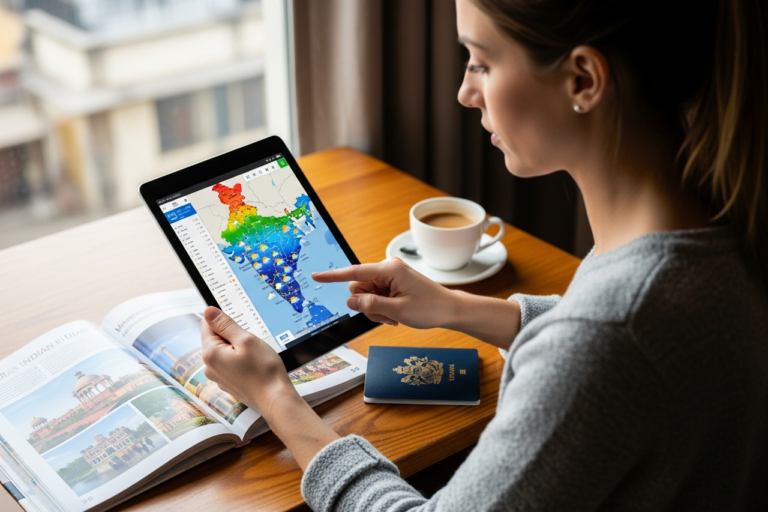
Key Highlights
Here are the key things you need to know about India’s weather for your trip:
-
India has many types of weather. There is a dry and cooler winter from December to February. There is a hot summer from March to May. The monsoon season comes in June to September.
-
The India Meteorological Department gives the official weather updates and alerts. This is important because there are different effects from climate change across the country.
-
During the monsoon season, there is a lot of heavy rainfall. This rain mostly happens from June to August. It can change travel plans in many parts of India.
-
Some big cities, like New Delhi, get very hot in the summer and much cooler in the winter.
-
You should pack your bags based on the time of year and the place you are going. For some places, bring light cotton clothing. For others and at other times, you will need warmer layers.
These points will help you get ready for all kinds of weather you may see in India or New Delhi.
Introduction
Are you planning a trip from Canada to India? Get ready for a lot of different weather conditions, lively culture, and beautiful places to see. In Canada, the weather is usually easy to guess, but in India, it’s not always the same. If you are not ready, the weather in India can take you by surprise.
It’s good to know about the weather conditions in India before you go. This will help you pack well and enjoy your trip. This guide is for Canadian travellers. It will help you learn what to expect from the weather in India. We want to make sure you are comfortable and have a good time.
Overview of India’s Weather Patterns
India is a big country, so weather conditions are not the same everywhere. In the south, there is a warm tropical feel. In the north, like up in the Himalayas, things can get cold, almost alpine.
Lately, climate change is making things even more unpredictable. Now, you see more heat waves and rainfall that can be hard to guess. If you know about all these changes and the way weather can be different depending on the area, you can plan your trip to India much better. Let’s take a closer look at the main climates and talk about the differences by region.
Main Climatic Zones Across the Country
India is split into a few main weather zones, and each one is a bit different. In the north, you get a dry, subtropical climate. That means it is really hot in summer, and sometimes there is a heat wave. In winter, it can be cool and a bit foggy. The Himalayan region is much colder, with an alpine climate. The winters are cold, and the summers just stay cool.
But in the coastal parts down in the south and to the west, the weather is tropical. The humidity is always high. Temperatures do not change much during the year. These regions also get a lot of precipitation during the monsoon. Central India has a tropical wet and dry weather to deal with, so you have a heavy rainy season, and then a long dry time when there is not much rain.
The rest of India, and most especially the wide Deccan Plateau, has a semi-arid climate. There is less rainfall here than in the coastal places. Summer gets hot, and winters are mild. It’s good to know about these zones before you travel, so you can be ready for what the weather will be like.
Regional Variations: North, South, East, and West
Weather in India changes a lot from place to place. In northwest India, like Rajasthan, the area is very dry. There are big changes in temperature from day to night, especially in winter.
If you go east, cities like Kolkata have high humidity and lots of rainfall during the monsoon. The weather there is also very hot and wet most of the year. In the south, the weather stays hot and humid. This part also gets two different monsoon seasons and plenty of rain. Towards the west, in coastal cities like Mumbai, people get strong monsoon rains from June to October.
To make it easy to see:
-
North: There are big swings in temperature. Summers get very hot and winters get cold.
-
East: It is wet and very humid with a lot of monsoon rainfall.
-
South: It is tropical and humid all year, and there is plenty of rain.
-
West: It gets hot, and there is strong monsoon rain along the coast.
Keywords used: northwest india, india, mumbai, humidity, monsoon, june, rainfall, october, kolkata
Seasonal Changes in India
India has three main seasons—winter, summer, and the monsoon. Winter goes from December to February. It is mostly dry and nice, so many tourists come at this time. From March, it starts to get hot. The heat grows and summer becomes both very hot and dry. The hottest days are in May.
This strong heat ends when the monsoon comes. The monsoon begins in June and lasts until September. During this time, there is a lot of rain and high humidity all around india. People get a break from the summer heat. But, travel can be harder because there is so much rainfall. Next, we will talk more about how temperatures and the monsoon sometimes affect life in india.
Winter and Summer Temperatures
During the winter months, from December to February, most places in India have cooler weather. In northern cities, like Delhi and New Delhi, the days can get up to 22°C. At night, it can go down to about 9°C. This time has a nice climate for sightseeing in much of the country.
But things change when summer comes. From late March, and even more in May and June, the heat goes up. In places like New Delhi, it can reach 34°C, and it can even go over 40°C. Rajasthan also gets very hot during April and May. Here, the average high temperature is about 37°C.
Coastal cities, such as Mumbai and Goa, stay hot as well. There is a lot of humidity in these places too, which makes it feel even warmer. Even after the main monsoon is over, in September and October, the temperature often stays up around 32°C.
The Monsoon: Timing and Impact
The monsoon is very important in India. It usually starts in June and goes on until September or sometimes early October. There is a lot of rainfall at this time across much of the country. The rain helps fill up water sources, but there can also be big problems, like flooding or travel getting delayed. The month when it starts and the amount of precipitation can change from year to year.
This season impacts travel in a big way. When there is heavy rain, you might see streets flood, landslides, and even late trains or flights, most often near coasts and in the mountains. You will notice heavy downpours in cities like Mumbai. In Rajasthan, people get less rainfall, but it is still a lot during July and August.
Here’s what usually happens in a monsoon season in India:
-
Start: The rains begin in the south in early June, then move north.
-
Peak: Most regions see the heaviest rainfall from June to August.
-
Impact: People have to deal with a lot of humidity, there is less sun, and holidays or work trips may be affected.
-
End: Rains slow down after September, and the weather becomes clearer into October.
Weather in Popular Indian Cities
The weather you get will change a lot depending on where you go. Delhi, in the north, has both very hot summers and cold winters. But, coastal cities such as Mumbai and Goa stay hot and humid most of the time. They also get lots of rain when it is monsoon season.
Rajasthan is known for being a dry and hot place, but winters are nice with cool nights. Each city has its own weather, so you should think about this before you plan what to do or what to pack for your trip. Now, let’s look at how these places can be different.
Comparing New Delhi, Mumbai, Goa, and Rajasthan
When you check the weather for Delhi today, you might see haze and a temperature of 40.6°C, which is typical for its hot summers. This is a stark contrast to its cool winters. Mumbai, on the other hand, is hot year-round but becomes intensely humid and rainy during the monsoon.
Goa shares a similar coastal climate to Mumbai, with high temperatures and a heavy monsoon but is especially sunny and pleasant during the winter months. Rajasthan is the driest of the lot, known for its desert climate. It has warm, pleasant days and cool nights in winter, while summers are scorchingly hot.
Here’s a quick comparison of average high temperatures during peak travel seasons:
|
City |
Winter (Dec-Feb) |
Summer (Mar-May) |
|---|---|---|
|
New Delhi |
22°C |
30°C |
|
Mumbai |
29°C |
31°C |
|
Goa |
32°C |
33°C |
|
Rajasthan |
24°C |
37°C |
Reliable Sources for Indian Weather Forecasts
Keeping up with the weather in India helps you have a better trip. The India Meteorological Department is the main place to go for the best weather updates. The information on their website is detailed and fresh. You will find warnings about things like heatwaves or a lot of rain.
When you get updates from the India Meteorological Department, you know the news is true and safe. This can help you plan your time. The IMD gives you forecasts for each city and also for bigger areas. It is a good way to know what you may need to bring or change for your day.
Let’s find out how you can get this weather news easily using their website and apps.
Official Websites for Alerts and City-Specific Updates
The main source for all the official weather news in India is the India Meteorological Department (IMD). The department’s website is a great place to go for forecasts, weather updates, alerts, and special reports for things like tourism and farming. You can get real-time data for big cities such as Delhi and Mumbai.
The IMD website has pages for each city. On these, you will find the latest weather info like temperature, humidity, and wind speed. It also sends out important warnings for bad weather. These warnings tell you about heat waves, cyclones, and heavy rainfall. It can be a good idea to check these alerts before you make travel plans, as they can help you make better choices.
To find the most important info, you should check these parts of the IMD website:
-
City Forecasts: Get the daily and weekly forecasts for where you want to go.
-
Warnings: Watch for colour-coded signs for bad weather.
-
Press Releases: Read more about how the weather is changing.
-
Current Weather: See updates from weather stations across India.
Best Apps and Tools for Canadian Travellers
Besides using official websites, you can get a good weather forecast by using some mobile apps. The Indian government made its own apps so people get weather updates right from the IMD. These are great tools for anyone who wants to keep up with the weather while they are on the move.
The “Mausam” app is the main app made by the IMD. It gives weather info, forecasts, and warnings for many cities in India, like Delhi, Mumbai, and Lucknow. Another app you can use is “Meghdoot.” This one is made for farmers, but it gives helpful local weather details in your area. “Damini” is also good if you want quick alerts when there is lightning around you.
If you are from Canada and visiting India, it is a good idea to have these apps. They will help you stay ready for any weather:
-
Mausam: For up-to-date weather details and warnings.
-
Meghdoot: For more weather information right where you are.
-
Damini: Get alerts for lightning in your area.
-
UMANG: This is a big government app that often gives weather updates too.
Packing Tips for Canadian Travellers
Now that you know about india’s different climate, let’s talk about packing. What you bring with you will change based on the time of year and where you go. It is not like packing for a trip inside Canada. You have to think about the heat, the humidity, and what people wear.
Bring light clothes that let your skin breathe—that works best in most parts of india and at most times. But remember, take along something for cooler nights. This is important if you go to the north in the winter. You also need to get ready for heavy rains during the monsoon.
Here are some tips to help you pack for india, so you can be ready for heat, humidity, and wet weather.
Clothing Advice Based on Seasons and Regions
Your packing list for India should change based on where and when you want to go. The season and the region make a big difference. If you plan a summer trip to the northern plains or Rajasthan, bring cotton clothes and linens. These clothes help you stay cool in the heat.
But, when you go to the north of India in December or other winter months, pack some warm clothes. You will need sweaters, jackets, and maybe even thermals. Chilly nights can surprise you. In Mumbai or Goa, be ready for humidity. It is hot and sticky most days of the year. Clothes that dry fast are good because they help you stay fresh. If you plan to see a religious place, be sure you have clothes that cover your shoulders and your knees. Carry a light scarf. The scarf works for many things. You can use it to block sun, give warmth, or cover up if you need to.
You should also think about wind speed, humidity, and weather each time you pack. You want outfits that work with the day’s climate.
Here are some things you will need:
-
Lightweight, loose-fitting cotton clothing for hot weather.
-
A light jacket or sweater for evenings and air-conditioned spaces.
-
Warm layers (jacket, scarf, thermals) for winter in the north.
-
Comfortable walking shoes and sandals.
-
A wide-brimmed hat and sunglasses for sun protection.
Special Considerations for the Monsoon Season
Travelling during the monsoon means you need to pack in a smart way. There is a lot of rainfall and the humidity is high. You will want clothes that dry very fast and things that keep you and your stuff safe from all the precipitation. Synthetic fabrics are better than cotton for this. They do not hold on to water as much.
You should always bring a good waterproof jacket or a poncho. You cannot leave these out. An umbrella helps a lot too, especially if you need to walk around city streets when the rain is coming down hard. It’s smart to wear tough, water-resistant shoes that have good grip. The streets can be really wet, slippery, and even flooded. You should not pick leather shoes or bags. The dampness can break them down fast.
Key items for a monsoon trip include:
-
A waterproof jacket and a sturdy umbrella.
-
Quick-drying clothes made from synthetic blends.
-
Water-resistant footwear with good traction.
-
A waterproof bag or cover to protect electronics and documents.
Conclusion
To sum up, if you want to travel from Canada to India, it helps to know about the weather before you go. India has many types of weather because the country is so big. What you pack and do may change by where and when you travel. The heat can get very strong in summer, while the monsoon brings heavy rain that makes things cooler and fresh. If you check the weather often, you can get ready for what is ahead.
Look up the latest weather news from good sources before and during your trip. This is smart no matter if you will walk in the busy city life of new delhi or spend your time at a seaside spot like Goa. Knowing about the weather in delhi and other cities helps you make the most of each day. Be safe and enjoy what india has to offer—your adventure can start with just a bit of the right information.
Frequently Asked Questions
What type of clothing should I pack for different regions in India?
For your packing in India, you need to think about the weather conditions. In the south, it is hot and there is a lot of humidity, so it’s good to choose lightweight cottons. In the north, it can be cold in winter. You should pack warm clothes you can layer. It is also important to take modest clothing when you visit temples. Because the weather can change a lot in India, it is good to bring things you can mix and layer for any situation.
How does India’s weather compare to Canada?
India’s climate is not like Canada’s at all. India is mostly hot and tropical all year. Canada gets four seasons, and some get very cold and snow in winter. In India, the main seasons are hot, wet, and cool. You will not get cooler weather in India like you do in a Canadian winter.
Where can I find up-to-date weather information before and during my trip?
For the best weather updates, go to the official India Meteorological Department (IMD) website. You can also use their “Mausam” app. These places give you the latest news, like the weather in Delhi today. They will tell you if anything changes with the weather in India. It is a good way to stay updated about the weather when you travel.



