

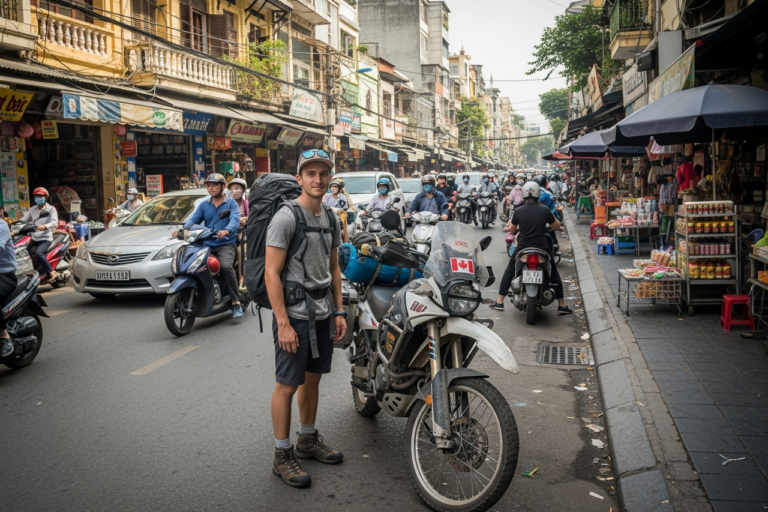
Key Highlights
Here are the main things you should remember from this guide:
-
Canada gives out a 1949 International Driving Permit (IDP), but this one is not accepted in Vietnam.
-
Vietnam only takes an IDP made under the 1968 Vienna Convention, and Canada is not a part of that.
-
If you want to drive in Vietnam, you need to switch your Canadian driving license to a Vietnamese driving license.
-
A lot of people bring their Canadian driving license, the 1949 IDP, and a 1968 IDP from an online service, even if it is not official.
-
Riding a motorbike in Vietnam without the right license might get you a fine. It could also mean your travel insurance will not work.
If you need more on the driving license rules in Vietnam or how to use your international driving permit, make sure to check all the local laws before you rent a motorbike.
Introduction
Are you a Canadian who wants to see the beautiful places in Vietnam by car or motorbike? Many people want to drive through busy cities or travel open roads that go past big mountains. Before you get on the road, it is very important to know the rules. You may ask if your Canadian driving licence is okay to use there. This guide will help you understand what you need to know about driving in Vietnam. You will also learn about the international driving permit and what you have to do to drive safe and legal in Vietnam.
Understanding Driving Regulations for Canadians in Vietnam
It can be hard for a Canadian to get used to the driving rules in Vietnam. This is because Vietnamese law has clear rules for any foreigner who wants to drive a car or a bike. You should know that your regular Canadian driving license by itself is not enough to let you drive legally in Vietnam.
You need to know the rules first if you want to drive in Vietnam without trouble. It’s good to find out which papers count and what steps you must take. Learning about the legal rules and the International Driving Permit system in Vietnam will help you get ready to drive.
Legal Requirements for Foreign Drivers
Under Vietnamese law, you cannot use your foreign driver’s license right away. Many travellers get confused about this. Just having your Canadian license will not let you drive a car or motorbike legally in Vietnam.
To drive in Vietnam, you need documents that are approved under Vietnamese law. You must have an International Driving Permit (IDP) that Vietnam accepts, or you have to change your home country license to a Vietnamese license. Not all international agreements on driving are part of Vietnam’s rules, so this makes things tough for some people who want to drive there.
Because of this, you need to get the right permits before you start driving. If you just use your license from your own country, you might have problems with the law. You can also run into trouble with insurance if you get into an accident while driving a car or motorbike.
International Driving Permit and Validity
The validity of an International Driving Permit in Vietnam depends on which convention it was issued under. Vietnam recognizes IDPs from countries that are part of the 1968 Vienna Convention on Road Traffic. This is a critical detail because not all countries issue this type of permit.
Unfortunately for Canadians, Canada issues an IDP under the 1949 Convention, which is not valid in Vietnam. The same applies to drivers from the United States and Australia. However, travellers from the UK, Japan, or the Republic of Korea, whose countries are party to the 1968 Convention, can use their IDP. Citizens of an ASEAN country can use their domestic driving license.
This distinction is the main reason why driving in Vietnam presents a legal gray area for Canadians.
|
Permit Convention |
Is it Valid in Vietnam? |
Example Countries Issuing This Type |
|---|---|---|
|
1968 Vienna Convention |
Yes |
UK, Germany, Italy, Spain, Japan, Republic of Korea |
|
1949 Geneva Convention |
No |
Canada, United States, Australia |
|
ASEAN Agreement |
Yes (National License) |
Thailand, Malaysia, Philippines, Singapore |
What Canadians Need to Get Started Driving in Vietnam
So, if you are a Canadian and want to drive in Vietnam, what should you do next? Since your IDP is not accepted, you will need to look for other ways to meet the rules. The best way is to get a few documents together before you leave.
You will need to put together a dossier of paperwork. This can include your original driving license, your passport, and maybe an application form to change your license over to a Vietnamese one. The Department of Transportation in Vietnam usually takes care of this for you.
Essential Documents and Permits
To handle the legal side of things, it’s a good idea to keep a full set of papers with you. Some rental places might not ask for all your papers, but you should still have them. This is important for your travel insurance and to stay on the right side of the law. Driving without the right permits can get you in trouble.
The International Driving Permit from Canada is not always officially valid. Still, a lot of people travelling from Canada get one before coming. The local police may not spot any difference. Your travel insurance might also want to see the international driving permit. Some people also pick up a copy of the 1968 IDP online to help cover all the bases.
To make sure you’re ready, try to get together these items:
-
Your Canadian driving license (for the kind of car you want to drive).
-
Your passport with a Vietnamese visa that is not expired.
-
The 1949 IDP you can get in Canada.
-
A printed 1968 IDP from a trustworthy website.
-
An application form for license conversion if you plan on living there for a while.
This way, you have the dossier of documents sorted. It can really help if you need to show your driving license, international driving permit, or other papers. It also makes the process smoother when you are in Vietnam.
Choosing Between Cars and Motorbikes
The choice between a car and a motorbike will have a big impact on your road trip in Vietnam. Most people in Vietnam use motorbikes. Riding a motorbike is a good way to see famous roads like the Ha Giang Loop or the Hai Van Pass. You can get through traffic easily and park almost anywhere with a motorbike.
A car, on the other hand, gives you more comfort and keeps you safe from bad weather. A car can be the better thing for families or for when you travel in the rain. But driving a car in busy cities in Vietnam can be very hard, especially if you are not used to it.
No matter if you pick a car or a motorbike, you must have the right license. You should not drive any motor vehicles in Vietnam without a valid Vietnamese driving license or a license that is recognized.
-
You will need a motorcycle endorsement on your driving license to ride a motorbike.
-
A standard car license only allows you to drive cars.
-
There are equal penalties for driving without the right class of license for both cars and bikes.
Step-by-Step Guide to Driving in Vietnam as a Canadian
Since your standard Canadian IDP doesn’t work, what can you do about it? The best way is to get ready before you leave, and then take the right steps when you get to Vietnam. You want to make sure people see you as a careful and prepared driver.
First, you need to get the right permits in Canada. Then, you will need to learn how to register your papers when you are in Vietnam. Here are the steps that any applicant from Canada should follow if they want to drive in Vietnam.
Step 1: Obtain the Correct International Driving Permit
The first thing a Canadian applicant needs to do is get the official International Driving Permit in Canada. This permit is the 1949 kind, and you get it from the Canadian Automobile Association (CAA). While Vietnam does not see it as legal in their law, it’s still an important document to have.
Why do you need this? Many travel insurance plans say you must have an IDP from your home country. If you don’t, your insurance might not cover you if there is an accident. Also, some police in vietnam may go with it, as they may not tell the difference between the 1949 and the 1968 idp versions.
Many people also take a second, extra step and order a printed 1968 International Driving Permit from an online provider. It’s not an official Canada document, but you will find that it is usually fine in vietnam, mainly in places where there are lots of tourists. If you carry both, you will give yourself the greatest chance to get out of trouble with the law in vietnam.
Step 2: Register Your Documents and Understand Local Rules
Once you are in Vietnam, the safest and most legal way is to change your Canadian license to a Vietnamese one. The provincial Department of Transportation will take care of this for you. You will have to give them an application form, plus notarized translations of your Canadian license and your passport. This step is best for people who plan to stay in Vietnam for a long time.
Besides filling out paperwork, you should also learn about how road traffic moves in Vietnam to stay safe. Vietnamese law about traffic can be hard to follow, and on the road it can look busy or out of order. The right of way is usually given to bigger vehicles like trucks and buses.
You must watch out for things drivers do that are not always written down. Stay ready for anything that could happen. Here are a few things to remember:
-
Honking is to let others know you are there, not to be rude.
-
Sometimes, traffic lights are not followed, so always look both ways at crossings.
-
Bigger vehicles almost always take the right of way.
-
Watch closely for motorbikes that could come into your lane from any side.
Conclusion
To sum up, driving in Vietnam as a Canadian can be a fun adventure. It is also important to know the rules and what you need before you hit the road. If you learn about the permits, papers, and local driving rules, you will have a safe time out there. You might want to travel by motorbike in the busy streets or pick a car if you want comfort. Either way, the most important thing is to be ready. Take time to learn and get to know how people drive in Vietnam. If you have questions or need help, you can always ask for advice!
Frequently Asked Questions
Can Canadians use their home country driver’s license in Vietnam?
No, you can’t legally drive in Vietnam with just your Canadian driver’s license. Vietnamese law says you must have a valid Vietnamese license or an international driving permit. But Canada does not give international driving permits you can use in Vietnam. Driving with only your license from your home country is not allowed under Vietnamese law and can get you in trouble.
How can Canadians convert their driver’s license to a Vietnamese one?
To switch your license, you need to send an application form to the local department of transportation. You have to bring your original license. Make sure you also have your passport that has a valid visa. These documents must be translated and notarized as well. After the process, you get a temporary Vietnamese driver’s license. This will be good for the time you stay in Vietnam.
Are there specific driving rules Canadians should be aware of?
Yes. Vietnamese law has rules about road traffic and the right of way. But in real life, the bigger vehicle will often go first. You need to be careful at intersections, because people do not always stop at traffic lights. There will be a lot of motorbikes on the road all the time. Use your horn, so others know you are there.
What are the penalties for driving illegally in Vietnam?
In Vietnam, you must have a driving license when you drive any motor vehicles. If you do not, the police can fine you. The fine can be from 2,000,000 to 3,000,000 VND. The authorities might also keep your motorbike or car until you pay the fine. You will not be able to go on with your trip until you sort this out. Make sure you follow Vietnamese law when you drive in the country.



