

Key Highlights
Here are the key takeaways for driving in Thailand as a Canadian:
-
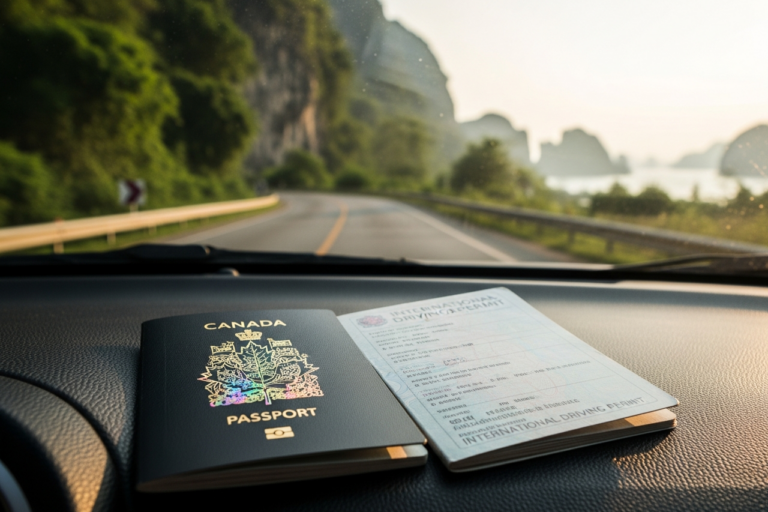
You can drive in Thailand by using your Canadian driving license, but you will also need an International Driving Permit (IDP).
-
When you are there for a short time, your national license and your IDP will be enough. If you stay longer, you need to get a Thai driving license.
-
To get a Thai driving licence, you have to apply with the Department of Land Transport. You must show proper documentation like a medical certificate and a residence certificate.
-
You must drive on the left side of the road in Thailand. It’s important to follow all local speed limits and traffic laws.
-
You should also make sure you have good insurance coverage from a trusted insurance company when driving as a foreign visitor in the country.
Introduction
Are you from Canada and want to travel to Thailand? Do you want to see the beauty of Thailand and drive around on your own? Driving by yourself lets you go where you want when you want. You also get more freedom this way. But it is important for foreign drivers to know the road rules first. You cannot drive in Thailand with just your Canadian licence. You need to do a few things to stay safe and follow the law. This guide will tell you what you need, like getting an international driving permit (IDP) and how to meet the other rules. It will help you have a good and safe time driving in Thailand.
Legal Requirements for Canadians Driving in Thailand
As a Canadian, you can drive in Thailand. But you can’t depend only on your driving license from your home country. You need to carry your original license and an international driving permit (IDP). People in Thailand know and accept this combination for foreign visitors staying a short time.
If you plan to stay in Thailand longer, or just want to avoid problems, it’s a good idea to get a Thai driving license from the Department of Land Transport. Always bring your proper documentation when you drive. You need your passport, visa, and the right licences. In the next part, we talk more about how long your Canadian license works in Thailand and why your IDP is also important.
Validity of Canadian Driver’s Licence in Thailand
If you hold a valid Canadian driving licence, that’s a good start, but it’s not enough to legally drive in Thailand. Your driving license shows you can drive in your home country, but in Thailand, you need some extra checks because there can be language barriers. If you drive with only your foreign driving license in this country, you might face trouble if there’s a police check or if you get in an accident.
You need to show both your Canadian driving licence and an International Driving Permit (IDP) if you want to follow local laws. Most tourists and people visiting for a short time use this pair of documents. It’s important to know that your driving licence from your home country is seen as valid in Thailand only when you have a current IDP with you.
If you plan to stay in Thailand for a long time, you can’t count on your foreign driving license forever. The rules for people who live in this country are not the same. So, you will have to get a Thai licence after some time if you want to drive on Thai roads and avoid problems with road traffic and local laws.
Need for International Driving Permit (IDP)
Yes, if you are a foreign visitor, like someone from Canada, you need to have an International Driving Permit (IDP) to drive in Thailand. The international driving permit is an official paper that translates your Canadian driving license info into other languages, including Thai. Local police and other officers can use it to check your driving credentials. You need to carry this with your Canadian licence, as the two work together.
You need to get your IDP while you are still in Canada. You cannot get it once you are in Thailand. Getting the international driving permit is simple, but must be done before your trip. Most car rental companies and insurers in Thailand will ask to see your IDP and driving license, and they do not make exceptions. Without an IDP, you may not be able to rent a car, or you may even have trouble with insurance claims if something happens.
Bringing your driving license and international driving permit helps you follow Thai law, and it makes things easier if you go through police checkpoints. It also lets you feel safe on your travels. This is an easy but very important part of getting ready to drive in Thailand.
Difference Between Tourist and Resident Driving Status
Yes, there is a big difference when it comes to driving rules for a tourist and a resident in Thailand. Your visa decides what kind of driving license you can use and what documents you need to show. If you are there as a tourist, you can drive with a Canadian licence and an international driving permit. But, you can only do this for a short time.
If you will stay in Thailand with a long-term visa, like a non-immigrant visa, work permit, or if you have a residence certificate, you must get a Thai driving license. The Department of Land Transport has set rules for people who plan to stay for a long time in Thailand. Here’s what this means if you are in Thailand just for vacation or if you will live there for a while.
Short-term Visitors vs Long-term Residents
For people who are in Thailand for a short stay with a tourist visa, driving around is pretty easy. You can drive if you have your Canadian driver’s licence, but you also need a valid international driving permit (IDP). If you have both your licence and your IDP, you can rent vehicles and meet the local driving rules while on holiday.
Things are not the same for people who stay for a long time. If you are in Thailand with a non-immigrant visa, have a work permit, or now live here, you must get a Thai driving license. You can’t just keep using your foreign licence and international driving permit if you stay longer than around 60 to 90 days without a break. It’s not allowed.
Getting a Thai driving license if you live here makes things much better. It acts as your local ID, makes getting insurance much easier, and there is no confusion about if you can drive or not. To apply for your Thai driving license, you need your passport, your visa, and a residence certificate you get from your local immigration office.
Driving Privileges and Restrictions Based on Visa Type
In Thailand, the kind of visa you have affects your driving privileges. The rules are set up to tell the difference between people who are visiting for a short time and those who plan to stay in the country for a longer time. It’s important to know how these rules work so you follow the law.
With a tourist visa, you get temporary driving rights. You can use your home country driving license and an IDP. This works for people who want to see Thailand for a short stay. If you have a long-term visa, like the non-immigrant “B” (work) or “O” (family) visa, things change. The government will want you to get a thai driving license if you live in Thailand for some time.
Here’s a look at how your visa changes what you can do with your licence:
-
Tourist Visa: You are allowed to drive with your Canadian licence and IDP.
-
Non-Immigrant Visa (without work permit): After staying in the country for a while, you should get a thai driving license. The first one will be a temporary licence, and it is good for two years.
-
Non-Immigrant Visa (with work permit): If you have a work permit, you should apply for a thai driving license. The work permit also helps you show where you live.
Knowing these details makes it easier to follow the rules for driving license use in Thailand.
Applying for a Thai Driving Licence as a Canadian
If you live in Thailand and are from Canada, you need to get a Thai driving license. The Department of Land Transport, or DLT, runs this process. It is not hard to do, especially if you have a valid foreign driving license. With a Thai licence, you can rent a car easily. You will also have less trouble at police checkpoints.
To start, you need a few important documents. These are your passport, proof of residence, and a medical certificate. Once you have these papers, go to your local DLT office. There you can begin the application. The next sections will show you who can apply, and take you through each step you need to complete.
Eligibility Criteria and Documentation
To be eligible for a Thai driving license, you must be at least 18 years old for a car licence, hold a valid non-immigrant visa, and not be a tourist. The primary requirement is proving you have a long-term presence in the country. You’ll need to gather specific documentation before heading to the DLT office.
A key document is a medical certificate, which you can get from almost any local clinic or hospital for a small fee. This certificate confirms you are physically fit to drive. Additionally, you need a residence certificate from your local immigration office or your embassy, or you can use your work permit if you have one.
Here is a summary of the required documentation:
|
Document |
Details |
|---|---|
|
Passport |
Original and photocopies of the main page, current visa, and latest entry stamp. |
|
Valid Driving Licence |
Your original Canadian driver’s licence and a photocopy. |
|
Medical Certificate |
Must be recent (usually issued within the last month) and from a recognized clinic. |
|
Residence Certificate or Work Permit |
Original and photocopy to prove your address in Thailand. |
Step-by-Step Application Process
The process to get a Thai driving license is quite clear. First, get all the needed documents, like your medical certificate and proof of residence. Next, go to the Department of Land Transport (DLT) office that is closest to you. Try to go early in the day because it can get very busy.
When you get to the DLT office, hand in your paperwork. You will then do a few quick physical tests. These include a colour blindness test, a reaction test for your braking speed, and a depth perception test. Every person who applies for a thai driving license must do these steps.
What comes next depends on if you already have a valid driving licence from your home country.
-
Bring your documents and hand them in for checking.
-
Do the physical tests (colour blindness, reaction, and more).
-
Go to a required 5-hour class about traffic safety.
-
Pass a theory test on Thai traffic laws using a computer.
-
If you do not have a valid licence from your country, you will also need to take a practical driving test on a closed course.
When you finish all these steps, you will get your photo taken. After that, you will get your new thai driving license on the same day.
Important Traffic Laws and Road Safety Tips for Canadians
Driving in Thailand can be quite an adventure. The road traffic and traffic laws in Thailand are not always the same as those in Canada. It is important to know the local rules about speed limits and wearing seat belts. You should follow these rules, not just to stay away from fines, but to keep you safe.
Thai roads have their own challenges. There are busy streets and sometimes there are rules that people do not write down but still follow. It is a good idea to focus on safe driving all the time. In this guide, you will learn more about the main traffic laws, road traffic, speed limits, and also the kind of insurance you will need in Thailand. All this will help you be safe on the road.
Local Regulations and Common Road Rules
The biggest thing to get used to for Canadians is that you have to drive on the left side of the road in Thailand. This is not like what we have in Canada, so you need to be very careful. Go slow, especially when you are at roundabouts or crossing at intersections. There are a lot of motorcycles in Thailand, and they can come from different angles and move quickly through traffic, so always look out for them.
You have to follow all local laws while driving in Thailand. There are speed limits marked, usually between 50 to 60 km/h when you are in the city and about 90 to 120 km/h on the highways. But most of the time, the speed you drive will depend on how fast other people are going. There are police checkpoints that you will see all over, mainly at night and in tourist spots. When you get to these checkpoints, police may ask to see your licence or that your vehicle registration is correct, and they’ll also check that you are not drunk.
Here are some important rules to keep in mind:
-
Drive on the Left: Always drive on the left side of the road, not the right.
-
Seat Belts: The driver and anyone in the front must always wear seat belts. Soon, it will be a rule for people in the back seats too.
-
Helmets: You and the other person on the motorcycle must wear helmets all the time.
-
No Drinking and Driving: Do not drive if
Safety, Enforcement, and Insurance Considerations
Safe driving practices help keep you safe on Thai roads. To drive safely, you need to do more than just know the rules. Always stay aware of your surroundings and look out for what other drivers might do. Keep a safe distance between your car and the one in front. Roads in Thailand can change fast. There may be potholes or animals, especially in rural areas, so you must watch out for these.
If you are renting a car, it is important to read all car insurance policies before you drive. The law says you must get basic insurance, but this gives you only a small amount of cover. It is a good idea to get more insurance coverage from a well-known insurance company. This can help pay for the cost if there is theft, damage, or a big accident. You also need to check that your insurance will still help even when the accident is your fault.
When you come to police checkpoints, stay calm and be nice. It will help a lot to have all your papers ready. Make sure your passport, your valid licence, your IDP, and your insurance papers are at hand. If you obey the law and keep your insurance coverage, you will have an easier and safer time driving in Thailand.
Conclusion
Driving in Thailand can be a fun and new experience for people from Canada. But, you need to know the traffic laws there. It is important that you have the proper documentation before you go. You must bring a valid Canadian driver’s license. You may also need an International Driving Permit (IDP). Having both will make your drive easier in Thailand.
You should also know about the difference between what tourists and residents can do when it comes to driving. Always follow the local traffic laws to keep yourself and others safe. This will help you avoid trouble.
Thailand has some beautiful views to see, so take time to enjoy them while you drive. But, always be careful on the road. If you want more help or you have any questions about the international driving permit (IDP) or other rules, you can ask for advice any time.
Frequently Asked Questions
What happens if a Canadian is caught driving without the correct license in Thailand?
If you drive in Thailand and do not have a valid license from your home country and an IDP, or a Thai licence, you can get a fine at police checkpoints. It is also very important to know that if you have an accident, your insurance company might not help pay for the costs. This could leave you with a big bill that you will have to cover on your own.
Are Canadians allowed to rent motorcycles and cars in Thailand with their Canadian license?
Yes, you can rent cars or other vehicles. You need to have your Canadian driving license with you, and you must also show an International Driving Permit. If you want to ride motorcycles, make sure your license from home has the right note or mark for motorcycle licences. If your license does not show you can ride motorcycles, you are not allowed to do so. Your insurance for motorcycles may also not work.
How long can a Canadian drive in Thailand before they need to obtain a Thai driving license?
If you are a tourist, you can use your valid driving licence and IDP in Thailand for as long as your visa allows, usually up to 60 days. But, if you will stay in Thailand on a long-term, non-immigrant visa, you should get a Thai driving license.



