

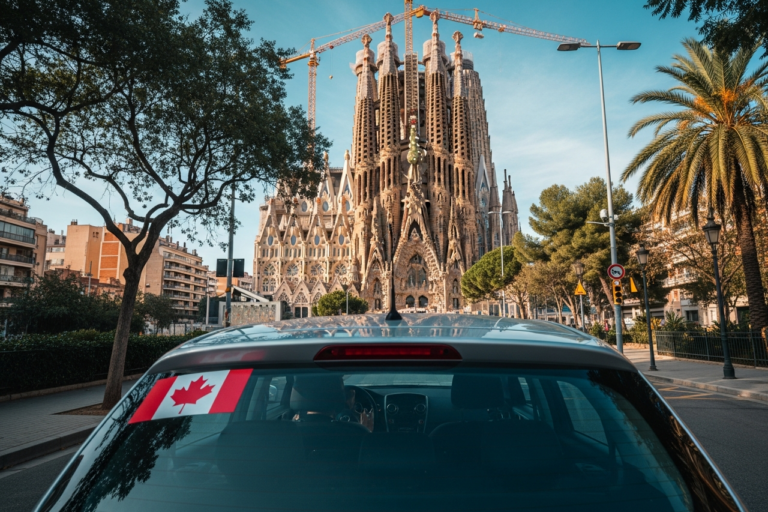
Key Highlights
Planning a trip to Spain? Here are the main things you need to know about driving there as a Canadian.
-
Your Canadian driver’s licence can be used for a short stay in Spain. But it is a good idea to get an International Driving Permit (IDP) too.
-
If you plan to be in Spain for more than six months, you have to trade your licence from your country for a Spanish licence.
-
An International Driving Permit helps as a translation of your licence. Many police and rental car companies in Spain may ask for an IDP.
-
The validity of your licence while you are a tourist in Spain is usually up to six months.
-
You must have third-party car insurance to drive on Spanish roads.
Make sure you keep your IDP, car insurance, and licence with you when you drive on Spanish roads. This way, you follow the rules and have a good time on your trip.
Introduction
Do you want to drive along Spain’s sunny shores or check out its old towns with a car? Driving gives you the chance to see the country in your own way and at your own speed. If you are from Canada, it is simple to drive in Spain, but you should know their rules first. If you have a Canadian driving licence and plan to stay only a short time, you can use that licence. Still, you might also need an International Driving Permit (IDP). This guide gives you the important things you need to know, like what licence you need and road rules. With this, you will be ready for a good time in Spain, for a trip that is both easy and fun.
Driving in Spain as a Canadian: Key Considerations
When you plan to drive in Spain, the first thing you need to look at is if your driving licence will be accepted. If you come from Canada, you can use the driving licence from your home country. But, you can only use it for a set time.
It is important to know how long this time is. The rule for tourists is different from the rule for people who move there to live. You have to know how long your foreign license works in Spain so you do not get into trouble with the Spanish law. This helps you stay on the right side of the law whether you take a holiday or move from your country of origin to Spain.
Validity of Canadian Driver’s License in Spain
Yes, you can drive in Spain with your Canadian driving licence if it is still valid. If you are a tourist or just in Canada for a short visit, you can use your driving licence on Spanish roads. This means you can rent a car and see the country without needing a Spanish licence right away.
But, it is a good idea to carry an International Driving Permit (IDP) with your Canadian licence. The IDP helps by showing the Spanish police the authenticity of the document. The IDP is there to work as translation, so if the police are not used to seeing a foreign driving licence, you will not face trouble. It can help you get out of any problem or a fine if you get stopped by the police.
You need to pay attention to the validity of your licence while you are there. This rules works well for short trips. But when you want to stay longer or become a resident, you will need to check new rules. Make sure your original licence is not expired.
Duration Canadians Can Drive with Their Licence
As a Canadian tourist, you can drive in Spain using your home driving licence for up to six months after you arrive. This rule is made for short visits. The general rule is that you do not need a Spanish driving licence if you are not a resident and you can stay with your Canadian licence for that time.
If you become a resident in Spain, things change. After six months of living in Spain, the validity of your licence from Canada ends. At that point, you have to get a Spanish driving licence to drive legally.
To get a new licence in Spain, you must pass a theory test and a driving test. If you keep driving on your Canadian licence for more than six months as a resident, you could get fines.
Countries Where Canadian Licences Are Accepted
Spain has agreements with various countries that simplify the process of driving and licence exchange. Drivers from European Union (EU) and European Economic Area (EEA) countries can use their national license for up to two years before needing to switch to a Spanish one. For countries outside the EU/EEA, the rules depend on whether a bilateral agreement exists.
Unfortunately, like the United States, Canada does not have a comprehensive bilateral agreement with Spain for a simple licence exchange. This means that while your licence is accepted for tourist stays, becoming a resident requires you to obtain a new Spanish licence from scratch.
Here is a comparison of how licences from different countries are treated for tourist driving in Spain:
|
Country |
Tourist Driving Rules |
|---|---|
|
Canada |
Licence accepted for up to 6 months. International Driving Permit (IDP) is highly recommended. |
|
USA |
Licence accepted for up to 6 months. IDP is highly recommended. |
|
Australia |
Licence accepted for up to 6 months. IDP is highly recommended. |
|
EU/EEA |
National license is accepted without an IDP. |
Do Canadians Need an International Driving Permit for Spain?
If you have a Canadian driver’s licence, you can use it in Spain if your stay is short. But it’s a good idea to bring an International Driving Permit (IDP) with you too. The IDP does not work as a licence by itself. It is a translation of your driver’s licence in a few languages, including Spanish.
Some car rental companies in Spain might not ask you for an IDP. But the Spanish police will want to see the international driving permit if they stop you. Carrying your international driver’s licence can help you avoid fines and makes it easier to talk with the authorities. Below, we talk about what an IDP is and how you can get one before your trip.
What Is an International Driving Permit (IDP)?
An International Driving Permit (IDP), also known as an international driver’s license, is a paper that turns your valid driving licence into twelve languages. It is accepted in more than 175 countries. The IDP shows that you are allowed to drive in your home country.
If you are Canadian in Spain, you need to know that the IDP goes together with your Canadian licence. This means it does not take the place of your Canadian driving licence. When you drive, you must bring both your valid driving licence and your IDP every time. The main reason for the IDP is to help police or rental car people in Spain understand your licence, especially if they do not speak your language.
You can think of the IDP as a licence that everyone can read. When you travel as a tourist, having the international driving permit can be good so you do not run into problems or delays. It is helpful if you get stopped for a check or if you are in an accident.
How to Apply for an IDP in Canada
Getting an International Driving Permit in Canada is easy and fast. The Canadian Automobile Association (CAA) is the only group that can give you an IDP in Canada. You can go to a CAA office and apply in person, or you can send your application by mail.
To get started, there are a few things you need to have. Be sure you have all of them before you begin. This will help the process go well. The international driving permit is good for one year from the date you get it.
This is what you need to give when you apply for your international driving permit:
-
A copy of both sides of your Canadian driver’s licence.
-
Two new and signed passport-sized photos.
-
A filled out and signed CAA IDP application form.
-
The fee for the application.
When Is an IDP Required for Driving in Spain?
While your Canadian driving licence works for tourist trips, you still need an IDP in some real-life cases. If the Spanish police, like Guardia Civil or Policía Nacional, stop you, they will want to see your foreign license and your IDP. If you do not have the IDP, you might get a fine.
A lot of car rental places in Spain say in their rules that you need an IDP with your licence, even if they don’t always ask to see it right away. It’s best to bring the IDP just in case. That way, you won’t get stopped from renting a car. The IDP helps show the validity of your licence. This makes renting a car much easier.
The Spanish government also says every non-EU or EEA driver should carry an IDP. It does not cost a lot and can help you avoid problems. Having an IDP means you can drive in Spain with less worry and more fun.
Legal Requirements for Foreign Drivers in Spain
To drive lawfully in Spain, you need more than a valid licence. If you are a foreign driver, like someone from Canada, there are special legal steps you must follow. You also have to keep the right documentation with you at all times. This will help you follow the law and be ready for things that can happen on the road.
You should have your passport, your foreign licence, and proof of insurance. Make sure all your papers are up to date and easy to get to when needed. In this guide, we talk about what documents are needed, the rules about insurance, and other things you should know if you want to rent a car. By having the proper documentation, you can feel sure when you drive in Spain.
Mandatory Documents for Canadians Driving in Spain
When you drive in Spain, you have to keep some important papers with you in the car. If you can’t show them when asked by the police, you could get fined right there. For Canadians, this list is simple, but it is very important to follow.
These papers show who you are, let you drive, and prove your car can be on the road. Before you start your car, look again and make sure you have all you need close by.
Here is a checklist of the papers you must take:
-
Your valid Canadian driving licence.
-
Your International Driving Permit (IDP).
-
Your passport to show who you are.
-
Proof of valid third-party car insurance.
-
The car’s registration documents and roadworthiness certificate (ITV).
Car Insurance Regulations for Visitors
Yes, car insurance is needed for everyone who wants to drive on Spanish roads, even if you are a foreign visitor. The smallest amount of car insurance you must have is third-party liability insurance. This one pays for damage or injury you cause to other people. If you drive without this basic coverage in Spain, you break the law. This can give you a big fine, and they may even take your car away.
If you rent a car, third-party liability insurance comes with the price automatically. But, the rental company will try to sell you more coverage. These may be things like waivers for collision damage or extra theft protection. You will have to pay more for these. It’s a good idea to take them if you want to feel more relaxed when you drive.
You should always have proof of payment or your certificate of insurance inside your car. The police may stop you. They will want you to show these papers, plus your other car papers, to prove you have legal car insurance to drive on Spanish roads.
Additional Requirements for Renting a Car in Spain
Beyond your driving licence and car insurance, there are a few other things you need if you want to rent a car in Spain. The rental companies do this to keep their cars safe and to make sure people who drive are careful.
Most companies ask that you are a certain age to rent a car. Some people who are not the right age may also need to pay extra. You must show a valid credit card to rent the car. This card pays for the deposit or covers any extra costs.
Here are some rules you usually have to follow if you want to rent a car in Spain:
-
Minimum Age: You usually need to be at least 21 years old, but some places want you to be 23. If you are under 25, you may have to pay a “young driver” fee.
-
Credit Card: The main driver should have a valid credit card. This card is used for the deposit. Most companies do not take debit cards for this.
-
Valid Driving Licence: You need to have a full driving licence for at least one year. You cannot use a provisional licence.
These rules help protect the car and the person who rents it. Remember to bring your driving licence, car insurance, and credit card with you when you rent a vehicle in Spain.
Exchanging a Canadian Licence for a Spanish Licence
If you want to live in Spain for more than six months, you will have to change your Canadian licence for a Spanish licence. Canada does not have a direct way to swap your licence with Spain. So, you cannot just trade your Canadian licence for a Spanish one. You need to go through the whole process to get a new licence.
You will have to sign up at the local traffic office, which is called DGT in Spain. You must take a medical exam. After that, you will need to pass both a theory driving test and a practical driving test. Let’s look at who needs to do this and what the steps are for getting your Spanish licence.
Who Needs to Exchange Their Licence?
If you are someone from Canada who becomes a legal resident in Spain, you will need to get a Spanish licence. You are usually a resident if you live in Spain for more than 183 days each year. When you get your official residency, you have six months to start getting your Spanish licence.
This rule is for any holder of a driving licence from a country of origin outside the EU or EEA with no exchange agreement. It does not matter if you are a student, worker, or retiree. If you are one of the new spanish residents, you need to follow this and not keep using your Canadian licence after this time. For spanish residents, driving on your old licence after the deadline is not legal.
For some jobs, like those where you do professional driving, there can be even stricter rules. It’s a good idea to check with the DGT before you make any moves. This way, you know what to do and you stay on the right side of the law about your licence.
Steps to Exchange a Canadian Licence
If you are Canadian, you cannot swap your licence directly, so you will need to get a new Spanish licence. The Dirección General de Tráfico (DGT) is the main agency for this in Spain. Many people sign up for a driving school (autoescuela) to help them get ready for the tests.
First, you need to pass the theory test. It covers things like Spanish traffic laws and road signs. This exam can be taken in English in big cities such as Madrid and Barcelona. Be sure to check with your local DGT traffic office to see if this option is open to you. After you pass the theory test, you can take the driving test.
Here are the key steps to get your Spanish licence:
-
Pass a Medical Exam: You have to get a medical fitness certificate (informe de aptitud psicofísica) from a place the DGT allows.
-
Pass the Theory Test: Study the rules and do the written test with multiple-choice questions.
-
Pass the Driving Test: Show your skills during the practical driving test with a DGT examiner.
If you want to drive in Spain, this is the way to do it. The process takes some time, but following each step will help you get your licence. The theory test and driving test are big parts of the process, and many people find a driving school makes it easier. If you have questions, you can ask your local traffic office. This process is needed whether you are in Barcelona
Documentation Needed for the Exchange Process
Getting the right documentation is a very important step when you apply for your Spanish licence. If you have all the papers ready, the process at the DGT office will go faster. When you work with a driving school, the staff can help you get your papers together and hand them in.
You need to bring your official ID, your proof of residency, and any certificate that shows you passed the needed tests. Each document will show that you can get a Spanish driving licence.
Be ready to show these documents:
-
Official application form from the DGT.
-
Proof of payment for the application fees.
-
Your NIE (Número de Identificación de Extranjero) and your proof of residency (empadronamiento).
-
Your valid passport.
-
Your medical fitness certificate.
-
Your valid Canadian driver’s licence.
Road Rules and Driving Practices in Spain
Driving in Spain can be a good experience. But you need to know the road rules and the way people drive there. Many rules are the same as across Europe. Still, some rules are special to Spain. Knowing these can help you move safely on spanish roads and save you money on fines.
You need to watch for speed limits and spanish road signs. Roundabouts work in a certain way there. It’s smart to be ready before you go. Below, we talk about some spanish traffic laws you should know. There is also a list of safety things you must have in the car. Last, you get some easy tips for traveling on spanish roads. This will help you have a nice time on the road in Spain.
Unique Traffic Laws All Canadians Should Know
Spain has a few traffic laws that might catch people from another country off guard. For example, you are not allowed to use a mobile phone while driving, not even when you are pulled over on the side of the road. You can use a fully hands-free set-up. But earpieces are still not allowed.
There is also an important rule about being able to see clearly on the road. If fog or heavy rain makes you see less than 50 metres, the speed limit on all roads drops to 50 km/h right away. In urban areas, you are also not allowed to honk your horn unless you need to stop an accident from happening.
Here are some more rules you should know when you drive in Spain:
-
Seat Belt: You and all your passengers must wear a seat belt, both in the front and in the back seats.
-
Blood Alcohol Limit: The rule for drinking is strict. The legal blood alcohol limit is 0.05% (or 0.25 mg/l for a breath test). This is lower than what you find in Canada. If you are new or a pro driver, the limit is even lower.
-
Helmets for Motorcycles: If you use motorcycles or scooters, it is a must for you and your passenger to wear a helmet.
Safety Equipment and Car Essentials
For good road safety in Spain, all private vehicles need to have certain safety items with them. If you rent a car, the rental company is the one who should make sure the car has this equipment. But it is still a good idea for you to know what needs to be inside the car.
This safety equipment helps keep you and other people safe if there is a breakdown or emergency on the road. If the police stop you and you do not have these things in your vehicle, you could get a fine. So, it is smart to give your car a quick look before you go anywhere.
Your car must have these items at all times:
-
Two warning triangles. You have to put one in front of the car and one behind it if your car breaks down.
-
A reflective high-visibility vest. This must be kept inside the car, not in the trunk, and you need to wear it if you get out of your car on a road or highway.
-
A spare tire and tools you need to change the tire if needed.
Tips for Navigating Roads and Highways
Driving on Spanish roads is mostly easy. There are some things you can do to make your road trip in Spain even better. The country has a strong network of highways called autopistas and autovías. Autopistas are toll roads, so you have to pay to use them. Autovías are dual carriageways with no tolls. It is a good idea to use a GPS or a map app when you drive on Spanish roads.
City centres can be tough for driving. This is because there are many small streets, a lot of one-way roads, and it is hard to find parking. Many Spanish cities also have low-emission zones, or Zonas de Bajas Emisiones. This means only some cars can go in these areas. It is often best to leave your car outside the centre and take the train or bus.
Here are some tips to help you on Spanish roads:
-
Right-hand Driving: In Spain, people drive on the right side of the road. Overtake only on the left.
-
Roundabouts: Cars already in the roundabout always go first. If you are leaving from one of the first exits, stay on the outside lane.
-
Fuel: Gas stations are not as common in the country. Make sure you fill up when you get the chance. “Gasolina” means petrol, and “gasóleo” or “diésel” means diesel.
Tolls, Parking, and Fines: What Canadians Should Expect
When you drive in Spain, you will see tolls, many parking rules, and you could get a fine if you do not follow the rules. It is good to know how these things work. This can help you keep to your budget and stop you from getting fines you do not want.
There are the main highways in Spain, and many of these are toll roads. In the city, parking can be hard. You will see different colour zones that show when and where you can park. We will tell you what you need to know for paying tolls in Spain, how to understand parking rules, and what you should do if you get a fine.
Paying Tolls in Spain
Many of the high-speed roads in Spain are called autopistas. To use these, you may have to pay tolls (these are called peajes). These roads are kept in good shape and can often get you from place to place faster than the free autovías. When you come close to a toll booth, you will find signs that show you where the different payment lanes are.
You can pay the toll with cash, a credit card, or by using an electronic system like “Telepeaje” or “Via-T.” The lanes where you can use your credit card will have a card symbol, and using a credit card is often an easy and fast way for people who are visiting Spain.
It is important to keep your proof of payment until you leave the toll road system. On some roads, you must take a ticket when you get on, and pay for the distance you travelled when you leave. This is common for longer toll highways in Spain.
Parking Regulations and Restrictions
Parking in urban areas in Spain can be tough. Parking on the street is often set up with different coloured lines, and you need to know what they mean, or you may get a ticket or your car could get towed. Blue zones, called “zona azul,” are the most common. They show paid parking and have a time limit.
You have to get a ticket from a machine nearby and put it on your dashboard. Green zones, or “zona verde,” are mostly for people who live in that area. But sometimes, others can park there for a short time if they pay more. Yellow lines mean you can’t park there at all. White lines are for free parking, but these spots fill up fast and are hard to find.
There are a some tips that will help you find a place for your private vehicles when parking in Spanish urban areas:
-
Pay Attention to Signs: You should always look at the signs to know the rules and how long you can park in that spot.
-
Underground Garages: For those with private vehicles, using an underground parking garage, or “aparcamiento subterráneo”, is often the safest and easiest way to park in a city.
-
No Parking Zones: You should not park in front of a garage door (these are marked with a “vado permanente” sign), in a loading place (“carga y descarga”), or in a space for people with disabilities, unless you have a permit.
Conclusion
In short, driving in Spain with a Canadian driver’s license can be a fun adventure. There are some rules you have to follow, though. You need to know if your Canadian driver’s license is okay to use. You should also learn about when you need an international driving permit. Knowing these things makes it easy for you on the road.
It’s a good idea to know some things about Spain before you drive there. This includes road rules, how tolls work, and where you can park your car. When you know about these, your trip will go better. If you want help or have questions, you can ask for more details. Have a good time and enjoy seeing Spain! If you want advice that fits your needs, get in touch for a free consultation today.
Frequently Asked Questions
Can Canadians drive in Spain as tourists?
Yes, Canadians are allowed to drive in Spain as tourists for up to six months if they have a valid Canadian driving licence. But, you should also have an International Driving Permit (IDP) with your licence. The IDP helps translate your driving licence, and police in Spain will often ask to see it.
Having an international driving permit with your Canadian licence can make things much easier. When you are in Spain, it’s best to carry both.
What documents are required for Canadians to drive legally in Spain?
To drive in Spain the right way, you must have your valid passport, your Canadian driving licence, and an International Driving Permit (IDP) with you. You need to bring proof of third-party car insurance as well. Have the car’s registration papers and the roadworthiness certificate too.
Is car insurance mandatory for Canadian drivers in Spain?
Yes, car insurance is needed for all foreign drivers on Spanish roads. You must have at least third-party cover. When you rent a car, this basic car insurance is included. You should always have the proof of payment or your insurance certificate with you.



