

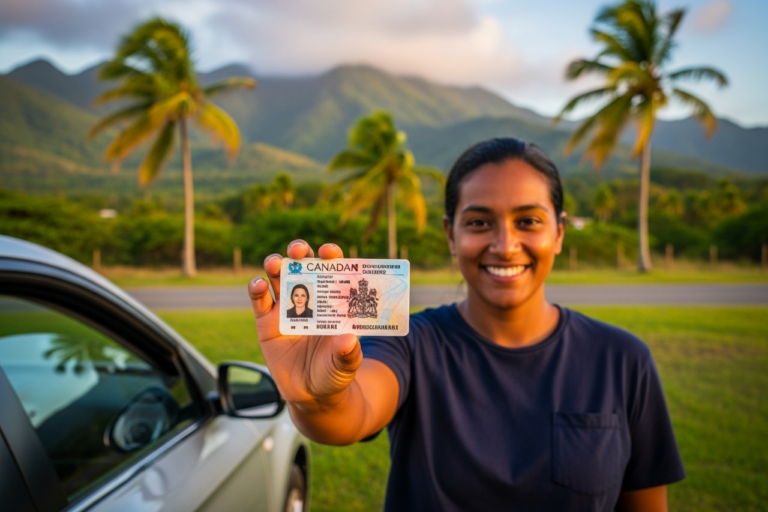
Key Highlights
Here are the key takeaways for Canadians who want to drive in Jamaica:
-
You can use your Canadian driving license while in Jamaica. You may do this for up to one year.
-
You do not have to get an International Driving Permit (IDP), but having one is a good idea. It can help with language barriers or when you go to some rental car places.
-
If you want to rent a car, you must be at least 21. You also need to have had your driving license for at least two years.
-
You should always keep your driving permit, your passport, and rental car documents with you when you are on the road.
-
Learn about the traffic laws there. This is very important. You have to remember that you will be driving on the left side of the road in Jamaica. That will help you stay safe on your journey.
Keywords: driving permit, international driving permit, driving license, rental car, side of the road, left side of the road, language barriers, jamaica, passport, idp
Introduction
Are you thinking about a trip to Jamaica and want to explore the beautiful sights at your own pace? Driving is a good way to see places that many people miss, from beaches with reefs to green mountains. If you are from Canada, you might wonder if you can drive there with your driver’s license. The good news is you can. It’s easy to do. This guide will tell you what you need to know about using your Canadian driver’s license in Jamaica and what the road rules are there.
Understanding Driving Rights for Canadians in Jamaica
Figuring out the rules for driving in a foreign country might look hard at first, but Jamaica keeps things easy for people from Canada. You can use your valid license from your country of origin to drive there. This is a good thing for those who want to get out and see Jamaica on their own.
But you should take some time to get ready before you go. Make sure you know the facts about your driving license and how long it stays good. Find out if you need an international driving permit too. When you have this information, you will have a smoother trip and not run into problems on the road. Take a look at the things you need to know.
Validity of Canadian Driver’s Licences in Jamaica
Yes, your Canadian driving license is good to use in Jamaica. If you come from Canada, you can drive in Jamaica with your valid license from back home. This is a big help for people who want their own car to see all the things on the island.
Jamaican rules let people use their own country’s driving license for a long time. You can drive with your Canadian license in Jamaica for up to one year. After that, you would need to think about getting a local Jamaican license. This is handy for short trips or if you plan to stay a bit longer.
Make sure your driving license is not expired. Always have your valid license with you when you are driving. The police or the car rental place might ask to see it, so keep it nearby.
International Driving Permit Requirements for Canadians
If you have a Canadian license, you can drive in Jamaica. You do not need an International Driving Permit (IDP) by law, but it is a good idea to get one. An IDP is an official travel document that shows your license details in many languages. This can help you a lot.
If you travel with your IDP and your Canadian license, things can be easier, like when you speak with the police or deal with car rental agencies. Some car rental agencies in Jamaica want you to have an IDP. It might even be a rule for them. To stay away from any delays, always check with the car rental agency before your trip to know what they need.
You need to get your IDP in Canada before you go to Jamaica. It should be from the same place as your Canadian license. The IDP works only when you also carry your valid Canadian license.
Driving in Jamaica is better when you are prepared with your IDP and all your documents. It will help make your trip go smoothly.
Legal Stay Duration for Driving as a Tourist
As a Canadian tourist, you can drive in Jamaica with your valid license from home for up to one year. The law gives you lots of time to enjoy your trip without extra paperwork. This is good for both short holidays and longer visits.
You do not need to get a local license unless you stay in Jamaica for over a year. For most people, your Canadian license is all you need. Some people also get an international permit for more peace of mind when driving.
If you want to live or work in Jamaica for more than a year, you will need to follow local laws and get a Jamaican driver’s license. For most visitors, the rules are set up to make driving in Jamaica easy.
Document Checklist for Canadians Driving in Jamaica
Getting your paperwork sorted out is an important thing to do before you drive in Jamaica. You have to make sure you have all the right papers so you can follow local laws. The right documents help you feel sure you can deal with things, like renting a car or talking to the police at a spot-check. You need more than just your driver’s license.
It’s a good idea to put your main papers in a small folder. Make sure you have your passport and your proof of insurance. Here is what you need for car rentals and what to keep in your car all the time.
Essential Papers for Car Rental and Road Use
When you go to get your rental car, the car rental agencies will ask to see some paperwork before you can get on your way. If you have these things ready, you will move through the process much faster and get your trip in Jamaica going without waiting.
It is important that you have the original papers with you when you get there. These are needed so they can check who you are, know if you can drive, and see if you can pay for the rental car.
Here is what you need to bring:
-
Your valid Canadian driving permit
-
Your passport to show who you are
-
A credit card in the driver’s name for putting down a deposit and for paying
-
Your rental booking confirmation
Insurance Requirements for Foreign Drivers
Having the right insurance is a must when you drive in Jamaica. Many foreign visitors get their coverage from the car rental companies. When you rent a car, there is basic insurance in the price you pay, but you have to know what this covers.
Most car rental companies will show you more insurance choices, like a Collision Damage Waiver (CDW). This will cost extra each day, but it might let you pay much less if the car is in an accident or gets damage. Take time to look at the policy so you know about anything you still have to pay and what is not covered.
If you are coming from Canada, it is smart to find out before your trip if your own car insurance or your credit card will cover you for an international rental. This might help you save money, but make sure their coverage works in Jamaica and check what is included. Always keep your proof of insurance with you when you drive.
What to Carry When Driving in Jamaica
Once you get on the road in Jamaica, make sure you always have some things with you in the car. This is not just about the law. It helps you be ready for things that can happen while driving here.
Your rental company must give you the car’s registration and fitness certificate. Before you go, check if these are in the car. It’s also a good idea to see if there’s a spare tire and the tools to use it.
Here’s a fast list of what you need to have:
-
Your valid Canadian driver’s license and also the international driving permit, if you have one
-
The car rental agreement and any insurance paperwork
-
Your passport, or at least a copy of it
-
A GPS or a good map for directions, but you can always ask people if you get lost
-
Names and phone numbers for emergency contacts
Renting a Car in Jamaica as a Canadian
Renting a car is a great way for people from Canada to see Jamaica. You can do things at your pace and go where you want. The whole process is like how you rent a car in Canada. There are big car rental agencies and local ones, too. You can find these at the airport and in most major towns. There is a good number of cars to choose from, like small cars that save gas or strong 4x4s if you want to tackle rough roads.
To get your rental car, you will need a credit card for the deposit. Now, let’s talk about what you need to have to be able to rent, some tips for booking, and how you can understand what’s written in rental agreements in Jamaica.
Eligibility and Accepted Licences
To rent a car in Jamaica, you need to meet some rules. The minimum age to drive in Jamaica is 18. To rent a car, though, you usually have to be at least 21. Most rental companies also want you to have your driving license for at least two years.
Your Canadian driving license will be fine at any rental company. A driving permit from another country or an international driving permit (IDP) is not always needed. But, some companies may still want to see it. This happens more if your license is not in English. Since Canadian licenses come in English, you may not need an IDP, but it could help have one just in case.
If you are under 30 or over 65, the rental company may add more fees or have rules for you. The best way to know their policies is to check with them before you book your car. That way, you will not get any surprises at the counter.
Process and Tips for Booking a Rental
Booking a rental car for your Jamaican trip is easy. It is a good idea to book early, most of all during busy travel times. This helps you make sure you get the car you want and at a better price. You can use trusted sites online or contact the rental company right away to book.
You will need your own details, your flight info if you pick the car up at the airport, and a credit card when you book. The rental company will use the credit card to keep your booking and for a safety deposit when you get the car. Be sure to read all the rules and what you have to do before you finish your booking.
Here are some tips for booking your rental car:
-
Compare prices on the web from each rental company.
-
Pick a car to match your plans—a small car is good for town, and a 4×4 works well on rural roads.
-
Look at extra costs like a young driver fee or a charge if you want another person to drive.
-
Check the times and places to pick up and bring back the car.
Navigating Rental Agreements and Local Policies
Before you get the keys and sign, you need to read your rental agreement carefully. This paper says what you have to do, the rules set by the rental company, and what insurance covers. If you do not understand something, ask questions.
Look at parts about the fuel policy, like if you need to fill the tank back up before you bring the car back. Check for things like how many miles you can drive and what steps you should take if there is an accident or your car stops working. If you know these local rules, you can stop extra fees when you go back with the car. The rental agreement is a legal paper. Make sure you know what you are signing.
You should also look at the car and check for any damage before you leave. Write down and take photos of any scratches, dents, or other problems on the rental form. This helps you not get blamed for damage that was already there when you bring the car back.
Jamaican Road Rules and Traffic Laws Explained
Driving in Jamaica is a great way to see the island, but you need to know the road rules. Many rules in Jamaica are like rules in other places. Still, there are a few things that are different about how Jamaicans drive. One thing that stands out, especially for Canadians, is that in Jamaica, people drive on the left side of the road.
It’s important to follow the speed limit and learn what road signs mean before you drive. Here are some common ways people drive and some of the main rules you will see when you are on the side of the road in Jamaica.
Common Local Driving Practices to Know
The most important thing you need to remember is to always drive on the left side of the road. The side of the road may not be what you are used to, so take your time and be careful, especially when you stop and go at intersections or when you reach a roundabout. Using the horn is also a common habit in the area. People give a quick beep to say hello, thank you, or warn someone they are about to pass them.
In rural areas, there are roads that are narrow and go around a lot. When you come up to a place you can’t see around a corner, it is a good idea to use your horn so others know you are there. From the bigger towns to out-of-the-way spots, there can be big changes in the road, so stay ready for anything.
Here are a few other local things to note:
-
Drivers sometimes do not use turn signals, so try to drive in a way that keeps you safe.
-
Keep an eye out for people walking and for animals on the road, and this is true even where there are many people.
-
Take your time; traffic can move slowly. People often move at their own speed here.
Speed Limits and Signage in Urban and Rural Areas
Obeying the speed limit is crucial for your safety, especially on unfamiliar roads. Jamaica has over 17,000 kilometers of road networks, and speed limits vary depending on whether you are in a built-up urban area or on an open highway. Speed limits are posted in kilometers per hour (kph).
Road signs generally follow international standards, but they can be sparse in some rural areas. Always be vigilant for signs indicating a change in the speed limit, upcoming hazards, or directions. The main highways are well-maintained, but rural roads can be a different story.
Here is a general guide to speed limits in Jamaica:
|
Road Type |
Speed Limit (kph) |
Speed Limit (mph) |
|---|---|---|
|
Urban / Built-up Areas |
50 kph |
30 mph |
|
Open Roads / Rural Roads |
80 kph |
50 mph |
|
Highways / Toll Roads |
110 kph |
70 mph |
Staying Safe While Driving in Jamaica
Driving in Jamaica can be a good and fun thing to do, but safety should always be your main concern. If you are a foreign visitor, you may find it hard to deal with new road traffic and the way people drive there. It is best to be ready for anything and drive with care so you do not have any problems on your trip.
If you face potholes in rural areas, or need to know who to reach out to in case of an emergency, being ready can really help. Here are some important safety tips and what you should do if something goes wrong. This will help Canadian tourists stay safe while driving on the island.
Safety Precautions for Canadian Tourists
It is usually safe for people from other places to drive in Jamaica, but you need to stay alert at all times. The road conditions can be very different from one place to another. You will find some smooth highways, but you will also get winding rural roads with potholes. Always drive at a speed where you can see and react if the road has a pothole or an animal jumps out.
If you can, do not drive at night, especially if you do not know the area. There may be little or no street lighting when you are away from major towns. This makes it hard to see any danger on the road. When you use GPS, be careful; it is useful, but sometimes it might send you on rural roads that are not good. If a road looks risky, trust your gut and ask people nearby if there is a better way to go.
Here are some key safety precautions:
-
Always wear your seatbelt, and ensure your passengers do too.
-
Keep your car doors locked and windows up when driving through busy towns.
-
Don’t leave valuables visible in your parked car.
-
Plan your route before you go and let someone know your itinerary.
Emergency Contacts and Procedures
Knowing what to do in an emergency can help you stay calm. Before you go on your trip, it’s good to add important numbers to your phone. In Jamaica, you can call 119 for police, fire, and ambulance help.
If you are in a small road traffic accident where no one gets hurt, it is better to go to the nearest police station and make a report. You do not have to wait at the place where it happened. If there is a big accident, call the police right away. Do not move your car unless it is blocking the road in a big way.
Here are some important contacts and things you should do:
-
Police/Fire/Ambulance: 119
-
Your rental company’s 24-hour helpline
-
Canadian Consulate or Embassy for help if you need it
-
Take photos of the place and share info with any other people involved.
Conclusion
To sum up, driving in Jamaica with a Canadian driver’s license can be a lot of fun, as long as you know the rules and what’s required. You should make sure your Canadian driver’s license is valid before you go. It’s also a good idea to find out what you need for renting a car. If you are ready, things will go well for you on the roads. Learn about the local traffic rules and stay safe when you drive. This lets you really enjoy the trip, whether you want to see Jamaica’s lovely places or enjoy the culture. Take some time to get this info so you can feel sure while you drive. If you need more help or have questions about driving in Jamaica, don’t hesitate to ask for advice on your trip!
Frequently Asked Questions
Can a Canadian Use Their Driver’s Licence or Is an IDP Required?
Yes, you can drive in Jamaica with your valid Canadian driver’s license for up to one year. You do not need an International Driving Permit (IDP), but it is a good idea to have one. The IDP will show local people and car rental agencies your driving permit in their language. This can help if you talk to the police or need to rent a car in Jamaica.
How Long Can Canadians Drive in Jamaica Without a Local Licence?
If you are a Canadian tourist, you can drive in Jamaica with your valid license from Canada. You can use it for up to one year during your legal stay. After one year, if you are still in Jamaica, you need to get a local license to keep driving by the law.
Is It Safe for Canadians to Drive Around Jamaica?
Yes, you can drive in Jamaica if you are from Canada. But you need to be careful. The road traffic is not the same as in Canada. Drive on the left side and pay close attention to other drivers. Watch out for tricky parts on rural roads. Try not to drive at night if you do not know the area well. Keep your safety first at all times.



