

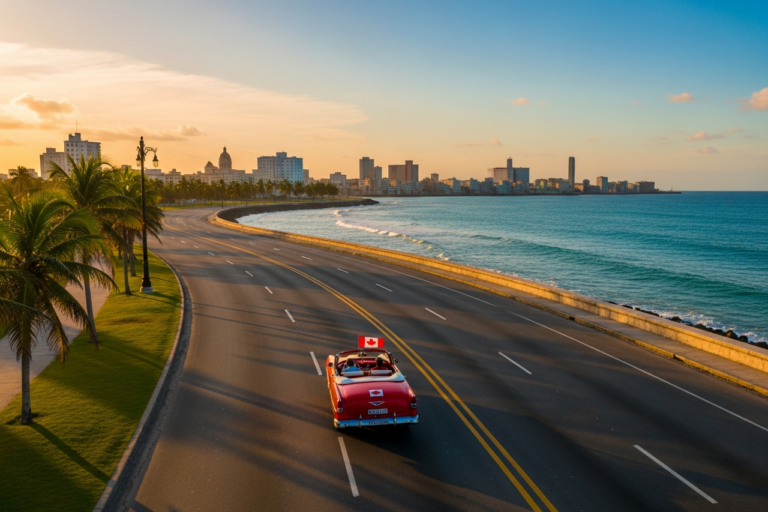
Key Highlights
Thinking about a driving trip in Cuba? Here is what you have to know.
-
Your Canadian driver’s license will work to drive a rental car for a short time in Cuba.
-
An International Driving Permit (IDP) may not always be needed. But it is a good idea to get one, since it helps if people need a translation.
-
The Cuban government says you must get car insurance for all rental cars. You must buy car insurance in Cuba.
-
To rent a car in Cuba, you need to be at least 21 and have some driving experience.
-
Road safety is important. You have to watch out for road conditions and see how people drive in Cuba.
-
Always carry your essential documents. Bring your passport, rental agreement, and any other key papers with you.
Using a rental car in Cuba can be a good way to see the country. But remember, if you want to drive there, bring all documents you need like your driver’s license, IDP, and car insurance. Stay safe by checking the roads, and make sure you know the rules the Cuban government set.
Introduction
Do you want to see the lively streets and beautiful places in Cuba from the driver’s seat? It’s a good way to travel the island how you like. Many people in Canada ask if they can get on the road in Cuba with their Canadian driver’s licence. The good news is that they can. This easy guide will help you know all you need about driving licences in Cuba, renting cars, and the main rules on the road. It is here to help make your trip easy and fun.
Understanding the Basics of Driving in Cuba as a Canadian
Driving in Cuba can give you a good and different experience. But before you get behind the wheel, it is important to know the rules in Cuba. The Cuban government lets people visit and drive a rental car if you have a valid license from your home country. So, if you have a Canadian license, you can use it in Cuba for a short stay.
The driving experience in Cuba is not the same as it is at home. The cars and the roads can be different. It is a good idea to be ready for that. Here’s a closer look at the main rules, road signs, and other things you might see when you drive in Cuba.
Overview of Driving Laws for Foreigners in Cuba
When you drive in Cuba, you need to follow the local rules. This helps you stay safe and not get into trouble. The cuban authorities ask that people from other countries have a driver’s license from where they live. So if you are from Canada, you will need to carry your provincial or territorial driving licences. Cuba will let you use it when you first get there.
The rules are tight, and getting caught for breaking them can be bad for you. You may get into trouble if you drive with no car insurance. Make sure you buy your car insurance in Cuba before you head out. The cuban authorities also pay close attention to accidents, mostly if someone gets hurt.
You should always keep your driving licences, your passport, and your car rental papers with you. If you know about these basic rules, you can feel good about your trip. You will stay safe and be on the right side of the law in Cuba.
Differences Between Canadian and Cuban Road Rules
While some basics of driving are the same everywhere, there are a few big differences between Canada and Cuba when it comes to road rules. In both countries, you have to drive on the right side of the road. But after that, things can be pretty different. The road itself and how people drive will give you a new experience.
You will see road signs written in Spanish, and the look of them may not be what you know from Canada. There are not as many traffic lights, especially if you are not in a large city. At a lot of intersections, people decide who goes first by watching others and giving way if needed. The speed limit is shown in kilometres per hour (km/h), but often, road and car conditions will mean you need to go much slower.
Here are a few things you need to know:
-
Right-of-way: Many intersections do not have signs. This can be confusing. It is smart to slow down and be ready to let others go first.
-
Road markings: You may see lane lines and signs that are very faded or missing in many areas.
-
Hitchhiking: In Cuba, it is normal for people to signal for a ride, and it is even a rule in some places.
Remember these things about the right side, road signs, speed limit, Spanish language, and how traffic lights and who comes first at cross roads work in Cuba compared to Canada.
Official Languages and Road Signs Canadians Will Encounter
Driving in Cuba means you have to use Spanish, since it is the official language there. All road signs you see are in Spanish. You will not find English on signs, even in tourist areas that get many visitors. It is a good idea to learn some simple Spanish phrases before your trip.
There are some common signs to know. “PARE” means Stop. “CEDA EL PASO” means Yield. You will also see speed limits, or signs that say “VELOCIDAD MÁXIMA.” Signs showing you the way will use the Spanish names of towns and cities. Do not count on finding English words when you get out on the road.
There are Cubans who work in jobs with tourists, and they often speak a bit of English. But if you leave the busy spots, this is not seen as much. That is why a Spanish phrasebook or translation app can help a lot, for reading road signs and in case you have to ask someone for help.
Validity of the Canadian Driver’s License in Cuba
One of the most asked things for Canadians before a trip is if their driver’s license is good to use in Cuba. The answer is yes. If you are there as a tourist, your Canadian driver’s license is usually fine to rent and drive a rental car. This makes getting on the road much easier.
But, it is good to know the rules about foreign driving licences can change. It may depend on how long you stay or what the language is on your license. We will talk about the details of how your Canadian license works in Cuba and talk about some things you might need to know before you go.
Recognition of Canadian Driver’s Licenses
Your Canadian driver’s license will be accepted by Cuban authorities when you visit Cuba for tourism. If you want to rent a car, you can show your license from your home country. The rental agency will use it to see if you are okay to drive. Cuba does this to help tourists and make it simple for people to get around.
The Ministry of the Interior, or MININT, handles traffic rules in Cuba. Their rules let tourists drive with a license from their home country for up to six months. This means for most trips, you only need your Canadian driver’s license if you want to drive a car in Cuba.
Make sure your driver’s license is not expired before you travel. It should also be in good shape. When you go to pick up your rental car, bring your license and your passport. The rental agent will check both. Keep your passport and license with you at all times when you are driving in Cuba.
Language Requirements on Licenses
When you want to use a foreign licence in another country, language is an important thing to think about. Good news is, Canadian driver’s licences are usually in English and sometimes French, so they are almost always fine in Cuba. The rental agencies in Cuba, and even the local authorities, see them all the time because so many people from Canada go there.
But, bringing a translation can help you, especially if you meet a police officer in a smaller town who does not speak English or French that well. It’s not something you must have, but if you get an official translation, it can stop confusion and make things go easier with the police officer or other officials.
This is why it’s good to have an International Driving Permit, or IDP. It works as a common translation of your licence into lots of languages, with Spanish being one of them, which is big in Cuba. Most times, you can get by without an IDP, but it is a good idea to get one. The IDP makes things clearer and safer in any problem you might have.
Length of Stay Limitations for Tourist Drivers
Your Canadian licence is good for driving in Cuba, but there are some rules to follow if you are a tourist. You can use your licence for the time your tourist visa lets you stay, which is usually up to 90 days. You can extend this time. For most people on vacation in cuba, this will be enough.
In cuba, tourists can drive with their home licence for up to six months. If you want to stay longer, you may need to get a Cuban licence. Most people who visit tourist areas or go on a road trip will be fine with the time limit.
It is important to check the expiry date on your Canadian licence before going to cuba. Your licence must work for your whole trip. Driving with an expired licence is not allowed in cuba, just like in canada. If your licence expires, and you get stopped or have a crash, you could have big problems.
The Need for an International Driving Permit (IDP)
You may wonder if you need an International Driving Permit (IDP) with your Canadian license when you drive in Cuba. The IDP is a paper that translates your license into many languages. It is known and accepted in the world through rules like the Geneva Convention. You do not always need one in Cuba, but it is a good thing to have.
Having an IDP can make things go easier with car rental agencies or if you meet the local police. They can read the different languages on your IDP, which shows your driving info and makes things simple. Now, let us look at what an international driving permit is, if Canadians must have it in Cuba, and how you can get one before you go.
What is an International Driving Permit?
An International Driving Permit (IDP) is a paper that gives an official translation of your valid Canadian driver’s license. The IDP is not a driver’s license by itself. You still need to have your own license with you when you use it. The IDP is made to help with language issues when you talk to rental companies or police in other places.
The IDP puts your information and your driving qualifications into 12 different languages. One of those is Spanish. This means if you will be in Cuba, people there can check your details without the need to guess what your license means. You do not need to take a new driving test to get an IDP. Getting one just proves that your main license is real.
The IDP is set up by the United Nations. It is the same in over 150 places around the world. Having an international driving permit gives you peace of mind when you are on the road in a new country. It can help you avoid problems with people or companies while you travel.
Is an IDP Mandatory in Cuba for Canadians?
Officially, Cuba does not always mandate an International Driving Permit for Canadians who hold a valid Canadian driver’s license in English or French. Most car rental agencies will rent you a vehicle with just your Canadian license and passport. However, the situation can be ambiguous, and having an IDP is strongly advised.
Some rental agents may insist on an IDP, and it can be invaluable during a police stop in a remote area. It eliminates any potential for miscommunication. Since it’s easy to obtain and offers significant benefits, getting an IDP is a small step that can save you a lot of hassle. Think of it as an insurance policy for smooth communication.
Here’s a quick comparison to help you decide:
|
Document |
Purpose |
Is it Mandatory in Cuba? |
|---|---|---|
|
Canadian Driver’s License |
Your official permit to drive. |
Yes, you must have a valid license. |
|
International Driving Permit (IDP) |
A translation of your license. |
Not strictly mandatory, but highly recommended. |
How to Obtain an IDP in Canada
Getting an international driving permit in Canada is easy. Only the Canadian Automobile Association (CAA) can give an IDP to people in Canada. You can do your application at a CAA store. In some places, you can also do it by mail.
You will need some essential documents when you apply. The whole thing is fast. If you complete your international driving permit application in person, you can get your IDP the same day. It is a good idea to do this a few weeks before you travel to Cuba. This will help you not feel stress at the last minute.
Here’s what you must have to get your international driving permit:
-
A signed and filled-out CAA IDP application form.
-
Two original passport photos taken recently.
-
A photocopy of both sides of your Canadian driver’s license.
-
The application fee.
Documents Required for Canadians to Drive in Cuba
When you get ready to drive in Cuba, make sure you have the right paperwork. This is very important. You need more than your driver’s license if you want to rent a car and drive on the roads in Cuba. To make your trip smooth, it is a good idea to keep all your essential documents together and easy to reach.
You have to bring your passport, your license, and proof that you have car insurance. Each of these is important. You will use them for who you are, for renting the car, and for insurance while you are in Cuba. Let’s see what essential documents you need. That way you will be ready to drive and enjoy your time in Cuba.
Essential Travel and Identity Documents
Before you get ready to drive in Cuba, you need to have all your essential documents with you. These are the things that the police officer or car rental person will ask for first. It is very important to keep the documents safe and together all the time while you travel.
Your passport is the top ID you need. Make sure that it is good for at least six months after the day you plan to leave Cuba. Along with your passport, you also need a valid Canadian driver’s license. These two are needed to prove you can drive while in Cuba.
Here is a checklist of the driver’s license and other essential documents you must have with you each time you drive:
-
A valid passport
-
A valid Canadian driver’s license
-
Your Cuban tourist card (visa)
-
Proof of insurance for the rental vehicle
Car Rental Documentation Requirements
When you get to the car rental counter in Cuba, you have to show some papers before you can get your car. The rental companies watch these steps closely, as they need to follow the law and their insurance rules. If you are ready with all you need, the pickup will be faster.
You must bring your passport and driver’s license. You also have to give a credit card from the main driver. Keep in mind, most rental companies in Cuba owned by the state do not take cash for the hold money, and they do not let you use your debit card either. Because of the US embargo, credit cards from American banks may not work there. Be sure to ask your credit card company before you go.
You need to sign a rental contract as well. Read this contract with care, as it tells you what you must do, what insurance you have, and what steps to take in an emergency. Keep this paper with you in the car every time you drive, as it is proof that you can use the car.
Proof of Insurance and Additional Permits
In Cuba, car insurance from outside the country is not accepted. You must buy a local car insurance policy when you rent a car. This rule is part of the rental process, and there is no way around it. The cost will be added to your total bill. The insurance comes from the state-owned insurance company called ESEN.
This car insurance is required in Cuba. It usually pays for damage you may cause to other people or their property. You need to know what it covers because it often has a high deductible. The rental agency in Cuba may also offer you extra insurance. This extra insurance can help cover things like burglary or other types of damage, but it will cost you more. With all the risks, choosing more coverage is a good idea.
After you pay for the insurance, the rental agency will give you a paper that shows you have coverage. This document is very important. You have to keep it with your rental papers in the car at all times. If you are pulled over or have an accident, the police will ask to see it.
Car Rental Process in Cuba for Canadian Tourists
Renting a car in Cuba is not quite like renting one in Canada. Most car rental agencies in Cuba are owned by the government. Because of this, you will deal with rental companies that the state runs. It is a good idea to book your rental car early, more so if you plan to go during the busy tourist time. There may not be many cars left to pick from if you wait, so book in advance with these rental agencies.
Many car rental agencies in Cuba have their own websites. You can use these sites to book your car online before your trip. This saves you time and helps you get the car you want. Now, let’s talk about the main rental companies in Cuba, what you need to have for a rental car, and what the costs will be.
Popular Car Rental Companies in Cuba
When you want to rent a car in Cuba, you will see that there are not many rental companies to pick from. The rental agencies you will find are all owned by the state. Most of these car rental companies have offices at international airports, in big hotels, and in many cities on the island. It is good to book your car before you go, because many people want to rent cars and sometimes there are not enough to meet the demand.
These rental companies have cars that range from small, cheaper cars to bigger SUVs. Still, most of the cars in their fleet are newer foreign models, not the old American cars you often see on Cuba’s streets. The main rental agencies are usually good, but sometimes the service can be slow. You may need to wait, so be ready for that.
Here are the main car rental companies you will find in Cuba:
-
Rex
-
Havanautos
-
Cubacar
-
Via Rent a Car
Minimum Age and Experience Needed
To rent a car in Cuba, you have to meet some rules about age and driving experience. Most rental agencies ask that you be at least 21 to get a car. Some places or fancy cars may need you to be 25.
You also need to have held your driver’s licence for one or two years. This is so they know you have driving experience and can handle roads that you may not know well. The rule may be different with other rental agencies, so it is a good idea to check before you book.
When you go to pick up the car, staff will check your age and the date you got your licence. If you are a young driver or you just got your licence, you should ask the rental agency about their rules. This will help you avoid problems when you get there.
Expected Costs and Payment Methods
Budgeting for a rental car in Cuba means you have to think about more than just the daily rate. The final price will have the car insurance cost, a security deposit, and fuel on top of the rental rate. Prices can change a lot depending on the car, the season, and how long you keep it. It’s a good idea to check many places and book ahead to get the best deal.
The car insurance in Cuba is set as a daily rate, usually between 15 and 30 USD each day, and it depends on what car you pick. You have to give a security deposit, and it goes back to you when you return the car in good condition. Most of the time, this deposit is taken on a credit card.
You will need a credit card for the car rental cost and the deposit. It has to be a non-US credit card, like the kind from Canadian banks. US cards or any connected to US banks are usually not taken. Cash will not work for this in Cuba.
Road Safety and Conditions in Cuba
Driving in Cuba can give you a lot of freedom, but you need to think about road safety all the time. The road conditions in Cuba are not always good. They can change fast and may not be the same as what you see in Canada. There are often potholes, poor lighting, and not much signage, especially when you drive in rural areas.
Your car insurance must be in place and gives you a backup if something goes wrong. Still, it is best to use defensive driving to keep safe on the road. Be sure you know about the common dangers you might face. Pay attention to the quality of rental vehicles. Also, know what to do if you have an emergency. Doing these things will help you get around Cuba with more safety.
Common Road Hazards and Cautions
The road surface in Cuba is not always the same. Many major highways are usually in good shape. But some country roads are not looked after well and have a lot of potholes or may not have pavement at all. This means you will need to slow down, adjust your average speed, and always look at the road in front of you.
You need to take some precautions if you drive here. One of the biggest things is not to drive at night. There is little or no street lighting except in big cities. It is very hard to see things like pedestrians, cyclists without lights, horse-drawn carts, and farm animals on the country roads at night. You may also run into surprise potholes that can damage your car, even on main highways in Cuba.
To stay safe while you drive, keep these tips in mind:
-
Always look out for the unexpected, like animals or classic cars going slow on the country roads.
-
Stay back far enough from other vehicles.
-
Fill up your tank every time you pass a gas station. There are not that many stations, especially on country roads.
-
Be ready to stop at any time for things on the road.
It is very important to pay close attention to the road surface. If you take the right precautions and watch out for cyclists, pedestrians, and other things, you will have a safer trip in Cuba.
Vehicle Quality and Availability for Rent
When you rent a car in Cuba, you should not expect to get the classic American private cars from the 1950s that you see in pictures. Those cars are mostly used as taxis, and you can’t rent them to drive yourself. Most of the rental car options are newer cars that are often made in China or Europe. These are usually economy or mid-size cars.
The condition of rental cars in Cuba can be good, but it also may not be. Some cars might show signs of being used for a long time. Because of this, it’s important to check your rental car well before you leave with it. Take a good look at the tires, even the spare. Check the brakes and the lights. Also, look for any damage that is already there and make sure it is written down in your rental agreement.
Finding a rental car in Cuba can be tough, mainly between November and April, which is the high season. It is better to book your car months before you go in order to make sure you get one. If you just show up in Cuba and hope to get a car, you will probably not have much luck and might be left without one at all.
Emergency Services and Contact Numbers
Knowing what to do in an emergency is very important when you are getting ready to drive. In Cuba, help on the road may not be easy to get, especially if you are not in a big city. The rental company should give you a number to call for roadside help. This is the number you will use first if you have any car problems.
If you get into a traffic accident, your first job is to make sure everyone is okay. After that, you have to call the police. You must not leave the scene of the accident, as this is a serious offence. You will have to stay until a police officer shows up, and they will write a police report. This police report is needed for your insurance company claim.
Here are some important numbers you need to keep with you:
-
Police: 106
-
Ambulance: 104
-
Fire Brigade: 105
Once you call the police, you also need to call the insurance company (ESEN) to let them know about the accident.
Driving Culture and Etiquette in Cuba
The driving culture in Cuba has both formal rules and local ways that happen on the road. The habits of Cubans when they drive can look messy to people who are new here, but there is a flow to the traffic. On the road, you will see many types of vehicles. There are modern cars, tour buses, old cars, bikes, and horse-drawn carts all using the same road.
To have a good time in Cuba, it is important to understand how Cubans drive. You should also know about the laws. Cuba enforces strong rules about the influence of alcohol when driving. If you get stopped by a police officer, it is important to know how to talk with them. Let’s look at the things you need to know so you feel ready.
Common Cuban Driving Habits
When you drive in Cuba, you will see it is quite different, especially on the busy streets of Havana. People behind the wheel can be creative when there is a lot going on. You will hear them use their horns a lot. They do not use it to show they are upset. Most use it to let others know they are near. This is common when they pass another car or come up on a spot where they cannot see ahead.
In Cuba, the idea of giving the right-of-way does not always match what you will see in Canada. Pedestrians and cyclists will often step out as if they are first to go. You need to look well and be ready to stop. It is normal to be stuck behind classic car taxis driving slow, and you may come upon a horse-drawn cart. For this reason, driving at the posted speed limit may not always happen in Havana.
Here are some things to look for:
-
Drivers use hand signals often. Sometimes they use these with, or instead of, their turn signals.
-
Cars may stop all of a sudden for people getting in or out.
-
People make their own lanes on wide roads.
-
Many do not follow lane stripes.
Dealing with Police Stops and Checkpoints
It is not rare to see police checkpoints in Cuba. You will find them often on highways that go between big cities or provinces. These stops are regular. If you are driving a rental car in Cuba, people can tell by the license plate. Most of the time, you will just be waved through by the local authorities.
If a police officer asks you to stop, stay calm and be polite. The officer will probably want to see your driver’s license, passport, and rental car documents. Make sure you have all of those ready so it is easy to show them. Almost every time, these meetings with the police are easy. The police officer is just doing his or her job.
If the police say you have broken a traffic rule, it is best for you to help and do what you are told. The fine is usually paid later at an office, not right at the checkpoint. Do not try to give money to the police officer, because bribing is a very big offence. If you get into an accident in Cuba, wait for the police to show up. The police will need to write a police report.
Local Practices Canadians Should Know
Besides the main rules, you will find some local ways of doing things that help make your driving experience in Cuba better. One of the main things that happen is hitchhiking. A lot of Cuban people use hitchhiking every day, and you will see them standing to flag cars on the side of the road. You do not have to give anyone a ride, but do look out for people waiting near the edge.
Drivers in Cuba also flash their headlights at others to give a warning. One quick flash can mean there is a problem or a police checkpoint coming up. This signals is a common way for people in cars to talk to each other. Often, the bigger or faster cars will go first, even if that does not match the real road rules.
Here are a few more tips:
-
Always stay alert at intersections. Don’t think the right-of-way always goes to you.
-
When you ask for directions, take your time and be nice. Cuban people will often help you out.
-
Always listen to what the police and other local authorities say.
This advice will help you have a good time when you drive in Cuba and make it safer for all people on the road. Remember, the Cuban people and local authorities are often willing to help if you need it or have questions. In Cuba, letting larger cars have precedence and using simple ways to talk with other drivers can go a long way to making your trip easier.
Restrictions and Regulations for Foreign Drivers
Cuba is open and friendly to tourist drivers. There are some rules and limits, though, that you should know about. The rules help keep people safe and follow local laws and insurance rules. Some rules tell you where you can go, and some deal with the penalties for breaking traffic laws.
You need to know about these rules before you plan your trip. This helps you stay safe and keeps you out of legal trouble. The rules may talk about places where you cannot drive. They also include details about insurance when driving in Cuba. Here are the main rules that every foreign driver needs to know.
Places Where Foreigners May Not Be Allowed to Drive
For the most part, you can drive your rental car across Cuba. But, there may be some rules about where to take it. A few country roads that are very far away or not looked after can be off-limits. Also, your rental agreement may say the car should not go on roads that are not paved.
There are protected areas, such as parts of a national park or a UNESCO World Heritage site, that might stop people from driving private cars there. This is done to help keep the area safe or to protect the spot. Some town centres, for example, may only let people walk, so cars are not allowed. Always watch for signs that show if there is a rule like this.
It’s a good idea to check with your rental agency or a local guide before going to a faraway place about the road conditions and any rules about where you can drive. If you go against these rules, your insurance might not cover you and you may get fined. So, it’s best to be sure before you go.
Insurance Restrictions for Tourists
The car insurance that you have to get when you rent a car in Cuba comes with rules that you need to know about. It is good to find out what the policy does and does not pay for so you do not get surprised by high bills later. For example, most times, the main insurance in Cuba has a big deductible. This means you will have to pay the first part of any damage before the insurance company will help.
Your car insurance might not work if you break the rental rules. If you drive after having alcohol, let someone who cannot drive your car, or take it on roads you are told not to go on, you will have to pay for all the damage by yourself in Cuba.
The insurance some people get may not pay for things like flat tires or damage to the bottom of the car. These are problems that can often happen on Cuba’s rough roads. When you talk to the car rental company’s staff at the desk, make sure the insurance company explains all these points before you sign anything.
[car insurance,influence of alcohol,insurance company,cuba]
Penalties for Violations as a Visitor
The penalties for breaking traffic rules in Cuba are strict, and you must follow the law just like everyone else. If you speed or do not wear a seatbelt, a police officer can give you a fine on the spot. You will need to pay the ticket at a certain bank or government office before you go out of Cuba.
If you do something more serious, there will be tougher results. The Ministry of the Interior looks at driving after drinking as a very big problem. If you get in a traffic accident and someone gets hurt, you may go through a long and hard legal process. You might have to stay in Cuba until all the checking is done.
Be aware of the following possible results:
-
Fines for small traffic violations.
-
You could have to deal with a long legal process if a traffic accident is serious.
-
Your insurance could be cancelled if you are to blame for the accident or break your rental terms.
Navigating Around Cuba: Directions and Technology
Getting around in Cuba can feel like a real adventure. If you like using GPS and map apps, things in Cuba may be a bit different. You have to know the internet is not as common or fast as you may like, so following a map live can be tough.
Because of this, the best way to enjoy a self-drive trip in Cuba is to use both old ways and new tech. Plan out your itinerary before you go. Make sure you have maps saved to your phone for offline use. Also, don’t be shy about asking people for help or directions. All these things make finding your way in Cuba better.
Let’s see what the best tips are for finding your way around Cuba.
Using GPS and Map Apps in Cuba
It is not good to depend only on real-time GPS navigation while in Cuba. You might be able to get mobile data, but it is often costly. The network can also be weak, more so when you are not in big cities. Because of this, the kind of apps that need the internet all the time to work are not a good option if you want to use gps on a road trip.
It is better to use gps apps that let you use maps without the internet. You can try Maps.me or Google Maps if you download offline maps ahead of time. They can really help you out. The best plan is to get maps for all of Cuba before your trip or while you have Wi-Fi. When the offline map is on your phone, your gps will show your spot on the map without any data connection.
Keep in mind, even these offline maps might not have everything. You may not see all smaller roads shown, and some shops or places can be outdated. It is smart to use this gps technology as your helper in Cuba, but do not fully trust it for every single detail.
Asking for Directions Locally
One good and fun way to get around Cuba is to ask for directions. The Cuban people are known to be very friendly, and they like to help out someone who got lost. So, do not feel bad about stopping and asking someone to help you find your way. It also helps if you prepare a little before you head out.
It is very helpful to know some easy Spanish words or phrases for asking how to get somewhere in Cuba, since there are many places where you will not find much English spoken. If you know how to say “¿Dónde está…?” (Where is…?) or words like “recto” (straight), “derecha” (right), and “izquierda” (left), you will get where you want with less stress. In Cuba, people do not always use street names. The Cuban people will often use places or landmarks when they give you directions.
Here are some tips for asking for directions:
-
Be nice when you start to ask. Use “Hola” or “Buenos días”.
-
If you can, have a map so you can point to where you need to go.
-
If you are not sure, ask more than one person. It helps you check that the info is right.
-
Put on a smile and say “Gracias” after you get help—it will make people happy you asked.
City Driving Compared to Rural or Coastal Roads
Driving in Cuba is not the same everywhere. When you are in a city like Havana, you will find streets that are full and busy. There are many cars, people walking, bikes, and taxis all around. The roads can be confusing, with many turns and crossings. Parking your car in the city is also tough, as there is not much space to leave it.
When you drive on country roads, the pace of life slows down a lot. These roads are not in the best shape. You may meet farm animals walking on the road. There are not many signs, so it can be hard to know where you are going.
If you drive on the roads near the coast, you will see nice views of the water. But these coastal roads are often narrow and have many sharp turns. You have to keep your eyes on the road the whole time.
There is a big road in Cuba called the “Autopista” or highway. It is the fastest way to travel a long way across the country. But there can still be bumps or other things on the highway, so you need to pay close attention when you drive.
Key differences to note:
-
City: Heavy traffic, complex navigation, parking challenges.
-
Rural: Poor road surfaces, slow-moving obstacles, limited services.
-
Highway: Faster travel, but still requires vigilance for unexpected hazards.
Road Tripping Across Cuba as a Canadian
A road trip in Cuba is a great way to see the island. You get to take in the different culture, the long history, and the beautiful nature. Canadians can make this kind of trip happen if they plan it well. You must set up your car rental ahead of time. It is also good to make an itinerary that can change if you need, and to always think about road safety.
Having your own car lets you go past the big tourist spots. You will see a more real side of Cuba. There is so much to see, from pretty drives to local places most people miss. A road trip gives you many chances to go where you want. Just be sure you follow the rules from the Cuban authorities and always think about safety on the road.
Popular Routes for Self-Drive Holidays
A self-drive holiday in Cuba gives you the chance to see a lot on your own. Many people start in Havana and drive west to the Viñales Valley. This area is a UNESCO World Heritage site. It is well known for its fields where people grow tobacco and for the tall, round hills called mogotes. The drive here is one of the most beautiful on the island.
You can also take a road trip east from Havana. If you do, you can visit old cities like Cienfuegos and Trinidad. Trinidad is another place on the UNESCO list, famous for its stone streets and old buildings. Not far from Trinidad, you can see the wild Escambray Mountains or sit by the sea at Playa Ancón’s beaches.
Look at these routes for your next time in Cuba:
-
The Western Route: Havana to Viñales, where you find Pinar del Río province.
-
The Central Colonial Route: Start in Havana, see Cienfuegos and Trinidad.
-
The Coastal Drive: Check out the beaches to the east of Havana (Playas del Este) or go to Varadero.
These drives will let you see more of what makes Cuba and its UNESCO World Heritage site locations so special.
Planning a Multi-City Road Trip
Planning a road trip to visit more than one city in Cuba takes some work. It is not as simple as picking a line on a map. The first thing is to get your vehicle. Try to book your car from one of the car rental agencies a few months before you want to go. When you have your ride sorted, then start to make your travel plans.
You need to be real about driving times with the road conditions in Cuba. The roads can slow you down, so what you see on the map may not match what it will be in your day. A short trip that looks like two hours can turn into four because of delays or the way roads can be. To not get tired out, try to keep your driving no more than four or five hours a day. This leaves more time for you to see the places, meet people, and just enjoy the place.
It is smart to book your place to sleep in each city before your road trip. There are “casas particulares,” or private homes you can find as you go along, but having your place for the night set is better in Cuba, especially where it gets busy. You want to make a plan when it comes to your trip, but always leave a little space in your itinerary for new ideas or a quick change. This is the way to get the best out of the trip and the road in Cuba.
Tips for Scenic Drives and Hidden Gems
A road trip is a great way to see Cuba and find special places that many people miss. You might plan to see big cities, but try to keep your itinerary open to new places. This way, you can stop in small towns or at nature spots you see along the road. Often, the best parts of a trip come from places you don’t expect to find.
For beautiful drives, you can take the road from Trinidad into the Topes de Collantes nature spot in the Escambray Mountains. The view is amazing, but the road can be steep and has a lot of turns. In the east, try the road along the coast from Santiago de Cuba to Baracoa. It is a tough drive, but you get to see so much.
Here are a few things that can help you find great stops in Cuba:
-
Ask local people and the people at your “casa particular” for where to go.
-
Try driving toward the coast or into the mountains to see what you find.
-
If you see a village or a quiet beach on your map, take a side trip and check it out.
This way, your itinerary can lead you to many good and new places, and you will get to know more about Cuba.
Conclusion
To sum up, driving in Cuba as a Canadian can be a great experience if you get ready before you go. Make sure you know the Cuban road rules and have the right papers, like an international driving permit. You should also know about the different driving signs and roads you will find in Cuba. This will help make your trip safer and more fun.
Drive with care, and get used to how people drive there. This will help you stay safe and enjoy your trip more. If you want to see more of Cuba by car, you can ask for help or tips to make your trip good and easy to remember. Get in touch today for a free consultation!
Frequently Asked Questions
Can I use my Canadian driver’s license alone or do I need an IDP?
If you want to drive in Cuba, your Canadian driver’s license is usually accepted. Still, it is a good idea to get an International Driving Permit (IDP) when you go. The IDP gives a Spanish version of your driving licences. This can help you stay out of trouble with rental agencies or the Ministry of the Interior police. The IDP is very useful in rural parts of Cuba, where people may not know any English.
Is it safe for Canadians to drive themselves around Cuba?
Yes, people from Canada can drive in Cuba, and it is usually safe. But you need to pay close attention to road safety at all times. You may find bad road conditions, more so when you are outside the city. Try not to drive at night. When you get a rental car, make sure it is in good condition before you go. When you drive on the busy streets of Havana, it is best to be careful and drive ready for anything.
What happens if I get into an accident or need roadside assistance?
If you get into a traffic accident in Cuba, you should not leave the scene. Call the police at 106 right away so they can write a police report. This police report is needed for your insurance claim with the insurance company. After that, call the roadside help number your rental agency gave you. You also need to tell the state insurance company about what happened.



