

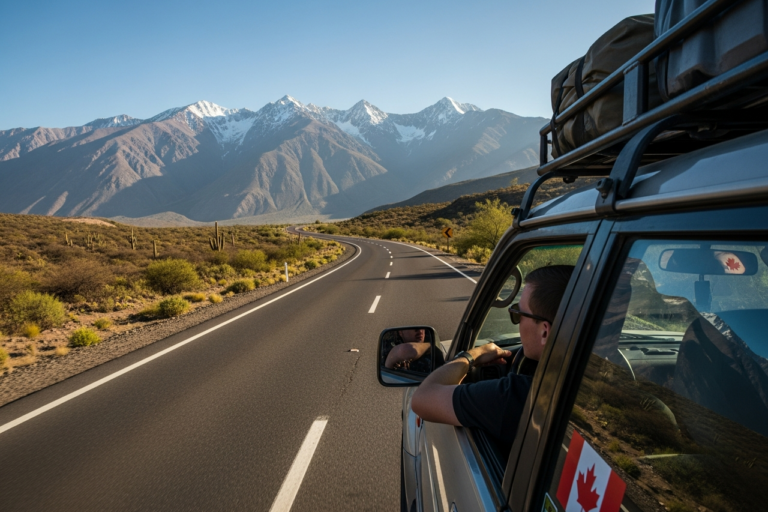
Key Highlights
Thinking about a road trip within Chile? This is what you should know before leaving.
-
You are allowed to drive in Chile if you have your Canadian driver’s license. Still, try to carry an international driving permit (IDP) as well.
-
You will find car rentals in many places. There will be age rules, and most of the time you need a credit card for a deposit.
-
Road rules in Chile look much like the ones in Canada. You drive on the right side of the road. However, speed limits and road signs are not the same everywhere, so pay attention.
-
Big highways in Chile are often toll roads. You will need cash for tolls most of the time.
-
Always bring your driver’s license, international driving permit, passport, and rental papers when you drive.
Introduction
Are you living in Canada and want to see the beautiful parts of Chile by car? Places like the Atacama Desert and the roads in Patagonia are waiting for you. When you drive by yourself, you get real freedom to stop when and where you want. But before you go, there are some things you should know about driving there. You need to know about using your Canadian driver’s license and why you may need an international driving permit. It is also good to learn about the local road signs and rules. This guide will help you get ready for your big trip. Let’s make sure you are all set for a safe and fun drive in Chile!
Understanding Driving in Chile for Canadians
Driving in Chile can be a great way to see the country. For someone from Canada, it is a special chance to know more about Chile. You can use your driver’s license from your home country, but you need to know the right rules and what is needed before you drive.
The road conditions in Chile are not always the same. In central Chile, you will find new and wide roads. But in far places like Patagonia, there are roads made of gravel. You must be ready for bad or rough roads in these places. Knowing this will help keep you safe and make your trip better. This part will tell you about the main things you should know about driving rules and what you will see when you are out on the road.
Overview of Driving Privileges for Canadians
If you are from Canada and want to visit Chile, you will like to know that you can drive there as long as you have your valid driver’s license. Most of the time, they will let you use your Canadian driving license for the whole time your tourist visa is active, which is up to 90 days. This means you can rent a car, travel around, and see a lot of the country right away, without needing to get a driver’s license from Chile right away.
But, even though your Canadian driving license is fine, it’s a good move to get an international driving permit. A lot of people call it an international driver’s license or IDP. This paper shows your license in Spanish, and the police or car renters in Chile will understand it right away. With the international driving permit, you might find that talking with the police or a car company is easier and quicker.
Try to think about the international driving permit as something you use with your Canadian driver’s license. It is not instead of your driver’s license. When you drive, always have both papers. The IDP only works when you show it along with your proper license. Taking the time to sort this out is a good way to avoid problems and feel sure you have what you need.
Differences Between Canadian and Chilean Road Systems
The good thing for Canadians is that in Chile, people also drive on the right side of the road. They pass other cars on the left, so the main way you drive will be the same. But there are some things you should know, especially about road quality and how people drive.
In urban areas like Santiago, roads and traffic can be messy. There are lots of one-way streets. Sometimes, the way traffic goes can change based on the time of day. In rural areas, you can find roads that are not paved. For example, the Carretera Austral in Patagonia or roads in the Atacama region often have gravel, so you have to drive slowly to keep from sliding.
Speed limits are different too. In urban areas, the speed limit is usually 50 km/h. On single-lane rural roads, it is about 100 km/h. On bigger two-lane highways, you can go up to 120 km/h. Road signs are in Spanish, so you need to know important words, like “Pare” for Stop and “Ceda el Paso” for Yield. There are no different traffic laws for visitors; everyone has to follow the same rules.
Using Your Canadian Driver’s License in Chile
You can use your valid Canadian license to drive in Chile. This is good for people who visit for a short time. The authorities in Chile often let tourists drive with a license from their home country. So, you can get on the road easily for your trip.
But, it is not always enough to have only your license from home. It is a good idea to get an International Driving Permit (IDP) before you leave Canada. The next parts will tell you why the international driving permit matters. You will also see what the rules are for driving legally in Chile.
Recognition of Canadian Licences by Chilean Authorities
Chilean local authorities do accept a valid Canadian driver’s license if you are a tourist. This lets you drive while you are there and you do not need to get a new local permit. You can use your license for the same time as your tourist visa. That is up to 90 days.
But, many local authorities, like police (Carabineros) or rental car workers, might still ask to see an international driving permit. This permit shows your license in Spanish, so there are no language problems. It also proves that your Canadian license is real.
You do not always have to get an international driving permit by law. But it is a good idea to take one. This can help you avoid problems if you get pulled over or want to rent a car. Carrying an IDP makes your trip easier and gives you more peace of mind.
Conditions Under Which Canadians Can Drive Legally
To drive in Chile as a Canadian visitor, there are some simple rules you need to know. The main rule is this: you can use your home country driver’s license while you are in Chile with a tourist visa. This is usually good for up to 90 days.
If you stay longer and get temporary residency or permanent residence, you will need to get a Chilean driver’s license. You cannot keep using your Canadian license after the Ministry of Transport does not see you as a tourist.
Here are the basic driving requirements for visitors:
-
You need a valid driver’s license from your home country.
-
You need to be in Chile with a tourist visa or permit.
-
Your right to drive in Chile with a foreign license ends when you are not a tourist anymore.
Language Requirements for Driver’s Documents
In Chile, the people speak Spanish. Because of that, it is important for your driver’s documents to be understood by the local officers. Your Canadian driver’s license is written in English and French. But not all police in Chile, or car rental workers, will understand these languages if there is a traffic stop.
That’s why an international driving permit is so important. The international driving permit puts your license information into Spanish. This makes things easy when the police or a rental company has to check your license. The permit helps you show your right to drive without any language problems. It acts as an official paper in other countries, including Chile.
While you are driving, you need to keep both your Canadian license and the international driving permit with you. Having both is what the laws ask for. You will show that you can drive, and we often find things go much better when you are prepared. This makes your trip and talking to the police or a worker simple and easy for everyone.
International Driving Permit (IDP) Explained
An International Driving Permit (IDP) is not a license by itself. Many people call it an international driving license, but it is really a paper that works with your own Canadian driving license. The IDP changes your license into different languages, like Spanish.
You use the IDP when you show your Canadian driving license to police or other officials in Chile. The IDP helps the people there know that you have a real driving license in your home country. This way, there is no trouble about language, and they can see your driving information easily. Next, we will talk about if you need the international driving permit as a Canadian, and how you can get one.
Is an IDP Required for Canadians in Chile?
Chilean law says that if you have a valid Canadian driver’s license and a tourist visa, you can drive in Chile. But, in real life, things are not always that simple. Many car rental companies in Chile ask for an International Driving Permit (IDP), and they often put it in their contracts. For some people, like Australians, an IDP is a must, and the same rules can also apply to people from other countries.
If you are stopped by the police, it helps a lot to show both your Canadian license and an IDP. The IDP gives an easy-to-read translation, so the police can see right away that you are allowed to drive. This can help you avoid confusion or delay, especially if you are in a tough spot.
So, for Canadians who want to drive in Chile, the best thing to do is to get an international driving permit before your trip. You may get by without one, but having it makes it much easier when dealing with car rentals and the police. This will help your travel feel easy and stress-free.
How to Obtain an IDP in Canada
Getting an International Driving Permit (IDP) in Canada is a simple and straightforward process. The only organization authorized to issue IDPs in Canada is the Canadian Automobile Association (CAA). You don’t need to contact your provincial motor vehicle department; you can apply directly through CAA.
You can apply in person at a CAA store or by mail. The process is quick, and you can often receive your permit the same day if you apply in person. The IDP is valid for one year from the date of issue.
To apply, you will need to meet a few basic requirements. The table below outlines what you’ll need to provide.
|
Requirement |
Details |
|---|---|
|
Valid Driver’s License |
A photocopy of the front and back of your valid Canadian provincial driver’s license. |
|
Passport Photos |
Two recent, signed passport-sized photographs. |
|
Application Form |
A completed and signed CAA IDP application form. |
|
Fee |
The applicable fee, which is typically quite affordable. |
Presenting IDP and Canadian License Together
You need to remember that your International Driving Permit (IDP) does not work alone. You have to show it with your valid Canadian driver’s license. You cannot use the IDP by itself to rent a car or show that you are allowed to drive.
When you are in Chile, think of your Canadian license and your IDP as two parts of one document. You need to keep them together. Carry them with your required papers like your passport and car rental agreement every time you drive.
If the police ask to see your papers, or when you are at a rental desk, be ready to show both documents. Here’s what to remember:
-
The IDP just translates the information on your driver’s license and helps explain it.
-
Always keep your physical Canadian license and your IDP with you.
-
If you cannot show both papers, you may be seen as driving without a valid license.
This advice will help you if you need an international driving permit.
Duration and Limits for Driving as a Visitor
When you visit Chile, you can drive with your Canadian driving license for a short time. This is allowed because of your tourist visa. So, you are able to drive as long as you are a tourist. If you become a resident, you will need to get a local license.
The time you can use your Canadian license is up to 90 days. This matches the usual stay you get with a tourist visa when you come in. This is important to know for your travel plans. It helps you see when you might need to make changes and get a Chilean license.
Time Limit for Using a Foreign License in Chile
The general rule is you can drive in Chile with the driver’s license from your home country while your tourist visa is still valid. For many people, like Canadians, this time is up to 90 days. The 90-day period starts on the day you arrive in Chile and get your tourist permit stamp.
During this time, you can rent a car and drive all over the country with your license from your home country. It’s good to have an IDP with you, too. This rule is there to help people who visit Chile for a short time. It lets you drive without needing to get a local license right away.
But once your time as a tourist is up, you can’t use your home license anymore. If you stay longer, change your visa, or become a resident, you lose this right. Then, you have to start getting a local license if you want to drive in Chile.
Transitioning from Visitor to Resident Driver Status
If you fall in love with Chile and want to live there longer by getting temporary residency or permanent residence, your right to drive will change. You can’t use your Canadian license anymore. You must get a Chilean driver’s license. This is important if you want to keep driving legally in the country.
To get a Chilean license, you have to go to the transit department at the local municipality. The things you need to show might change a little, but you will usually have to prove your residency and pass some tests.
If you come from a country that does not have a deal with Chile about licenses, like Canada, you must follow the full process. This often means taking a written test about rules, a medical test, and doing a practical exam. You will need to show them that you know the local traffic laws and how to drive.
When to Apply for a Chilean Driver’s License
You should start to apply for a Chilean driving license as soon as you get your residency in Chile. If you have temporary residency, or you are waiting to become a permanent resident, you are not seen as a tourist now. The 90-day visitor rule for driving card does not cover you anymore.
Do not put this off until the last minute. Getting your Chilean driving license can take some time. There is paperwork to do, and tests you need to book like the theoretical test and the practical exam. You should reach out to your local Ministry of Transport office in your town right away. They will tell you what you need to have and give you an idea about the steps.
If you drive with no proper license, it is a big problem. So, make sure you start when you can. Begin by gathering all the documents you need, and start learning about the tests early. If you get ready at the start, you will have an easy move into long-term life in Chile and stay on the right side of the law. If you are from Spain or from South Korea, your process may be shorter because of agreements between the countries.
Mandatory Documents for Canadians Driving in Chile
When you drive in Chile, you need the right paperwork with you. It is not just about knowing the road rules. You must always have a few key documents in your car. This is important so you follow local laws.
You need to have your travel papers, proof that you can drive, and information about the car, like insurance. Here is what you need to keep with you if you are stopped by local police.
Travel Documents and Permits to Carry
When you drive in Chile, you need to show who you are and that you are allowed to be on the road. You must always have your passport with you. The passport proves both your identity and that you entered the country the right way.
Besides your passport, you also need to carry all your driving papers. You must have your Canadian driver’s license with you and it is a good idea to have your International Driving Permit (IDP) too. These papers tell others that you really can drive a car there.
Here is a simple checklist showing what personal documents you need to bring:
-
Your valid passport.
-
Your valid Canadian driver’s license.
-
Your International Driving Permit (IDP).
Insurance Proof and Car Hire Contracts
You need to bring your own papers, but you also need to have vehicle documents with you when you drive. If you get your car from car hire companies, your car hire contract is very important. This shows you are allowed to use the car in a legal way.
You must also have proof of mandatory insurance. Car hire companies usually put this insurance in your rental agreement, but it is always good to check. You can show your rental documents to prove you have the insurance if anyone asks. You should keep these in the glove compartment so you can reach them fast.
Here’s what to take with you for the car:
-
The car rental agreement (car hire contract).
-
Proof of mandatory insurance (most of the time, this is in your rental papers).
-
The vehicle’s registration documents.
Handling Traffic Stops and Police Requests
If you see a police sign with crossed rifles on a green background, or if the Carabineros (the Chilean national police) signal for you to stop, pull over safely and keep calm. Traffic stops by local authorities happen, so the best thing to do is be polite and work with them.
When a police officer comes to your car, they will likely ask to see your papers. Have your passport, your driver’s license, your IDP, and the car’s registration and insurance papers ready. If you keep these documents together, it will help the stop go smoothly and quickly.
Try to follow all road rules so you are less likely to be pulled over. If it does happen, just show the right paperwork. The police want to make sure everyone is safe, so giving them your help is always good.
Renting a Car in Chile as a Canadian
Renting a car is a good way to see Chile. You can move at your own speed and see many types of places. There are car rental companies in most major cities and at airports in the country. You can find all kinds of rental cars for your trip.
If you are from Canada, there are some rules you need to follow. You have to check your age and how you will pay. Knowing these things before you rent will help make things easy. Keep reading to find out what you should know when you rent a car in Chile.
Valid License and Age Requirements
To rent a car in Chile, you need to have a valid driving license. The car rental companies will ask for your Canadian driving license. You must have had this license for at least one year. Many car rental companies also want you to have an international driving permit.
You should also know about the age rule. The minimum age to rent is usually 21. This age can be more in some places or with some car rental companies. It is good to look at the rules when you book.
If you are under 26 or over 69, then you might pay extra fees.
-
Minimum Age: Most of the time it is 21, but sometimes it is more.
-
Young/Senior Driver Fees: Car rental companies may ask for extra fees if you are under 26 or over 69.
-
Check in Advance: You should ask your car rental company about their age rule before you travel.
Types of Vehicles Available for Foreigners
Car rental companies in Chile have many types of cars for foreign guests. For city driving and smooth highways, you can get compact cars, sedans, and SUVs. These are good when you want to see places like the Central Valley or the cities by the coast.
If your travel plans take you to wilder spots like Patagonia or the Atacama altiplano, the roads can be rough and not paved. A strong 4×4 or a tough SUV is a better choice here. It will be better for these roads and make your trip safer.
When you book car rentals, think about where you are going. Picking the right car for the roads is key. Some car rental companies may not let you take every car on rough paths. So, you should always read the rules before you go.
Finding Automatic Transmission Cars
You can find cars with automatic transmission in Chile, but they are not as easy to get as manual ones. Most cars in the rental fleet in the economy and compact groups will be manual.
If you really need an automatic, you should book your car rentals early. There are not many automatic cars, and many people want them. You will have a better chance to get one with big, international car hire companies in big cities like Santiago or at main airports.
Do not expect to just arrive and find an automatic car ready for you. Be sure to tell them you want an automatic transmission when you book online or by phone. Checking this before you go will save you from problems after you get there.
Credit Card and Security Deposit Needs
If you want to rent a car in Chile, you need to have a valid credit card in your own name. Car rental companies will almost always ask for this. Most places do not take debit cards or cash when it comes to the security deposit. This is how the rules work everywhere you go.
The car rental companies will put a hold on your credit card for the security deposit. This amount is there in case the car gets damaged, has any tickets, or if you owe for gas when you bring it back. Once you return the car in good condition, the company will release the hold. It might take a few business days before your bank shows your money is back.
Here’s what you need to have ready:
-
Credit Card: The card must belong to the main driver.
-
Security Deposit: The car rental companies will block a large sum on your card; you want to make sure you have enough credit for this hold.
-
No Debit/Cash: Usually, car rental companies do not take any other kind of payment for the deposit. Be sure not to count on paying with a debit card or cash.
Key Road Rules Canadians Must Know
To have a safe and easy drive in Chile, you need to know the main road rules. Some rules are like what you see in Canada, such as driving on the right side of the road. But there are some things in Chile that are not the same.
It is good for you to understand how speed limits work, what road signs and traffic signals like red lights mean, and how people handle right-of-way there. This will help you stay out of trouble. The next parts show you the main road rules, common road signs, and the penalties you may face if you break these rules. Read these before you go, so you know what to do when it is your time to drive.
Basic Traffic Laws in Chile
The main traffic rules in Chile are a lot like those in North America. You have to drive on the right-hand side of the road. If you want to pass another car, you need to do it on the left. Everyone in the car must have their seat belts on. This rule is watched closely and is taken very seriously.
It is very important to know that you cannot use your mobile phone when driving unless you have a hands-free set. You are also not allowed to use headphones or smoke while you are driving. The best thing is to avoid anything that can take your mind off the road.
You have to give the right of way to pedestrians all the time. In urban areas, be extra careful when you come to a crossing or an intersection. When you change lanes or try to get into traffic, you need to use your signals. You should expect that other drivers might not always signal, though. It is a good idea to drive safely and watch other cars, especially in busy cities.
Common Road Signs and Local Regulations
Chilean road signs look like the ones you see in many other parts of the world. They follow global rules, but all the words are in Spanish. The regulatory signs, which tell people what they can or cannot do, usually have a white background with a red circle around them.
Warning signs are there to help you. They tell you about things up ahead that could be a problem. These signs are often yellow with a black symbol on them. When you see a green sign, it will give directions. Brown or blue signs help you find attractions or important places. It is a good idea to learn a few main Spanish words for road signs, like “Pare” for Stop, “No Estacionar” for No Parking, and “Velocidad Máxima” for Maximum Speed.
There are also some rules that are different and only in Chile, like the ‘restricción vehicular’ in Santiago.
-
This rule limits cars on the road based on the last number on your license plate.
-
It happens each winter to fight air pollution in the city.
-
Always check if these rules are happening that day before you drive in town.
Speed Limits, Toll Roads, and Penalties
It is important to follow speed limits in Chile to stay safe and avoid fines. The maximum driving speed changes based on the type of road. These speed limits are always watched.
Many major highways in Chile, like the Pan-American Highway, are toll roads called “autopistas.” There are a lot of toll points, or “peaje,” on these roads. You need to have cash in Chilean pesos for these. In Santiago, some main highways use an electronic tag for tolls. If you rent a car, make sure it has this tag. If not, ask the rental company about their toll roads policy.
You can get heavy fines for breaking traffic laws. The police take things like drink driving very seriously.
-
Speed Limits: The speed limit is 50 km/h in urban areas, 100 km/h on rural roads, and 120 km/h on two-lane highways unless there is a sign saying something different.
-
Drink Driving: The blood alcohol limit is only 0.05%. So, it is best not to drink at all if you want to drive.
-
Penalties: If you go over the alcohol limit, the fine can be very high, and you could even go to jail.
Seatbelts, Child Seats, and Mobile Phone Use
Safety comes first in Chilean road rules. Everyone in the car must wear seat belts at all times. This goes for both front and back seats. Police check for it, so make sure all people are buckled up before you start to drive.
There are also clear road rules for kids. If you have a child under 4 years old, you have to use a right child safety seat for them. Kids younger than 12 years old have to stay in the back seats. When you rent a car, you can often ask for a child seat. It is a good idea to book your seat ahead of time with the company.
You cannot use mobile phones when you drive, unless you use a hands-free system. Do not text, hold your phone to your ear, or use the GPS on your phone with your hands when the car is moving. There are strong penalties for driving while distracted, so follow this rule.
Border Crossings and Driving Beyond Chile
Taking a long drive across South America sounds fun. Chile is next to Argentina, Bolivia, and Peru, so you may want to visit more than one country. But if you plan to use a rental car and cross a border, things are not simple.
To do this, you need to plan ahead. You have to get special permission from the car rental companies. There will also be more paperwork to handle. If you want to drive into other countries, you must know and follow the rules. The next sections will tell you what you have to do.
Driving into Argentina and Neighbouring Countries
Yes, you can drive a rental car from Chile to other nearby countries like Argentina. But you need to plan before you go. You cannot just drive up to the border and expect to cross without the right papers.
You must have clear permission from the car rental company if you want to go out of Chile. Not every company lets you do this. The ones that do will ask you to pay more for the right paperwork and the insurance you need to go out of the country. You must start this process long before your trip.
If you want to cross the border, you need to do these things:
-
Tell the rental company when you book the car.
-
Pay for a special permit and more insurance.
-
Be ready for more checks and papers at the border.
Extra Permits and Paperwork for Border Trips
If the rental company says yes to your travel plans and lets you drive into a nearby country, they will get a special permit ready for you. This paper is often called a “Permiso de Salida” and allows the car to leave Chile. This is the most important paperwork you need for your trip over the border.
You also must have insurance that works in the country you will go to, like Argentina. The regular insurance that comes with your rental in Chile will not work once you drive out of the country. The car rental company will set this up, but you must pay an extra fee for it.
You should tell your car rental company about these travel plans when you first book your car.
-
If you wait until the last minute to ask for a border crossing permit, you usually can not get it.
-
You may have to pay several hundred dollars for the permit and the insurance.
-
Before you go to the border, make sure you have all the right paperwork. If not, you could get turned away.
Car Rental Restrictions on International Trips
Even if you can take a rental car out of Chile, there will be some rules you need to follow. The car rentals company will not let every car go across the border. Most of the time, only some types of cars or newer ones can leave the country.
The company may let you travel with your rental only to some countries. In most cases, you can only drive into Argentina. Taking a Chilean rental car into Bolivia or Peru is not easy. It is hard to do because of different laws and rules about insurance.
The rental place can also put a limit on how long your rental car stays out of Chile. Be sure to look over your car rentals terms and conditions. You should always carry your passport, driver’s license, and international driving permit with you. You will also need a special paper for the car at the border. Give all these things to the person at the checkpoint when you go across.
What to Do in Case of Road Accidents or Emergencies
No one wants to get into a road accident, but you need to know what to do if something happens while you are driving in Chile. It is good to be ready so the whole thing feels easier to handle. The first thing to do is check that everyone is safe. Stay calm while you look at what has happened. Do not move your car unless you have to because it is blocking the road or it is a danger to other people.
You should then call the local authorities and get in touch with your insurance company. You also need to know the right emergency numbers for the police, ambulance, and fire services. It helps to keep this information somewhere you can find it fast. The next parts will walk you through what steps to take, from calling the right people to getting help if someone needs medical care.
Steps to Take After a Traffic Incident
In the event of a road accident, make sure you and others are safe first. Check if anyone has been hurt. If someone is injured, call for help right away. If you can do it safely, turn on your hazard lights or use warning triangles to let other drivers know about the accident.
Do not move your car from where the traffic incident happened unless local authorities tell you to do so, or if your car is in a spot that is blocking the road in a dangerous way. The police need to see where the cars stopped. Make sure to share names, contact info, license plate numbers, and insurance details with the other driver.
Here are the steps you should follow right away:
-
Stop your vehicle and check for injuries.
-
Call the police (Carabineros) to come to the scene and make an official report.
-
Take photos of the area and the damage done to all vehicles involved.
Contacting Authorities and Insurance Providers
After you are in a road accident in Chile, you have to let the authorities know. You need to call the police (Carabineros) at 133. Getting an official police report is very important if you want to make an insurance claim. Tell the police what happened as clearly as you can. If you have trouble with the language, you can use a translation app.
Once you call the police, your next step is to get in touch with your car rental company and their insurance provider. The emergency contact number is on your rental agreement. Tell them about the accident and do what they tell you to do.
They will let you know what to do next about your car and your insurance claim. Do not make any private deals or say it was your fault at the scene. Let the police and the insurance companies take care of everything in an official way.
Medical Assistance and Emergency Numbers
Knowing the right emergency numbers in Chile is important. If you have an injury, even if it looks small, you should get medical help. Your health and safety come first.
It is good to put these numbers in your phone when you arrive in Chile. The people who answer may not speak English. Be ready to say your location or ask someone in the area to help you call.
Here are the main emergency numbers:
-
Police (Carabineros): 133
-
Ambulance/Medical Services: 131
-
Fire Department: 132
Conclusion
Driving in Chile can be exciting for Canadians. But you need to know the rules before you go. The road system is different than in Canada. You should know what documents you have to carry and the key rules for driving there. Check if you have to get an international driving permit before you leave. Always keep your travel papers and proof of car insurance with you. If you understand these things, you will be ready to drive on the nice roads in Chile and enjoy your trip. If you need more help or want to ask about anything, you can ask for a free consultation.
Frequently Asked Questions
Can Canadians drive in Chile with only their Canadian license?
Yes, you can drive in Chile with your Canadian driver’s license for up to 90 days. But to avoid problems with local authorities or car rental companies, it is a good idea to also have an international driving permit with you. This will help if there are language problems or questions about your documents.
Do Canadians need an international driving permit to rent or drive a car in Chile?
An International Driving Permit (IDP) is not always required by law to drive. But, it is a good idea to have one. Many car rental companies in Chile want you to show an IDP. This is because the IDP makes it easier for police to check your driving license. It also gives them a Spanish version, so there are no mix-ups.
How long can Canadians drive as tourists before needing a local driver’s license?
Canadians can use a driver’s license from their home country to drive in Chile. This is allowed while you are there on a tourist visa, and this visa usually lasts 90 days. If you get residency or stay past the time that is given for tourist status, you have to apply for a Chilean driver’s license.



