

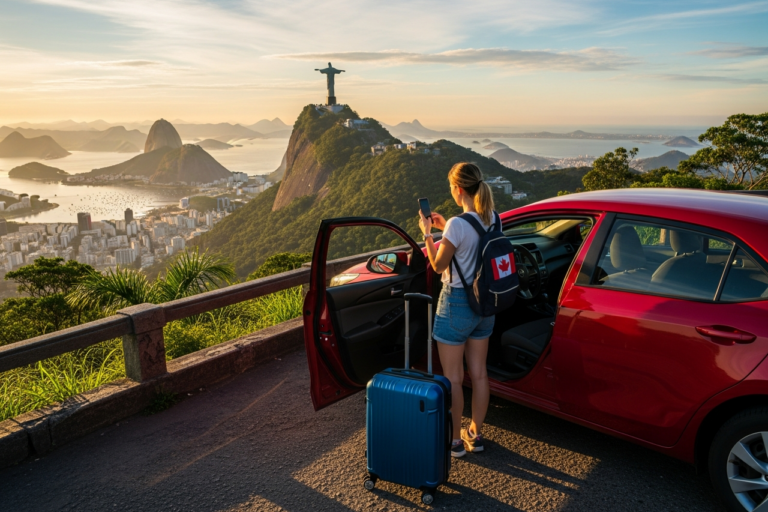
Key Highlights
Here are the main things Canadians should know before they drive in Brazil:
-
You can use your Canadian driver’s license in Brazil for up to 180 days.
-
An International Driving Permit is not always needed by Brazilian law. Still, it is a good idea to have one, so you do not have problems with police or rental companies.
-
If you do not have an International Driving Permit, you will need to show an official translation of your driver’s license into Portuguese.
-
Most rental companies will ask for an International Driving Permit, your passport, and a credit card for a security deposit.
-
You should get ready for different road conditions. In major cities, roads are usually good. In rural areas, some roads are unpaved and harder to use.
Introduction
Are you planning a trip to Brazil and want to see the best places by car? You might want to know if you, as a Canadian, can drive there. The good news is that you can. For short stays, your valid foreign driver’s license is usually enough. You will be able to drive on Brazilian roads with it. But, it’s important to know all the rules, like if you need an international driving permit or not. This will help your trip go well.
This guide will tell you what you need to do as a foreign driver. It covers everything about using your foreign driver’s license and what is needed for short stays in Brazil. So, you’ll be ready before you go.
Understanding the Basics of Driving in Brazil as a Canadian
Driving in Brazil can be a great adventure. It is good to get ready before you go. The roads might not be the same as in Canada. The road conditions and the way people drive there can be different.
Brazilian law says you can drive with your foreign driver’s license, but only for a short time. Watch the local traffic rules, like speed limits. The speed limits might be lower when you are in urban areas. If you know these things, you can have a safe and fun time on the road. Now, let’s look at what foreign visitors need to know.
Who Can Drive in Brazil: Overview for Foreign Visitors
In Brazil, a foreign driver who is over 18 can drive if they have a valid driver’s license from their home country. You can use this license for up to 180 days after you enter the country.
This rule is good for tourists or people visiting Brazil for a short time. It lets you rent a car and see the country. Make sure your license is still good and has not run out. If you stay in Brazil more than 180 days, you will need to get a Brazilian driver’s license.
Keep in mind that even with your license from your home country, road conditions in Brazil may not always be easy. Always carry your passport and your license together. Local authorities may ask to see them if you get stopped during your trip.
Recognition of Canadian Driver’s Licenses in Brazil
Your Canadian driver’s license is accepted in Brazil when you travel there. Brazilian law says you can drive on Brazilian roads with a valid foreign driver’s license for up to 180 days. You do not need a local license right away, which makes things easier.
The most important thing is your driver’s license has to be valid the whole time you drive in Brazil. It must be from your country of origin, and you should have it with you, along with your passport. If the police ask, you need to show both.
There are some rules you have to follow. You need to follow all traffic laws in Brazil. This includes the rule of no drinking and driving at all. If your driver’s license is not in Portuguese, it’s a good idea to bring an official translation or an International Driving Permit, to make things clear for law enforcement. This helps avoid any problems with the police.
Common Misconceptions About Driving as a Foreigner
Many people believe things about driving in Brazil as a foreign driver that are not true. One big idea is that you must always have an international driving permit. But, to be clear, Brazilian law lets you drive with your own license if you have an official translation in Portuguese. Still, it is good to have an international driving permit when you travel.
Another thing some people think is that traffic laws are not enforced there. In fact, road traffic in urban areas is watched closely by the police. If you break the rules, like using your phone when driving or going too fast, you could get a large fine. Just because you are a tourist does not mean you can skip the law.
Here are a few more myths you should know about:
-
All roads are modern and paved: In major cities, the roads are usually good. In lots of rural areas, though, the roads can be rough or not even paved.
-
Driving rules are the same everywhere: How people drive can change a lot between large cities and small towns.
-
You can easily talk your way out of a ticket: Trying to bribe the police is a criminal offense.
Knowing what is real and what is not can help you drive safely in Brazil. These tips are good for every foreign driver.
Essential Documents Required for Canadians to Drive in Brazil
If you want to follow the legal requirements for driving in Brazil, you need to have the right papers with you. This is important. If your trip is short, the steps are simple. But if you forget an important paper, you could have problems you did not expect.
You need to bring your Canadian driver’s license, your passport, and often an international driving permit or an official translation of your license into Portuguese. Let’s talk about each of these documents, so you know why they matter for short stays.
Valid Canadian Driver’s License and Its Acceptance
Yes, you can use your valid Canadian driver’s license to drive in Brazil. Brazilian law allows people with a foreign license from their home country to drive for up to 180 days. This works well for Canadian tourists who want to rent a car and travel in the country without having to get a local permit for their short trips.
There are some rules you must follow if you use your foreign license. It must be current and not expired. You also need to show your license if local authorities or car rental agencies ask for it.
But, you should know that Brazil mostly uses Portuguese. Your Canadian license is in English and French, so there can be language problems. That is why having an international driving permit or an official translation in Portuguese can help a lot. If you carry one of these with you, the local authorities will find it much easier to check your papers when you need to show them.
International Driving Permit (IDP): Is It Necessary?
You do not have to legally get an International Driving Permit (IDP) to drive in Brazil, but it is a very good idea to have one. Brazil is a part of the 1968 Vienna Convention on Road Traffic. This brings driving rules closer among the countries that have signed on. The international driving permit acts as an official translation of your Canadian driver’s license. This multi-language booklet can be very useful.
Some foreign drivers have had problems with the police when they did not show an international driving permit or a license translated into Portuguese. Also, many rental companies in Brazil will ask for an IDP when you try to get a car. If you do not have it, you might not be able to get a vehicle.
Here’s why you should get an international driving permit:
-
It helps you talk to local authorities when you need to show your driver’s details.
-
The international driving permit is accepted in over 150 countries, so it is good to take with you when you travel.
-
It will prove that you have a real driver’s license from your home country.
Other Important Papers: Passport, Rental Agreements, and Insurance
Beyond your license and IDP, you need to carry some important papers when you drive in Brazil. Your passport is the key one. It shows who you are and that you came into the country the right way. The local authorities can ask to see it anytime you get stopped.
If you use a rental car, keep the rental agreement with you all the time. This proves that the car is yours to drive. Proof of insurance is needed too. It can be the insurance from the rental company or part of your own travel insurance that covers rental cars. This is important in the case of an accident.
To stay ready, put these papers in one spot that is safe and easy to reach:
-
Passport: The main paper showing who you are.
-
Rental Agreement: Proof that you can drive the car.
-
Proof of Insurance: Needed if you get into an accident.
Beginner’s Guide: How Canadians Can Start Driving in Brazil
Getting ready to drive in Brazil for the first time? Make sure you are prepared before you go. The most important thing is to know the legal requirements, and get used to the road conditions that you will find there. Roads and traffic can be very different from what you see at home.
Before you book your flight, take time to get all the papers you will need. Try to know the main rules for driving in Brazil too. This way, when you get there, you will feel good about getting in the car. You will be able to drive both safely and within the law. The next parts here will show you what to do first.
What You’ll Need to Get Started: Licenses, Permits, and Preparation
To start driving in Brazil, you need to make sure all your papers are ready. Your Canadian driver’s license is important, but you will need more than that to drive. You should be prepared so you meet all legal requirements. It will help you avoid trouble with local authorities.
You should get an International Driving Permit (IDP) before leaving Canada. This IDP will change your license details into other languages, like Portuguese. It makes dealing with the police or other local authorities much easier. Also, be sure you have car insurance.
Here’s a quick checklist for getting ready:
-
Valid Canadian driver’s license: Make sure it is not expired.
-
International Driving Permit (IDP): A good idea for translations and when renting a car.
-
Passport: You will need this to show who you are.
-
Proof of insurance: This is needed if you want to follow the law.
Navigating Car Rentals: Requirements for Canadians
Renting a car in Brazil is a good choice for Canadians who want to go where they want. The car rental agencies have some rules you need to follow. Most rental companies will ask you to be at least 21 years old. Some places want drivers to be 25.
You will need your valid Canadian driver’s license, your passport, and often an international driving permit. The rental companies will also ask for a credit card in your name. This is usually needed to put down a security deposit. That way, if there is damage or fines during your time with the car, it can come out from that deposit.
Before you sign any papers, be sure to read the terms and conditions. Look at what is covered by insurance, rules on fuel, and any limits on where you are allowed to drive. It is good to get all the details first. That way, there will be no surprises when you pick up or drop off your car.
Understanding Local Vehicle Insurance Options
Getting car insurance in Brazil is very important when you plan a road trip. You need to have at least third-party liability insurance to drive there. Rental companies give you different insurance options when you get a car.
The basic option covers damage to other cars and property. It does not cover damage to your own rental car. It is a good idea to get extra protection. You can ask for Collision Damage Waiver (CDW) or Loss Damage Waiver (LDW). This makes sure you do not have to pay a lot if there is an accident, theft, or damage to the car.
Before you buy insurance from rental companies, check your credit card benefits and your travel insurance. Sometimes, your credit card or travel insurance gives you car insurance. This can help you save money. But, make sure you meet Brazil’s legal requirements and the coverage is good enough for you and your peace of mind. Always carry the proof of your insurance with you while driving.
Step-by-Step Guide to Driving Legally in Brazil for Canadians
Are you ready to drive in Brazil? It is good to follow a clear, step-by-step guide. This will help make things easy and keep you stress-free. When you are a foreign driver, you need to make sure you meet every legal rule. This is one way to make sure you have a good drive from the start to the end.
This guide will show you four simple steps. You start by getting your papers in order before you leave Canada. Then you learn about the local road rules when you get there. We will start with the first big thing you need to do: get an IDP.
Step 1: Obtain an International Driving Permit (IDP) in Canada
The first thing to do before you drive in Brazil is to get an international driving permit (IDP) in Canada. Your Canadian driver’s license will be accepted. Still, the IDP is an official translation that people in other countries understand. It helps you avoid problems with police or car rental places.
In Canada, the Canadian Automobile Association (CAA) gives out IDPs. The process is easy. You fill out a form, get two passport photos, make a copy of your valid Canadian driver’s license, and pay a small fee. You can go to a CAA office or send your forms by mail.
Having your IDP before your trip is a smart move. It makes the trip go smoother and gives you peace of mind for the year. It can really help if you do not know Portuguese, and it can stop many issues. Keep in mind, you need both your original foreign driver’s license and the IDP for it to be valid.
Step 2: Gather All Required Documentation Before Arrival
Once you have your international driving permit, the next thing to do is get all the papers you need. Make sure you organize everything before you go to Brazil. This makes it easier for you when you arrive. It will also help when you want to rent a car. Keep all these documents in a folder that is safe and easy for you to get.
You must have your Canadian driver’s license. You also need to bring your international driving permit. Keep both with you in Brazil. You should have your passport with you at all times. The passport will show who you are and prove you can be in the country.
Here is a final checklist of the papers you need:
-
Valid Canadian driver’s license: Make sure it is not expired.
-
International Driving Permit (IDP): Bring it with your license.
-
Valid passport: For showing who you are and for proof you came into Brazil.
-
Proof of travel and car insurance: Keep both in paper and digital forms.
Step 3: Rent or Register a Car According to Brazilian Law
With your documents in hand, you’re ready to rent a car in Brazil. The process is generally straightforward, but you must follow the legal requirements set by both the government and the rental companies. Most major international and local rental agencies have desks at airports and in large cities.
To rent a car, you will need to present the documents you’ve gathered: your passport, valid driver’s license, and your IDP. You will also need a credit card with sufficient funds for a security deposit. The rental agent will have you sign an agreement that outlines the terms, insurance coverage, and fees.
According to Brazilian law, you must meet certain criteria to drive a rental vehicle. Here’s a summary of the typical requirements:
|
Requirement |
Details |
|---|---|
|
Minimum Age |
Usually 21, but some companies require 25. Drivers under 25 may face a “young driver” surcharge. |
|
Driver’s License |
A valid license from your home country is required. It must have been held for at least 1-2 years. |
|
IDP |
While not always a legal must, most rental companies will ask for an IDP along with your license. |
|
Credit Card |
A major credit card in the renter’s name is necessary for the security deposit. |
|
Passport |
Required for identification purposes. |
Step 4: Follow Local Traffic Rules and Safety Guidelines
Now that you’re in the driver’s seat, the last part is the most key one. You need to drive in a safe way and follow the local rules. Driving in Brazil may not be the same as Canada because of the different road conditions, local customs, and road traffic rules you find here. It may not always be risky, but you should pay full attention and always be aware of what is going on.
You need to learn the main rules. In Brazil, people drive on the right side of the road. You and all the people in the car must use seat belts. Speed limits may be different, often between 30-40 km/h in cities and up to 110 km/h on highways. But, you should always look for and follow the posted signs. In Brazil, there is a zero-tolerance law for drunk driving and you must never drink and drive.
Here are some ways to stay safe with road conditions and road traffic, both in urban areas and rural areas:
-
Be alert for speed bumps (‘lombadas’): There are many, but they may not always be easy to spot or marked well.
-
Keep doors locked and windows up: This is a good idea in urban areas and also when you stop at traffic lights. It helps stop theft.
-
Avoid driving at night in unfamiliar rural areas: These rural areas might not have road lights and the roads may also not be in good shape.
Be sure you are always ready,
Important Rules, Restrictions, and Safety Tips for Canadians
To make sure you remember your road trip in Brazil for good reasons, you need to know the traffic laws in the country. Some driving rules and road conditions are different than what you see in Canada.
Speed limits, driving rules, and ways to deal with Brazil’s road conditions are not always the same as back home. Knowing this will help you feel ready and safe as you drive. In the next parts, you will find out about the most important traffic laws, speed limits, and how long you can drive as a tourist. This will help you drive safely and follow the rules during your trip.
Key Brazilian Traffic Laws and Driving Differences
To drive safely in Brazil, it is important to know the country’s traffic laws. One big rule is the zero-tolerance policy for alcohol. The legal blood alcohol level is set at zero, so you cannot drink and drive at all in Brazil. If you break this rule, the penalties are tough. Another thing to remember is that you cannot use a handheld phone while driving. If you do, you will get a big fine.
Speed limits are important and watched closely by police. You will see these limits in kilometres per hour (km/h). In urban areas, the speed is usually about 30 to 40 km/h. On federal highways, it can be as high as 110 km/h. Brazilian drivers can be bold on the road, and in heavy traffic you may see motorcyclists split lanes between cars.
Other important traffic laws to remember are:
-
Driving side: Always drive on the right side of the road.
-
Seat belts: All people in the car must wear a seat belt.
-
Road signs: Road signs use Portuguese. If you see “PARE,” that means stop.
Duration and Restrictions for Driving as a Tourist or Expat
As a Canadian tourist, you can use your driver’s license from your home country to drive in Brazil for up to 180 days. This time starts when you get into Brazil. It is made for visitors with short stays. The rule lets you get out and see all parts of the country, including its state and federal highways.
If you stay more than 180 days, like if you live or work there, you need a Brazilian driver’s license. Using a foreign license after this time is not allowed. You could get a fine or other penalties if you do.
To change your license, you need to go through medical exams. There might be a written or driving test, depending on where your home country license is from in Canada and other agreements. It is important to start this before your 180 days are up so you stay legal to drive.
Renting a Car in Brazil: What Canadians Should Know
Renting a car lets you see Brazil in your own way and your own time. You can find many car rental agencies, both from big names and local companies. They are easy to get to, with most found in airports and large cities. So, getting a car is simple.
But, there are some rules and things to keep in mind when you book. Rental companies have rules like how old you must be, what insurance they offer, and the deposit you need. If you know these things ahead of time, your rental will go well. This guide will help you learn what to expect from rental companies.
Minimum Age and License Requirements for Rentals
To rent a car in Brazil, you have to be at least 21 years old. Still, most rental companies like to rent cars to people who are 25 or older. If you are between 21 and 24, you might need to pay a “young driver” fee that will make the rental more expensive.
You must show a valid foreign driver’s license that you got from your home country. Rental companies want you to have your license for at least one or two years. Remember, your license should be current and not damaged.
You will also need to bring your passport for ID. This is not always a strict rule for driving, but car rental agencies almost always want to see an international driving permit along with your Canadian license. Make sure to have an international driving permit with you.
Insurance Coverage and Deposit Policies
When you rent a car, it is important to know what kind of insurance you will get. Basic third-party liability insurance is required in Brazil. It is often in the price that you pay to car rental agencies. But this insurance just pays for damage you cause to other people. To protect yourself, you should think about buying extra cover like a Collision Damage Waiver (CDW).
Car rental agencies will also ask for a security deposit. They usually put a hold on your credit card. The amount can be a couple of hundred or even more than one thousand dollars. It depends on the car, the company, and how long you are renting for. This money is used if there are any damages, fines, or extra fuel charges.
Before you book your car, find out what insurance covers. Ask about exactly how much deposit you need. You may also want to talk to your credit card provider. Some credit card companies give car insurance for rentals. Be sure that your credit limit is enough to handle the deposit hold.
Additional Fees and Important Considerations
Besides the daily rental rate, that you pay, you should watch out for extra fees. Many rental companies may charge you for things you do not need or want. So, it is a good idea to check your rental agreement closely. This helps you not get surprised by costs when you bring back the car.
Think if renting a car is the right pick for your whole time in Brazil. In large cities like Rio de Janeiro or São Paulo, traffic can be bad, and parking is hard to find and not cheap. In these places, using public transport or ride-share services can be easier for getting around. It saves you time and money, and may be less stressful.
Keep your eyes open for these usual extra charges:
-
Young driver surcharge: This is charged to drivers under 25.
-
Airport pickup fees: You pay extra if you rent the car from the airport.
-
GPS and child seat rentals: These have daily costs.
-
One-way drop-off fees: You pay more if you return the car somewhere else.
Frequently Asked Questions (FAQ)
Driving in Brazil can bring up a lot of questions. One question people ask is if a foreign driver’s license will work in the country. You should always carry your own license and an international driving permit while in Brazil. This is important for following the local rules. Make sure you also follow Brazil’s traffic laws, like speed limits and rules for urban areas like Rio de Janeiro and for rural roads.
If there is a case of an accident, you need to know how to report it and what steps to take. This can help save you time and stop big problems from happening.
If you want to rent a car, most car rental agencies will ask for a credit card. Some will not let people below a certain age rent vehicles, so it’s best to check with the company first. If you plan to stay in the country a long time, you might need to get a Brazilian driver’s license instead.
Driving on the right side of the road is another thing to get used to, especially if you come from a place where you drive on the left.
Also, keep emergency services contact numbers with you when you drive. You never know when you will need them.
Do Canadians need an International Driving Permit to drive in Brazil?
Brazilian law lets a foreign driver use their license if they have an official translation. Still, an International Driving Permit (IDP) is highly recommended. Many car rental agencies ask for it. It works as a clear translation of your driver’s license and can help you avoid problems with local authorities.
How long can Canadians drive in Brazil before needing a Brazilian license?
If you come to Brazil as a tourist, you can use your valid Canadian license to drive for up to 180 days from when you arrive. This works well for short stays. But, if you want to live in Brazil for more than 180 days, you will need to get a Brazilian driver’s license.
What should Canadians do if stopped by police while driving in Brazil?
If you get stopped by local authorities, try to stay calm. Pull the car over to the side of the road safely. Make sure you have your driver’s license, passport, IDP, and car rental or insurance papers ready to show. Always be polite and work with the officer. If you cannot speak the language well, your IDP can help a lot. Do not give the officer any money.
Can Canadians convert their driver’s license to a Brazilian one?
Yes, Canadians who live in Brazil can trade their license for a Brazilian driver’s license. The legal requirements usually include medical and psychological tests. If your province has a reciprocal deal, you might not need to take the written exam or practical driving tests. This can make things much easier.
Conclusion
Driving in Brazil as a Canadian can be a great experience. The thing is, you just need to know a few rules before you go. The most important thing is to have an international driving permit. You also need to understand local traffic laws. This will help things go well for you.
Make sure you bring the right papers when you travel. Try to get to know how people drive in Brazil before you hit the road. These steps will help you have a good trip whether you stay for a short time or a long time.
If you have any questions or want help, you can ask for it. Have a safe trip!



