

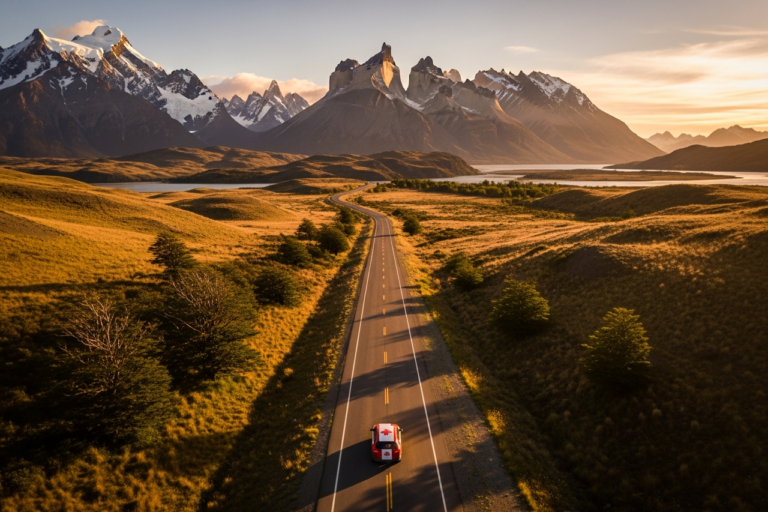
Key Highlights
Are you thinking about a road trip across Argentina? Driving is a good way to see many different places in the country. Here are some important things you should know if you have a Canadian driving license:
-
Your Canadian driving license will usually be fine for short trips, but it is a good idea to bring an international driving permit with you.
-
Many car rentals or rental companies ask for an international driving permit. You might also need it if the police pull you over.
-
Rental companies each have their own rules about age and paperwork. Check with them before you make plans or pay.
-
Learn the local driving laws in Argentina. This includes speed limits and road signs that might be new or different for you.
-
Always keep your passport, driving license, international driving permit, and any car papers with you when you drive.
Introduction
Are you thinking about seeing the beautiful places in Argentina by car? You can start on the busy streets of Buenos Aires and then drive across the wide open land of Patagonia. Taking the road will let you feel a kind of freedom that you can’t get in any other way. For Canadian travelers who want to drive, you need to know the rules for driving there. This simple guide will show you what you have to do before you start your road trip. You will learn about the rules you need to follow, and you will get some tips to help make your trip easy and fun. So, get set for your big adventure through the expansive terrain of Patagonia!
Legal Requirements for Canadians Driving in Argentina
If you are from Canada and want to take a road trip in Argentina, there are some things you need to know. The law says that foreign drivers can use their own license. So, your Canadian driver’s license will work, but it is a good idea to also get an international driving permit. This helps make sure there are no problems if someone asks for your papers.
To have a good trip and not run into trouble, it is smart to learn these rules ahead of time. This way, your time on the road can be easy and fun. Next, we will look at more details about using your Canadian license and why the international driving permit matters for foreign drivers.
Validity of Canadian Driver’s Licence
Yes, if you are a Canadian tourist, you can drive in Argentina with your valid Canadian driving license for a short trip. The law in Argentina lets a person use their national driving license from their home country when they are there for tourism. You do not need to get a local license for your visit.
But, this rule works as long as your tourist visa is still good. When you are driving, you should use your Canadian driving license as your main document to show you are able to drive in your home country.
There is one thing to know. Even though the law allows you to use your Canadian license, some local officials or rental companies may not know much about it. So, it is useful to have extra papers, like an ID or more proof, to help clear up any problems or hold-ups while you travel.
International Driving Permit (IDP) – Is It Mandatory?
Having an International Driving Permit (IDP) with you in Argentina is a good idea for all foreign drivers. It may not always be a strict legal requirement for driving, but most rental agencies and police at checkpoints will ask to see it. The IDP changes your Canadian license into many languages, like Spanish, which helps when you need to talk to local authorities.
Many rental companies in Argentina say you must show an International Driving Permit to rent a car. If you do not have it, you may not get the car, even if you show your Canadian license.
Carrying an IDP can help you avoid fines, car seizure, or trouble if you get stopped by police. It proves that your license is valid and helps everyone understand you better, making the whole process with law enforcement and rental companies easier.
Argentine Driving Laws and Road Regulations
Driving on Argentine roads means you have to learn some new rules. Some of these local laws are like the ones in Canada, but others are different. The rules are often strict. You need to know about things like speed limits and road traffic signs to stay safe.
In the next parts, you will find more detail about the key regulations. You will read about things like road signs, speed limits, and how you should act on the road. It will also talk about wearing seatbelts and using your mobile phone. These will help you know what to do and give you more confidence while driving.
Speed Limits and Road Signs Canadians Should Know
It’s important to follow speed limits in Argentina to stay safe and avoid getting a fine. These speed limits can change based on the type of road you are on, so always watch for road signs. The road signs in Argentina use some things from Europe and America. Most of them are easy to understand.
Warning signs are usually yellow and diamond-shaped, like in the US. Signs about the rules for the road use a style in line with the Vienna Convention.
Here are some key speed limits you should know:
-
Residential areas: 40 km/h (25 mph)
-
Urban areas: 60 km/h (37 mph)
-
Suburban main roads: 80 km/h (50 mph)
-
Highways: 120 km/h (75 mph)
People who live in Argentina often drive faster than these limits, but if you are visiting, you should stick to the speed shown on the signs for your own safety. Also, know that toll roads are common on big highways that go between cities. These are called “autopistas con peaje” in Spanish.
Drink-Driving, Mobile Phone, and Seatbelt Rules
Argentina has strong rules to keep drivers and passengers safe. You cannot use your mobile phone for calls or texts while you drive. If police catch you, the penalty will be high. Always pull over to a safe place if you want to use your phone.
The law says headlights must be on all the time, day or night. This is to help people see your car better. Also, you must not turn right on a red light unless there is a sign that says you can. Wait for a green light before you go.
Here are some other important rules you need to know:
-
Blood Alcohol Limit: The blood alcohol limit is 0.05%. Police checkpoints are there often, mostly on weekends, to check if drivers are safe.
-
Seatbelts: Every person in the car, both in front and in the back, must have a seatbelt on.
-
Right of Way: The traffic coming from the right should have the right of way. But not everyone follows this law, so you must drive carefully.
The Documentation You Need When Driving in Argentina
When you drive in Argentina, you must have the right papers with you at all times. Police checkpoints are common, mostly when you go from one province to another. The police will ask for your papers right away. If you have all the right documents, you can avoid fines and do not waste time when you get stopped.
To help you follow the rules, you need to know what you must keep in the car. In the next sections, you will see a list of the main papers you need and some details about insurance for foreign drivers at police checkpoints.
Essential Papers You Must Carry
Having all your documents ready is very important when you drive in Argentina. Police checkpoints happen often, and they will want to see your papers. Make sure you keep these documents in your car so things go well if you get stopped.
It does not matter if you use a rental car or drive your own. You need to have your paperwork in order. This can help you stay out of trouble at police checkpoints. It also shows you are a responsible driver and that you follow the rules.
Here is a checklist of the must-have documents for you:
-
Your Canadian driver’s license that is valid.
-
A passport as your ID and to show you are legal in the country.
-
An International Driving Permit (IDP), if your license is not in Spanish.
-
Proof of your vehicle insurance.
-
The car’s registration papers and, if you rent, your car rental agreement.
Insurance Requirements for Foreign Drivers
For foreign drivers in Argentina, having the right insurance is a legal requirement. When you rent a car, basic third-party liability insurance is typically included in the rental price. However, this basic coverage often leaves you financially exposed in case of a road accident.
Most rental companies will require you to take out additional coverage, like a Collision Damage Waiver (CDW). While your Canadian credit card might offer some car rental insurance, it’s vital to check if it’s valid in Argentina. Many rental agencies insist on you purchasing their insurance regardless.
It’s best to clarify insurance details directly with the rental company before you book. Understanding what is covered can prevent large, unexpected costs if something goes wrong.
|
Insurance Type |
Description |
|---|---|
|
Third-Party Liability |
Mandatory coverage for damage to other people or property. Usually included in the rental price. |
|
Collision Damage Waiver (CDW) |
Covers damage to the rental vehicle. Often required by rental companies and sold as an add-on. |
|
Theft Protection (TP) |
Covers the loss of the rental car due to theft. It is frequently bundled with CDW. |
|
Personal Credit Card Insurance |
Coverage offered by your credit card. You must verify if it is applicable in Argentina. |
Car Rental for Canadians in Argentina
Renting a car is a common way for Canadians to travel in Argentina. There are many rental companies in the country. You can find big international names and local options too, offering all kinds of vehicles. But rental agencies have some rules for foreign drivers that you need to know about.
Before you book a car, make sure you know the rules about age. Check if your driving license will be accepted. You should also find out what documents you have to show. The next parts will tell you what you need so you can have a good experience renting a car in Argentina.
Age Restrictions and Necessary Documents
If you want to rent a car in Argentina, you have to follow some age and document rules. Most rental companies say you have to be at least 21, but some might want drivers to be 25 or older. If you are under 25, most companies will make you pay an extra charge for young drivers.
When you get to the rental counter, you will have to show some documents to prove who you are and that you can drive. If you have the papers ready, you will get your car faster and get on the road sooner.
Here is what you’ll usually need to show:
-
A valid national driving license from your home country. You should have this for at least one year.
-
Your passport.
-
A credit card in the main driver’s name for the security deposit.
-
An International Driving Permit (IDP). Most rental agencies will ask for this.
Rental Agencies’ Licence Recognition Policies
Most car rental agencies in Argentina will take your valid Canadian license. But their rules may change from one company to another. The law in Argentina may let you use your home country license if you are there for tourism. Still, rental companies can have their own ways to lower their risk.
This is where an International Driving Permit, or IDP, helps a lot. A lot of rental companies see an IDP as something you must have if you are a foreign guest. It works as a simple translation of your Canadian license. This helps staff at the rental desk check your documents. It makes sure you meet their rules.
To not have any problems, it is best to talk with your chosen rental agency before you leave. Find out what their rules are for your license, and ask if an International Driving Permit is a must for you. Doing this can stop you from being refused when you go to get your car.
Applying for an International Driving Permit in Canada
Getting an International Driving Permit (IDP) in Canada before you travel to Argentina is simple. The Canadian Automobile Association (CAA) is the only place to get it done in the country. You can go to a CAA office in person, or send your application by mail.
Bringing this international driving permit with you is a good idea when you go on a road trip in another country. The next sections show you the steps, cost, and how long your permit will last. With this, you can get your IDP without any trouble.
Step-by-Step Application Process
The process to get an international driving permit in Canada is easy and quick. You have to apply using the Canadian Automobile Association (CAA). That is because CAA is the only group in the country that can give the international driving permit. You do not need to be one of their members to do this.
You can go to a CAA store in person to get your international driving permit right away. Or you can send your papers by mail. This way will take more time. Make sure you apply early before you leave so you get your permit on time.
Here are the main steps to follow in the application:
-
Fill in the real CAA international driving permit form. You can get it on their website.
-
Give two new and real passport-size pictures.
-
Add a copy of the front and the back of your Canadian driver’s license.
-
Pay the needed fee.
Validity, Costs, and IDP Tips for Travel to Argentina
When you get an international driving permit for your trip to Argentina, you need to know what the terms are. An IDP that is given out in Canada will be good for one year from the time you get it, but it can never last longer than your current provincial driver’s license.
The price to get an international driving permit is a fixed fee that you pay to the CAA. In the last few years, this fee has stayed pretty low. It is a small cost, but it can bring you a lot of safety and help when you travel.
To use your international driving permit in Argentina, keep these things in mind:
-
Always keep your international driving permit with your Canadian driver’s license. The international driving permit does not work if you do not have your main license.
-
Make sure your Canadian license will not run out while you are away.
-
Have a digital copy of both your international driving permit and your Canadian license saved, but know you must also have the physical permits with you.
-
Argentina will accept the 1949 Convention international driving permit.
How to Obtain a Local Argentine Driver’s Licence
If you are a Canadian and planning to visit Argentina for a short time, you do not need an argentine license. But if you move to Argentina or plan to stay there for a long time, you will have to get a local license. Foreign nationals who become residents must go through this process.
Getting a local license in Argentina is not the same as driving there on a trip. The next parts will show when you may need an argentine license and talk about the steps that come with the conversion process.
When and Why Canadians Might Need One
If you are from Canada and you stop being a tourist in Argentina, you will need to get an Argentine license. This usually happens when you get a resident visa. You can have a temporary or a permanent resident visa. When you become a resident, your Canadian license and IDP will not be enough for driving in Argentina.
The law says that all residents must have a local license to drive. The government wants all who stay for a long time to be in the system. They also want you to meet the rules for an Argentine license. If you are a resident and you drive without one, you could have big problems with the law.
So, you need to switch from your home country license to an Argentine license if your legal status changes. If you are just visiting on a tourist visa, you can use your Canadian license. If you become a permanent resident, you need to get the new one.
Required Steps and Documentation for Conversion
Changing your Canadian driving license to an Argentine license has a few steps. There are some papers you need to bring, and you must go to the Dirección General de Transportes or another traffic office in your town.
Be ready for a process that may take time. You might have to go back to the office more than once. It helps to look at the official website before you start, so you have the latest information about what you need. Keep all your papers with you to make things go faster.
You will need:
-
Your resident visa and DNI (Argentine national identification number).
-
Your valid passport.
-
Your original Canadian driving license.
-
To pay an administrative fee. Sometimes, you may also need your driving record or take other tests.
Practical Information on Driving Conditions in Argentina
Driving in Argentina can show you so much, but the trip will feel very different based on where you go. If you are in Buenos Aires or other busy urban areas, things feel fast. When you get out to the expansive terrain of Patagonia, the roads and how people drive are not the same at all.
To help you get ready for all that, it is good to know about road conditions on argentine roads. Each place has its own way, and there are special things you should look out for there. Keep reading for some good tips to help you drive all over Argentina.
Road Infrastructure and Types of Highways
Argentina has many roads, and they are different in quality. The national government takes care of large, paved roads called national routes (“rutas nacionales”). These connect all the big cities. Still, less than a third of the roads in this country are paved. So, you can find lots of gravel or dirt roads out in rural areas.
You will see expressways and toll roads, mostly close to big cities like Buenos Aires. These roads move the traffic well and get looked after. You will often travel faster on them. But, you may have to pay toll fees. Provincial routes are also common. These are looked after by the local government. The roads can be good in some places and not so good in others. It is smart to check your route before you go so there will not be any surprises.
Here are the main types of roads people use:
-
National Routes: Big highways that run across the country. A good example is the Route 40.
-
Provincial Routes: The roads that the provinces look after. They come in all levels of quality.
-
Autopistas: Many-lane expressways. Many ask you to pay toll fees to use them.
-
Ripios: These are gravel or dirt roads. You see them a lot in Patagonia and in rural areas.
Navigating Cities vs. Rural Areas as a Foreigner
Getting around in Argentina’s big cities, like Buenos Aires, can be hard. The traffic is often heavy, and drivers in the city can act rude on the roads. It is not easy to find a parking spot most days. In this kind of place, using public transport is often a better idea. Try to leave driving for trips that take you outside of the busy city.
In the rural areas, driving is not the same at all. The roads are often empty, so you can go for a long time without seeing another person or car. But gas stations can be very hard to find. Make sure you fill your tank every time you can.
To help you find your way, here are some simple tips:
-
It is good to use GPS apps like Google Maps. But you should also download offline maps, because cell service might not work sometimes.
-
Have a good road map with you. It’s a smart backup if the other things fail.
-
When you are driving in places like Patagonia, notice that the towns are spread far apart.
-
If you must drive in big cities, stay careful and watch out for what others do on the road.
Remember these things to have a good time whether you are in Buenos Aires, another of the big cities, or out in the rural areas.
Key Considerations for Canadians Crossing Borders by Car
Are you thinking about going on a road trip that goes past Argentina? Many people want to cross the border and see places like Chile. But to take your car across a border, you must follow some rules and do some extra planning.
It does not matter if the car is yours or is a rental. You need to get the right papers and insurance for it. The next parts will tell you what you have to get to go through the border without any problems.
Taking Your Rental or Canadian Vehicle Into Neighbouring Countries
If you want to take your rental car from Argentina into a country like Chile, you need to talk to the rental company before you go. Not every company will let you drive their car over the border. The ones that do will ask you to pay a fee to get the cross-border permit.
You have to show this permit when you get to the border. It is a very important document. If you do not have it, you will not be allowed to enter. The rental agency can also help set up the international insurance you need for the country you want to visit.
To make sure you have a smooth border crossing, here is what you need to do:
-
Inform your rental agency of your travel plans when you book.
-
Get the needed cross-border permit from the rental company.
-
Make sure your insurance works in the other country.
-
Have all car papers and your personal documents with you.
Argentina IDP Requirement for Travel to Chile and Beyond
Yes, you need to have an International Driving Permit (IDP) for places next to each other, like Chile. This is just like what is needed in Argentina. Having an IDP is the smart choice if you plan to drive in Chile. It works as an important translation of your Canadian license. Many rental companies and police will ask for it.
When you make plans for a road trip in South America and want to visit more than one country, you will see the IDP becomes even more important. It will help when you need to talk to police officers or rental agencies in other countries and you do not know the language or when the rules are not the same.
So, if your trip goes from Argentina to Chile or any other country that is close, you must remember to have your IDP with you. In some places, it is the law and you cannot drive without it. In every other case, it is a very good idea because it can help you if there is any problem. The international driving permit is a key paper for any road trip across borders in South America.
Conclusion
To sum up, driving in Argentina as a Canadian can be a fun trip if you are ready for it. You need to know the laws, road rules, and all the papers you have to have. This will help you have a good time there. If you learn about the way people drive and what to look out for, you will get around the cities and rural areas with ease. Remember, keeping safe is very important. If you want more help or advice, reach out to our team. Have a safe and good trip as you see the sights across beautiful Argentina!
Frequently Asked Questions
Are there known challenges for Canadians driving in Argentina?
Canadians can run into problems because the road conditions are not always the same. There are good highways, but there can also be dirt roads in the country. You might find aggressive drivers, especially when you go into big cities. There are many police checkpoints, so foreign drivers must have the right papers with them. A language barrier can also happen when you talk to local emergency services or the police. It’s important for foreign drivers to stay ready and use defensive driving on the road.
What should Canadians do if involved in a traffic accident in Argentina?
If you get into a road accident, first check that everyone is safe. Call emergency services right away if people need help. Do not move your car. You should call the police so they can make a report. This report is needed for your insurance claim. Share your contact and insurance details with the other driver. Then, tell your car rental company or insurance company about what happened as soon as you can.
Do car rental companies in Argentina accept a Canadian licence without an IDP?
Some rental companies might let you drive with just a Canadian license. But many of them ask foreign drivers to show an international driving permit too. Each company has its own rules. To stay out of trouble with your car rental, it’s a good idea to get an international driving permit before you visit Argentina.



