

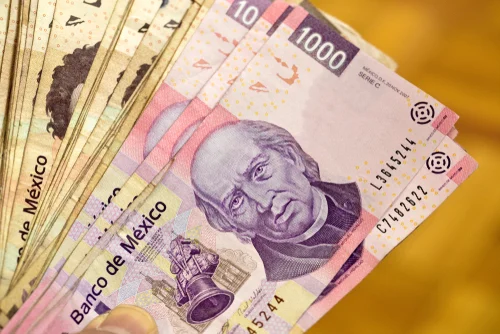
The Mexican peso (MXN) is Mexico’s national currency, issued by Banco de México and divided into 100 centavos. Current coins range from 5 centavos to 20 pesos, while current banknotes run from 20 to 1,000 pesos. If you’re travelling from Australia, you’ll generally need Mexican pesos, as Australian currency can’t usually be exchanged in Mexico.
At a glance
- The Mexican peso (MXN) is Mexico’s national currency and is divided into 100 centavos.
- Current Mexican coins range from 5 centavos to 20 pesos, while banknotes range from 20 to 1,000 pesos.
- Smaller notes are useful for everyday spending, as some businesses may have difficulty accepting or making change for a 1,000-peso note.
- If you’re travelling from Australia, plan to use Mexican pesos rather than AUD, and consider carrying a mix of cash and card payment options.

What are Mexican pesos?
Mexican pesos are the currency used throughout Mexico. The international currency code is MXN, and one peso equals 100 centavos. Banco de México issues the country’s banknotes and instructs the Casa de Moneda de México to mint its coins. If you’re travelling from Australia or sending money to Mexico, MXN is the currency you’ll see on prices, cash withdrawals, and transfers.
The peso also has a significant place in international currency markets. In the 2025 Triennial Central Bank Survey, Banco de México reported that the Mexican peso ranked 14th among the world’s most traded currencies and third among emerging-market currencies, behind the Chinese renminbi and Indian rupee.
For Australians, it helps to recognise both MXN and the “$” symbol. Mexico and Australia use the same symbol for their currencies, so MXN and AUD are useful currency codes when you’re comparing prices or checking a transfer. You can also read Remitly’s guide to currency symbols for more on how similar symbols are used around the world.

Mexican peso denominations: coins and banknotes
Mexico currently uses a combination of peso and centavo coins, plus six main banknote denominations. Banco de México’s current-circulation information confirms the denominations below.
Coins in circulation
Current Mexican peso coins include:
- 5 centavos
- 10 centavos
- 20 centavos
- 50 centavos
- 1 peso
- 2 pesos
- 5 pesos
- 10 pesos
- 20 pesos
The lowest-value centavo coins remain part of the currency system, although you may encounter them less often in day-to-day spending. For travel, peso coins and smaller banknotes are generally more useful for small purchases, tips, and situations where change is limited.

Banknotes in circulation
Banco de México’s current G-family banknotes include:
- 20 pesos: a polymer commemorative note marking the bicentenary of Mexican independence, with the Army of the Three Guarantees entering Mexico City on the front and the Sian Ka’an mangrove ecosystem on the reverse.
- 50 pesos: a purple polymer note featuring ancient Mexico and Tenochtitlan on the front, with an axolotl, maize, and Xochimilco on the reverse.
- 100 pesos: a red polymer note featuring writer Sor Juana Inés de la Cruz, with the Monarch Butterfly Biosphere Reserve on the reverse.
- 200 pesos: a green cotton-paper note featuring independence leaders Miguel Hidalgo and José María Morelos, with a golden eagle and the El Pinacate desert ecosystem on the reverse.
- 500 pesos: a blue cotton-paper note featuring former president Benito Juárez, with a grey whale and calf in the El Vizcaíno Biosphere Reserve on the reverse.
- 1,000 pesos: a grey cotton-paper note featuring Francisco I. Madero, Hermila Galindo, and Carmen Serdán, with a jaguar and the Calakmul tropical forest ecosystem on the reverse.
For everyday spending, carrying several denominations can make things easier. Banco de México acknowledges that some merchants decline 1,000-peso notes because they are concerned about authenticity or do not have enough change, even though valid 1,000-peso notes are legal tender. Smaller notes such as 50, 100, and 200 pesos can therefore be more convenient for routine purchases.
Modern Mexican banknotes include security features that vary by denomination. Banco de México recommends checking notes by touch, sight, and movement. Features across the current series include raised printing, see-through windows on polymer notes, watermarks on cotton-paper bills, shiny security threads, and denomination numerals that change colour when the note is tilted.

A brief history of the Mexican peso
The Mexican peso has roots in the Spanish silver dollar, or piece of eight, which circulated widely through the Americas and across international trade routes. Mexico gained independence from Spain in 1821, but the silver-coin tradition continued to shape the country’s currency and its influence abroad.
Paper money arrived early in independent Mexico’s history. Banco de México’s history of Mexican coins and banknotes records the first official paper issues under Agustín de Iturbide in December 1822. Republican banknotes followed in 1823, printed on cancelled papal documents in an effort to make the unfamiliar paper currency more acceptable to the public.
Banco de México opened in 1925 and became the country’s central bank and banknote issuer. Its first notes were printed in New York by the American Bank Note Company. Mexico later began producing Banco de México banknotes domestically in 1969.
Another major change arrived in 1993. After a period of high inflation, Mexico introduced the nuevo peso and removed three zeros from the old unit, so 1,000 old pesos became 1 nuevo peso. The word “nuevo” was later dropped, leaving the peso used today.
The peso’s international story stretches well beyond Mexico. Spanish and Mexican silver dollars circulated extensively in East Asia. Spanish and Mexican silver dollars circulated widely beyond the Americas, including across parts of Asia, where they became important trade currencies. Their influence appears in the development of several later dollar and silver-based monetary systems. In the United States, the Spanish-American peso also influenced the dollar system and the “$” sign.

7 facts about the Mexican peso you probably didn’t know
“Peso” means “weight”
The Spanish word peso means “weight”, reflecting the currency’s origins in silver coins whose value was closely connected to their metal content. That link between weight and money is also part of the history of the Spanish dollar, the widely traded coin from which the Mexican peso developed.
The “$” sign has roots in the Spanish-American peso
The US Bureau of Engraving and Printing says the most widely accepted explanation for the “$” symbol is that it evolved from the handwritten abbreviation “Ps” for pesos, piastres, or pieces of eight. The symbol was already widely used before the United States adopted the dollar in 1785.
Banco de México’s first notes were printed in New York
When Banco de México began operating in 1925, its first banknotes were produced by the American Bank Note Company in New York. Banco de México records the first series as running from 1925 to 1934, with denominations from 5 to 1,000 pesos.
Mexico’s newest banknote family mixes polymer and cotton paper
The current G family does not use a single banknote material. The 20-, 50-, and 100-peso notes are polymer, while the 200-, 500-, and 1,000-peso notes are cotton paper. Security features vary by material and denomination.
The 1,000-peso note tells a story of revolution and biodiversity
The current 1,000-peso note entered circulation in November 2020. Its front depicts Francisco I. Madero, Hermila Galindo, and Carmen Serdán in the context of the Mexican Revolution, while its reverse features a jaguar and tropical forest at Calakmul.
Mexico ranked 13th for crude oil production in 2025
Mexico remains a significant oil producer, although older articles can overstate its position. The US Energy Information Administration ranked Mexico 13th globally for crude oil, including lease condensate, in 2025, at about 1.73 million barrels per day.
Recent Mexican notes have won international design awards
Mexico won the International Bank Note Society’s Banknote of the Year award in consecutive years. The 100-peso note won for 2020, followed by the 50-peso note for 2021, giving the current series recognition for both its design and security features.

Practical tips for Australians handling Mexican pesos
If you’re travelling from Australia, planning how you’ll access pesos before you leave can save some scrambling after a long flight. Australia’s Smartraveller advice for Mexico confirms that ATMs are easy to find in cities and towns, cards are accepted at most international hotels and tourist facilities, and cash is useful in rural areas.
- Check your options before departure. Some Australian banks and foreign-currency providers can arrange Mexican pesos before you travel. Compare the exchange rate, fees, and collection or delivery arrangements rather than looking at the rate alone.
- Use ATMs with care in Mexico. ATMs are widely available, particularly in cities and towns. Check any fee shown before confirming a withdrawal, and consider using machines inside banks or other secure locations. Remitly’s guide to banks in Mexico can help you recognise some of the major institutions.
- Carry a mix of denominations. Smaller notes and coins are useful for tips and low-value purchases. A 1,000-peso note can be harder to use at some businesses, so avoid relying on large notes alone.
- Don’t rely on Australian dollars. Smartraveller says Australian currency and traveller’s cheques generally cannot be exchanged in Mexico. US dollars are accepted in some holiday resort areas, but pesos remain the practical currency for everyday spending.
- It’s smart to have a couple of ways to pay. Cards work in most tourist spots, but you’ll still want some cash on hand, especially when you’re away from big cities.
- If you’re sending money rather than carrying cash, compare the full transfer. Remitly supports money transfers from Australia to Mexico in AUD to MXN, with delivery options that can include bank deposit, cash pickup, and mobile wallet depending on availability. Check the rate, transfer fee, and amount your recipient will receive before confirming.
Exchange rates can change throughout the day, so a rate you saw earlier may no longer apply when you exchange cash or send a transfer. Checking the current quote at the point of transaction gives you a clearer picture of the amount involved.

About Mexico: key facts for Australian visitors
Mexico sits between the United States and Central America and has coastlines on both the Pacific Ocean and the Gulf of Mexico and Caribbean Sea. The World Bank reports a population of about 131.9 million in 2025. Mexico City itself had about 9.2 million residents in Mexico’s 2020 census. The wider Valley of Mexico metropolitan area is much larger, with Mexican government sources describing it as home to more than 21 million people.
Spanish is the most widely spoken language in Mexico. Under Mexican law, Spanish and recognised Indigenous languages are considered national languages and have the same legal validity. Mexican law recognises Spanish and the country’s Indigenous languages as national languages with the same legal validity in relevant contexts. In the 2020 census, Catholicism remained the largest religious affiliation, with INEGI reporting that about 78% of the population identified as Catholic.
Australian visitors commonly encounter very different sides of Mexico, from Mexico City to coastal destinations such as Cancún and the Riviera Maya and historic centres such as Oaxaca. Food is another big part of the experience, and Remitly’s guide to Mexico’s national dishes offers some background before you go. For a longer stay, check current entry and visa rules through official government sources before travelling.
FAQs
What is the Mexican peso?
The Mexican peso is Mexico’s national currency. Its ISO currency code is MXN, and one peso is divided into 100 centavos. Banco de México issues the country’s banknotes, while coins are minted by the Casa de Moneda de México on the central bank’s instruction.
What does MXN stand for?
MXN is the ISO 4217 currency code for the Mexican peso. You’ll commonly see it on exchange-rate displays, banking platforms, and international money-transfer services. For Australians, using MXN and AUD makes it easier to distinguish Mexican pesos from Australian dollars because both currencies use the “$” symbol.
What is a centavo?
A centavo is one-hundredth of a Mexican peso, much like one cent is one-hundredth of an Australian dollar. Mexico has centavo coins as well as peso coins. The lowest-value coins remain in circulation, although small centavo denominations may be less noticeable in everyday transactions.
What do Mexican peso banknotes look like?
Current Mexican banknotes use distinctive colours, historical themes, and images of Mexican ecosystems. The 50-peso note, for example, features Tenochtitlan and an axolotl, while the 500-peso note depicts Benito Juárez and grey whales. Security features include raised print, colour-changing elements, windows, watermarks, and security threads.
Can you use Australian dollars in Mexico?
Australian dollars are not a practical payment currency in Mexico. Smartraveller says Australian currency generally cannot be exchanged there. US dollars may be accepted in some resort areas, but Mexican pesos are the more useful option for everyday purchases, transport, tips, and spending outside major tourist centres.
What’s a practical way for Australians to get Mexican pesos?
You can arrange some pesos through an Australian bank or foreign-currency provider before departure, or withdraw MXN from ATMs after arriving in Mexico. It’s a good idea to compare fees and exchange rates before choosing. It can also help to carry smaller notes, as large denominations such as 1,000 pesos may be inconvenient at some businesses.
Why does the Mexican peso use the “$” sign?
The “$” sign predates the US dollar. The US Bureau of Engraving and Printing says the most widely accepted explanation is that it developed from the written abbreviation “Ps” for Spanish and Spanish-American pesos. The United States later retained the symbol when it adopted the dollar.
Key takeaways
- The Mexican peso (MXN) is Mexico’s national currency, divided into 100 centavos, with current coins from 5 centavos to 20 pesos and banknotes from 20 to 1,000 pesos.
- The 1,000-peso note is valid currency, but Banco de México acknowledges that some merchants may decline it because of concerns about authenticity or a lack of change. We recommend using smaller notes for everyday spending.
- The peso grew from the Spanish-American silver-dollar tradition and influenced monetary systems far beyond Mexico, including early US dollar symbolism and 19th-century currency systems in East Asia.
- Australians can access pesos before departure or through ATMs in Mexico, while Smartraveller notes that Australian currency generally cannot be exchanged in Mexico and that cash remains useful in rural areas.
- Current Mexican banknotes combine polymer and cotton paper with features such as raised printing, transparent windows, watermarks, dynamic threads, and colour-changing denomination elements to make authentication easier.
If you’re sending money from Australia rather than travelling with cash, you can check Remitly’s AUD-to-MXN transfer options to see the current rate, transfer fee, delivery methods, and amount your recipient would receive before you send.
Last reviewed: September 2026



