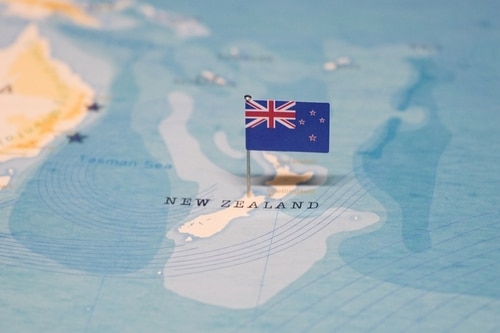

New Zealand and Australia enjoy a special relationship as next-door neighbours, and both residents and visitors often hop from one country to the other. But while they seem very close on the map, how long does it actually take to fly between New Zealand and Australia?
If you are planning a trip Down Under, several factors influence how long you’ll need to move from point A to B, including the port of departure and the availability of direct flights between destination cities. That said, hundreds of flights complete the journey over the Tasman Sea each week, making it easy for adventurers to navigate this region.
In this article, we at Remitly will explain how long it takes to travel between New Zealand’s four biggest airports and Australia’s major hubs. We’ll offer up-to-date information on where you can expect to find direct flights and when you might need a stopover. We’ll also review essential information like time zone differences and the documents you’ll need for travel. Let’s dive in.
New Zealand to Australia: essential flight facts
New Zealand and Australia share geographic, cultural, and spiritual roots, but their apparent physical closeness is partially due to the effect of the flat map. In reality, these countries are actually farther apart than they appear.
What to expect when flying
The Tasman Sea—or “The Ditch”—separates the two neighbouring nations, and it measures about 1,931 kilometres (1,200 miles).
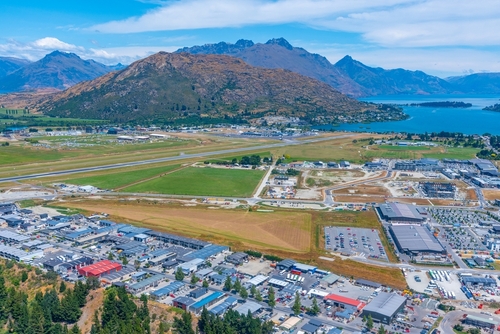
Plus, although New Zealand is small, flights between Auckland, the country’s biggest and busiest airport, and Queenstown, a major airport in the south, still take almost two hours.
That said, the most significant factor when it comes to flight times between New Zealand and Australia is your Aussie destination. Sydney is the closest mainland capital to New Zealand, and depending on your Kiwi point of origin, the flight can take three to four hours. For instance, if you’re going to Perth on the Australian West Coast, you can expect any direct flight from New Zealand to take a minimum of seven hours.
NZ to Australia flight times
The table below summarises how long trips between New Zealand’s four major airports and key Australian cities would take via direct flights.
| New Zealand airport | Australia airport | Flight time (Direct) |
| Auckland | Sydney | 3.5–4 hours |
| Melbourne | 4 hours | |
| Brisbane | 3.5–4 hours | |
| Adelaide | 4–4.5 hours | |
| Perth | 7–8 hours | |
| Hobart | 4 hours | |
| Darwin | 6.5–7 hours | |
| Cairns | 5.5–6 hours | |
| Wellington | Sydney | 3.5–4 hours |
| Melbourne | 4 hours | |
| Brisbane | 4 hours | |
| Christchurch | Sydney | 3.5 hours |
| Melbourne | 4 hours | |
| Brisbane | 3.5–4 hours | |
| Queenstown | Sydney | 3–3.5 hours |
| Melbourne | 3.5 hours | |
| Brisbane | 4 hours |
What airlines fly between New Zealand and Australia?
Air New Zealand offers the most extensive range of nonstop flights between New Zealand and Australia. Their routes include direct links between:
- Auckland to Sydney, Melbourne, Brisbane, Adelaide, Perth, Hobart, Darwin, Cairns, the Gold Coast, and the Sunshine Coast
- Christchurch to Sydney, Melbourne, Brisbane, and the Gold Coast
- Wellington to Sydney, Melbourne, and Brisbane
- Queenstown to Sydney and Melbourne
Qantas offers several routes, with planes flying between Sydney, Melbourne, and Brisbane to the four major airports in New Zealand. It also has limited direct flights between Perth and Auckland.
Alternatively, Jetstar offers similar routes to Qantas as well as some domestic flights within New Zealand. The carrier has recently added new direct flights, including routes between the Gold Coast and Hamilton and between Cairns and Christchurch.
Virgin Australia, Emirates, Fiji Airways, China Eastern, and LATAM airlines also operate direct flights between the two countries, following the same popular routes.
What factors can affect your flight time?
As already mentioned, the primary factor determining the duration of your flight from New Zealand to Australia is your destination. Flying to coastal Aussie cities like Sydney is a short hop that takes less than four hours, but if you’re going to more distant areas such as Perth, Darwin, or Cairns, it will double your flight time.
Other factors you should keep in mind include:
- Availability of direct flights: While you can fly nonstop to major hubs on either side of The Ditch most days of the week, travelling to smaller airports may require booking a connecting flight. This process could add a layover and at least two hours for airport transfer to your overall travel time.
- Weather conditions: Also, don’t forget that the flight times outlined above are just estimates. Your trip could go faster or slower depending on weather conditions, especially in the presence of strong winds, fog, or thunderstorms. For example, it’s usually faster to fly from Australia to New Zealand than vice versa because of the favourable Tasman jet streams.
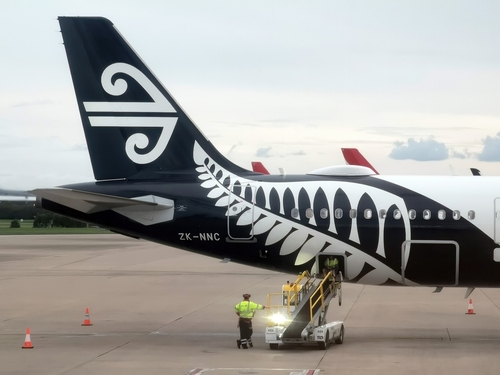
- Aircraft type: The Airbus A320 and the Boeing 737 are commonly used for these short-haul international flights. However, larger aircraft, such as the Boeing 787 Dreamliner and Airbus A350, are occasionally put into rotation by carriers like Air New Zealand and Qantas. The Boeing 787 has a maximum speed of around 1,110 kilometres per hour (690 mph), compared to 955 km/h (593 mph) for the Boeing 737, meaning the larger plane will get you there faster.
There are always lots of things that can impact travel time, from delays on the ground and headwind or tailwind conditions, to specific flight paths and waiting times for runway space or air traffic controller clearance upon arrival. That’s why it’s always important to give yourself extra time when planning your itinerary.
Don’t forget about time zones
No, Australia and New Zealand aren’t in the same time zone, so be sure to factor this in when planning your trip. Here are some important facts that will help you get it right:
New Zealand Standard Time (NZST) is 12 hours ahead of Greenwich Mean Time (GMT+12). In the summer, between the last Sunday of September and the first Sunday of April, they also observe daylight saving time (NZDT), pushing the time zone to GMT+13.
Australia’s East Coast is about two hours behind New Zealand, with Australian Eastern Standard Time (AEST) established at GMT+10.
Many eastern states, including New South Wales, Victoria, Tasmania, and the Australian Capital Territory, also adopt daylight saving, taking them to Australian Eastern Daylight Time (AEDT), which is GMT+11. While this ensures a two-hour time difference between cities like Sydney and Melbourne with New Zealand, Queensland doesn’t have daylight saving, so Brisbane falls three hours behind.
To further complicate matters, Australia adopts daylight saving a little later than New Zealand, starting in the first week of October.
Australia also spans several time zones, so as you head further west, the time difference with New Zealand increases. Not accounting for daylight saving, South Australia and the Northern Territory generally operate at GMT+9.5, while Western Australia is at GMT+8, putting Perth four hours behind.

Planning your trip: key considerations
Flying between New Zealand and Australia can be a short, easy journey, but only with proper preparation. There are numerous flights available, and Kiwi and Aussie citizens can travel between the two countries visa-free with only a valid passport—no Electronic Travel Authority (ETA) required.
That said, there are a few simple things you can do to ensure the best possible travel experience.
- If you are looking for direct flights, start your search with the major airlines as they have the most options.
- Are you flexible with your travel dates and prioritize value over time? Broaden your search to include smaller airlines, which sometimes offer better prices but might include a layover.
- There are hundreds of flights between New Zealand and Australia each week. But if you need specific dates or are travelling during the holidays, book well in advance as the popular routes fill up quickly.
- Double-check that your passport is valid before making your booking. If you don’t have a New Zealand or Australian passport, check the visa conditions before you fly. Both countries need an ETA for people from most other countries, and depending on your nationality, a visa may also be required.
- And remember, you’ll also need local currency during your trip, so convert your New Zealand Dollars (NZD) to Australian dollars before the flight.
Cross The Ditch hassle-free
Moving between New Zealand and Australia is fast and stress-free compared with other parts of the world, even with a stopover. The good relationship these countries enjoy means cross-border journeys almost feel like travelling domestically. So, what are you waiting for? Start planning your next trip over the Tasman, and get ready to take in the amazing sights and wildlife encounters this region has to offer.
FAQs
Is it faster to fly from Australia to New Zealand?
Yes, flights from Australia to New Zealand can be around 30 minutes faster than vice versa, as the wind conditions over the Tasman Sea tend to mean favourable tailwinds when traveling east to New Zealand, but stronger headwinds when traveling west to Australia.
What is the shortest flight between New Zealand and Australia?
The shortest flights between New Zealand and Australia are between Queenstown and Christchurch in the South Island and Sydney, the closest Australian state capital in terms of both longitude and latitude. The flight usually takes three to three and a half hours.
Do I need a visa to travel from New Zealand to Australia?
Australian and New Zealand citizens holding a valid passport don’t need a visa to travel between the two countries for tourism, as they are granted a visa on arrival. However, citizens from other countries will need to complete an Electronic Travel Authority (ETA) at a minimum before travelling.
What is the cheapest month to fly to Australia from New Zealand?
Because flights between Australia and New Zealand are so frequent, you can find good deals pretty much any time of the year. Airlines also tend to put on extra flights during peak seasons. That said, if you travel around the holidays, especially in December and January, you can expect to pay more. The cheapest flights are generally available during off-peak and shoulder seasons in months like February, May, and October.