

Key Highlights
Here are the key things to know about the weather in Tanzania:
-
Tanzania has two main seasons. There is a long dry season and also a wet season that happens in two parts.
-
The dry season goes from June to October. This is the best time for a safari experience.
-
The ‘long rains’ come from March to May, and there are more big showers during this time.
-
The ‘short rains’ cover November and December. This is a smaller rainy season.
-
The best time to go will depend on what you want to see and do. The weather can change where to find animals and how you travel.
-
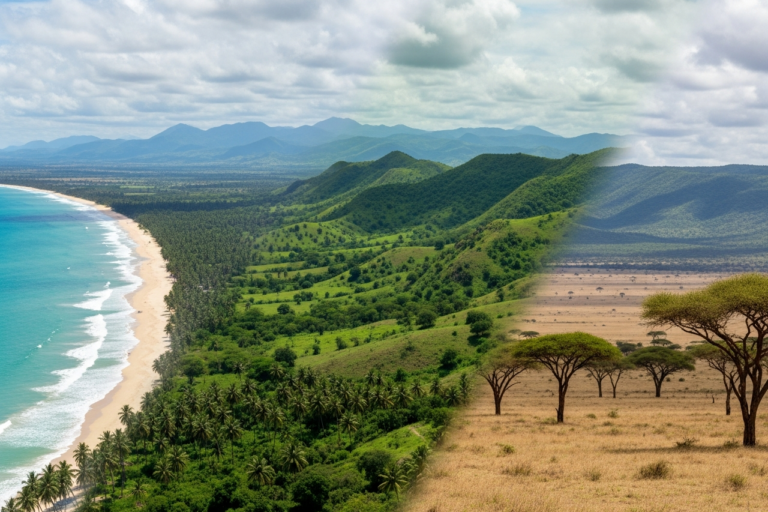
The coastal areas are more hot and humid, but it is cooler in the highlands further inland.
Introduction
Are you thinking about a great trip to Tanzania? You should know about the weather to get the most out of your adventure in this amazing part of Africa. Tanzania sits right below the equator, so it has a tropical climate. But since it is a big country, the weather can be different from place to place. You might want to go on a safari, relax on a beach, or climb a mountain. It is good to know what kind of weather you will get before you go. This will help you plan the best trip.
Understanding Tanzania’s Climate Zones
Tanzania is close to the equator. Because of this, the country has a tropical climate. Still, Tanzania is big, and the land is not all the same. The weather is not the same everywhere because of this.
The coastal areas of Tanzania are hot and have a lot of moisture in the air. When you go inland or to places higher up, the air can feel cooler. There, the weather is not as hot. So, your time in Tanzania can feel very different depending on where you are. The change from the coast to the middle or higher parts of the country changes the weather you get.
This tropical climate and these different zones shape how people use and enjoy the land in Tanzania. Now, let’s see how each place gives its own type of weather.
Coastal, Highland, and Inland Weather Patterns
The coastal areas of Tanzania, like Dar es Salaam and the islands, have a classic tropical climate. There is a lot of heat and humidity all year. When the rainy seasons come, you will see heavier and more regular afternoon rain. Daily temperatures often go up into the low to mid 30s Celsius.
But the highland regions, that are around places like Ngorongoro Crater and Arusha, are cooler. These areas get the same wet and dry seasons the coast does, but the altitude makes the air milder for most of the year. At night, it can get cold there. Be sure to pack extra layers.
In the central plateau, further inland, the climate is hot and dry. This part of Tanzania has less humidity than the coastal areas. The temperature can change a lot from day to night. Understanding these patterns can help you plan what to do when you visit Tanzania.
Seasonal Variations Across Regions
Tanzania’s weather is shaped by the rainy season and the dry season, not by four separate seasons like you may know. The main rainy season, or ‘long rains,’ is from March to May. During this rainy season, you will often see afternoon storms, mostly near the coast.
After this, the long dry season starts. This dry season goes from June to October. The weather in this time is clear and sunny. It is a good time to go to Tanzania. There is little rain, so animals come out and gather near water. This makes it a great time for a safari.
Near the end of the year, in November and December, there is another rainy season called the ‘short rains.’ During short rains, there is less rain and it is harder to guess when it will rain. These rains do not stop people from traveling as much as the long rains do. In northern Tanzania, you will see these changes in season the most. These changes cause people to make new plans for safari trips and choosing a place to stay.
Monthly and Seasonal Changes in Tanzania’s Weather
Tanzania does not have a simple summer and winter. Instead, the year is split by rain. There is a dry season and a wet season. The main dry season starts in June and goes until October. At this time, the weather is nice and there is only a small chance of rain. The wet season comes with more rain, but it can be light or heavy.
It is good to know how the weather changes each month. The year has two wet seasons and two dry spells. Each one gives its own special feeling to your trip. Here is what you can expect during these wet and dry seasons in Tanzania.
Weather Trends by Month: Dry vs. Wet Seasons
The year in Tanzania starts with a short dry season during January and February. The weather is hot and not too wet at this time. It is a good time for beach trips and to see wildlife before the big rainy season. After the short rains that come in November and December, there is a lot of green in the landscapes.
The main wet season, also called the long rains, happens from March to May. April brings the most rain, and afternoons are often full of heavy showers with a lot of humidity. Some places to stay will close, but the green views are nice to see.
From June to October, the long dry season returns to Tanzania. Most people choose to visit during this time, as there are sunny days and less rain. The weather feels cool and nice. The short rains start again in November. These rains are lighter than the long rains. They do not cause much trouble and let you watch Tanzania’s landscapes change again.
[Keywords: wet season, dry season, long rains, short rains, tanzania, june, humidity, october, december, november, january, february, april]
What to Expect During the Rainy and Dry Seasons
During the main rainy season from March to May, you need to be ready for heavy rains, mainly in the afternoon. There are often big tropical downpours. Some roads may not be safe to use, and a few camps in the south can close during this time. The chance of rain is high, and the air feels heavy with a lot of humidity. This time is called the low season because not many people are there.
The dry season goes from June to October. At this time, the weather is sunny, and the skies stay clear. This is when most people visit, especially if they want a safari. You can see more animals because they gather near rivers and waterholes. It is easier for people to travel now, as things do not get wet, and outdoor plans are less likely to change.
November and December have a short rainy season with lighter rains. These showers do not happen as often, and they probably will not ruin your trip. This is when the land looks green and fresh again. It is also a good time to see birds that come from other places.
Weather in Key Tanzanian Cities
Are you thinking about going to one of tanzania’s busy cities? The weather can change a lot from one city to the next. The coastal cities, like dar es salaam and the island of zanzibar, are hot and sticky most of the time. If you go to arusha, which is higher up, you will find that it is cooler and feels milder.
It does not matter if you want to start your safari or just want a beach break, knowing what the weather is like can help you a lot. Here is what you can expect in places like dar es salaam, arusha, and zanzibar.
Typical Weather in Dar es Salaam
Dar es Salaam is the largest city in Tanzania and sits on the coast. The weather in this city is hot and humid all year. If you come here, you will see that the temperatures stay high most of the time, often in the low or mid 30s Celsius.
This city gets the same rainy season as other coastal areas. There are long rains from March to May. Heavy showers happen almost every afternoon at this time, and the humidity goes up a lot. Then, in November and December, there are short rains. These rains are not as strong as the long rains, but they help keep the tropical air.
The best time to visit Dar es Salaam is in the months from June to October. These months are the driest and have the lowest humidity. The sky is sunny, and you get good weather to go out and see the city or spend time on the beaches nearby.
Climate Insights for Arusha and Zanzibar
Arusha sits at a high altitude, and is known as the gateway to Tanzania’s northern safari circuit. This place has weather that is milder than the coast. It is not as humid. During the day, the sun feels good and the air is warm. At night, the temperature drops a lot. It is smart to bring a sweater or jacket with you.
Zanzibar is an island archipelago that is part of Tanzania. It has the hot and humid tropical climate that you find on the mainland coast. The best time for a beach trip is in the long dry spell from June to October. At this time, skies are usually clear and the sun shines. January and February are also good months to go diving and snorkeling, but it gets quite hot then.
Both Arusha and Zanzibar have the same rainy season pattern seen across Tanzania. There is a long rainy season and a short one. Arusha gets less rain on most days than the coast. Zanzibar goes through heavy tropical rain, so the main rainy season is not the best time for a beach holiday.
Temperatures Throughout the Year in Tanzania
Tanzania usually has warm weather, but the temperatures change more because of altitude and season, not from a standard summer or winter. The country’s dry season, which is from June to October, has the coolest days. The hottest weather often comes in January and February.
The climate in Tanzania can feel different in each area. The coast gets hot and humid. The highlands are cooler, and nights there can get cold. Here is what you can expect for average high and low temperatures, plus what it’s like during the day as it warms and cools off.
Average Highs and Lows by Season
During Tanzania’s long dry season (June-October), temperatures are pleasant and mild. Average highs generally range from 20°C (68°F) to 30°C (86°F), depending on the location. June is often the coolest month of this period, while temperatures begin to climb in October.
The wet season and the short dry period see higher temperatures. January and February are typically the hottest months of the year. The long rains from March to May bring high humidity, but the cloud cover can slightly lower the daytime temperatures compared to the hot, dry spells.
Here’s a general guide to average temperatures in Tanzania, though they vary by region:
|
Season |
Average Highs |
Average Lows |
|---|---|---|
|
Dry (Jun-Oct) |
25°C – 30°C (77°F – 86°F) |
12°C – 18°C (54°F – 64°F) |
|
Wet (Mar-May) |
27°C – 32°C (80°F – 90°F) |
18°C – 22°C (64°F – 72°F) |
|
Hot (Jan-Feb) |
28°C – 35°C (82°F – 95°F) |
19°C – 23°C (66°F – 73°F) |
Daytime vs. Nighttime Temperature Swings
One thing you need to know about tanzania is the way temperatures change from day to night. This is a big deal during the dry season, and it’s even more true if you are in high places like arusha or the Ngorongoro Crater. Days can be sunny and warm, but when the sun goes down, it can get very cold fast.
In arusha and other highland spots, you might feel fine in a t-shirt while the sun is out. But you will want a jacket or fleece at night and in the early morning. Many people do a safari game drive before sunrise, and the air can feel colder than you expect, especially in an open car.
When you are in parks that are not as high, you might still notice that as soon as it is dark, the temperature drops a lot. The best way to handle this is to pack layers. That way, you can be ready for all sorts of weather—from the warm afternoon sun to the chilly breeze of early morning.
Weather Forecasts and Climate Data for Travelers
When you plan your trip, it’s a good idea to check weather forecasts and past climate data. Predicting weather in Africa can be hard because it changes a lot. Still, sites like AccuWeather and other big weather services can help you know what to expect for your travel days.
You should also look at long-term charts to see the usual weather for each season. This helps you get ready for your time in Tanzania. Let’s talk about where to find this info and how to use it for your journey.
Accessing Reliable Weather Information
For the latest forecasts, the big international weather websites are a good place to start. They give short forecasts for cities and national parks in Tanzania. Still, you should know that weather can change fast in this country, and it can be hard to guess.
If you want a bigger picture, look at climate data going back years. This kind of info shows you what to expect for the month you plan to vacation. You can see average rain and temps. For packing and planning, this is often better than a short-term forecast.
Here are some ways to find good weather info:
-
International Weather Websites: Sites like AccuWeather, The Weather Channel, and BBC Weather share daily and 10-day forecasts for big spots in Tanzania.
-
Travel and Safari Companies: Your tour operator knows the area from experience and can give you the right advice.
-
Climate Data portals: These websites focus on past climate data. You can find month-by-month averages for how hot or rainy it will be.
Interpreting Climate Charts and Long-Range Forecasts
When you check climate charts for Tanzania, you see past weather information, not a perfect guess about what will happen. These charts help you understand the usual weather through the year. Look at the average monthly rainfall to find out when it is wet or dry. Check the average high and low temperatures to help decide what to pack.
Long-range forecasts are useful, but you should be careful with them. They can show trends, but the weather in Tanzania changes quickly and is not the same everywhere. Forecasts might say you get rain. It could mean a short shower in one part, while another area will stay dry. During the short rainy season, do not let forecasts keep you from going.
The best way to plan is to use climate charts and forecasts together. Choose the right time for your trip using the charts. Before you leave, check short-term forecasts to help with your packing. This way, you get ready for the usual weather and can adjust if things change.
Keywords: rainy season, tanzania, forecasts
Travel Tips for Visiting Tanzania Based on Weather
Now that you know more about Tanzania’s climate, you can use this to plan your trip better. The weather in Tanzania will decide what you pack. It also affects the safari experience you will get. Picking the right accommodation and safari activities is important for every season.
The best time to travel depends on what you want to do during your stay. Here are some good tips for your safari experience, including what packing essentials you need and how to set your plans for the year.
Packing Essentials for Tanzania’s Climate
Packing for tanzania means you have to be ready for anything. You should bring light clothes that you can layer. Put on more as it gets cool, or take them off when it gets hot. This is very important if you want to have an early morning safari experience, because it can get cold before the sun comes up and warms things up.
If you are going during the rainy season, you must have waterproof things with you. A light rain jacket that lets you breathe and waterproof bags for electronics will help a lot. If you go in the dry season, you should focus on protecting yourself from the sun. A wide-brimmed hat, sunglasses, and sunscreen with high SPF are really needed.
Here are some things you should pack for any trip to tanzania, and for your safari experience:
-
Lightweight shirts and pants with long sleeves and legs. Pick neutral colors. These help protect you from the sun and insects.
-
A warm fleece or jacket is good for cold nights and early mornings.
-
Comfortable, sturdy closed shoes.
-
Bring a rain jacket if your trip is during the rainy season.
Planning Activities According to the Season
The best time for a classic safari in the northern parks like the Serengeti and Ngorongoro is the long dry season. This happens from June to October. Wildlife is easy to see then, because animals come to limited spots with water. The weather is sunny and feels good. It’s the high season, so you need to book your accommodation and tours early.
If you go during the wet season, which runs from March to May, you will find green landscapes and not as many tourists. It’s a great time for birdwatching. You also get to see newborn wildebeest in the southern Serengeti. But keep in mind, some far camps are closed, and the rain can make travel hard.
Consider these tips when planning:
-
Dry Season (Jun-Oct): This is the best time for watching all sorts of wildlife. You can see Great Migration river crossings in the north.
-
Wet Season (Mar-May): This is a good time to see birds. You will see animals born in this season. Prices are lower and crowds are less.
-
Shoulder Seasons (Jan-Feb, Nov-Dec): These months give you green views and a good chance to see wildlife. But, there is some chance of rain.
Conclusion
To sum up, you need to know about the weather in Tanzania before you plan your trip. The country has many climate zones, and the weather can change with the time of year. Knowing what the weather will be like can make your trip better. If you want to hike in the highlands or rest by the coast, it helps to know the average temperatures and weather. This way, you can pack the right clothes and pick the best time for your activities. Be sure to get the right info, so you are ready to see all that Tanzania can give you. If you want advice that fits your plans, ask our experts for a free consultation.
Frequently Asked Questions
When is the best time to visit Tanzania for safaris and beach holidays?
The best time to enjoy a safari and beach trip in Tanzania is from June to October. The weather is dry and sunny during these months. You will have good temperatures, so it feels nice during the day. This is the dry season with the best chance to see animals. It is also great to relax at the beach.
How reliable are weather forecasts in Tanzania?
Short-term forecasts, like the ones from Accuweather, can give you a good idea about the weather. But sometimes, they are not always right, especially with rain. If you want to plan better, it helps to check past climate charts to see what the weather is like during the season. Forecasts can change, so it is smart to be ready for many kinds of weather.
What should I be prepared for during the rainy season?
During the rainy season in Tanzania, there will be short and heavy rains. These often happen in the afternoons. The roads get muddy, and some safari camps close. You should pack a waterproof jacket and insect repellent. Even with the rain, you will see green landscapes and there are fewer people around on the safari.



