

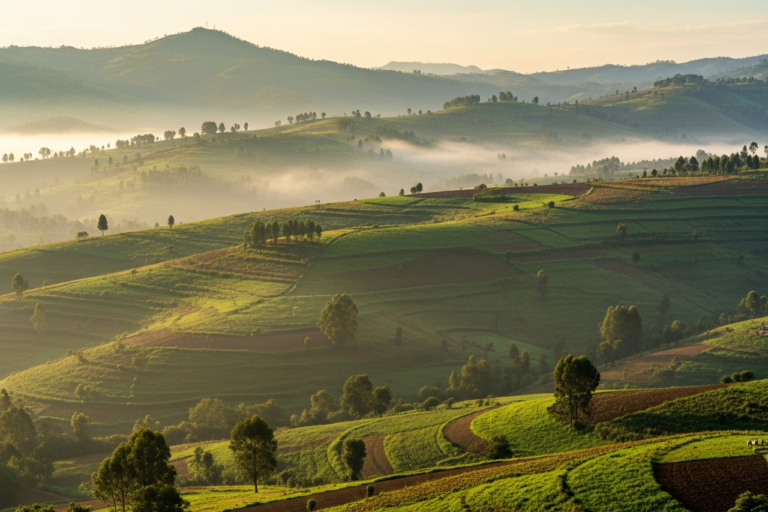
Key Highlights
-
Rwanda has two main seasons: the dry season and the rainy season. These seasons play a big part in when is the best time to visit.
-
The long dry season from June to September is a good time for safari trips. It is also the best time for trying to see mountain gorillas in Volcanoes National Park.
-
There is a lot of rainfall during the long rainy season, which goes from March to May. April is the wettest month of all.
-
Rwanda sits at a high altitude, so it enjoys a nice tropical highland climate. This means the temperatures stay moderate through the year.
-
It is normal to see some light cloud cover even in the dry season. This cloud cover helps keep the temperatures good and not too hot.
-
A short rainy season comes from October to November, and then a short dry season follows from December to February.
Introduction
Are you thinking about taking a trip to the heart of Africa? It is important to know about the weather in Rwanda so you can get the most from your time there. Rwanda is just south of the equator, but it has a good climate because of its high altitude. People call it “the land of a thousand hills” for this reason, and its high altitude keeps the weather nice through all months of the year. This guide will help you see what the weather will be like in Rwanda, so you know what to pack and when is the best time to go.
Overview of Rwanda’s Climate and Weather Patterns
Rwanda has a tropical highland climate. The country is at a high altitude, so the weather is mild. Rwanda does not get the strong heat that other places near the equator can have. Temperatures stay about the same all year, and it is not too hot.
What changes most in Rwanda’s weather is rainfall, not temperature. There are two rainy seasons and two dry seasons each year. When there is no rain, you will still often see light cloud cover in the sky. This light cloud cover helps keep the weather nice most of the time. If you need more local details, the Rwanda Meteorology Agency has up-to-date weather data. Next, we can learn more about the patterns each year and how weather can be different from one place to another.
Typical Weather Throughout the Year
The weather in Rwanda is divided into four main periods. The long rainy season runs from March to May, bringing heavy and persistent downpours. April is known as the wettest month, so be prepared for significant rainfall if you travel then. Following this is the long dry season from June to mid-September, which offers clear skies and is a popular time for tourism.
A shorter rainy season, or wet season, occurs from October to November. The year then concludes with a short dry season from December to February, where there is little rainfall. This period is another great window for travel, offering pleasant weather before the long rains begin again.
To give you a clearer picture, here’s a monthly breakdown of what to expect:
|
Month |
Weather Pattern |
|---|---|
|
January |
Rain subsides as the short dry season continues. |
|
February |
End of the short dry season, with rain increasing. |
|
March |
Start of the long rainy season. |
|
April |
Peak of the wet season, the wettest month. |
|
May |
Heavy and persistent rainfall continues. |
|
June |
Rainfall stops, days are clear and warm. |
|
July |
The long dry season is in full swing. |
|
August |
Hot weather with light cloud cover. |
|
September |
End of the long dry season mid-month. |
|
October |
Start of the short rainy season, humid and wet. |
|
November |
Rainfall remains high. |
|
December |
Rain levels drop as the short dry season begins. |
Regional Differences in Rwanda’s Climate
Rwanda has a mostly steady climate, but you will see that weather changes a lot from one area to the next, mostly because of the different altitude levels. The mountainous places are much cooler than the plains. So, what you need to pack will depend on where in Rwanda you plan to go.
For instance, the western area, where the Virunga Mountains are found and where the country borders the Democratic Republic of the Congo, gets cooler temperatures and more rainfall. This place is the best spot to see mountain gorillas.
But if you go east, where Akagera National Park sits, you will be near sea level. Here, the air is hotter and drier. These shifts make Rwanda a country with many kinds of nature.
-
Western & Northern Regions: These parts have higher altitude, cooler temperatures, and more rain. This is where you find Volcanoes National Park.
-
Eastern Region: At a lower altitude, this area is hotter and more dry. Akagera National Park is in this region.
-
Central Region (including Kigali): This area has a middle altitude with a mild climate.
-
Lake Kivu Area: The weather here is nice and you get a great view by the lake.
Distinct Seasons in Rwanda
Rwanda has two main seasons: the dry season and the rainy season. These two times of year have a big effect on when people should travel and what they can do. The long dry season goes from June up to the middle of September. There are many sunny days with very little rain during this time. That makes it a good time for doing things outside like gorilla trekking and safaris.
The long rainy season is from March to May. During these months, there is a lot of rain, and April is when it rains the most. The wet weather can make some trails slippery. But the rain also turns the land into a bright and rich green. In the next parts, you will see what to expect during both the dry season and the long rainy season in Rwanda.
Dry Season versus Rainy Season
The best time to visit depends on what you want to do. If you pick the long dry season, which goes from June to mid-September, you will have a good chance to see wildlife. There is less rain during these months. The trails are more easy to walk, and animals come out to drink by the water.
The rainy season is special in its own way. Everything looks green, and the air is clear. The long rainy season happens from March to May. The short rainy season is in October and November. When it rains, it is often heavy, but it does not last the whole day. Most days have showers in the afternoon, and after that the sky clears.
If you are not bothered by carrying a raincoat, the rainy season can be a great pick. There are less people and the plants look their best. But, if you want to try gorilla trekking, it is better to go in the drier months of the dry season, because the trails will be easier to walk.
Temperature and Humidity Variations
In Rwanda, the temperature and humidity are mostly shaped by the altitude. The country is close to the equator, but because it sits at a high altitude, the air stays fairly cool. Even in the city of Kigali, the average temperature each day is about 21°C (70°F). There are not big changes in temperature through the year. What changes the most is the rainfall.
Humidity goes up during the rainy season. This makes the air feel wetter. In the dry season, humidity is lower. The air is crisper and less damp then. If you go to the mountains, like the Virunga Mountains, it gets cooler. Nights can be quite chilly there. Over most of the year, visibility is good, but some haze can show up in the driest months.
Here are some key points about temperature and humidity:
-
High Altitude: Gives Rwanda cooler temperatures compared to other countries near the equator.
-
Humidity: Goes up in the rainy season (March-May, Oct-Nov) and comes down in the dry season.
-
Kigali: The average temperature during the day is close to 21°C (70°F).
-
Mountains: Temperatures get much cooler here, especially at night.
Conclusion
To sum up, knowing about the weather in Rwanda is important if you want to visit or enjoy what makes this place special. The country has different types of season and weather in each part, so knowing what the weather will be can help you get ready for your trip. The dry season is good for some activities, while the rainy months make the land green and lively. There is always something to do, no matter what time you go.
If you plan to hike in Volcanoes National Park or want to explore Kigali, it is smart to check the weather before you go. This way, you can pack the right clothes and plan what to do each day. Try to use real-time weather updates from good sources to have a better trip in Rwanda.
Frequently Asked Questions
When is the best time to visit Rwanda based on the weather?
The best time to go to Rwanda is in the dry season. The long dry season runs from June to September. This is the best time for a safari and to see mountain gorillas. The short dry season happens from December to February. This time also has good weather and clear skies. It is a great time to visit Rwanda and see the gorillas.
How accurate are online weather forecasts for Rwanda?
Online weather forecasts from places like AccuWeather can give a good sense of what the weather will be. But, in Rwanda, the land is hilly, so things can shift fast. For the most trusted and new information, it is good to check the Rwanda Meteorology Agency. You will find local forecasts and data about visibility there.
Where can travelers find up-to-date weather information for Kigali and other cities?
For real and trusted weather news in Kigali and other cities in Rwanda, you should check the Rwanda Meteorology Agency. The Meteo Rwanda website gives you clear forecasts every day and every week. You will find facts on temperature and rainfall. Sometimes, you can also see the air quality index there.



