

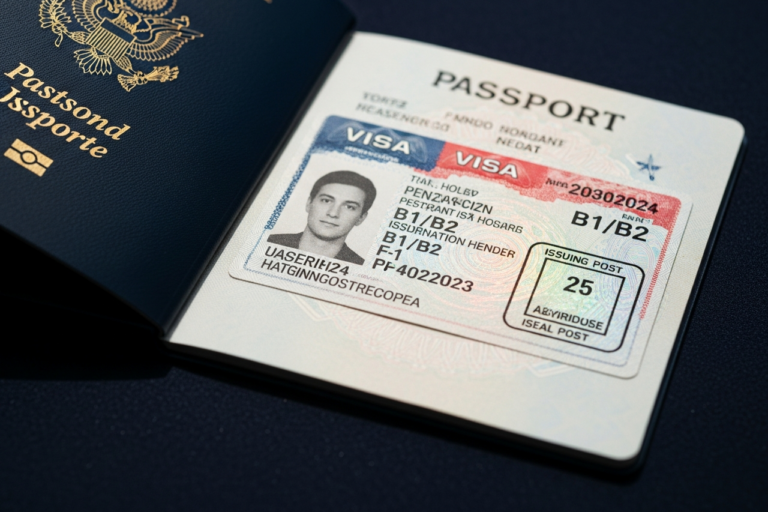
Key Highlights
-
The United States gives out two main types of visas. These are nonimmigrant visas for people who want to stay for a short time and immigrant visas for those who want permanent residence.
-
The type of visa you get will depend on the reason you are coming, like a visitor visa for tourism, work visas for jobs, or a visa to study.
-
The visa application process in the United States usually starts when you fill out an online form. You also need to turn in documents and go to a visa interview.
-
Immigrant visas or what people call a green card, let you live and work in the United States for good.
-
There is a Visa Waiver Program. It lets some people visit the United States for a short time without getting a visa.
-
To make your visa application strong, you must meet the eligibility requirements and give the right documents.
Introduction
Welcome! If you want to visit, work, or live in the United States, understanding the visa application process is where you start. The visa application process can look hard to follow at first. There are many ways to get a visa, and which one you use depends on your plans. Some people just come for a short time, while others want to stay and get a green card. This guide gives you the basics you need. We make the information about United States visas easy to understand and help you move forward.
Overview of United States Visas
Understanding the world of U.S. visas starts with knowing there are two main types. The visa type you need depends on why you want to come to the United States. Do you plan to visit for a short time for fun, work, or study? Or would you like to live in the united states for good?
Your choice will put you in either the nonimmigrant or immigrant visa category. Each visa application needs a certain travel document and has its own rules. We will look at the main visa types and talk about what makes them different.
Main Types of U.S. Visas
The U.S. visa system is set up to help with many kinds of travel to the country. Each visa category is made for a certain reason, like coming for a short visit or staying to live in the U.S. for good. It is important to know the difference between these visa categories if you want your application to go well.
In general, there are two main visa groups in the U.S.: nonimmigrant visas and immigrant visas. Nonimmigrant visas are for people who plan to stay in the U.S. for a short time. This could be for things like going on a trip, doing business, or studying at a school. Immigrant visas are for those who want to live in the U.S. for a long time, and who may look to get a green card.
Here are some of the most common visa types:
-
Visitor Visa: This is for people coming for fun, rest, to see family (B-2), or for those on a short business trip (B-1).
-
Student Visa: This visa is for people in school. You will use the F visa for academic studies and the M visa for job-based school programs.
-
Work Visas: This category is for those who want to work in the U.S. for a certain time. These include H, L, O, and P visas.
-
Diversity Visa: This immigrant visa is given out through a lottery each year to people from countries where not many
Difference Between Nonimmigrant and Immigrant Visas
The core difference between nonimmigrant and immigrant visas lies in the intended length and purpose of your stay in the U.S. A nonimmigrant visa is a temporary visa, meaning it’s valid for a specific period and requires you to eventually return to your home country.
In contrast, an immigrant visa is your pathway to permanent residency, also known as obtaining a green card. This visa type allows you to live and work in the United States indefinitely. The application process for immigrant visas is typically much longer and more complex than for nonimmigrant visas.
Here’s a simple comparison of the two visa types:
|
Feature |
Nonimmigrant Visa |
Immigrant Visa |
|---|---|---|
|
Purpose of Stay |
Temporary (tourism, study, temporary work) |
Permanent (live and work indefinitely) |
|
Duration |
Limited, with a specific expiration date |
Indefinite, leads to a green card |
|
Intent |
Must prove intent to return to home country |
Intend to live permanently in the U.S. |
|
Common Name |
Temporary Visa |
Green Card / Permanent Residency |
Nonimmigrant Visas for Temporary Visits
Nonimmigrant visas are for people from other countries who want to come to the United States for a short time. They are for a special reason, like taking a holiday, getting medical treatment, or working for a little while. When you apply for these visas, you need to show that you plan to go back to your home country after your stay.
The visa application process for the United States changes based on which type of visa you want. Some common nonimmigrant visas are the tourist visa for vacation, different work visas for jobs, and student visas for studying. We will talk more about the most used types soon.
Tourist and Business Visas (B-1/B-2)
The most common visitor visa is the B-1/B-2 visa. The B-1 visa is for business trips, such as going to meetings or working out deals. The B-2 tourist visa is for things like taking a vacation or spending some time with your family. Many times, you will get a B-1/B-2 visa that covers both reasons.
This temporary visa is for a short visit. When you go through the application process, you have to show the consular officer that you will go back to your home country after your trip. One of the main visa requirements is to prove strong ties to your home country, like having a job, family, or property. You will also need to show you have enough money to cover your stay.
You should know that some people from certain countries do not need a visa for a short visit. They can use the Visa Waiver Program, or VWP, if they get travel authorization with an approved ESTA before their trip.
Student Visas (F, M, J)
If you want to go to the U.S. to study, you need to get a student visa. This visa category falls under nonimmigrant visas and there are a few types, based on what you plan to study. The F-1 visa is for people who want to learn at universities, colleges, or high schools. The M-1 visa is used for people looking to get training in jobs or fields that are not mainly academic.
There is also the J-1 visa. This one comes from the exchange visitor program. The J-1 is made for people who go to cultural exchange programs, like students, trainees, and scholars. Before you can get any student visa, you must show that a school or program in the U.S. has accepted you. The school or program has to be approved by the U.S. government.
You have to meet certain eligibility requirements, too. You must be able to show that you have enough money to pay for both your classes and living in the U.S. You also need to make clear to the visa officer that you plan to go back to your home country after your studies are over. To keep your visa status, you must always follow the rules set for your visa category.
Temporary Work Visas (H, L, O, P)
For temporary workers who want to work in the United States, there are a few work visas you can get. Each one fits a certain job. The visa application process usually starts with your possible U.S. boss filing a petition for you.
The H-1B visa is one of the most common work visas. It is for people in specialty occupations. For this visa type, you need at least a bachelor’s degree. The L-1 visa is for employees who work for an international company and need to be moved to a U.S. branch. There are also O visas for people with top skills in science, art, or sports. If you are an athlete or an entertainer, you may need to get a P visa.
Every visa type has strict rules. You must meet the job’s needs, and your boss must fill out all the needed paperwork. Like other nonimmigrant visas, you have to plan to go back to your home country after your job in the United States ends.
Requirements and Eligibility for Nonimmigrant Visas
To get a nonimmigrant visa, you need to meet the rules that the U.S. Department of State has set. One big part of the visa application is showing that you do not plan to stay in the U.S. for good. You should show that you will go back to your home country when your stay is over.
This process asks you to fill out a visa application. You also have to give some documents to support your case. Most of the time, you must go to a visa interview. This usually takes place at a U.S. embassy or consulate. The next part will talk about what you need to meet, the documents you need, and other things to think about for your visa application.
General Eligibility Criteria
Meeting general eligibility requirements is the base of your temporary visa application. One of the most important things for nonimmigrant visas is to show “nonimmigrant intent.” This means you must give clear proof that you have strong ties to your home country. The reason is, this will make you leave the U.S. after your trip.
Consular officers look for proof of these ties when you apply and during your interview. This is a big part of visa requirements for things like tourist or business visas. If you are using the Visa Waiver Program, the requirements change, but you still need online approval.
To qualify, you need to:
-
Have a valid passport to travel to the U.S.
-
Plan to stay for a short and clear time.
-
Show you have enough money to pay for your stay.
-
Give evidence of strong ties to your home country, like a job, family, or property.
Required Application Documents
Getting ready for your visa application needs you to gather the right papers. It is important to have all of the documents together and neat. This makes the application process go much better. The main part is the online form. The papers you give will support the things you fill in.
You have to pay a visa application fee that you cannot get back. You must do this before setting up your interview. The exact documents can be different based on your visa type and your home country. However, there are some that most people need for their visa application.
Common documents you must have:
-
A valid passport that will not run out for at least six months after you plan to leave.
-
The confirmation page you get after you submit your DS-160 online application form.
-
The receipt that shows you paid your visa application fee.
-
A passport photo that fits the rules.
-
Papers that show why you want to travel or why you will return home (for example, an employment letter, bank statements, or property deeds).
Financial and Security Considerations
When you start the visa application process, the government will check if you are stable with money and if you are a risk for security. You need to prove that you have enough money to cover travel, stay, and daily costs without taking jobs in the U.S. that are not allowed. Proving your financial support is an important part of the visa requirements.
You can show your money situation with bank statements, a letter from your employer, or an affidavit of support from someone in the U.S. who will help you. Besides money, every person applying also gets checked for security. The department of homeland security and the U.S. government will look into your background to see that you do not bring any threat.
If you have any criminal history or problems with old immigration rules, you might not get a visa. It is very important to be honest while doing the visa application. If you give false details, you could be banned forever from applying again.
Immigrant Visas for Permanent Residency
Immigrant visas are for people who want to live in the United States for good. If you get an immigrant visa, you will get a green card and become a lawful permanent resident. This lets you live and work anywhere in the United States for as long as you want. The application process for these visas is longer and has more steps than it does for nonimmigrant visas.
There are a few main ways to get permanent residency. You can be sponsored by a family member, by a U.S. employer, or you can get in through the Diversity Visa program. Below, we will look at the main ways people get immigrant visas.
Family-Based Immigrant Visas
A family-based immigrant visa is one of the most common ways to get permanent residency. If you have a family member who is a U.S. citizen or a green card holder, they can sponsor you for a green card.
The application process starts when your family member in the U.S. files a petition for you. The visa type and the wait time depend on how you are related to them. Immediate relatives of U.S. citizens, such as spouses, unmarried children under 21, and parents of adult citizens, have the highest priority. This group usually gets faster processing times.
Other family members, like siblings or married children of U.S. citizens, and relatives of green card holders, are in “family preference” categories. These categories have yearly limits. Because of that, there can be longer waits before you get a chance to become a permanent resident and receive your permanent resident card.
Employment-Based Immigrant Visas
Another big way to get a green card is through a job. Immigrant visas for work are here for people who have special skills, work experience, or the right education. The application process often needs a job offer from a company in the U.S. that will support your case.
This visa category has a few main levels. There are “priority workers” who have extraordinary ability (EB-1). It also has people with higher degrees (EB-2), and skilled workers in specialty occupations (EB-3). Some categories are for special immigrants, like religious workers (EB-4), and for investors (EB-5) who put a lot of money into a U.S. business.
The rules are strict. The boss in the U.S. must also show that there are no U.S. workers who could do the job. When you get through this process, you become a permanent resident.
Diversity Visa Lottery Program
The Diversity Immigrant Visa Program is also called the green card lottery. It gives people a different way to get a green card. Each year, this program offers up to 55,000 immigrant visas. These are for people from countries that have low rates of immigration to the United States.
To join, you need to be from a country on the list. You also must meet education or work experience rules. The government picks winners through a random computer draw. If you are picked in the green card lottery, that does not mean you will get a visa yet. It means you may now apply for a visa.
If you are a winner, you still need to finish a visa application and go to an interview. You must also meet the rest of the requirements before they give you a green card. The diversity immigrant visa program gives people who do not have family or job sponsors a chance to try for permanent residency in the United States.
Steps to Apply for a U.S. Visa
The visa application process can look hard at first, but you can break it down into simple steps. For most nonimmigrant visas, you start with an online visa application. After that, you have to gather your papers and get ready for your visa interview.
The U.S. Department of State is in charge of the visa application process. Every step is important if you want things to go well. In the next parts, you will see the main steps you need. We will show you what to do—from filling out the online form to checking your application status after the visa interview.
Online Visa Application Process
Yes, the first thing most people do when starting a U.S. visa application is to go online. You have to fill out a form called DS-160 if you are applying for most nonimmigrant visas. This form is found on the official U.S. Department of State Consular Electronic Application Center (CEAC) gov website.
The online application process asks for your personal info, your travel plans, and your background. You should answer every question, and be sure you are right and complete with your answers. After you send in the form, you get a page with a barcode. You need to bring this page to your interview.
Here is what you do in the online application process:
-
Figure out the best visa category for why you want to travel.
-
Fill out and send in the DS-160 online visa application.
-
Upload a new photo that is passport-style and matches the rules.
-
Pay the visa application fee, which cannot be refunded.
Form DS-160 and Supporting Materials
The Form DS-160 is the main part of your visa application if you are not planning to stay forever. It is an online form that asks for all the details a consular officer needs to look at your visa status and decide if you can get a visa. Be honest and clear about everything you put in. If something does not match or is wrong, it can hurt your chance to get a visa.
Once you send in the DS-160, you will not be able to fix your answers. So check your work to make sure everything is right before you send it. After that, you need to print the page that shows you finished with a barcode. You have to bring this page to your interview. Along with the DS-160 page, you need to collect other papers to show at your interview.
Your packet should have:
-
Your valid passport.
-
The DS-160 confirmation page.
-
Your visa fee payment receipt.
-
Papers that matter for your visa application, like proof you have money, a job, and links to your home country.
Scheduling Visa Interview and Biometrics
After you finish your DS-160 and pay the fee, the next thing to do in the application process is book your visa interview. Most people between 14 and 79 need to go for an in-person visa interview with a consular officer at a U.S. embassy or consulate in their country of residence.
At this appointment, the consular officer will ask you about your travel plans, your past, and the ties you have to your home country. This is your chance to show that you meet all the visa requirements. At the same time, they will also take your fingerprints and your photo as part of your biometrics.
To set up your appointment:
-
Visit the official U.S. embassy or consulate website for your country.
-
Follow the steps there to book your visa interview and also make a time for your biometrics. These may both be on the same day or on different days.
-
Bring every required paper to your appointment. This includes your passport, your DS-160 confirmation page, and the receipt showing you paid your fee.
Visa Processing Times and Tracking Application Status
After you go to your visa interview, you have to wait for the next step. The time it takes for visa processing can be very different. It depends on the visa type you want, the U.S. embassy or consulate that is handling your case, and your own situation. Some people get their visa application approved fast. Others need to go through more checks, and it can take more time.
The good thing is, the U.S. department of state lets you check the status of your visa application online. This helps you stay up to date with your application process. When you know what the normal timeline can be and how to check your status, it makes it easier to know what to expect after your visa interview. This can really help while you finish the last part of the visa application process.
Typical Processing Timeframes
The question “how long will it take?” comes up a lot during the visa application process. But there is not one clear answer to this. The time it takes depends on the visa category, how busy the U.S. embassy is in your home country, and if your application needs more checks.
For many nonimmigrant visas, a consular officer might tell you if it is approved at the end of your interview. In this case, you could get your passport with the visa in it in a few days, or sometimes in a couple of weeks.
Still, some people have their case put into “administrative processing.” This can last for weeks, and sometimes months.
-
Nonimmigrant Visas: Usually done in a few weeks, but it can take more time.
-
Immigrant Visas: These often take much more time. Some people wait for years because there are yearly limits and long lines.
-
Administrative Processing: This can take any amount of time. Extra checks or reviews can hold things up for a while.
How to Check Your Visa Application Status
You can check the status of your U.S. visa application online. The U.S. Department of State has a website called the Consular Electronic Application Center (CEAC). You use this gov website to track your visa application. It is the same place you filled out your DS-160 form.
You will need your case number for this. You get that number when you turn in your application or sit for your interview. With this, you can find out if your visa application is still being handled, has been given the green light, or if you need to do something more.
Here’s how you can check your status:
-
Go to the CEAC website.
-
Click on “Check My Visa Application Status.”
-
Choose the visa type. Pick nonimmigrant or immigrant.
-
Put in your interview spot and your case number or application ID.
-
Hit “Submit” to view your current status.
Common Delays and Solutions
Sometimes, visa applications go well and finish on time. But some, that have problems, often take longer. It helps to know what causes delays. That way, you can get ready and try to avoid them. Many people face a delayed visa processing time because their visa application is missing some information or it’s not filled in right.
A big reason is something called “administrative processing.” This is when your application needs extra checks, or needs to be reviewed more. This can involve other groups, like law enforcement. Once your application goes to administrative processing, there is nothing you can do to speed it up. The embassy cannot move this ahead for you.
Here are some usual reasons for delays and what you can do about them:
-
Incomplete Application: You should make sure to fill in every form the right way. Give all the needed papers, so there are no missing files.
-
Administrative Processing: This takes time and needs patience. This review is inside their system. You should check your status online to see updates.
-
High Application Volume: If you apply during busy times, it may take longer to get your visa processed. It is smart to plan early if you can.
Knowing these common problems with the visa application and visa processing steps can help make your travel plan go more smoothly. Law enforcement checks are sometimes needed, and they always take some time.
Conclusion
Getting a visa for the United States can seem hard at first. But if you know the different types and steps, it will be easier for you to decide what to do. Some people will want to stay for a short time, and some will want permanent residency. Each visa has its own rules and steps you need to follow. It is important to get the right documents and be ready before you start. If you keep up with the needed papers and stay organized, your visa process will go better. If you want help that fits you, reach out to us. Your journey to the United States starts here!
Frequently Asked Questions
What are the main requirements to get a U.S. tourist visa?
To get a U.S. tourist visa, you need to show you plan to go back to your home country after your visit. You do this by showing you have strong connections, like a job or family. You also need to show you can support your own trip with enough money. You must complete the visa application process. This includes filling out the visa application and doing well in the visa interview.
How can I apply for a U.S. visa online and what documents do I need?
First, you need to fill out the DS-160 for your visa application. You must do this on the official U.S. Department of State gov website. You will have to bring some papers with you when you apply. This includes your passport, the DS-160 confirmation page, a recent photo, the payment receipt, and documents that show why you want to travel and how you can pay for your trip.
What is the difference between an immigrant and nonimmigrant U.S. visa?
The big difference between nonimmigrant visas and immigrant visas is why you want to come. Nonimmigrant visas are for short stays like when you come for vacation or work. You must go back home when your trip is over. Immigrant visas, also called a green card, are for people who want to live in the U.S. for good. They give you permanent residency in the country.



