Key Highlights
-
The New Zealand Dollar is the official currency of New Zealand and its currency code is NZD.
-
People call it the “Kiwi” because the one-dollar coin shows the kiwi bird.
-
Currency rankings show that NZD to USD is one of the most-traded pairs.
-
The new NZD banknotes are made with tough polymer and have strong security features.
-
The exchange rate for the New Zealand Dollar can change because of things like interest rates and the prices of goods.
-
It helps to know the Zealand dollar exchange rate if you want to travel or make international money transfers.
Introduction
Welcome to your full guide to the New Zealand Dollar (NZD). This will be helpful if you want to know more about the currency of New Zealand, are planning a trip there, or need to send money overseas. Many people also just want to understand more about the NZD and exchange rates.
The NZD is the official currency of New Zealand. People often call it the “Kiwi” dollar. It has a big part in how money moves across the world. This guide will tell you where it came from, what makes it special, and how the exchange rate for this currency is set.
Understanding the New Zealand Dollar (NZD)
The New Zealand Dollar (NZD) is the official currency of New Zealand. People in the Cook Islands, Niue, Tokelau, and the Pitcairn Islands use this money too. The currency code for the New Zealand Dollar is NZD. The symbol for this money is $, but you will also see it as NZ$ to make it clear that it is not another dollar, like the US or Australian dollar.
The NZD is often called the “Kiwi” dollar, after the well-known kiwi bird. This bird is from New Zealand and you can see it on the $1 coin. Banknotes of the currency of New Zealand are made from a polymer material. This makes them flexible and helps them last longer than notes made from paper. We will now have a good look at the features of this dollar and learn about how it became the official currency of New Zealand.
Key features and symbols of NZD banknotes and coins
The currency of New Zealand is easy to spot. The banknotes and coins show off the country’s history and natural beauty. Today, NZD notes are made of a polymer. This makes them last longer and helps add better security features than old paper notes.
On one side of each NZ dollar banknote, there is a famous New Zealander. On the other side, there is a bird that lives in New Zealand. For example, the $5 note shows Sir Edmund Hillary and the hoiho, which is a yellow-eyed penguin. We use the dollar sign ($) as the currency symbol for NZD. The smaller unit is called cents or ‘c’.
These are the banknotes and coins people use most of the time:
-
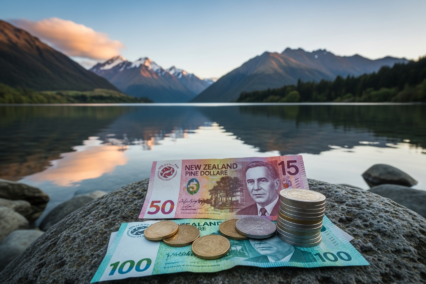
Coins: 10c, 20c, 50c, $1, $2
-
Banknotes: $5, $10, $20, $50, $100
-
The $1 coin has the kiwi bird on it, and this is why people sometimes call the currency the “kiwi.”
The currency of New Zealand stands out because of its design and its use of the polymer material. The country is proud of what is shown on every coin and note, reflecting the real spirit of New Zealand.
A brief history of the New Zealand Dollar and its value movements
The history of the New Zealand Dollar started on 10 July 1967. That was the day it took the place of the New Zealand Pound when the country changed to a decimal currency system. There was a lot of talk about what the new official currency should be called. Names like ‘kiwi’ and ‘zeal’ were looked at, but in the end, ‘dollar’ was the name that was picked.
At first, the value of the New Zealand Dollar was tied to the US Dollar. But in 1985, this fixed way of setting the dollar’s value ended. Now, the NZD is free to change up or down in value, and this is decided by people buying and selling it on the big foreign exchange market.
In the past year, the NZD value has moved a lot, which is normal for a floating currency. To give one example, the NZD’s value next to the US Dollar has gone from 0.5584 to 0.6121 in the last 52 weeks. These ups and downs show the way global and New Zealand economic conditions change.
Exchange Rates and Influencing Factors
The exchange rate of the New Zealand Dollar, or NZD, shows how much it is worth when you compare it to other money from around the world. Some of the most common pairings you will see in currency rankings are NZD with the US Dollar (USD), Australian Dollar (AUD), British Pound (GBP), and Euro (EUR). The Zealand dollar exchange rate does not stay in one place. It changes all the time because of what is happening in the market.
It is important for people to know about these rates. This is true if you are part of trade in other countries, you travel, or you send money overseas. There are also many reasons these rates go up or down. These can be things like news about the economy, or what is going on around the world. Next, we will look at what the current exchange rates are and what causes the NZD’s value to move.
Current NZD exchange rates against major currencies
Recent trends show how the NZD moves with other big currencies. Right now, the New Zealand dollar is strong against the US dollar, the Australian dollar, and the euro. For people who want to send money to another country, the value can change quickly. This gives you a good chance to make your currency change at the right time. The New Zealand dollar does well against the British pound and Japanese yen too. That is why it is a top pick for travelers and people who want to invest.
Main factors affecting the NZD exchange rate
The NZD exchange rate is not kept at one fixed value. The government does not use a peg for the official currency of New Zealand. The price goes up and down in real time because of supply and demand in the foreign exchange market. A few main things make these forces change, and that can make the value of the official currency of New Zealand go up or down.
One big factor is the Official Cash Rate (OCR). The Reserve Bank of New Zealand manages this rate. When interest rates are high, the country can get more foreign money coming in. This makes more people want to get NZD. So, it gets stronger against other big currencies like the USD, GBP, and EUR.
Other things that also matter are:
-
Commodity Prices: The economy in New Zealand gets a lot from selling things like dairy and meat. Global prices for these goods can go up or down. This has a strong pull on the trade numbers and the exchange rate of the currency of New Zealand.
-
Economic Performance: There are some key numbers like GDP growth, inflation, and jobs. These show how the New Zealand economy is doing, and can change if investors want to buy or sell NZD.
-
Global Market Sentiment: The NZD is a smaller currency in the world. Many times, what people feel about risk can pull it up or push it down. When the world is not sure, investors may go after “safe-haven” money instead, and leave
Currency Exchange and International Transfers
When you want to send money to another country or swap money for travel, it is important to know how things work if you want a good deal. You can use an online currency converter to get a quick look at the New Zealand dollar exchange rate in real time. But keep in mind, the rate you see may not be the same as the one you get when you send money.
If you need to change money to NZD or from NZD, banks and international money transfer services will add a margin to the market rate. It is helpful to learn how currency conversion works. This will help you find the best exchange rate before you send money or do money transfers with the New Zealand dollar.
How to convert to and from New Zealand Dollars
Changing your money to or from New Zealand Dollars (NZD) is an easy process. There are a few ways to do this, and you should check them to make sure you get a good exchange rate. If you want to change US dollars to New Zealand dollars, you can use a bank, a money transfer service, or a currency exchange booth for this.
You can use an online currency converter to see the mid-market or real-time Zealand dollar exchange rate. This exchange rate is what big banks and finance groups use. But, when you do your own money swaps, you will get a different exchange rate. This is because the provider adds a fee or a bit extra to the rate.
To get started, you can:
-
Compare exchange rates of new zealand dollar from different options, like your bank and an online money transfer place.
-
Use a currency converter to check the nzd to usd rate. This helps you know if the rate you get is good.
-
Look at any transfer fees, and check these along with the exchange rate so you know what the whole cost to exchange your usd or nzd will be.
Where to find the best NZD exchange rates and travel tips
Getting the best exchange rate for your NZD can help you save a lot of money, especially if you need to make a big money transfer. Many people use banks because they are easy to find, but they do not always offer good rates or low fees for money transfers or currency exchange. There are online money transfer services that often give you a better Zealand dollar exchange rate.
The best way to get a good exchange rate is to compare different providers. You can use currency rankings or review sites to check who has the lowest fees and best rates. Try not to exchange large amounts of cash at airports—the rates and fees there are a lot higher.
Here are some travel tips:
-
Compare online money transfer services before you go to buy NZD.
-
Think about using a credit card that does not charge foreign transaction fees when you shop in New Zealand.
-
Most of the time, it is less expensive to get cash from an ATM after you arrive than to exchange it before you go.
-
Be sure to check the exchange rate and any extra fees when you are about to make a transaction.
Conclusion
To sum up, it is important to know about the New Zealand Dollar (NZD) if you plan to use this money. This could be for travel, for investing, or for any trade. The NZD has some features that make it different. It can teach you a lot about New Zealand’s economy and also a bit about its culture. If you watch the exchange rates and know where to get the best deal, you can make choices that help you with your money. If you want to learn more about the world of money or need help, you can get a free chat to help you find the best way forward.
Frequently Asked Questions
Where can I get reliable historical data on NZD exchange rates?
You can get good historical data for the New Zealand dollar exchange rate from websites run by central banks, like the Reserve Bank of New Zealand. Well-known financial news sites and currency data sites also show clear charts and information about the Zealand dollar exchange rate.
Is it better to buy New Zealand Dollars in advance or on arrival?
For the best exchange rate, it’s good to wait until you get to New Zealand. You can take out NZD from a local ATM. Buying Zealand dollars before you go may cost you more. You can also use a multi-currency travel card or a credit card that has low fees for using money in other countries.
Which banks in New Zealand offer competitive foreign exchange rates?
Major banks in New Zealand, such as ANZ, ASB, BNZ, and Westpac, give you foreign exchange services. But the exchange rate for NZD at these banks may not be as good as what you get from online money transfer services. These online sites often have lower fees and better rates for your New Zealand dollar.