Key Highlights
-
Opening a UK bank account is important if you are a New Zealander in the UK. It helps you look after your money while you are there.
-
To get a current account, you will need to show proof of identity and proof of address.
-
Many UK banks let you begin your application online, so you can get it done quicker.
-
You can pick from different types of accounts like everyday current account or student accounts made for students.
-
When your bank account is open, you will get a debit card. You can also use online banking for your daily needs.
-
Some banks give extra support to international customers to help them get started.
Introduction
Moving from New Zealand to the UK can be a big step, and it brings a lot of new things to get used to. One of the important things to do will be sorting out your money. If you open a UK bank account, it will be easier for you to pay for rent, bills, and your everyday spending in the UK. This can save you a lot of trouble. The way banks work in the UK might not be what you know from New Zealand, but don’t worry. This guide is here to help you understand what is needed when you open a current account and what it means to be a UK resident for bank account purposes. This way, you will get your money matters sorted out quickly and get the most out of your time in the UK.
Understanding Banking in the UK for New Zealanders
Getting used to the UK banking system is an important step when you move there. The banks in the UK are checked by the Financial Conduct Authority. This means your money will be safe. You will see that most of the main banks offer many types of services for people who are new to the country.
For a lot of Kiwis, the hardest thing is giving a proof of address. But you do not have to worry, because there are ways to fix this. When you have your documents ready, getting a current account should be simple. Now, let’s talk about why you need a UK bank account and how it is not the same as what you might know from New Zealand.
Why New Zealanders Need a UK Bank Account
Having a UK bank account is important if you want to live in Britain. It is more than just something nice to have. You need it because your work will only pay your salary into a local account. Landlords also want you to have one, so you can pay your rent. If you try to do all of this through a New Zealand account, it will not be easy. The fees for sending money overseas can be high, and exchange rates can change, so you might end up paying more.
When you open a new account, you get a debit card. You can use the debit card for everyday spending. This would be things like buying a coffee or when you go out to shop each week. The account will let you set up Direct Debits, too. This is the normal way people pay for things like mobile phone bills, council tax, and other utilities. Paying with Direct Debits makes it easy to manage your bills each month.
For a UK resident, a UK current account is like a passport for your money. You need it to do all of the usual things in daily life. To open a bank account, you have to show proof of your identity and proof of your UK address. We will give you more details about what you need later on.
How UK Banks Differ from New Zealand Banks
The main job of a bank is about the same everywhere, but there are some key things to know about the UK banking system. You will not just see big banks here. You will also find building societies. These are groups that are owned by their members and they give out savings and mortgage products, much like banks do.
The UK also has a strong system to keep people safe when dealing with banks. The Financial Ombudsman Service helps to solve problems between people and their financial companies. This is a free service. It is fair and does not take sides. This means you get peace of mind. If you run into an issue, you know there is a clear way to get it fixed.
Some other things you will notice are:
-
Current Account Switching Service: You can easily change your current account from one bank to another in just seven working days. This is done through a formal and free service.
-
Overdrafts: Many people can get an arranged overdraft on their current account. The interest rates for these can be quite different, so it pays to check.
-
Packaged Accounts: There are some banks that offer current accounts with extra perks. You may get travel insurance or phone insurance if you pay a monthly fee. This can be useful for international students or people who are new to the UK.
Types of Bank Accounts Available to New Zealanders
When you start looking for a bank account in the UK, you will see there is a wide range of accounts to choose from. The account you go with will depend on your own needs. You might need a current account if you are working, studying, or just want to do daily transactions.
You can pick a simple current account for day-to-day spending, or there are accounts made for saving, and some are just for students too. There will be something that works for everyone. If you know what types of bank accounts are out there, it gets easier to pick the right one. In this guide, we will look at some of the main choices for Kiwis who are moving to the UK.
Current Accounts and Everyday Banking
A current account is the most common type of everyday bank account you will find in the UK. It is made to help you with your day-to-day money needs. This could be things like getting your pay, paying bills, or spending money in shops. When you open a current account, you get a debit card. You can use it to pay in stores, shop online, or get cash from ATMs.
Most current accounts let you use online banking and a mobile app. These are great as they help you look after your money when you are out and about. You can check your balance, move money, and set up payments whenever you need to. Some banks also give you handy tools, like spending trackers, which make it easier for you to keep to your budget.
If you are new to all this, there are different types of current account for you to choose from. Basic accounts give you just what you need, with no monthly fee. There are also reward accounts. These might give you cashback or pay some interest, but you might need to pay a small monthly fee for them.
If you want to change who you bank with, the current account switch service makes it quick and easy to move to another provider. You can pick what works best for you as your money needs change.
Savings, Student, and Specialist Accounts
UK banks give you more than just a basic current account. They have other kinds of accounts for different needs. If you want to save some money and get some interest, a savings account is a good option. These usually have better interest rates than current accounts. There might be rules about how often you can take out your money.
If you plan to come to the UK for study, many banks have student accounts just for you. These accounts often give you an interest-free overdraft. This can help you when money is tight. There are also special accounts for young people under 18.
UK banks sure have some special accounts for certain needs:
-
Student accounts: Made for people at university or college. These usually come with an overdraft and other good things for students.
-
Youth accounts: For kids and teenagers, often for those aged 11 to 17. They help you learn how to use a debit card and let you check your money by mobile banking.
-
Savings accounts: These include easy-access savers, fixed-rate bonds, and ISAs (Individual Savings Accounts). With these, you can get tax-free interest, which means you do not pay tax on the interest you get.
What You Need to Open a UK Bank Account
When you want to open your account, you need to get a few important things ready. UK banks have to check who you are and where you live. This is the law. So you will have to give proof of identity and proof of address.
The range of documents needed can change a bit between banks. It also depends on what kind of account you want. It’s good to have these documents before you fill out your application form. This way, things will go much easier for you. Let’s see what you will need.
Essential Documents and Proof of Identity
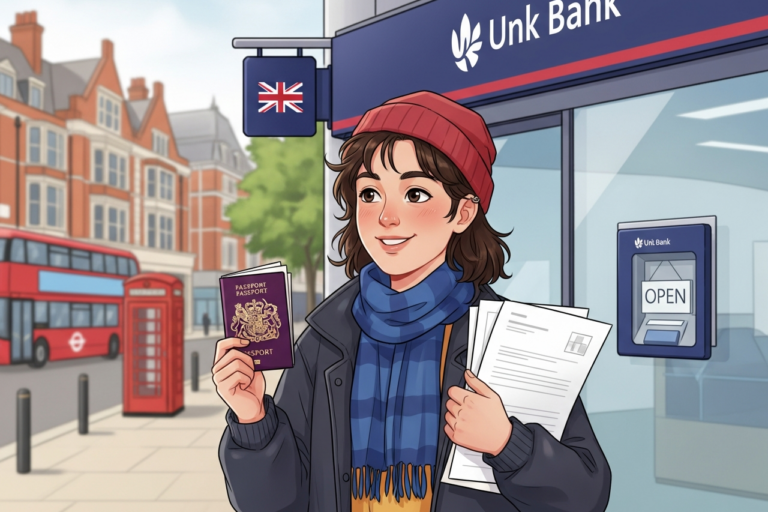
To show who you are, you have to give a photo ID that is accepted. Every UK bank will ask for this to keep out fraud and follow the rules. Your ID needs to have your full name and date of birth shown clearly.
The passport or a UK driving licence are what most people use for proof of identity. If you are from New Zealand, your passport is the main one you will go for. Some banks give you a way to use an app to scan your passport and check your ID on your phone. This will make things faster for you.
Here are the main things you can use as proof of identity:
-
A valid passport (non-UK passports are fine for most online sign-ups).
-
A current UK photo driving licence.
-
Some banks may also let you use a national identity card, but this does not happen much if you are not from the EU.
Proof of Address: Acceptable Documents for New Zealanders
Proving your UK address can be the trickiest part of opening a bank account when you’ve just arrived. Banks need a recent, official document that links you to a residential address in the UK. This is where many newcomers run into a classic chicken-and-egg problem: you need an address to get a bank account, but you often need a bank account to get a lease for an address.
Fortunately, banks accept a range of documents. If you’re renting, a tenancy agreement is often accepted. Utility bills (like gas, electricity, or water) or a council tax bill in your name are also standard proofs. Some banks may also accept a letter from your employer or university, or correspondence from the Home Office.
Many banks now allow you to complete the entire application online, but you will still need to provide digital copies of these documents.
|
Accepted Proof of Address Documents |
Details |
|---|---|
|
Utility Bill |
A recent gas, electricity, or water bill (usually less than 3 months old). |
|
Council Tax Bill |
Your council tax bill for the current year. |
|
Tenancy Agreement |
A current contract from a reputable letting agency. |
|
Bank or Credit Union Statement |
A statement from another UK bank or credit union showing your address. |
|
Letter from Employer/University |
A letter on headed paper confirming your address, often used by students and workers. |
Step-by-Step Guide: How to Open a UK Bank Account as a New Zealander
Now that you know what you need, let’s look at how to open your new bank account. You start by choosing the right bank and end by activating your card. This is a simple process. Most steps can be done at your new home.
Today, opening a bank account is much easier. You can fill in the application form and set up online banking in just one go. Follow these five steps to start using your bank account in the UK, and you will not have any trouble.
Step 1: Choose the Right UK Bank for Your Needs
Your first step is to pick the bank that works best for you. In the UK, there is a range of bank options to pick from. You can see big names like Lloyds and Halifax, or try modern choices that are only online. Each one has different types of bank account options, fees, and the kind of service you get as a customer.
When you look at your choices, think about the monthly fees, interest rates, what sort of overdraft you can get, and if they give extra help for people from other countries. It’s also good to find out if they are easy for new arrivals to join. Some are better for people the first time they open a new account. All proper banks are checked by the Financial Conduct Authority, so your money is safe with them.
Take time to look at the website for every range of bank you are thinking about. Check the bank account offers they have. Find an account for those new to the UK or the one with easy steps to open. Looking into this will help you get the right new account for what you need.
Step 2: Gather All Required Documents
After you pick a bank, the next thing you need to do is get all your paperwork sorted. This is a big part of the process, and it helps your application go more quickly and easily. As we have said before, banks ask for a range of documents to check your identity and where you live.
Make sure you have both your proof of id and proof of address ready before you start. If you are a Kiwi, your main form of proof of id will be your New Zealand passport. For proof of address, you can use something like a recent utility bill, a tenancy agreement, or an official letter.
To get ready, you should have these things with you:
-
Proof of ID: Your valid New Zealand passport.
-
Proof of Address: A paper like a council tax bill or a letter from your boss.
-
Personal Details: Your date of birth, how to contact you, and you may also need to give some info about your work and what you earn.
Step 3: Decide Between Online or In-Branch Application
You have two main ways to send in your application for a bank account. You can do this online or go to a branch. Applying online is the fastest and easiest for most people. Many banks have made their mobile apps better for opening a new account. Some even use a QR code to take you right to where you need to be. This works well if all your papers are already saved on your device.
Yes, you can often open a UK bank account online even if you are new to the country. This way is what most banks and people like best.
But, if you are not sure about something or your situation is a bit hard, visiting a branch can be very useful. The staff can help make things clear and answer your questions about your new account. Make sure you set up a time to visit, though. Not all banks let you just walk in for a new account.
-
Online/App: Quick, easy, and you can do it anywhere.
-
In-Branch: Great for those who want one-on-one help or like talking face-to-face.
-
By Phone: Some banks let you open your account by calling them.
Step 4: Complete Your Application and Verification
Whether you choose to do it online or go into a branch, you will need to fill out an application form. The form will ask for your personal details. It will need your address history and, sometimes, details about your job and how much you earn. Be sure you give correct information. If you make errors, there could be delays.
When you send in the application form, you will go on to the next step. This is the verification stage. Here, the bank checks your proof of identity and your proof of address. If you are applying online, you will likely need to upload scans or photos of your documents. Some bank apps may even ask you to take a selfie so it can match your face with your passport photo.
The time it takes for your account to open is not always the same. If your proof of address and proof of identity are all good and checked fast, your account could be ready in one or two days. Sometimes, the bank might ask for extra information and this could take a bit longer. Most banks will set up the account within a week.
Step 5: Activate Your Account and Start Banking
Congrats, your new bank account is open! The last thing you need to do is activate it, so you can start using it for everyday spending. Your bank will post you a welcome pack. This will usually have your new debit card and tell you how to get started with online banking.
You will get your debit card and PIN in the post, but they will come in different envelopes. This is to keep things safe. Once you have your card and PIN, you can activate the card. You can do this at an ATM, by making a payment, or on your online banking page. After this, you can use your debit card to shop or take out cash from your current account.
Next, set up your online banking profile and get the mobile app. This is a good way to keep track of your money right from your phone or laptop. You can send money, start payments, and keep an eye on what you spend. Most current accounts don’t have any monthly fees, but some with extra features or perks might cost a little bit more.
Support and Special Services for New Arrivals
Moving to a new country can be tough, and the banks in the UK know this. Many of them have special support and accounts to help you settle in more easily if you’re an international customer.
You may find accounts for students and customer support in more than one language. These services can help a lot when you start your life in the UK. When you pick your bank, ask them what help they offer. It can really improve your time with the bank.
Student and Youth Accounts for New Zealanders
If you’re a New Zealander who is going to the UK to study, you’re in a good spot. UK banks have a range of accounts made just for students. These student accounts are made for the student lifestyle. You can get a lot of good perks with these that you will not get with a standard bank account.
One big thing you get is a no interest arranged overdraft. This means you can borrow up to a set amount and not have to pay interest on it. This helps a lot if you are waiting for your student loan to come in. You will need to show proof that you have a place at a UK university when you apply for this kind of bank account.
If you are a younger Kiwi, there are youth accounts too. These accounts are for people aged 11 to 17. They help young people get started with money and learn how to use it well. Most youth accounts give you a debit card and let you use mobile banking. There is an age limit and you will not get an overdraft with these, so it’s a safe way to start with a new bank account.
Banking Support Services for International Customers
UK banks offer different kinds of help to make it easier for newcomers to use the financial system. Many banks have teams focused on giving advice to international customers. These teams can tell you how to open a current account and what to do with your money while you are in the UK.
If you have a problem with your bank that you cannot fix, you can get help from the Financial Ombudsman Service. This group helps to solve problems in a fair way and does not take sides. It is a very important safety net for people who use banks. The Current Account Switch Service is another useful tool. It helps you switch your current account to a new bank if you find a better offer. You do not need to stress because the Switch Service makes it simple.
Banks may also help people who find things harder, such as:
-
Guidance for refugees: If you are a refugee, you can get help opening a current account with other paperwork, like documents you may have when you first arrive. Sometimes, a social worker can help with this.
-
Basic Bank Accounts: You can get this type of account if you have a low credit score or if you are getting payments like Universal Credit. These accounts let everyone have banking services.
-
Information Hubs: On many banks’ websites, you will see “New to the UK” sections. These have easy guides and checklists so you know what to do first.
Conclusion
To sum up, opening a bank account in the UK if you are from New Zealand can look hard at first, but you can make it simple if you know what you need and get ready. When you know the different bank accounts, have your papers sorted, and follow each step, it gets much easier to get things done with the bank. This will help you manage your money while living in a new place and make you feel safe as you start a new life. If you want to get started or need a hand, you can reach out and ask for help to set up your UK bank account.
Frequently Asked Questions
Can I open a UK bank account before arriving from New Zealand?
Most high-street banks in the UK want you to be a UK resident with a UK address before you open a bank account. While some international banks let you start the process from outside the country, it’s much easier to open your new bank account when you get there. This is because you will need to give proof of your address in the UK.
What are the typical fees for UK bank accounts?
Most regular current accounts do not have a monthly fee for normal banking. A basic account is also free. But some “packaged” accounts ask for a monthly fee and give extra things, like insurance. You may have to pay other fees if you use your overdraft or send money over to another country. Always look at the account’s terms before you start.
How long does it take to open a UK bank account as a New Zealander?
The quickest way to open a current account is to apply online or use a mobile app. If your application form has all the needed details and your papers are checked with no problems, you can get your current account in just one or two business days. If the bank asks for any additional information, it can take up to a week.
Which UK banks are most welcoming to New Zealand customers?
Many big banks you see on the high street, like Lloyds and Halifax, are ready to help people new to the UK. You should look at the “New to the UK” parts on their websites. The best pick is often a bank that gives clear advice to international people and lets you use different things for proof of address.