Key Highlights
-
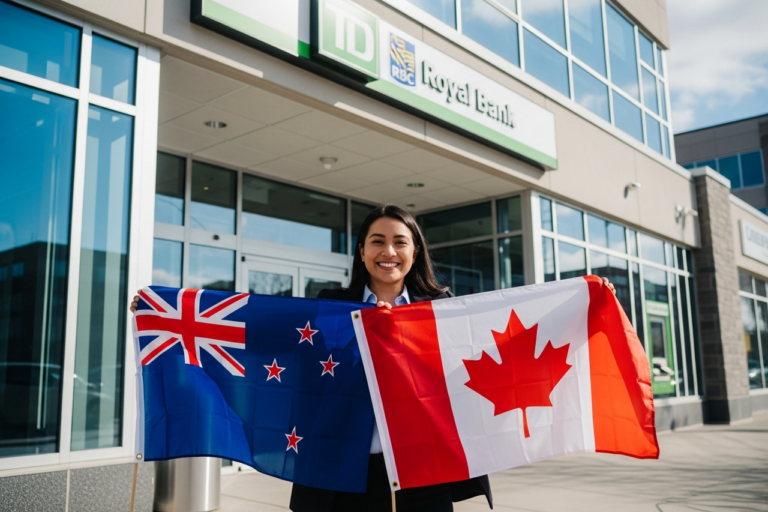
If you are from New Zealand, you can open a Canadian bank account. You can often do this before you get there.
-
The main accounts are a chequing account for daily money needs and a savings account for when you want to put money away.
-
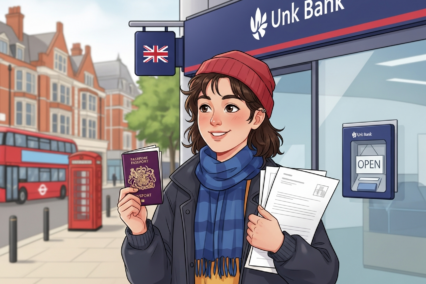
You must give the right ID, like your passport and something that shows your Canadian address, to open an account with a financial institution.
-
A social insurance number is usually needed if your account will earn you interest.
-
Many banks have special offers for new people. These can include no fees and some other good extras.
-
When your account is open, you can get direct deposit for your pay. You can also apply for a credit card.
Introduction
Moving to Canada from New Zealand is a big step, and getting your money sorted should come first. Opening a Canadian bank account will help you look after your money, pay for things each day, and get your pay. If you are new in the country, picking a bank or financial institution, and finding the right bank account, can seem hard at the start. This guide will tell you all you need to know about opening a bank account in Canada. It will make things simple and easy for you.
Understanding the Canadian Banking System
The Canadian banking system is led by a small number of big banks known as the “Big Five.” These big banks offer many kinds of personal bank accounts. There is an account for every need. If you are new to Canada, it is simple to open a bank account. Many banks have special deals to help you start your money journey. These can also help you to build your credit history.
Most Canadian financial institutions give you very good online banking options. You can check your bank account balance or your past transactions from anywhere. The steps are simple. Pick a bank, get your ID ready, and then you can apply for an account online or go in person.
Types of Bank Accounts Available in Canada
When you open an account in Canada, you’ll usually pick between two main types: chequing accounts and savings accounts. Both have their own use, and a lot of people have both to help with their money. Opening them takes about the same steps, but each account works a bit differently.
A chequing account is good for your day-to-day banking. You use it to pay bills, buy things, and get direct deposit from your boss. A savings account is where you put money you don’t want to spend right away. With these, you can work towards goals, and you will earn some interest on the amount you keep in there.
Here are the main types of accounts:
-
Chequing Accounts: Good for your daily spending and payments.
-
Savings Accounts: Used for holding onto money and getting interest.
-
Hybrid Accounts: Some banks have these, where you get what chequing accounts do, plus interest like a savings account.
-
Student or Senior Accounts: These are made for people at school or older people and give special perks just for them.
Major Banks in Canada for New Zealanders
Canada’s banking scene is dominated by the “Big Five” banks. These are large, well-established institutions with branches and ATMs across the country. For New Zealanders, these banks are often the most straightforward choice for opening your first bank account, as they have extensive experience assisting newcomers and offer robust services, including user-friendly mobile banking app options.
Choosing the right financial institution depends on your personal needs. Consider factors like monthly fees, branch locations, and special offers for new immigrants. It’s a good idea to use a reliable source like the Financial Consumer Agency of Canada’s account comparison tool to weigh your options.
Here are the “Big Five” banks in Canada:
|
Bank |
Notes for Newcomers |
|---|---|
|
Royal Bank of Canada (RBC) |
Offers comprehensive newcomer packages and has a large network. |
|
Toronto-Dominion Bank (TD Bank) |
Known for its long branch hours and strong customer service. |
|
Scotiabank |
Has a StartRight™ Program specifically designed for non-residents and newcomers. |
|
Bank of Montreal (BMO) |
Provides newcomer offers, including no-fee banking for a set period. |
|
Canadian Imperial Bank of Commerce (CIBC) |
Often has no minimum deposit requirements and special offers for new immigrants. |
Key Differences Between Chequing and Savings Accounts
The main difference between a chequing account and a savings account is what you use the account for. A chequing account is made for your everyday money needs. You use it to pay bills and shop. You will often pay monthly fees for these accounts unless you meet some rules to have the fees dropped. Chequing accounts do not give you a high interest rate.
A savings account is there to help your money grow over time. Savings accounts offer a better interest rate than a chequing account. But for this, you can only take out money a few times each month without paying extra. The Financial Consumer Agency of Canada can help you look at and compare what each account offers.
Features of Chequing Accounts
A chequing account is a simple way to handle your daily spending in Canada. When you set one up, the bank gives you a debit card. You can use this card at ATMs to get cash or pay for things right from your chequing account. The chequing account is for ease and made for people who use it often.
You can look after your chequing account with online banking or in a mobile app. You can pay bills, send money, or see where your money goes. Make sure you know about any transaction fees. Some types of chequing account let you have as many transactions as you want. Some have a monthly limit and will add fees if you do extra transactions.
Key features often have:
-
A debit card to use in shops and to get cash from ATMs.
-
Unlimited or a certain number of monthly transactions.
-
Online banking and a mobile app for easy access.
-
Overdraft protection you can choose, so you are covered if there is not enough money in your account.
Features of Savings Accounts
A savings account is a good spot to put your money, whether you have a short-term or long-term goal. The best part of this bank account is that you can earn some interest on your bank account balance. The money you keep in it can grow as time goes by. Many banks try to offer a good interest rate. Some even offer a competitive interest rate for new accounts.
A savings account is different to a chequing account. It is not meant for day-to-day use. There are usually only a set number of free withdrawals or transfers each month. This setup makes you less likely to take money out, so your bank account balance has more time to earn interest. Online statements make it simple for you to keep track of your savings.
Common features of a savings account are:
-
An interest rate applied to your balance.
-
Limited free transactions per month.
-
No monthly fees, or fees that are easily waived.
-
Features to help you save, like automatic transfers from your chequing account.
What You Need to Open a Bank Account as a New Zealander
If you are from New Zealand, you will see that Canadian banks have simple eligibility requirements for opening a bank account. The main thing you have to do is show your identity. For identification purposes, you need to give certain documents that show who you are and where you live in Canada.
Most of the time, the bank will ask for two pieces of identification. One is to prove your identity, and the other is for your address. It is a good idea to get these documents ready before you start so everything goes well. Now, let’s see what you will need.
Required Documents and Identification
To open a bank account, you must show documents to prove your name, date of birth, and that you have a permanent address in Canada. The bank needs to check who you are for safety and to follow the law. If you have the right papers ready, the whole thing will be fast and simple.
You have to give two pieces of valid identification. One of them must be photo identification. You can not use the same document for your identity and your Canadian address. So, if you show your driver’s license as your photo ID, you need another document to show your Canadian address.
Here are some documents you can use:
-
A valid passport from New Zealand.
-
A Canadian driver’s license.
-
Your permanent resident card or your immigration papers.
-
A recent utility bill or bank statement that has your Canadian address on it.
-
A tax notice from the Canadian government.
Do You Need a Social Insurance Number (SIN)?
You do not have to give your Social Insurance Number (SIN) to open a bank account in Canada. But if you have one, it can make things easier. The SIN can help the bank check who you are. It can also help you get some financial products and services more easily.
Step-by-Step Guide to Opening a Canadian Bank Account
Now that you know the basics, let’s go through the account opening process. If you follow these steps, you can set up your Canadian bank account without any problems. It is a good idea to look into each financial institution before making a choice. This way, you can pick one that works for you as a newcomer.
Opening a bank account is not hard. You just need to choose a bank, get your papers ready, fill out an application, and then put money in your new account. Here is a simple look at every step.
Step 1: Choose the Right Bank and Account Type
Your first step is to look at different banks and the types of accounts they have. The “Big Five” banks in Canada are well known, but there are smaller banks and credit unions too. The smaller ones might give you better service or rates. Try to find special newcomer packages. These can help you save money on monthly fees.
When thinking about what type of account is best for you, think about how you use your money. Will you take money out a lot, or do you want to save up and get a good interest rate? Many people choose to open both a chequing and a savings account. This way, they can use one for spending and one to grow their money. It is a good idea to use a reliable source like an account comparison tool to help you decide.
Keep these things in mind when you pick an account:
-
Monthly fees and how to waive them: Pick accounts that have low monthly fees or none at all.
-
Newcomer offers: Some banks have no-fee deals, sometimes for the first one or two years.
-
Branch and ATM access: Choose a bank that has a branch or ATM you can get to easily from your house or job.
Step 2: Gather Your Documents
Once you pick a bank and type of account, the next thing to do is get your paperwork ready. The bank has to check who you are, so if you have the right pieces of identification, it helps the process go faster. Most banks ask for two separate forms of identification.
Your papers need to show your name, date of birth, and your current Canadian address. Most people use their passport as photo identification. You also need another document, like a bill or a lease, as proof of address. Always check that your documents are not out of date.
Here’s what you need to collect:
-
A valid piece of photo identification (for example, your New Zealand passport).
-
A second piece of identification (such as your work permit or permanent resident card).
-
Proof of your Canadian address (this can be a utility bill, rental agreement, or government letter).
-
Your Social Insurance Number (SIN), if you are opening an account that pays interest.
Step 3: Apply Online or In-Branch
With your documents ready, you can now open a bank account. You have two main ways to do this. You can apply online, or you can go in person to a branch of the financial institution. Many banks now let you do everything online, so you can open your bank account from home using the bank’s website or mobile app.
Applying online is fast and easy, and you can do it at any time. You just fill out a form with your details and upload your identification papers. The bank will check your information, and this may take a few business days. This way is good if you are happy to use digital banking.
If you want, you can still go to a branch to open your account.
-
Online Application: Fast, easy, and can be done anytime. You’ll need to upload your documents.
-
In-Branch Application: You can speak directly with a banking advisor who can guide you through the process and answer your questions.
-
Book an Appointment: It’s often a good idea to book an appointment online before visiting a branch to avoid waiting.
Step 4: Fund Your Account and Activate Banking Services
After the bank says yes to your application, the last thing to do is start using your new bank account. Most banks ask that you put some money in to open the account. Some need a set amount as a first deposit. Others do not need this. You can put money in by sending cash from another bank or using money transfers.
When you add money, your debit card should come in the mail within a few business days. The bank will also give you steps to set up your online banking and mobile app. At this time, you may want to set up things like regular payments or talk to your boss about getting your pay sent straight to your bank account with direct deposit.
To use your new bank account fully, please do the following:
-
Activate your debit card: Follow the steps that the bank sends with your card.
-
Set up online and mobile banking: This will let you see and use your account all the time, day or night.
-
Consider other services: Ask the bank about getting a credit card. Using a credit card can help you build your Canadian credit history.
Common Fees and Minimum Deposit Requirements
When you pick a Canadian financial institution, you need to know about the fees that come with it. Most chequing accounts will have monthly fees. But, you can often get these fees waived if you keep a set amount of money in your account. For example, you might not have to pay a $15 monthly fee if you have at least $4,000 in your account. You can use the Financial Consumer Agency of Canada website to compare fees between banks. Most savings accounts do not come with monthly fees.
During the account opening process, you do not see many minimum deposit requirements, especially with newcomer packages. Many banks let you open your account with no starting deposit. But, to keep your account in good standing and avoid some fees, you may need to keep a certain balance. It is best to read the account agreement carefully to know all the charges you might get.
Typical Charges for Chequing and Savings Accounts
The fees for a chequing account can change a lot based on the plan you pick. Basic accounts come with lower monthly fees, but there may be a limit on how many transactions you can do in a month. If you go over this limit, the bank will charge transaction fees for every extra debit, withdrawal, or e-Transfer. Premium accounts often give you unlimited transactions and some extras, like an annual fee rebate if you have a credit card linked to the account.
A savings account is usually cheaper to keep open. Most of them come with no monthly fees at all and you do not need to keep any set amount in the account. But, these accounts are meant for saving, not for spending your money often. If you take out cash more than the allowed number of times in a single month, you may have to pay fees.
Here are some common fees you should know about:
-
Monthly Account Fees: These are from $4 to $30 for a chequing account, but you can often get them waived.
-
Transaction Fees: You get charged these if you go over your monthly transaction limit.
-
Overdraft Fees: This is a fee for using overdraft protection.
Conclusion
Opening a bank account in Canada as a New Zealander might feel hard at first. But when you have the right facts and get ready, it turns into a simple thing to do. You need to know how the Canadian banking system works, and what kinds of bank account options are there. It will help you pick what works best for your money needs. Be sure to get all the right papers and follow every step in the guide. This makes it easy for you to apply. When you do all this, you can feel sure about using your new bank account and enjoy what comes with it. If you want to move forward with your money plans in Canada, talk to the bank you choose to get started.
Frequently Asked Questions
Can New Zealanders open a Canadian bank account online?
Yes, there are many banks in Canada where you can open a bank account online. The account opening process for online banking is easy and fast. You have to fill out an application and send in clear photos of your ID. You do this step by step using the bank’s safe digital banking system.
What are the fastest banks for account opening in Canada?
Digital-first banks and big financial institution players with advanced mobile app technology often have the fastest account opening process. Some banks say you can get a bank account online in just a few minutes. You need to have all your documents and a Canadian mobile phone number ready to do this.
Is it possible for non-residents to open a bank account in Canada?
Yes, you can open a bank account in Canada even if you are not living there. You will need to show some pieces of identification, like your passport. The account opening process is quite simple. But some banks may ask you for a Canadian address, even if you do not live in Canada full-time.
Are there special offers for newcomers at Canadian banks?
Most big banks in Canada have welcome offers for people new to the country. These deals can give you no monthly fees when you open a new bank account for the first year or two. You can also get a free credit card, plus they may give back the yearly fee. There are other great perks that help you get started. Remember to check the eligibility requirements for each personal bank account offer.