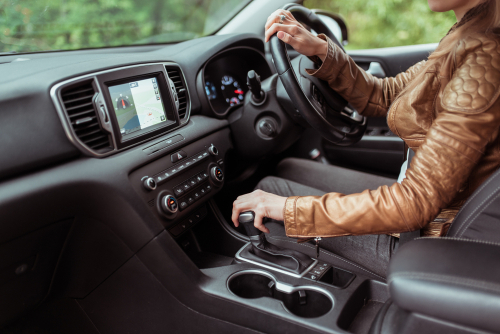

When travelling to another country, renting a car is often the best way to get around. But it can feel immediately more complicated when you discover that you’ll need to drive on a different side of the road than you’re used to, or to circle roundabouts in the opposite direction. Seeing the steering wheel is on the other side of the vehicle might also come as a shock, as will the realisation that you’ll need to change gears with a different hand.
That said, the concept of left-hand and right-hand drive countries is more complex than it needs to be. In this Remitly article, we explain what the concept means and why some countries use RHD while others drive on the left. We’ll also provide a comprehensive list of all right-hand drive countries in the world, so you know what to expect in the next place you visit.
Right-hand drive vs left-hand drive: what’s the difference?
Most people get confused about what these terms mean. But it becomes much easier once you understand that it simply refers to the position of the steering wheel, which in turn determines what side of the road you drive on.
- Right-hand drive (RHD) means the steering wheel is on the right side, and these countries drive on the left side of the road.
- In left-hand drive (LHD) countries, the steering wheel sits on the left side of the car, but motorists drive on the right side of the road.
So, the United Kingdom is a right-hand drive country, even if motorists always keep left.
Why do some countries drive on the left?
Why is it that some countries drive on the left, with RHD cars, while others drive on the right?
The most likely theory is that it dates back to an ancient Roman custom. In those olden days, travellers riding on horseback tended to stick to the left side of roads to keep their right hand free to pull their weapon and face threats coming from the opposite direction, since most people are right-handed. As the Romans built roads and marched their armies across the Empire, this became customary and spread to the provinces, such as Roman Britain.
Popular culture suggests that the “keep left” rules became official across much of Europe around 1300 CE, when Pope Boniface VIII instituted the first-ever Jubilee Year. As part of the celebrations, he declared that all pilgrims to Rome should travel on the left. However, there is no documented evidence for this decree, so we can’t be sure.

Why the “keep left” culture persists today
But then why do people drive on the left in Britain today, but not in Italy?
Ensuring horses and carts stayed on the left was customary for centuries, but this changed gradually due to cart drivers, who preferred to sit at the left rear of their horses. This position allowed them to have better control over the carriage with their right hand. Driving on the right also gave them a better view of the road.
As a result, Britain passed its General Highways Act in 1773 to tackle congestion issues, advising everyone to keep left. This practice spread with the British Empire, which is why it is so common in regions such as Africa, Oceania, and the Caribbean.
The US state of Pennsylvania introduced a “keep right” law in 1792, and much of the rest of the country—as well as Canada—followed its example. Similarly, it became customary in France, and the culture spread across much of Europe through Napoleon’s conquests.
What role did cars play?
The earliest cars were designed for drivers sitting on the left and driving on the right side of the road. Due to the placement of controls near the ground, it was easiest for motorists to sit left, reach down, and manage the components with their right hand, all while driving on the right.
This LHD became the standard configuration in the United States with the introduction of the Ford Model T, released in 1908. While American cars were imported to the UK, Australia, and more, these countries soon started manufacturing their own right-hand drive vehicles for left-flowing traffic, which became the norm by the 1920s.
Will RHD countries switch to LHD?
There have been questions about whether RHD countries like the UK would change their driving rules to align with most of the rest of the world. After all, they wouldn’t be the first to do so. Sweden, for example, made the switch to LHD in 1967, followed by Iceland in 1968, to match mainland Europe.
The UK investigated this question in the 1960s, but the cost of redesigning roads, moving traffic lights, and replacing existing car designs was considered just too much.
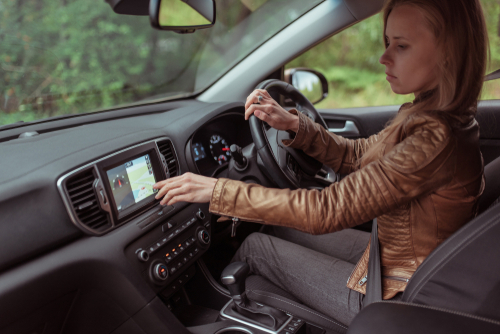
Full list of right-hand drive (RHD) countries
The main reference for right-hand drive countries is the United Kingdom, which is different from mainland Europe, where almost everyone uses left-hand drive.
Other countries with right-hand drive systems are primarily former British colonies, including Australia and India.
Below is a complete list of right-hand drive countries by region.
| Region | RHD Countries & Territories |
| Europe | Cyprus, Guernsey, Ireland, Isle of Man, Jersey, Malta, United Kingdom |
| Asia | Bangladesh, Bhutan, Brunei, Hong Kong, India, Indonesia, Japan, Macao, Nepal, Pakistan, Singapore, Sri Lanka, Thailand |
| Africa | Botswana, Eswatini (formerly Swaziland), Kenya, Lesotho, Malawi, Mauritius, Mozambique, Namibia, Saint Helena, Seychelles, South Africa, Tanzania, Uganda, Zambia, Zimbabwe |
| Americas/Caribbean | Anguilla, Antigua and Barbuda, Bahamas, Barbados, Bermuda, British Virgin Islands, Cayman Islands, Dominica, Falkland Islands, Grenada, Guyana, Jamaica, Montserrat, Saint Kitts and Nevis, Saint Lucia, Saint Vincent and the Grenadines, Suriname, Trinidad and Tobago, Turks and Caicos Islands, United States Virgin Islands |
| Oceania | Australia, Cook Islands, East Timor, Fiji, Kiribati, Malaysia, Nauru, Niue, New Zealand, Papua New Guinea, Pitcairn Islands, Samoa, Solomon Islands, Tokelau, Tonga, Tuvalu |
Driving abroad: what UK residents need to know
So, with this in mind, what should UK residents keep in mind before planning to drive abroad?
- If you take your RHD car to an LHD country, perhaps via a tunnel, bridge, or ferry, you can legally drive on the right side of the road. However, it’s considered more dangerous due to reduced visibility of traffic conditions.
- If you choose to rent a car, bear in mind that you’ll be managing the controls with the other hand. But foot pedals remain in the same positions, and gears change in the same configuration, with the lowest gears on the left climbing to the highest gears on the right. While most people adapt after a few hours behind the wheel, some drivers prefer to rent an automatic car to make things easier.
- Remember that it is not just what side of the road you drive on that changes, but also traffic flows. In LHD countries, you’ll need to give way to the left and travel anti-clockwise around roundabouts.
- You can use your UK driver’s license in some countries, such as the US and Australia, but others require you to get an International Driving Permit (IDP). You can get one from participating PayPoint stores if you have a valid UK driver’s licence, depending on whether you’ll need it in your chosen destination.
- Consider reading up on local driving laws before you travel, as they can vary from one place to another. For example, some countries prohibit driving in flip-flops, while others recommend using your horn when approaching blind corners to alert potential oncoming traffic.
While this can seem like a lot, for experienced drivers, switching from RHD to LHD is usually a fairly simple process.
Driving on the right
While most of the world uses LHD, which means they drive on the right side of the road, a small but significant number of RHD countries drive on the left. This includes the UK and many former territories of the British Empire, such as Australia, India, and most of the Caribbean and Oceania.
This means that it can be a bit disconcerting for UK residents to drive in Europe or the Americas, as it involves not only using the other side of the road, but controlling the car with the opposite hand while following reversed traffic flows.
That said, most drivers adapt after just a few hours behind the wheel, and renting an automatic can make it even easier. So, don’t let fear of driving stop you from exploring your next travel destination from behind the wheel.
FAQs
Which side of the road do they drive on in the USA?
In the United States, people drive on the right side of the road, which means they use left-hand drive cars, with the driver sitting on the left side of the vehicle.
How many countries in the world are right-hand drive?
Around 75 countries and territories use RHD vehicles, meaning they drive on the left. They are mostly former British colonies and territories that adopted the custom from the UK, including many regions of Africa, Asia, the Caribbean, and Oceania. They make up about 35% of the world’s population.
Is Japan a right-hand drive country?
Yes, Japan drives on the left, making it a right-hand drive country. This is often linked to the samurai practice of carrying their sword on the left, and therefore walking on the left to ensure that these weapons didn’t clash in the middle of the road. However, it’s probably more closely related to British influence during the Meiji era, when railroads were built according to British customs, including RHD.
Why did Sweden switch driving sides?
Sweden used RHD, driving on the left, until 1967. It switched to align with neighbouring countries such as Norway and Denmark, plus the rest of mainland Europe, to reduce accidents when crossing borders.