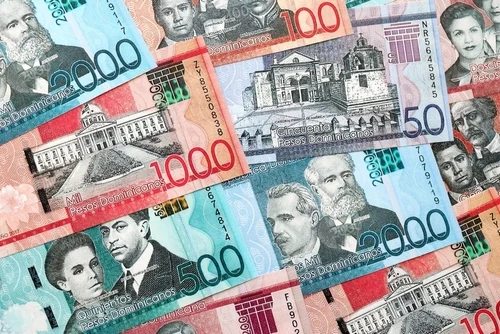
The official currency of the Dominican Republic is the Dominican peso (DOP), issued by the Banco Central de la República Dominicana. Banknotes come in denominations of 50, 100, 200, 500, 1,000, and 2,000 pesos. UK visitors should exchange money on arrival for the best value, as paying in US dollars typically costs more.
All the facts at a glance
- The Dominican peso (DOP) is the official currency of the Dominican Republic, issued by the Banco Central de la República Dominicana.
- It’s been a fiat currency since 1963 and comes in banknotes of 50, 100, 200, 500, 1,000, and 2,000 pesos.
- UK travellers get better value exchanging GBP for pesos on arrival rather than paying in US dollars or exchanging at UK airports.
- Cards are widely accepted in tourist areas, but cash is still essential outside Santo Domingo and Punta Cana.

What Is the Currency of the Dominican Republic?
The Dominican peso (DOP) is the official currency of the Dominican Republic, sometimes written as RD$ to distinguish it from the US dollar and other pesos. It is issued by the Banco Central de la República Dominicana and has been a fiat currency since 1963, meaning its value isn’t tied to gold or any other commodity.
Much like the US dollar, it is divided into 100 centavos, and it uses the same $ symbol, which can confuse first-time visitors. As with several other currency symbols around the world, the same character can mean different things depending on where you are. UK travellers should be aware of dollar pricing for hotel extras and excursions, as fees are usually marked up. Pay in pesos where you can, and if a card terminal asks whether to charge you in GBP or pesos, choose pesos.

Dominican Peso Denominations: Coins and Banknotes
As of 2026, the Central Bank of the Dominican Republic or Banco Central de la República Dominicana confirms the following denominations are in circulation:
- Coins: 1, 5, 10, and 25 pesos
- Banknotes: 50, 100, 200, 500, 1,000, and 2,000 pesos
Each note is easy to tell apart at a glance:
- 50 pesos: The note is purple in colour, featuring the Basilica Cathedral of Santa María la Menor, the oldest cathedral in the Western Hemisphere.
- 100 pesos: Orange in colour, the note depicts the three founders of La Trinitaria, Juan Pablo Duarte, Ramón Matías Mella Castillo, and Francisco del Rosario Sánchez, honoured as the Dominican Republic’s founding fathers.
- 200 pesos: Easy to spot in pink, honouring the Mirabal sisters, Patria, Minerva, María Teresa, and Dedé, who resisted the Trujillo dictatorship.
- 500 pesos: Green/turquoise in colour, featuring the portraits of revered writers Salomé Ureña and Pedro Henríquez Ureña.
- 1,000 pesos: A red note showing the Alcázar de Colón, a 16th-century mansion in Santo Domingo’s Ciudad Colonial.
- 2,000 pesos: A blue note showcasing the prominent figures Emilio Prud’Homme and José Reyes.
Ensure that you have a combination of smaller denominations, such as 50s and 100s, handy, since many smaller shops, taxis, or market stalls won’t be able to break a 1,000 or 2,000-peso note.

Using Currency in the Dominican Republic: Practical Tips for UK Travellers
You get the most value for your money when you pay for services in pesos rather than GBP or USD. Here’s how to manage your money as a UK visitor:
- Exchange on arrival, not before you fly: UK bureaux de change (including the Post Office and Travelex) rarely stock Dominican pesos. Even when they do, the rates for exotic currencies in the UK are usually poor. Instead, exchange GBP for pesos once you land, or withdraw pesos directly from a bank ATM.
- Use ATMs for the best rates: Bank-operated ATMs typically offer more competitive rates compared to standalone tourist-area machines or those at hotel exchange desks. Most charge a withdrawal fee, so it is advisable to check with your UK bank about foreign transaction charges.
- Carry cash with you: While Visa and Mastercard are widely accepted in Punta Cana, Santo Domingo, and Puerto Plata, card terminals are rare in smaller towns. It is best to carry physical currency if you plan to explore rural areas, dine at local restaurants, or use public transport.
- Reconvert leftover pesos before you leave: Dominican pesos are highly difficult to exchange back in the UK. Plan to spend your remaining cash during the final days of your trip, or convert it back to GBP at a Dominican bank or airport counter before your departure flight.
A Brief History of the Dominican Peso
Since gaining independence in 1844, the Dominican Republic has transitioned through multiple monetary systems. The nation introduced its first peso in 1844, later experimenting with a secondary currency called the franco between 1891 and 1897.
In 1905, the country adopted the US dollar directly, at a fixed conversion rate of 5 pesos to 1 USD. That changed in 1937, when the peso oro (“golden weight”) was introduced, initially pegged to gold before being tied to the dollar instead.
Since 1963, the currency, renamed the peso dominicano, has operated as a fiat currency, in line with most of the world’s modern monetary systems, according to the Banco Central de la República Dominicana.

Sending Money to the Dominican Republic from the UK
According to World Bank data, the Dominican Republic is one of the largest recipients of remittances across Latin America and the Caribbean. Money sent home by Dominicans abroad contributes to a significant share of household income across the country.
If you are a UK resident supporting family or friends there, Remitly offers a streamlined, secure platform to transfer your GBP, converted directly to Dominican pesos (DOP). There are also delivery options including bank deposits and cash pickups at locations beyond Santo Domingo and Punta Cana.
If you’re sending money or travelling elsewhere in the Caribbean, our guides to the Jamaican dollar and Bahamian dollar cover what to expect in nearby destinations.
Frequently Asked Questions About Dominican Republic Currency
What is the official currency of the Dominican Republic?
The official currency is the Dominican peso (DOP), issued by the Banco Central de la República Dominicana. It has been a fiat currency since 1963 and is the only legal tender for transactions across the country.
Can I use pounds sterling in the Dominican Republic?
No. GBP isn’t accepted for everyday purchases. You will have to exchange pounds for Dominican pesos, or occasionally US dollars, once you arrive or via a UK bank transfer app before travelling.
Should I pay in cash or by card in the Dominican Republic?
Both work, depending on where you are. Cards are widely accepted in resorts, hotels, and city restaurants, but cash, ideally pesos, is essential for small towns, local markets, and taxis.
Can I get Dominican pesos in the UK before I travel?
It is quite rare, and rates are usually poor when you can. Most UK bureaux de change don’t stock pesos in volume, so it’s practical to exchange GBP or withdraw pesos from an ATM after you land.
Why does the Dominican peso use the $ symbol?
The peso adopted the $ symbol, similar to the US dollar and several other Latin American currencies. Look for “RD$” on price tags and receipts to confirm that you’re dealing with pesos, not USD.
What denominations does the Dominican peso come in?
Coins come in 1, 5, 10, and 25 pesos, and banknotes in 50, 100, 200, 500, 1,000, and 2,000 pesos, as confirmed by the Banco Central de la República Dominicana.
Is the Dominican Republic affordable for UK visitors?
Generally, yes. Local prices in pesos are lower than dollar-denominated tourist pricing, so budgeting in pesos and avoiding USD payment options tends to stretch a UK travel budget further.

Key Takeaways
- The Dominican peso (DOP) is issued by the Banco Central de la República Dominicana in coin denominations of 1–25 pesos and banknote denominations of 50–2,000 pesos.
- Paying in pesos is typically cheaper than paying in US dollars, which are often marked up in tourist areas.
- UK travellers should exchange currency on arrival rather than in the UK, where pesos are hard to source at competitive rates.
- The peso has been a fiat currency since 1963, following a history that includes a period using the US dollar and the gold-linked peso oro.
- The Dominican Republic is among the region’s leading remittance recipients, per World Bank data, and services like Remitly support GBP-to-DOP transfers with cash pickup across the country.
Last updated: August 2026